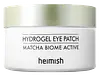
This hydrating eye mask is formulated around Niacinamide and Camellia Sinensis Leaf Extract to hydrate skin and calm redness.
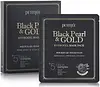
This hydrating sheet mask is formulated around Beta-Glucan to hydrate skin and calm redness.

What's inside
What's inside
 Key Ingredients
Benefits
Concerns
Ingredients Side-by-side
Water
Skin ConditioningGlycerin
Humectant


Carrageenan



Niacinamide
Smoothing









Camellia Sinensis Leaf Extract
Antimicrobial
Ceratonia Siliqua Gum
EmollientPentylene Glycol
Skin Conditioning
Caprylyl Glycol
Emollient
Lavandula Angustifolia Flower Extract
Cleansing

Monarda Didyma Leaf Extract
Skin ConditioningCyamopsis Tetragonoloba Gum
Emulsion StabilisingMentha Piperita Leaf Extract
Skin ConditioningFreesia Refracta Extract
Skin ConditioningChamomilla Recutita Flower Extract
Masking
Rosmarinus Officinalis Leaf Extract
AntimicrobialLactobacillus Ferment
Skin Conditioning
Saccharomyces Ferment
Skin Conditioning

Paeonia Lactiflora Root Extract
Skin ConditioningGlycyrrhiza Glabra Root Extract
Bleaching
Polygonum Multiflorum Root Extract
Skin ConditioningPhellinus Linteus Extract
Skin ConditioningMorus Alba Bark Extract
Skin ConditioningSophora Angustifolia Root Extract
Skin ConditioningCimicifuga Racemosa Root Extract
Antimicrobial
Sesamum Indicum Seed Extract
Skin Conditioning
Angelica Gigas Root Extract
Skin ConditioningScutellaria Baicalensis Root Extract
Astringent
Citrus Nobilis Peel Extract
Masking
Cupressus Sempervirens Leaf/Stem Extract
Skin ConditioningHedera Helix Leaf/Stem Extract
AntimicrobialCitrus Aurantium Bergamia Fruit Oil
Masking

Litsea Cubeba Fruit Oil
Masking
Ribes Nigrum Leaf Extract
Perfuming
Butylene Glycol
Humectant
Ethyl Hexanediol
SolventHexylene Glycol
EmulsifyingRicinus Communis Seed Oil
Masking
Propanediol
Solvent
Pinus Sylvestris Leaf Extract
TonicPolyglyceryl-10 Laurate
Skin Conditioning
Calcium Chloride
AstringentAllantoin
Skin Conditioning
Cellulose Gum
Emulsion Stabilising1,2-Hexanediol
Skin Conditioning
Chromium Oxide Greens
Potassium Chloride
Hydroxyacetophenone
Antioxidant
Illicium Verum Fruit Extract
Perfuming
Sucrose
Humectant
Chlorphenesin
Antimicrobial
Calcium Lactate
AstringentDipotassium Glycyrrhizate
Humectant
Titanium/Titanium Dioxide
Cosmetic ColorantSynthetic Fluorphlogopite
Adenosine
Skin Conditioning
Titanium Dioxide
Cosmetic Colorant

Polymethylsilsesquioxane

Silica
Abrasive
Polyglyceryl-10 Oleate
Skin Conditioning
Arginine
Masking
Ethylhexylglycerin
Skin ConditioningDisodium EDTA
ChelatingWater, Glycerin, Carrageenan, Niacinamide, Camellia Sinensis Leaf Extract, Ceratonia Siliqua Gum, Pentylene Glycol, Caprylyl Glycol, Lavandula Angustifolia Flower Extract, Monarda Didyma Leaf Extract, Cyamopsis Tetragonoloba Gum, Mentha Piperita Leaf Extract, Freesia Refracta Extract, Chamomilla Recutita Flower Extract, Rosmarinus Officinalis Leaf Extract, Lactobacillus Ferment, Saccharomyces Ferment, Paeonia Lactiflora Root Extract, Glycyrrhiza Glabra Root Extract, Polygonum Multiflorum Root Extract, Phellinus Linteus Extract, Morus Alba Bark Extract, Sophora Angustifolia Root Extract, Cimicifuga Racemosa Root Extract, Sesamum Indicum Seed Extract, Angelica Gigas Root Extract, Scutellaria Baicalensis Root Extract, Citrus Nobilis Peel Extract, Cupressus Sempervirens Leaf/Stem Extract, Hedera Helix Leaf/Stem Extract, Citrus Aurantium Bergamia Fruit Oil, Litsea Cubeba Fruit Oil, Ribes Nigrum Leaf Extract, Butylene Glycol, Ethyl Hexanediol, Hexylene Glycol, Ricinus Communis Seed Oil, Propanediol, Pinus Sylvestris Leaf Extract, Polyglyceryl-10 Laurate, Calcium Chloride, Allantoin, Cellulose Gum, 1,2-Hexanediol, Chromium Oxide Greens, Potassium Chloride, Hydroxyacetophenone, Illicium Verum Fruit Extract, Sucrose, Chlorphenesin, Calcium Lactate, Dipotassium Glycyrrhizate, Titanium/Titanium Dioxide, Synthetic Fluorphlogopite, Adenosine, Titanium Dioxide, Polymethylsilsesquioxane, Silica, Polyglyceryl-10 Oleate, Arginine, Ethylhexylglycerin, Disodium EDTA
Water
Skin ConditioningGlycerin
Humectant
Calcium Chloride
AstringentMethylpropanediol
SolventCeratonia Siliqua Gum
EmollientXanthan Gum
EmulsifyingCaprylic/Capric Triglyceride
Masking
Ricinus Communis Seed Oil
Masking
Beta-Glucan
Skin Conditioning
Persea Gratissima Oil
Skin Conditioning
Chondrus Crispus Powder
Abrasive
Phenoxyethanol
Preservative
Peat Water
Skin ConditioningScutellaria Baicalensis Root Extract
Astringent
Camellia Sinensis Leaf Extract
Antimicrobial
Houttuynia Cordata Extract
Skin Conditioning
Artemisia Princeps Leaf Extract
Skin ConditioningCitrus Junos Fruit Extract
Skin Conditioning1,2-Hexanediol
Skin Conditioning
Caprylyl Glycol
Emollient
Ethyl Hexanediol
SolventChlorphenesin
Antimicrobial
Synthetic Fluorphlogopite
Titanium Dioxide
Cosmetic Colorant
CI 77499
Cosmetic ColorantCI 77491
Cosmetic ColorantHydroxyethylcellulose
Emulsion StabilisingParfum
Masking
Disodium EDTA
ChelatingPearl Extract
Antioxidant
Laminaria Digitata Extract
Skin Protecting
Undaria Pinnatifida Extract
Skin ConditioningPearl Powder
Gold
Cosmetic ColorantWater, Glycerin, Calcium Chloride, Methylpropanediol, Ceratonia Siliqua Gum, Xanthan Gum, Caprylic/Capric Triglyceride, Ricinus Communis Seed Oil, Beta-Glucan, Persea Gratissima Oil, Chondrus Crispus Powder, Phenoxyethanol, Peat Water, Scutellaria Baicalensis Root Extract, Camellia Sinensis Leaf Extract, Houttuynia Cordata Extract, Artemisia Princeps Leaf Extract, Citrus Junos Fruit Extract, 1,2-Hexanediol, Caprylyl Glycol, Ethyl Hexanediol, Chlorphenesin, Synthetic Fluorphlogopite, Titanium Dioxide, CI 77499, CI 77491, Hydroxyethylcellulose, Parfum, Disodium EDTA, Pearl Extract, Laminaria Digitata Extract, Undaria Pinnatifida Extract, Pearl Powder, Gold
Reviews
Alternatives
Ingredients Explained
These ingredients are found in both products.
Ingredients higher up in an ingredient list are typically present in a larger amount.
1,2-Hexanediol is a synthetic liquid and another multi-functional powerhouse.
It is a:
- Humectant, drawing moisture into the skin
- Emollient, helping to soften skin
- Solvent, dispersing and stabilizing formulas
- Preservative booster, enhancing the antimicrobial activity of other preservatives
Calcium chloride is a white, odorless, crystalline solid. It is an astringent and can be used to change the viscosity of products.
This ingredient is highly soluble in water, acetic acid, and ethanol.
There are many forms of this ingredient, including monohydrate, dihydrate, tetrahydrate, and hexahydrate.
Learn more about Calcium ChlorideCamellia Sinensis Leaf Extract (tea extract) is one of the most well-researched plant extracts in skincare with an impressive resume.
Black tea, green tea, and oolong tea are all harvested from the Camellia Sinensis plant.
Studies show green tea extract and its catechins (like epigallocatechin gallate (EGCG)) help your skin cells product energy more efficiently and reducing the number of free-radicals that can damage your skin from the inside.
In lab-grown skin models, this translated to younger, healthier, and stronger skin.
There's also good sun protection data; researchers saw less DNA damage and redness on human skin when green tea was applied before UVB exposure. And the more they applied, the better the protection.
Needless to say, this ingredient shouldn't replace your sunscreen. But it is a great supportive ingredient that you can already find in many sunscreens and antioxidant serums.
A 2009 study found a 2% green tea lotion was effective for mild-to-moderate acne thanks to its anti-inflammatory and mild antimicrobial activity.
The quality of the extract matters a lot here:
Good extracts contain 50-90% catechins while lower quality ones are mostly there for marketing. We recommend reaching out to the brand if you have questions about the quality or source of their ingredients.
Human Repeated Insult Patch Testing showed no irritation or sensitization at use concentrations (0.86% in leave-on products and up to 30% as leaf water).
Learn more about Camellia Sinensis Leaf ExtractCaprylyl Glycol is a humectant, skin conditioner, emollient, and preservative booster derived from either caprylic acid or synthetically created.
Typical use levels vary from 0.3-1% as a preservative booster and go up to 2% to condition skin.
Because it is not a free-fatty acid, this ingredient is fungal acne safe (there's nothing for Malassezia to feed on).
Learn more about Caprylyl GlycolCeratonia Siliqua Gum is extracted from the seeds of the carob tree. You might know this ingredient as Carob Gum or Locust Bean Gum. It is used to stabilize other ingredients and improve the texture of products.
Carob gum is made up of long-chain polysaccharides. This makes it a natural thickener.
Yes! This ingredient comes from the seeds of a tree. The name 'Locust Bean Gum' can be misleading.
Learn more about Ceratonia Siliqua GumChlorphenesin is a synthetic preservative. It helps protect a product against bacteria in order to extend shelf life. In most cases, Chlorphenesin is paired with other preservatives such as phenoxyethanol and caprylyl glycol.
Chlorphenesin is a biocide. This means it is able to help fight the microorganisms on our skin. It is also able to fight odor-releasing bacteria.
Chlorphenesin is soluble in both water and glycerin.
Studies show Chlorphenesin is easily absorbed by our skin. You should speak with a skincare professional if you have concerns about using Chlorphenesin.
Learn more about ChlorphenesinDisodium EDTA is a chelating agent. It grabs onto and deactivates metal ions that sneak into your products from water, packaging, or air.
This ingredient mainly works behind the scenes and helps with:
On top of that, this ingredient can counteract the effects of hard water by binding to the minerals in it.
One thing worth knowing is that Disodium EDTA has been shown to be a mild penetration enhancer. It can help other ingredients absorb into skin more effectively which can be a double-edged sword (great for actives, but can also make the active too strong if you have sensitive skin).
Clinical patch testing showed no significant skin irritation at typical use concentrations and minimal dermal absorption.
You'll most likely see this ingredient near the end of an ingredient list. It's typically found in concentrations less than 1%.
Learn more about Disodium EDTAEthyl Hexanediol is an aliphatic alcohol. It is a solvent.
Solvents are used to keep ingredients together in a product. They can help dissolve ingredients to stable bases or help evenly distribute ingredients throughout the product.
Glycerin (or glycerol) is a compound naturally found in your skin. It's a powerhouse humectant that pulls water into the stratum corneum.
Topically, glycerin does several things at once:
Your skin makes glycerin on its own (mostly from sebaceous oil breakdown) and shuttles it to your outermost layer of skin, or your epidermis, via aquaporin-3.
Aquaporin-3 is a transporter that is essential for normal skin hydration, elasticity, and repair. Interestingly, mice lacking in AQP3 have dry and less elastic skin that can be fully corrected with glycerin.
This ingredient is non-irritating, plays well with almost every ingredient, and works across all skin types. Typical use is anywhere between 3-10% but can go up to 79% in some leave-on products.
Just know very high concentrations (>40%) can feel tacky in low humidity.
Glycerin is the name for this ingredient in American English. British English uses Glycerol/Glycerine.
Learn more about GlycerinThis ingredient is also known as castor oil. It is a skin conditioning ingredient.
The star component of castor oil is ricinoleic acid, an unusual fatty acid that makes up ~80-92% of its composition.
In skincare, it is an emollient that dries down to a solid film with water-binding properties. This helps keep skin hydrated and helps reduce transepidermal water loss (TEWL).
A 2026 dermatology review pulls together its broader uses:
Human clinical testing found this ingredient to be non-irritating and non-sensitizing.
Because castor oil contains fatty acids in the C11-24 range, this ingredient may not be fungal acne safe.
At this time, the literature does not support castor oil in regrowing hair. A 2022 systematic review found no strong evidence that it supports hair growth and only weak evidence that it improves hair shine.
Castor oil itself carries "perfuming" and "masking" function tags according to the official CosIng database. This is because of its mild odor and odor-dampening properties.
Learn more about Ricinus Communis Seed OilScutellaria Baicalensis Root Extract comes from the Baikal skullcap or Chinese skullcap plant. This plant is native to Northeast Asia and can be found in China, Mongolia, Korea, and Siberia.
In cosmetics, Scutellaria Baicalensis Root Extract provides antioxidant and anti-inflammatory benefits. This is due to the flavonoid composition of Scutellaria Baicalensis Root Extract.
In Chinese traditional folk medicine, Scutellaria Baicalensis Root Extract is used to help treat lung issues and hypertension.
Learn more about Scutellaria Baicalensis Root ExtractSynthetic Fluorphlogopite is the synthethic version of mica. It consists of fluorine, aluminum and silicate.
Synthetic Fluorphlogopite is used to add volume to products.
It is considered non-irritating on the skin.
Learn more about Synthetic FluorphlogopiteTitanium Dioxide (TD) is a mineral UV filter widely used in sunscreens and cosmetics.
It's one of only two UV filters officially classified as "mineral" by regulatory agencies (the other being Zinc Oxide).
A really common myth is that mineral filters work by reflecting UV light off your skin like tiny mirrors.
They don't only do that; modern research shows TD protects mostly by absorbing UV radiation, the same way chemical filters do.
When researchers measured this, reflection accounted for only about 4-5% of the protection (and less than SPF 2 on its own). The other ~95% comes from absorption: the UV photons hit the particle and their energy gets soaked up by its semiconductor band gap rather than bouncing off.
So "reflects vs. absorbs" was never really the right way to split mineral from chemical filters.
TD gives broad-spectrum protection that's strongest in the UVB and UVA-2 range and weaker in the UVA-1 range. Its UVA protection isn't quite as strong as Zinc Oxide's which is why you'll often see the two paired together.
Together, they make a solid broad-spectrum system.
TD is a great pick for sensitive, acne-prone, or redness-prone skin because it's non-irritating and chemically inert. Regulatory reviews classify it as a non-sensitizer and mild-to-non-irritant.
It's also unlikely to cause the "eye sting" some chemical filters are known for.
The main trade-off is cosmetic; TD can leave a white cast and has a thicker texture. This is why mineral sunscreens are often less cosmetically elegant than chemical or hybrid formulas (and harder to shade-match on deeper skin tones).
Formulators often use micronized or nano-sized TD to cut down on white case and improve spreadability. Smaller particles scatter less visible light so the formula looks less chalky while still filtering UV.
TD is almost always bundled with coatings like Alumina, Silica, Stearic Acid, or Dimethicone. These coatings do two important jobs:
TD can be used at up to 25% in a finished sunscreen; this is the regulatory ceiling in both the US and the EU.
In practice, the amount in any given product varies a lot depending on the target SPF and whether it's paired with other UV filters.
TD is one of the most heavily vetted sunscreen ingredients out there. It is approved as a UV filter in all major markets worldwide, including the US, EU, UK, Japan, Korea, China, Australia, and Canada.
The safety evidence is solid. There was an old worry that nano particles might absorb through skin into the body but multiple studies (including on damaged, sunburned, and UV-irradiated skin) have shown that TD stays on the surface and the layer of dead skin cells on top of everything else.
There's also no evidence of carcinogenicity, mutagenicity, or reproductive toxicity from dermal exposure of this ingredient.
For those who have seen the headline about a 2022 EU ban on TD, that was on TD as a food additive (a complete separate use from topical sunscreen).
There are ongoing questions about how nano-TD might affect marine ecosystems. As of now, there has been no conclusive evidence that any form of TD (or any other sunscreen filter) harms coral reefs or marine life.
The science is still developing and it's a space worth watching rather than packing over.
However, several destinations have reef-safety sunscreen rules that restrict certain chemical filters and steer visitors toward mineral, non-nano options. If you're traveling somewhere with these rules, a non-nano mineral sunscreen is the safe bet.
Learn more about Titanium DioxideWater. It's the most common cosmetic ingredient of all. You'll usually see it at the top of ingredient lists, meaning that it makes up the largest part of the product.
So why is it so popular? Water most often acts as a solvent - this means that it helps dissolve other ingredients into the formulation.
You'll also recognize water as that liquid we all need to stay alive. If you see this, drink a glass of water. Remember to stay hydrated!
Learn more about Water

