Emina Ms. Pimple Acne Solution Moisturizing Gel Versus Scora 2.5% D-Panthenol Barrier Shield Moisturizer
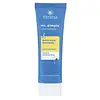
This calming moisturizer is formulated around Panthenol and Aloe Barbadensis Leaf Extract to calm redness and hydrate skin.
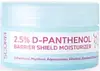
This barrier-repair moisturizer is formulated around Panthenol and Sodium PCA to strengthen the skin barrier and calm redness.

What's inside
What's inside
 Key Ingredients
Benefits
Concerns
Ingredients Side-by-side
Water
Skin ConditioningEthylhexyl Methoxycinnamate
UV Absorber


Propylene Glycol
Humectant


4-Methylbenzylidene Camphor
UV Absorber
Acrylates Copolymer
Dimethicone
Emollient

Polyacrylamide
Cyclopentasiloxane
Emollient
Butylene Glycol
Humectant
Benzyl Alcohol
Perfuming




Panthenol
Skin Conditioning

Triethanolamine
BufferingC13-14 Isoparaffin
Emollient
Polysorbate 60
Emulsifying
Ethylhexylglycerin
Skin ConditioningParfum
Masking
Aloe Barbadensis Leaf Extract
Emollient
Epilobium Angustifolium Extract
Skin ConditioningLaureth-7
EmulsifyingBeta-Glucan
Skin Conditioning
Carbomer
Emulsion StabilisingTitanium Dioxide
Cosmetic Colorant
Tocopheryl Acetate
Antioxidant


Dimethicone Crosspolymer
Emulsion Stabilising
Dimethicone/Vinyl Dimethicone Crosspolymer
Skin Conditioning
Phenoxyethanol
Preservative
Dimethiconol
Emollient
Sodium Metabisulfite
Antioxidant
Hamamelis Virginiana Extract
Antiseborrhoeic
Potassium Sorbate
Preservative
Sodium Benzoate
Masking
Tocopherol
Antioxidant

Water, Ethylhexyl Methoxycinnamate, Propylene Glycol, 4-Methylbenzylidene Camphor, Acrylates Copolymer, Dimethicone, Polyacrylamide, Cyclopentasiloxane, Butylene Glycol, Benzyl Alcohol, Panthenol, Triethanolamine, C13-14 Isoparaffin, Polysorbate 60, Ethylhexylglycerin, Parfum, Aloe Barbadensis Leaf Extract, Epilobium Angustifolium Extract, Laureth-7, Beta-Glucan, Carbomer, Titanium Dioxide, Tocopheryl Acetate, Dimethicone Crosspolymer, Dimethicone/Vinyl Dimethicone Crosspolymer, Phenoxyethanol, Dimethiconol, Sodium Metabisulfite, Hamamelis Virginiana Extract, Potassium Sorbate, Sodium Benzoate, Tocopherol
Water
Skin ConditioningCyclopentasiloxane
Emollient
Panthenol
Skin Conditioning
Butylene Glycol
Humectant
Sodium PCA
Humectant
Caprylic/Capric Triglyceride
Masking
Glycerin
Humectant
Carbomer
Emulsion StabilisingPolysorbate 20
Emulsifying
Allantoin
Skin Conditioning
Urea
Buffering

Triethanolamine
BufferingHydroxyethyl Acrylate/Sodium Acryloyldimethyl Taurate Copolymer
Emulsion StabilisingDMDM Hydantoin
Preservative
Isohexadecane
EmollientPolyacrylate-13
Styrene
Perfuming
BHT
Antioxidant
Disodium EDTA
ChelatingPPG-26-Buteth-26
Skin ConditioningPolyisobutene
Phenoxyethanol
Preservative
Bisabolol
Antioxidant
Tocopheryl Acetate
Antioxidant
Ziziphus Jujuba Fruit Extract
Skin ConditioningPEG-40 Hydrogenated Castor Oil
Emulsifying
Paeonia Lactiflora Root Extract
Skin ConditioningScutellaria Baicalensis Root Extract
Astringent
Ethylhexyl Methoxycinnamate
UV Absorber
Polysorbate 60
Emulsifying
Sorbitan Isostearate
Emulsifying
Glycyrrhiza Glabra Root Extract
Bleaching
Sodium Benzoate
Masking
Butyl Methoxydibenzoylmethane
UV Absorber
Ethylhexyl Salicylate
UV Absorber
Opuntia Ficus-Indica Stem Extract
Skin Conditioning
Citric Acid
Buffering
Water, Cyclopentasiloxane, Panthenol, Butylene Glycol, Sodium PCA, Caprylic/Capric Triglyceride, Glycerin, Carbomer, Polysorbate 20, Allantoin, Urea, Triethanolamine, Hydroxyethyl Acrylate/Sodium Acryloyldimethyl Taurate Copolymer, DMDM Hydantoin, Isohexadecane, Polyacrylate-13, Styrene, BHT, Disodium EDTA, PPG-26-Buteth-26, Polyisobutene, Phenoxyethanol, Bisabolol, Tocopheryl Acetate, Ziziphus Jujuba Fruit Extract, PEG-40 Hydrogenated Castor Oil, Paeonia Lactiflora Root Extract, Scutellaria Baicalensis Root Extract, Ethylhexyl Methoxycinnamate, Polysorbate 60, Sorbitan Isostearate, Glycyrrhiza Glabra Root Extract, Sodium Benzoate, Butyl Methoxydibenzoylmethane, Ethylhexyl Salicylate, Opuntia Ficus-Indica Stem Extract, Citric Acid
Reviews
Ingredients Explained
These ingredients are found in both products.
Ingredients higher up in an ingredient list are typically present in a larger amount.
Butylene Glycol (or BG) is used within cosmetic products for a few different reasons:
Overall, Butylene Glycol is a safe and well-rounded ingredient that works well with other ingredients.
Though this ingredient works well with most skin types, some people with sensitive skin may experience a reaction such as allergic rashes, closed comedones, or itchiness.
Learn more about Butylene GlycolCarbomer is a synthetic thickening and gelling agent. It's basically the ingredient that gives a lot of serums, gels, creams, and sunscreens their smooth, non-sticky texture.
Although legally permitted at very high levels, carbomers are normally used at concentrations below 1%.
It also needs to be neutralized to actually thicken, and because it is a large molecule, it doesn't really penetrate the skin barrier.
Allergy-wise, the risk is very low. Clinical studies show carbomers have low potential for skin irritation/sensitization even at concentrations up to 100%.
A 2024 UK study patch-tested 1,302 patients and found true allergy to the parent group of carbomer to be rare with no confirmed relevant reactions.
Learn more about CarbomerCyclopentasiloxane (D5) is a lightweight silicone that mostly acts as an emollient and solvent in cosmetics. Its the reason your products feel silky, fast-spreading, and non-greasy.
Since D5 is volatile, it does its thing and then evaporates off the skin quickly.
The safety profile of this ingredient is reassuring; the US CIR Expert Panel concluded D5 is safe as used in cosmetics and Health Canada concluded that D5 is not harmful to human health or the environment as currently used in cosmetics
There's a study that people mention about D5 in a rat study showing tumors. This study is related to long-term inhalation of high D5 levels.
Regulatory bodies have judged this study to be not applicable in topical skincare since skin absorption of D5 is very low and we're not really inhaling huge amounts of D5.
The only restriction for this ingredient is environmental. The European Chemicals Agency (ECHA) restricted D5 in wash-off cosmetics at or above 0.1% due to their persistence in water.
Learn more about CyclopentasiloxaneThis ingredient is also known as Octinoxate and is one of the oldest and most widely used chemical UV filters in skincare.
It has a simple job: soap up UVB radiation (290-320 nm), the wavelengths responsible for sunburn and a big chunk of long-term sun damage.
In formulas, it's always paired with a separate UVA filter because octinoxate solely protects skin from UVB.
Because it's an oil-soluble liquid, it's easy to blend into the oil phase of lotions/creams and gives a cosmetically elegant feel.
The one quirk about formulating this ingredient is photostability; the molecule slowly changes shape into a less effective version when sunlight hits it. So the longer you're in the sun, the weaker its protection gets. The drop can be more than 30% in some formulas.
It also doesn't play nice with Avobenzone (the common UVA filter) since avobenzone destabilizes octinoxate and the two degrade each other. But don't worry: brands have solved this issue by adding photostabilizers like Tinosorb S to prevent degradation and keep SPF stable under heavy UV exposure.
The maximum allowed level is 10% in the EU and Australia, 7.5% in the US and Canada, and 20% in Japan.
The Cosmetic Ingredient Review Panel has concluded this ingredient to be safe in cosmetics up to 10%.
One last thing worth knowing for context:
Octinoxate has been the subject of ongoing review in Europe where the Scientific Committee on Consumer Safety's (SCCS) 2025 final opinion is that this ingredient is an endocrine-active substance.
Lab and animal studies suggest it can act a bit like a hormone in the body (mildly mimicking estrogen and slightly blocking male hormones). It's important to know this hasn't really been shown to happen in everyday human use.
This ingredient is also banned in Hawaii over coral reef concerns.
Learn more about Ethylhexyl MethoxycinnamatePanthenol is a common ingredient that helps hydrate and soothe the skin. It is found naturally in our skin and hair.
There are two forms of panthenol: D and L.
D-panthenol is also known as dexpanthenol. Most cosmetics use dexpanthenol or a mixture of D and L-panthenol.
Panthenol is famous due to its ability to go deeper into the skin's layers. Using this ingredient has numerous pros (and no cons):
Like hyaluronic acid, panthenol is a humectant. Humectants are able to bind and hold large amounts of water to keep skin hydrated.
This ingredient works well for wound healing. It works by increasing tissue in the wound and helps close open wounds.
Once oxidized, panthenol converts to pantothenic acid. Panthothenic acid is found in all living cells.
This ingredient is also referred to as pro-vitamin B5.
Learn more about PanthenolPhenoxyethanol is one of the most widely used preservatives in skincare (and for good reason!).
It has a large spectrum of antimicrobial activity and especially effective bacteria, yeast, and mold while only having a weak effect on your skin's natural microbiome.
On a cellular level, it disrupts the cell membranes of microbes by poking holes that make the cell leak. This shuts down the chemical reactions the microbe needs to make energy so it can no longer survive.
Another perk of this ingredient is that it stays functional across a wide pH range (3-10).
You'll often see it paired with boosters like Ethylhexylglycerin; one study showed that a 1:9 ratio of Ethylhexylglycerin to Phenoxyethanol damages bacterial membranes as effectively as doubling the Phenoxyethanol concentration on its own.
Typical use concentrations range from 0.3-1% depending on the formula, and this ingredient is capped at 1% int the EU.
Safety-wise, the fear mongering does not hold up to the evidence. The EU's Scientific Committee on Consumer Safety and FDA consider it safe as a preservative at up to 1%, including for children of all ages.
Adverse systemic effects only showed up in animal studies at exposures roughly 200x higher than what people get from cosmetics. And despite its very widespread use, this ingredient is a rare sensitizer and allergic reactions are uncommon.
Learn more about PhenoxyethanolPolysorbate 60 is used to help stabilize products. It is a surfactant and emulsifier. These properties help keep ingredients together in a product. Surfactants help reduce surface tension between ingredients with different states, such as liquids and solids. Emulsifiers help prevent oils and waters from separating.
Polysorbate 60 is sorbitol-based and created from the ethoxylation of sorbitan. Ethoxylation is a chemical reaction used to add ethylene oxide. Sorbitan is a the dehydrated version of sorbitol, a sugar found in fruits.
In this case, the 60 comes from reacting 60 units of ethylene oxide with sorbitan.
Polysorbates are commonly used in medicine and foods.
Learn more about Polysorbate 60Sodium Benzoate is a preservative. It's used in both cosmetic and food products to inhibit the growth of mold and bacteria. It is typically produced synthetically.
Both the US FDA and EU Health Committee have approved the use of sodium benzoate. In the US, levels of 0.1% (of the total product) are allowed.
Sodium benzoate works as a preservative by inhibiting the growth of bacteria inside of cells. It prevents the cell from fermenting a type of sugar using an enzyme called phosphofructokinase.
It is the salt of benzoic acid. Foods containing sodium benzoate include soda, salad dressings, condiments, fruit juices, wines, and snack foods.
Studies for using ascorbic acid and sodium benzoate in cosmetics are lacking, especially in skincare routines with multiple steps.
We always recommend speaking with a professional, such as a dermatologist, if you have any concerns.
Learn more about Sodium BenzoateTocopheryl Acetate is a stable, shelf-friendly form of vitamin E.
Formulators love it because plain vitamin E oxidizes quickly once it hits air. This acetate version stays stable and resists going off, helping to extend a product's shelf life.
It's actually inactive on its own and works like a slow-release "storage" form; the enzymes in your skin called esterases gradually convert it into active vitamin E over time.
One in vivo study showed 5% of the acetate in the living layer of the epidermis converted to vitamin E after 5 days of application. This study also found the skin gained protection against UV damage even though the conversion was slow and small.
Once converted, vitamin E acts as a skin's main fat-soluble antioxidant that fights free radicals to protect skin from damage.
Topical vitamin E generally boosts the skin's photoprotection, and it reduced UV-damage in animal models.
This ingredient has some brightening potential but it's more of a prevention ingredient than spot-fader. Cell studies show it can slow down melanin production but it's worth noting that it's not the most powerful brightener out there.
Overall, it has a pretty solid safety profile and has been found to be non-irritating and non-comedogenic. Allergic reactions may happen but stay rare due to how widely the ingredient gets used.
The concentration will vary depending on the formula; industry data shows 0.1% in baby lotions, 3% in lipsticks, and 5% in foot powders. You can also find this ingredient at 100% in a pure vitamin E oil.
Most leave-on skincare keeps it at the lower end, often between 0.5-1%.
Learn more about Tocopheryl AcetateTriethanolamine (TEA) is an emulsifier and pH adjuster. It is created using ethylene oxide and ammonia. This gives Triethanolamine a nitrogen core and a similar scent to ammonia.
As an emulsifier, it prevents ingredients from separating and enhances texture by adding volume to a product.
PH adjusters are common in cosmetic products. The pH of a product can affect the effectiveness of other ingredients. A product with a high pH may also irritate the skin.
If you are looking for the tea leaf ingredient, click here.
Learn more about TriethanolamineWater. It's the most common cosmetic ingredient of all. You'll usually see it at the top of ingredient lists, meaning that it makes up the largest part of the product.
So why is it so popular? Water most often acts as a solvent - this means that it helps dissolve other ingredients into the formulation.
You'll also recognize water as that liquid we all need to stay alive. If you see this, drink a glass of water. Remember to stay hydrated!
Learn more about Water

