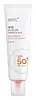
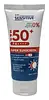
BRTC V10 UV Shield Moisture Essence Sun SPF 50+ PA++++ Versus Dr. Sensitive Super Sunscreen SPF50+ PA++++
This chemical sunscreen covers the full UV range and blocks ~98% of UVB at SPF 50.
This hybrid sunscreen covers the full UV range and blocks ~98% of UVB at SPF 50.


What's inside
What's inside
 Key Ingredients
Benefits
Concerns
Ingredients Side-by-side
Water
Skin ConditioningDipropylene Glycol
HumectantEthylhexyl Methoxycinnamate
UV Absorber


Isoamyl P-Methoxycinnamate
UV Absorber
Alcohol
Antimicrobial



Styrene/Acrylates Copolymer
Diethylamino Hydroxybenzoyl Hexyl Benzoate
UV Filter
Ethylhexyl Salicylate
UV Absorber
Niacinamide
Smoothing











C12-15 Alkyl Benzoate
AntimicrobialBis-Ethylhexyloxyphenol Methoxyphenyl Triazine
UV Absorber
1,2-Hexanediol
Skin Conditioning
Dimethicone
Emollient
Hydroxyacetophenone
Antioxidant
Acrylates/C10-30 Alkyl Acrylate Crosspolymer
Emulsion StabilisingSodium Hydroxide
BufferingBetula Platyphylla Japonica Juice
Skin Conditioning
Sodium Hyaluronate
Humectant
Macadamia Integrifolia Seed Oil
Skin Conditioning

Simmondsia Chinensis Seed Oil
Emollient
Leontopodium Alpinum Callus Culture Extract
Antioxidant
Lonicera Japonica Flower Extract
Skin ConditioningGlycerin
Humectant
Spirulina Platensis Extract
Skin ProtectingLavandula Angustifolia Extract
Skin Conditioning
Apium Graveolens Extract
Skin ConditioningHyacinthus Orientalis Extract
Skin ConditioningChamomilla Recutita Flower/Leaf Extract
AntimicrobialHordeum Vulgare Seed Extract
Skin ConditioningCentaurea Cyanus Flower Extract
Astringent
Butylene Glycol
Humectant
Ethylhexylglycerin
Skin ConditioningCentella Asiatica Extract
Cleansing
Aloe Barbadensis Leaf Extract
Emollient
Mentha Piperita Leaf Extract
Skin ConditioningEucalyptus Globulus Leaf Extract
Perfuming
Chamomilla Recutita Extract
Skin Conditioning
Artemisia Montana Leaf Extract
Skin ConditioningUlmus Davidiana Root Extract
Skin Conditioning
Dioscorea Villosa Root Extract
Skin Conditioning
Pseudoalteromonas Ferment Extract
Humectant
Yeast Extract
Skin ConditioningPortulaca Oleracea Extract
Skin Conditioning
Propolis Extract
Skin Conditioning
Panthenol
Skin Conditioning
Hydrogenated Lecithin
Emulsifying
Tocopheryl Succinate
Antioxidant
Linoleic Acid
Cleansing
Glyceryl Oleate
Emollient
Pyridoxine
Skin ConditioningPolyacrylic Acid
Emulsion StabilisingBiotin
AntiseborrhoeicCyanocobalamin
Skin ConditioningBeta-Carotene
Skin ConditioningSodium Ascorbyl Phosphate
Antioxidant
Brassica Oleracea Italica Extract
AstringentLavandula Angustifolia Oil
Masking
Aniba Rosaeodora Wood Oil
Astringent
Citrus Aurantium Dulcis Peel Oil
Masking
Allantoin
Skin Conditioning
Xanthan Gum
EmulsifyingPentaerythrityl Tetra-Di-T-Butyl Hydroxyhydrocinnamate
Antioxidant
Adenosine
Skin Conditioning
Disodium EDTA
Water, Dipropylene Glycol, Ethylhexyl Methoxycinnamate, Isoamyl P-Methoxycinnamate, Alcohol, Styrene/Acrylates Copolymer, Diethylamino Hydroxybenzoyl Hexyl Benzoate, Ethylhexyl Salicylate, Niacinamide, C12-15 Alkyl Benzoate, Bis-Ethylhexyloxyphenol Methoxyphenyl Triazine, 1,2-Hexanediol, Dimethicone, Hydroxyacetophenone, Acrylates/C10-30 Alkyl Acrylate Crosspolymer, Sodium Hydroxide, Betula Platyphylla Japonica Juice, Sodium Hyaluronate, Macadamia Integrifolia Seed Oil, Simmondsia Chinensis Seed Oil, Leontopodium Alpinum Callus Culture Extract, Lonicera Japonica Flower Extract, Glycerin, Spirulina Platensis Extract, Lavandula Angustifolia Extract, Apium Graveolens Extract, Hyacinthus Orientalis Extract, Chamomilla Recutita Flower/Leaf Extract, Hordeum Vulgare Seed Extract, Centaurea Cyanus Flower Extract, Butylene Glycol, Ethylhexylglycerin, Centella Asiatica Extract, Aloe Barbadensis Leaf Extract, Mentha Piperita Leaf Extract, Eucalyptus Globulus Leaf Extract, Chamomilla Recutita Extract, Artemisia Montana Leaf Extract, Ulmus Davidiana Root Extract, Dioscorea Villosa Root Extract, Pseudoalteromonas Ferment Extract, Yeast Extract, Portulaca Oleracea Extract, Propolis Extract, Panthenol, Hydrogenated Lecithin, Tocopheryl Succinate, Linoleic Acid, Glyceryl Oleate, Pyridoxine, Polyacrylic Acid, Biotin, Cyanocobalamin, Beta-Carotene, Sodium Ascorbyl Phosphate, Brassica Oleracea Italica Extract, Lavandula Angustifolia Oil, Aniba Rosaeodora Wood Oil, Citrus Aurantium Dulcis Peel Oil, Allantoin, Xanthan Gum, Pentaerythrityl Tetra-Di-T-Butyl Hydroxyhydrocinnamate, Adenosine, Disodium EDTA
Water
Skin ConditioningEthylhexyl Methoxycinnamate
UV Absorber
Butyl Methoxydibenzoylmethane
UV Absorber
Phospholipids
Skin Conditioning
Butylene Glycol
Humectant
Propylene Glycol
Humectant
Glycerin
Humectant
Phenoxyethanol
Preservative
Chlorphenesin
Antimicrobial
Polyacrylate Crosspolymer-6
Emulsion StabilisingTitanium Dioxide
Cosmetic Colorant
Allantoin
Skin Conditioning
Niacinamide
Smoothing
Calcium Pantothenate
Sodium Ascorbyl Phosphate
Antioxidant
Tocopheryl Acetate
Antioxidant
Pyridoxine Hcl
Skin ConditioningMaltodextrin
Absorbent
Sodium Starch Octenylsuccinate
AbsorbentSilica
Abrasive
Glutathione
Water, Ethylhexyl Methoxycinnamate, Butyl Methoxydibenzoylmethane, Phospholipids, Butylene Glycol, Propylene Glycol, Glycerin, Phenoxyethanol, Chlorphenesin, Polyacrylate Crosspolymer-6, Titanium Dioxide, Allantoin, Niacinamide, Calcium Pantothenate, Sodium Ascorbyl Phosphate, Tocopheryl Acetate, Pyridoxine Hcl, Maltodextrin, Sodium Starch Octenylsuccinate, Silica, Glutathione
Reviews
Ingredients Explained
These ingredients are found in both products.
Ingredients higher up in an ingredient list are typically present in a larger amount.
Allantoin is a soothing ingredient known for its protective and moisturizing properties; it's basically a quiet workhorse ingredient you can find in a huge range of cosmetics.
Though it can be derived from the comfrey plant, allantoin is produced synthetically for cosmetic products to ensure purity.
Research shows it can encourage your skin cells to turn over and renew by stimulating keratinocyte and fibroblast proliferation.
It also has mild keratolytic properties to help loosen and shed dead skin cells without being harsh.
Studies also suggest allantoin can help calm inflammation by dialing down some of the chemical signals your skin sends out when it is irritated.
This ingredient is typically used in the 0.1-0.5% range, and the FDA recognizes it as a skin protectant in OTC products up to 2%.
Overall, allantoin is a wonderful addition to most routines; it is stable across a wide pH range (~4-8), works well with other ingredients, and is considered non-sensitizing/non-irritating.
Fun fact: Allantoin is naturally occurring in comfrey root, beets, chamomile, and wheat sprouts. Our bodies even produce it as a byproduct of uric acid metabolism.
Learn more about AllantoinButylene Glycol (or BG) is used within cosmetic products for a few different reasons:
Overall, Butylene Glycol is a safe and well-rounded ingredient that works well with other ingredients.
Though this ingredient works well with most skin types, some people with sensitive skin may experience a reaction such as allergic rashes, closed comedones, or itchiness.
Learn more about Butylene GlycolThis ingredient is also known as Octinoxate and is one of the oldest and most widely used chemical UV filters in skincare.
It has a simple job: soap up UVB radiation (290-320 nm), the wavelengths responsible for sunburn and a big chunk of long-term sun damage.
In formulas, it's always paired with a separate UVA filter because octinoxate solely protects skin from UVB.
Because it's an oil-soluble liquid, it's easy to blend into the oil phase of lotions/creams and gives a cosmetically elegant feel.
The one quirk about formulating this ingredient is photostability; the molecule slowly changes shape into a less effective version when sunlight hits it. So the longer you're in the sun, the weaker its protection gets. The drop can be more than 30% in some formulas.
It also doesn't play nice with Avobenzone (the common UVA filter) since avobenzone destabilizes octinoxate and the two degrade each other. But don't worry: brands have solved this issue by adding photostabilizers like Tinosorb S to prevent degradation and keep SPF stable under heavy UV exposure.
The maximum allowed level is 10% in the EU and Australia, 7.5% in the US and Canada, and 20% in Japan.
The Cosmetic Ingredient Review Panel has concluded this ingredient to be safe in cosmetics up to 10%.
One last thing worth knowing for context:
Octinoxate has been the subject of ongoing review in Europe where the Scientific Committee on Consumer Safety's (SCCS) 2025 final opinion is that this ingredient is an endocrine-active substance.
Lab and animal studies suggest it can act a bit like a hormone in the body (mildly mimicking estrogen and slightly blocking male hormones). It's important to know this hasn't really been shown to happen in everyday human use.
This ingredient is also banned in Hawaii over coral reef concerns.
Learn more about Ethylhexyl MethoxycinnamateGlycerin (or glycerol) is a compound naturally found in your skin. It's a powerhouse humectant that pulls water into the stratum corneum.
Topically, glycerin does several things at once:
Your skin makes glycerin on its own (mostly from sebaceous oil breakdown) and shuttles it to your outermost layer of skin, or your epidermis, via aquaporin-3.
Aquaporin-3 is a transporter that is essential for normal skin hydration, elasticity, and repair. Interestingly, mice lacking in AQP3 have dry and less elastic skin that can be fully corrected with glycerin.
This ingredient is non-irritating, plays well with almost every ingredient, and works across all skin types. Typical use is anywhere between 3-10% but can go up to 79% in some leave-on products.
Just know very high concentrations (>40%) can feel tacky in low humidity.
Glycerin is the name for this ingredient in American English. British English uses Glycerol/Glycerine.
Learn more about GlycerinNiacinamide is a multitasking form of vitamin B3 that strengthens the skin barrier, reduces pores and dark spots, regulates oil, and improves signs of aging.
And the best part? It's gentle and well-tolerated by most skin types, including sensitive and reactive skin.
You might have heard of "niacin flush", or the reddening of skin that causes itchiness. Niacinamide has not been found to cause this.
In very rare cases, some individuals may not be able to tolerate niacinamide at all or experience an allergic reaction to it.
If you are experiencing flaking, irritation, and dryness with this ingredient, be sure to double check all your products as this ingredient can be found in all categories of skincare.
When incorporating niacinamide into your routine, look out for concentration amounts. Typically, 5% niacinamide provides benefits such as fading dark spots. However, if you have sensitive skin, it is better to begin with a smaller concentration.
When you apply niacinamide to your skin, your body converts it into nicotinamide adenine dinucleotide (NAD). NAD is an essential coenzyme that is already found in your cells as "fuel" and powers countless biological processes.
In your skin, NAD helps repair cell damage, produce new healthy cells, support collagen production, strengthen the skin barrier, and fight environmental stressors (like UV and pollution).
Our natural NAD levels start to decline with age, leading to slower skin repair, visible aging, and a weaker skin barrier. By providing your skin niacinamide, you're recharging your skin's NAD levels. This leads to stronger, healthier, and younger looking skin.
Another name for vitamin B3 is nicotinamide. This vitamin is water-soluble and our bodies don't store it. We obtain Vitamin B3 from either food or skincare. Meat, fish, wheat, yeast, and leafy greens contain vitamin B3.
The type of niacinamide used in skincare is synthetically created.
Learn more about NiacinamideSodium Ascorbyl Phosphate (SAP) is a water-soluble form of Vitamin C. It is the salt of ascorbic acid.
This ingredient is commonly used in skincare because it's more formulation-stable while still offering the same benefits as pure ascorbic acid. Ascorbic acid is notorious for breaking down when exposed to sunlight and oxygen whereas SAP has been shown to be more stable.
Studies show SAP has anti-acne and antioxidant benefits. One study found 5% of SAP lotion to be an effective ingredient for treating acne vulgaris. This is because research shows that SAP may help control acne by reducing acne-causing bacteria and slowing the oxidation of skin oils caused by UV exposure.
In addition to acne, vitamin C is important for skin structure. Lab studies suggest SAP may support collagen production in skin cells, making it a great ingredient in anti-aging routines.
Vitamin C has many benefits: it helps reduce redness, improve skin texture, fade the appearance of dark spots, and brighten the skin.
Read more about other types of Vitamin C:
Learn more about Sodium Ascorbyl PhosphateWater. It's the most common cosmetic ingredient of all. You'll usually see it at the top of ingredient lists, meaning that it makes up the largest part of the product.
So why is it so popular? Water most often acts as a solvent - this means that it helps dissolve other ingredients into the formulation.
You'll also recognize water as that liquid we all need to stay alive. If you see this, drink a glass of water. Remember to stay hydrated!
Learn more about Water

