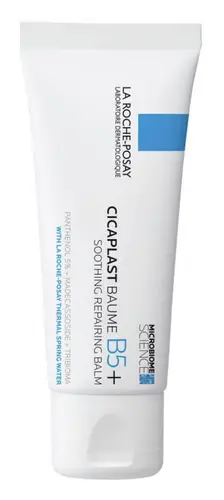
This calming moisturizer is formulated around Glycyrrhetinic Acid and Laminaria Ochroleuca Extract to calm redness and strengthen the skin barrier.
This barrier-repair moisturizer is formulated around Portulaca Oleracea Extract and Ceramide NP to strengthen the skin barrier and calm redness.


What's inside
What's inside
 Key Ingredients
Benefits
Concerns
Ingredients Side-by-side
Water
Skin ConditioningParaffinum Liquidum
Emollient


Beeswax
Emulsion Stabilising



Propylene Glycol
Humectant
Cetyl Alcohol
Emollient

Glycyrrhetinic Acid
Skin Conditioning
Glyceryl Stearate
Emollient
Palmitic Acid
Emollient
Stearic Acid
Cleansing
Sorbitan Sesquioleate
Emulsifying
Tocopheryl Acetate
Antioxidant


Mannitol
Humectant
Xylitol
Humectant
Rhamnose
HumectantFructooligosaccharides
Humectant
Laminaria Ochroleuca Extract
Skin Conditioning
Allantoin
Skin Conditioning
Sodium PCA
Humectant
Caprylyl Glycol
Emollient
Caprylic/Capric Triglyceride
Masking
Pentylene Glycol
Skin Conditioning
1,2-Hexanediol
Skin Conditioning
Carbomer
Emulsion StabilisingTriethanolamine
BufferingWater, Paraffinum Liquidum, Beeswax, Propylene Glycol, Cetyl Alcohol, Glycyrrhetinic Acid, Glyceryl Stearate, Palmitic Acid, Stearic Acid, Sorbitan Sesquioleate, Tocopheryl Acetate, Mannitol, Xylitol, Rhamnose, Fructooligosaccharides, Laminaria Ochroleuca Extract, Allantoin, Sodium PCA, Caprylyl Glycol, Caprylic/Capric Triglyceride, Pentylene Glycol, 1,2-Hexanediol, Carbomer, Triethanolamine
Portulaca Oleracea Extract
Skin Conditioning
Water
Skin ConditioningGlycerin
Humectant
Dicaprylyl Carbonate
EmollientButylene Glycol
Humectant
1,2-Hexanediol
Skin Conditioning
Dipropylene Glycol
HumectantBetaine
Humectant
Euterpe Oleracea Sterols
Skin ConditioningCeramide NP
Skin Conditioning

Ceramide Ns
Skin Conditioning
Ceramide As
Skin Conditioning
Ceramide AP
Skin Conditioning
Ceramide EOP
Skin Conditioning
Bisabolol
Antioxidant
Cetearyl Olivate
Sorbitan Olivate
Emulsifying
Panthenol
Skin Conditioning
Allantoin
Skin Conditioning
Vinyldimethicone

Hydrogenated Lecithin
Emulsifying
Hydroxyethyl Acrylate/Sodium Acryloyldimethyl Taurate Copolymer
Emulsion StabilisingCholesterol
Emollient
Stearic Acid
Cleansing
Glyceryl Stearate
Emollient
Eclipta Prostrata Extract
Skin Conditioning
Phytosphingosine
Skin Conditioning
Curcuma Longa Root Extract
Antioxidant
Xanthan Gum
EmulsifyingMelia Azadirachta Leaf Extract
Skin ConditioningSorbitan Isostearate
Emulsifying
Disodium EDTA
Sodium Hyaluronate
Humectant
Melia Azadirachta Flower Extract
Skin ConditioningMoringa Oleifera Seed Oil
Emollient
Arachidic Acid
Cleansing
Melia Azadirachta Bark Extract
AntimicrobialCorallina Officinalis Extract
Skin Conditioning
Ocimum Sanctum Leaf Extract
Skin ConditioningPalmitic Acid
Emollient
Tocopherol
Antioxidant
Pantolactone
Humectant
Oleic Acid
Emollient
Ethylhexylglycerin
Skin ConditioningParfum
Masking
Portulaca Oleracea Extract, Water, Glycerin, Dicaprylyl Carbonate, Butylene Glycol, 1,2-Hexanediol, Dipropylene Glycol, Betaine, Euterpe Oleracea Sterols, Ceramide NP, Ceramide Ns, Ceramide As, Ceramide AP, Ceramide EOP, Bisabolol, Cetearyl Olivate, Sorbitan Olivate, Panthenol, Allantoin, Vinyldimethicone, Hydrogenated Lecithin, Hydroxyethyl Acrylate/Sodium Acryloyldimethyl Taurate Copolymer, Cholesterol, Stearic Acid, Glyceryl Stearate, Eclipta Prostrata Extract, Phytosphingosine, Curcuma Longa Root Extract, Xanthan Gum, Melia Azadirachta Leaf Extract, Sorbitan Isostearate, Disodium EDTA, Sodium Hyaluronate, Melia Azadirachta Flower Extract, Moringa Oleifera Seed Oil, Arachidic Acid, Melia Azadirachta Bark Extract, Corallina Officinalis Extract, Ocimum Sanctum Leaf Extract, Palmitic Acid, Tocopherol, Pantolactone, Oleic Acid, Ethylhexylglycerin, Parfum
Reviews
Ingredients Explained
These ingredients are found in both products.
Ingredients higher up in an ingredient list are typically present in a larger amount.
1,2-Hexanediol is a synthetic liquid and another multi-functional powerhouse.
It is a:
- Humectant, drawing moisture into the skin
- Emollient, helping to soften skin
- Solvent, dispersing and stabilizing formulas
- Preservative booster, enhancing the antimicrobial activity of other preservatives
Allantoin is a soothing ingredient known for its protective and moisturizing properties; it's basically a quiet workhorse ingredient you can find in a huge range of cosmetics.
Though it can be derived from the comfrey plant, allantoin is produced synthetically for cosmetic products to ensure purity.
Research shows it can encourage your skin cells to turn over and renew by stimulating keratinocyte and fibroblast proliferation.
It also has mild keratolytic properties to help loosen and shed dead skin cells without being harsh.
Studies also suggest allantoin can help calm inflammation by dialing down some of the chemical signals your skin sends out when it is irritated.
This ingredient is typically used in the 0.1-0.5% range, and the FDA recognizes it as a skin protectant in OTC products up to 2%.
Overall, allantoin is a wonderful addition to most routines; it is stable across a wide pH range (~4-8), works well with other ingredients, and is considered non-sensitizing/non-irritating.
Fun fact: Allantoin is naturally occurring in comfrey root, beets, chamomile, and wheat sprouts. Our bodies even produce it as a byproduct of uric acid metabolism.
Learn more about AllantoinGlyceryl Stearate is made by reacting glycerin with stearic acid (typically sourced from plant oils like palm or coconut). It's an emulsifier, emollient, and mild occlusive.
Emulsifiers help ingredients like oil and water stay mixed so your formula stays nicely blended and uniform in texture.
This ingredient is typically used in concentrations between 1-10%. Studies have found it to be non-sensitizing, non-phototoxic, and non-photoallergenic.
A close cousin of this ingredient is Glyceryl Stearate SE ("self-emulsifying"). This just has a small amount of sodium or potassium stearate added so it can emulsify without a co-emulsifier.
Since this ingredient is an ester of a C18 fatty acid, it may not be fungal acne safe. The Malassezia yeast can potentially metabolize within the C11-C24 range.
Fun fact: The human body also creates Glyceryl Stearate naturally.
Learn more about Glyceryl StearatePalmitic Acid is a fatty acid naturally found in our skin and in many plant and animal sources.
In cosmetics, it is usually derived from palm oil. It serves many purposes in skincare, acting as a cleanser, emollient, and emulsifier.
Interestingly, topically applied Palmitic Acid can be elongated into longer chain fatty acids and ceramides. A 2019 study found low levels of Palmitic Acid lead to slower development of cells, suggesting it plays a role in keeping your skin's renewal process on track.
The CIR (Cosmetic Ingredient Review) panel determined it safe as used in cosmetics at concentrations up to 13%. It is non-irritating and non-sensitizing in clinical studies.
The culprit behind fungal acne, the Malassezia yeast, feeds on fatty acids with carbon chain lengths between C11-C24. Palmitic Acid, at C16, falls right into that sweet spot.
In vitro studies have shown that Palmitic Acid is one of the fatty acids that induce rapid Malassezia growth in lab settings.
It's worth noting that what feeds yeast in a lab doesn't necessarily feed it on your face since formulation and your skin's chemistry play a bigger role.
Learn more about Palmitic AcidStearic Acid is a fatty acid that is already found in your skin. It's one of the free fatty acids that works alongside ceramides and cholesterols to maintain your barrier.
In cosmetics, it is a multitasker:
Safety-wise, the CIR Expert Panel has concluded it to be safe in cosmetics when formulated to be non-irritating and non-sensitizing.
Free stearic acid is a C18 fatty acid that the Malassezia yeast can substrate, so this ingredient may not be fungal acne safe.
Learn more about Stearic AcidWater. It's the most common cosmetic ingredient of all. You'll usually see it at the top of ingredient lists, meaning that it makes up the largest part of the product.
So why is it so popular? Water most often acts as a solvent - this means that it helps dissolve other ingredients into the formulation.
You'll also recognize water as that liquid we all need to stay alive. If you see this, drink a glass of water. Remember to stay hydrated!
Learn more about Water