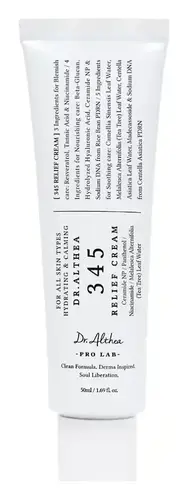
This wash off mask is made with Diatomaceous Earth and Niacinamide for a rinse-off hydration boost.
This barrier-repair moisturizer is formulated around Panthenol and Sodium Hyaluronate to strengthen the skin barrier and hydrate skin.

What's inside
What's inside
 Key Ingredients
Benefits
Concerns
Ingredients Side-by-side
Water
Skin ConditioningDiatomaceous Earth
Abrasive

Glycerin
Humectant


Butylene Glycol
Humectant
PEG-75
HumectantAlgin
Masking1,2-Hexanediol
Skin Conditioning
Tetrasodium Pyrophosphate
BufferingHydroxyacetophenone
Antioxidant
Niacinamide
Smoothing








Titanium Dioxide
Cosmetic Colorant

Ultramarines
Disodium EDTA
Allantoin
Skin Conditioning
Melissa Officinalis Flower/Leaf/Stem Water
Skin ConditioningRosmarinus Officinalis Leaf Water
MaskingCitrus Aurantium Dulcis Peel Oil
Masking

Sodium Hyaluronate
Humectant
Citrus Aurantifolia Oil
Cleansing


Oleth-10
EmulsifyingPolysorbate 60
Emulsifying

Aluminum Hydroxide
EmollientPelargonium Graveolens Flower Oil
Masking
Rosmarinus Officinalis Leaf Oil
Masking
Eucalyptus Globulus Leaf Extract
Perfuming
Triethoxycaprylylsilane

Methyl Methacrylate Crosspolymer
Simethicone
Emollient
Mentha Suaveolens Leaf Extract
AstringentRosa Canina Fruit Extract
Astringent
Thymus Vulgaris Leaf Extract
Skin ProtectingLimonene
Perfuming
Citronellol
Perfuming
Simmondsia Chinensis Seed Oil
Emollient
Camellia Japonica Seed Oil
Emollient
Canola Oil
Emollient

Polysorbate 80
Emulsifying
Caprylic/Capric Triglyceride
Masking
Persea Gratissima Oil
Skin Conditioning
Ricinus Communis Seed Oil
Masking
Prunus Amygdalus Dulcis Oil
Skin Conditioning
Argania Spinosa Kernel Oil
Emollient
Rosa Canina Fruit Oil
Emollient
CI 77231
Cosmetic ColorantLinalool
Perfuming
Geraniol
Perfuming
Citral
Perfuming
Water, Diatomaceous Earth, Glycerin, Butylene Glycol, PEG-75, Algin, 1,2-Hexanediol, Tetrasodium Pyrophosphate, Hydroxyacetophenone, Niacinamide, Titanium Dioxide, Ultramarines, Disodium EDTA, Allantoin, Melissa Officinalis Flower/Leaf/Stem Water, Rosmarinus Officinalis Leaf Water, Citrus Aurantium Dulcis Peel Oil, Sodium Hyaluronate, Citrus Aurantifolia Oil, Oleth-10, Polysorbate 60, Aluminum Hydroxide, Pelargonium Graveolens Flower Oil, Rosmarinus Officinalis Leaf Oil, Eucalyptus Globulus Leaf Extract, Triethoxycaprylylsilane, Methyl Methacrylate Crosspolymer, Simethicone, Mentha Suaveolens Leaf Extract, Rosa Canina Fruit Extract, Thymus Vulgaris Leaf Extract, Limonene, Citronellol, Simmondsia Chinensis Seed Oil, Camellia Japonica Seed Oil, Canola Oil, Polysorbate 80, Caprylic/Capric Triglyceride, Persea Gratissima Oil, Ricinus Communis Seed Oil, Prunus Amygdalus Dulcis Oil, Argania Spinosa Kernel Oil, Rosa Canina Fruit Oil, CI 77231, Linalool, Geraniol, Citral
Water
Skin ConditioningButylene Glycol
Humectant
Caprylic/Capric Triglyceride
Masking
1,2-Hexanediol
Skin Conditioning
Betaine
Humectant
Behenyl Alcohol
Emollient
Panthenol
Skin Conditioning
Eucalyptus Globulus Leaf Extract
Perfuming
Mentha Rotundifolia Leaf Extract
TonicRosa Canina Fruit Extract
Astringent
Melissa Officinalis Flower/Leaf/Stem Water
Skin ConditioningThymus Vulgaris Leaf Extract
Skin ProtectingRosmarinus Officinalis Leaf Water
MaskingCitrus Aurantium Amara Flower Oil
Masking
Peat Extract
Skin ConditioningPopulus Nigra Bark/Bud/Leaf/Twig Extract
Skin ConditioningRosa Gallica Flower Extract
AstringentTuber Magnatum Extract
Skin ConditioningXylitol
Humectant
Erythritol
Humectant
Sodium Hyaluronate
Humectant
Caffeine
Skin Conditioning
Copper Tripeptide-1
Skin Conditioning
Glycine
Buffering
Beta-Glucan
Skin Conditioning
Niacinamide
Smoothing
Glyceryl Polymethacrylate
Triethylhexanoin
MaskingCarbomer
Emulsion StabilisingDimethicone
Emollient
Disiloxane
Skin Conditioning
Tromethamine
BufferingGlycerin
Humectant
Propylene Glycol
Humectant
Stearyl Dimethicone
Emollient
Lactobacillus/Soybean Ferment Extract
Skin ConditioningC30-45 Alkyl Dimethicone
Skin Conditioning
Tocopheryl Acetate
Antioxidant
Saccharomyces/Potato Extract Ferment Filtrate
Humectant
Saccharomyces/Barley Seed Ferment Filtrate
HumectantTrisodium EDTA
Malachite Extract
Antioxidant
Methyl Diisopropyl Propionamide
MaskingCitrus Aurantium Dulcis Peel Oil
Masking
Citrus Aurantifolia Oil
Cleansing
Pelargonium Graveolens Flower Oil
Masking
Rosmarinus Officinalis Leaf Oil
Masking
Limonene
Perfuming
Citronellol
Perfuming
Geraniol
Perfuming
Citral
Perfuming
Linalool
Perfuming
Water, Butylene Glycol, Caprylic/Capric Triglyceride, 1,2-Hexanediol, Betaine, Behenyl Alcohol, Panthenol, Eucalyptus Globulus Leaf Extract, Mentha Rotundifolia Leaf Extract, Rosa Canina Fruit Extract, Melissa Officinalis Flower/Leaf/Stem Water, Thymus Vulgaris Leaf Extract, Rosmarinus Officinalis Leaf Water, Citrus Aurantium Amara Flower Oil, Peat Extract, Populus Nigra Bark/Bud/Leaf/Twig Extract, Rosa Gallica Flower Extract, Tuber Magnatum Extract, Xylitol, Erythritol, Sodium Hyaluronate, Caffeine, Copper Tripeptide-1, Glycine, Beta-Glucan, Niacinamide, Glyceryl Polymethacrylate, Triethylhexanoin, Carbomer, Dimethicone, Disiloxane, Tromethamine, Glycerin, Propylene Glycol, Stearyl Dimethicone, Lactobacillus/Soybean Ferment Extract, C30-45 Alkyl Dimethicone, Tocopheryl Acetate, Saccharomyces/Potato Extract Ferment Filtrate, Saccharomyces/Barley Seed Ferment Filtrate, Trisodium EDTA, Malachite Extract, Methyl Diisopropyl Propionamide, Citrus Aurantium Dulcis Peel Oil, Citrus Aurantifolia Oil, Pelargonium Graveolens Flower Oil, Rosmarinus Officinalis Leaf Oil, Limonene, Citronellol, Geraniol, Citral, Linalool
Ingredients Explained
These ingredients are found in both products.
Ingredients higher up in an ingredient list are typically present in a larger amount.
1,2-Hexanediol is a synthetic liquid and another multi-functional powerhouse.
It is a:
- Humectant, drawing moisture into the skin
- Emollient, helping to soften skin
- Solvent, dispersing and stabilizing formulas
- Preservative booster, enhancing the antimicrobial activity of other preservatives
Butylene Glycol (or BG) is used within cosmetic products for a few different reasons:
Overall, Butylene Glycol is a safe and well-rounded ingredient that works well with other ingredients.
Though this ingredient works well with most skin types, some people with sensitive skin may experience a reaction such as allergic rashes, closed comedones, or itchiness.
Learn more about Butylene GlycolCaprylic/Capric Triglyceride (aka MCT Oil) is a lightweight emollient, solvent, and texture enhancer. It is considered a skin-softener by helping to prevent moisture loss.
Though it behaves like an oil, it is not technically one due to its chemical composition. One perk of this ingredient is that it is very stable, resistant to oxidation, and unlikely to go rancid.
In practice, that translates to a long shelf life and a consistently elegant skin feel.
While there is an assumption Caprylic Triglyceride can clog pores due to it being derived from coconut oil, there is no research supporting this. Just patch test if you have concerns.
Fractionated coconut oil and MCT Oil are both listed as Caprylic/Capric Triglyceride according to INCI. This is because INCI names are based on the ingredient’s final chemical composition and not its marketing name or source.
This ingredient is treated as the gold standard fungal acne safe oil. Even though it is coconut derived, the problematic lauric acid is stripped out.
This leaves just caprylic (C8) and capric (C10) acid. These chain lengths actually trend antifungal; a 2020 study found caprylic acid was enough to disrupt Malassezia furfur cell membrane, with a caprylic acid derivative damaging membrane structures at concentrations as low as 0.2%.
Learn more about Caprylic/Capric TriglycerideCitral is the molecule responsible for the fresh lemon scent in lemon, lime, and lemongrass. It is a fragrance ingredient that can be created from plant essential oils or synthetically.
Though Citral has documented antimicrobial activity against acne bacteria (which is where the marketing claims about it being good for acne-prone skin originate), real formulas use it at fragrance-level concentrations under 1% so there's likely no skin benefit.
You should know this ingredient is a known EU fragrance allergen.
Animal studies classifies this ingredient as a weak-to-moderate skin sensitizer and clinical patch testing on eczema patients confirmed it to be both a contact allergen and irritant.
The term 'citral' is a collective term for two geometric isomers: geranial/Citral A and neral/Citral B.
The term 'fragrance' is not regulated in many countries. In many cases, it is up to the brand to define this term. For instance, many brands choose to label themselves as "fragrance-free" because they are not using synthetic fragrances. However, their products may still contain ingredients such as essential oils that are considered a fragrance.
Learn more about CitralCitronellol is used to add fragrance/parfum to a product. It is often derived from plants such as roses. In fact, it can be found in many essential oils including geranium, lavender, neroli, and more. The scent of Citronellol is often described as "fresh, grassy, and citrus-like".
Since the Citronellol molecule is already unstable, Citronellol becomes irritating on the skin when exposed to air.
Citronellol is a modified terpene. Terpenes are unsaturated hydrocarbons found in plants. They make up the primary part of essential oils.
Citronellol is not able to be absorbed into deeper layers of the skin. It has low permeability,
Citronellol is also a natural insect repellent.
Learn more about CitronellolThis ingredient is also known as lime essential oil or key lime essential oil.
Like other citrus extracts and oils, this ingredient contains furanocoumarins that can cause phototoxicity.
Citrus Aurantium Dulcis Peel Oil is oil from the peel of an orange fruit.
Limonene and linalool make up the majority of oils from citrus peels. Limonene has a "citrus" fragrance. Citrus peels also contain flavonoids, which have anti-inflammatory properties.
Citrus peel is also a rich source of flavonoids. Flavonoids are natural antioxidants and help protect your skin against damage. Flavonoids are a group of compounds naturally found in vegetables and fruits.
The term 'fragrance' is not regulated in many countries. In many cases, it is up to the brand to define this term. For instance, many brands choose to label themselves as "fragrance-free" because they are not using synthetic fragrances. However, their products may still contain ingredients such as essential oils that are considered a fragrance.
Learn more about Citrus Aurantium Dulcis Peel OilEucalyptus globulus leaf extract comes from the leaves of the blue gum tree. It has perfuming and skin conditioning properties.
According to a manufacturer, this ingredient has antioxidants to help protect skin against free radicals.
This ingredient is water-soluble.
Learn more about Eucalyptus Globulus Leaf ExtractGeraniol is used to add fragrance/parfum to a product. It is the main component of citronellol. It is a monoterpenoid and an alcohol.
Monoterpenes are naturally found in many parts of different plants.
Geraniol can be found in many essential oils including Rose Oil and Citronella Oil. The scent of Geraniol is often described as "rose-like". Many foods also contain Geraniol for fruit flavoring.
Geraniol can irritate the skin when exposed to air. However, irritation depends on the ability of geraniol to penetrate into the skin. In general, geraniol is not able to penetrate skin easily.
Geraniol is colorless and has low water-solubility. However, it is soluble in common organic solvents.
Like citronellol, it is a natural insect repellent.
2,6-Octadien-1-ol, 3,7-dimethyl-, (2E)-
Learn more about GeraniolGlycerin (or glycerol) is a compound naturally found in your skin. It's a powerhouse humectant that pulls water into the stratum corneum.
Topically, glycerin does several things at once:
Your skin makes glycerin on its own (mostly from sebaceous oil breakdown) and shuttles it to your outermost layer of skin, or your epidermis, via aquaporin-3.
Aquaporin-3 is a transporter that is essential for normal skin hydration, elasticity, and repair. Interestingly, mice lacking in AQP3 have dry and less elastic skin that can be fully corrected with glycerin.
This ingredient is non-irritating, plays well with almost every ingredient, and works across all skin types. Typical use is anywhere between 3-10% but can go up to 79% in some leave-on products.
Just know very high concentrations (>40%) can feel tacky in low humidity.
Glycerin is the name for this ingredient in American English. British English uses Glycerol/Glycerine.
Learn more about GlycerinLimonene is a fragrance that adds scent and taste to a formulation.
It's found in the peel oil of citrus fruits and other plants such as lavender and eucalyptus. The scent of limonene is generally described as "sweet citrus".
Limonene acts as an antioxidant, meaning it helps neutralize free radicals.
When exposed to air, oxidized limonene may sensitize the skin. Because of this, limonene is often avoided by people with sensitive skin.
The term 'fragrance' is not regulated in many countries. In many cases, it is up to the brand to define this term. For instance, many brands choose to label themselves as "fragrance-free" because they are not using synthetic fragrances. However, their products may still contain ingredients such as essential oils that are considered a fragrance.
Learn more about LimoneneLinalool is a fragrance and helps add scent to products. It's derived from common plants such as cinnamon, mint, citrus, and lavender.
Like Limonene, this ingredient oxidizes when exposed to air. Oxidized linalool can cause allergies and skin sensitivity.
This ingredient has a scent that is floral, spicy tropical, and citrus-like.
Learn more about LinaloolThis ingredient is an aqueous distillate obtained during the Melissa officinalis (lemon balm) plant.
It contains water-soluble aromatic compounds from the flowers, leaves, and stems, rather than the concentrated essential oil.
Niacinamide is a multitasking form of vitamin B3 that strengthens the skin barrier, reduces pores and dark spots, regulates oil, and improves signs of aging.
And the best part? It's gentle and well-tolerated by most skin types, including sensitive and reactive skin.
You might have heard of "niacin flush", or the reddening of skin that causes itchiness. Niacinamide has not been found to cause this.
In very rare cases, some individuals may not be able to tolerate niacinamide at all or experience an allergic reaction to it.
If you are experiencing flaking, irritation, and dryness with this ingredient, be sure to double check all your products as this ingredient can be found in all categories of skincare.
When incorporating niacinamide into your routine, look out for concentration amounts. Typically, 5% niacinamide provides benefits such as fading dark spots. However, if you have sensitive skin, it is better to begin with a smaller concentration.
When you apply niacinamide to your skin, your body converts it into nicotinamide adenine dinucleotide (NAD). NAD is an essential coenzyme that is already found in your cells as "fuel" and powers countless biological processes.
In your skin, NAD helps repair cell damage, produce new healthy cells, support collagen production, strengthen the skin barrier, and fight environmental stressors (like UV and pollution).
Our natural NAD levels start to decline with age, leading to slower skin repair, visible aging, and a weaker skin barrier. By providing your skin niacinamide, you're recharging your skin's NAD levels. This leads to stronger, healthier, and younger looking skin.
Another name for vitamin B3 is nicotinamide. This vitamin is water-soluble and our bodies don't store it. We obtain Vitamin B3 from either food or skincare. Meat, fish, wheat, yeast, and leafy greens contain vitamin B3.
The type of niacinamide used in skincare is synthetically created.
Learn more about NiacinamidePelargonium Graveolens Flower Oil is the pressed oil of the Rose Geranium plant. It is volatile, meaning it evaporates off the skin.
Fragrant components of Rose Geranium include citronellol and geraniol. These may cause allergies and skin-sensitivity. We recommend speaking with a professional if you have any concerns.
The scent of Rose Geranium closely resembles traditional roses.
Learn more about Pelargonium Graveolens Flower OilRosa Canina Fruit Extract is from Rosehip. Rosehips are a fruit from a wild rose bush native to Eurasia and Africa.
Rosehip contains Vitamin C, Vitamin E, fatty acids and linolenic acids that hydrate skin. Having hydrated skin helps reduce the appearance of fine-lines and wrinkles.
Vitamins C and E are potent antioxidants and may help with anti-aging. The fatty acids are emollients that help soften and hydrate your skin.
Another potent vitamin found in rosehip is Vitamin A, or retinol. Retinol encourages collagen production in the skin.
Rosehip extract may help with brightening the skin. Several components, such as beta-carotene, are able to reduce pigmentation caused by sun damage.
Learn more about Rosa Canina Fruit ExtractRosmarinus Officinalis Leaf Oil is an essential oil also known as rosemary essential oil. In skincare, it is a skin conditioning agent and also acts as a natural fragrance that gives products a fresh/herby smell.
The oil is a mix of over 100 volatile compounds with 1,8-cineole, α-pinene, camphor, and verbenone usually leading the pack.
Lab studies credit this oil with antioxidant, anti-inflammatory, and antimicrobial activity. Some research even show rosemary compounds calming acne-related inflammation.
The Cosmetic Ingredient Review (CIR) has concluded rosemary-derived ingredients to be safe when formulated to be nonsensitizing.
Since this is a fragrant essential oil, the main concern is for fragrance-sensitive folks.
Learn more about Rosmarinus Officinalis Leaf OilWe don't have a description for Rosmarinus Officinalis Leaf Water yet.
Sodium Hyaluronate is the salt form of hyaluronic acid. It is a long sugar chain that is naturally found in your skin, joints, and connective tissue that maintains hydration and elasticity.
In skincare, it works as a humectant. It pulls water from the environment and deeper layers of skin and binds it to the surface.
Interestingly, the size of the molecule affects its behavior:
Some clinical evidence links low molecular weight versions to improved wrinkle depth, elasticity, anti-inflammatory effects, and barrier repair.
Many serums use a blend of both weights so you can get surface hydration plus longer-lasting and deeper effects.
You'll typically see concentrations between 0.1-2% for this ingredient.
Learn more about Sodium HyaluronateWe don't have a description for Thymus Vulgaris Leaf Extract yet.
Water. It's the most common cosmetic ingredient of all. You'll usually see it at the top of ingredient lists, meaning that it makes up the largest part of the product.
So why is it so popular? Water most often acts as a solvent - this means that it helps dissolve other ingredients into the formulation.
You'll also recognize water as that liquid we all need to stay alive. If you see this, drink a glass of water. Remember to stay hydrated!
Learn more about Water