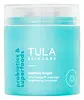
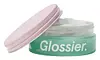
Tula Skincare Bedtime Bright Vita-Charge Overnight Brightening Treatment Versus Glossier After Baume
This brightening overnight mask is formulated around Niacinamide and Lactococcus Ferment Lysate to brighten dull-looking skin and fade the look of dark spots.
This moisturizer is formulated around Orbignya Oleifera Seed Oil to hydrate skin.

What's inside
What's inside
 Key Ingredients
Benefits
Concerns
Ingredients Side-by-side
Water
Skin ConditioningGlycerin
Humectant


Butylene Glycol
Humectant
Diglycerin
Humectant
Methyl Gluceth-20
Humectant
Niacinamide
Smoothing









Pentylene Glycol
Skin Conditioning
Lactococcus Ferment Lysate
Skin Conditioning
3-O-Ethyl Ascorbic Acid
Skin Conditioning
Betula Alba Juice
AstringentPanthenol
Skin Conditioning
Tetrahydrodiferuloylmethane
Antioxidant
Beta Vulgaris Root Extract
Skin ConditioningAscorbyl Glucoside
Antioxidant
Inulin
Skin Conditioning
Mandelic Acid
Antimicrobial


Lactic Acid
Buffering
Curcuma Longa Root Extract
Antioxidant
Hippophae Rhamnoides Fruit Extract
Skin Conditioning
Copper Gluconate
Skin Conditioning
Magnesium Aspartate
Skin ConditioningZinc Gluconate
Skin Conditioning
Prunus Armeniaca Kernel Oil
Masking


Lactobacillus Ferment
Skin Conditioning
Lactobacillus
Skin ConditioningAlpha-Glucan Oligosaccharide
Cleansing
Tromethamine
BufferingSodium Polyacrylate Starch
AbsorbentCarbomer
Emulsion StabilisingAcrylates/C10-30 Alkyl Acrylate Crosspolymer
Emulsion StabilisingXanthan Gum
EmulsifyingAmmonium Acryloyldimethyltaurate/Vp Copolymer
Ethylhexylglycerin
Skin ConditioningTriethyl Citrate
Masking
1,2-Hexanediol
Skin Conditioning
Polymnia Sonchifolia Root Juice
Skin ConditioningCitrus Aurantium Dulcis Peel Oil
Masking
Helianthus Annuus Seed Oil
Emollient
Maltodextrin
Absorbent
Sodium Benzoate
Masking
Sodium Chloride
MaskingCitrus Reticulata Peel Oil
Masking
Eugenia Caryophyllus Flower Extract
AstringentVanilla Planifolia Fruit Extract
Skin Conditioning
Phenoxyethanol
Preservative
Tocopherol
Antioxidant
CI 19140
Cosmetic ColorantCI 17200
Cosmetic ColorantWater, Glycerin, Butylene Glycol, Diglycerin, Methyl Gluceth-20, Niacinamide, Pentylene Glycol, Lactococcus Ferment Lysate, 3-O-Ethyl Ascorbic Acid, Betula Alba Juice, Panthenol, Tetrahydrodiferuloylmethane, Beta Vulgaris Root Extract, Ascorbyl Glucoside, Inulin, Mandelic Acid, Lactic Acid, Curcuma Longa Root Extract, Hippophae Rhamnoides Fruit Extract, Copper Gluconate, Magnesium Aspartate, Zinc Gluconate, Prunus Armeniaca Kernel Oil, Lactobacillus Ferment, Lactobacillus, Alpha-Glucan Oligosaccharide, Tromethamine, Sodium Polyacrylate Starch, Carbomer, Acrylates/C10-30 Alkyl Acrylate Crosspolymer, Xanthan Gum, Ammonium Acryloyldimethyltaurate/Vp Copolymer, Ethylhexylglycerin, Triethyl Citrate, 1,2-Hexanediol, Polymnia Sonchifolia Root Juice, Citrus Aurantium Dulcis Peel Oil, Helianthus Annuus Seed Oil, Maltodextrin, Sodium Benzoate, Sodium Chloride, Citrus Reticulata Peel Oil, Eugenia Caryophyllus Flower Extract, Vanilla Planifolia Fruit Extract, Phenoxyethanol, Tocopherol, CI 19140, CI 17200
Water
Skin ConditioningPhytosteryl/Isostearyl/Cetyl/Stearyl/Behenyl Dimer Dilinoleate
Skin Conditioning
Orbignya Oleifera Seed Oil
Emollient
Glycerin
Humectant
Phytosteryl/Behenyl/Octyldodecyl Lauroyl Glutamate
Skin ConditioningTheobroma Grandiflorum Seed Butter
Skin Conditioning
Cetearyl Olivate
Glyceryl Stearate
Emollient
Cetearyl Alcohol
Emollient


1,2-Hexanediol
Skin Conditioning
Lactobacillus Ferment Lysate Filtrate
Skin ConditioningSorbitan Olivate
Emulsifying
Ethyl Linoleate
Emollient
Inulin Lauryl Carbamate
Emulsion StabilisingChlorella Vulgaris Extract
Skin ConditioningLeuconostoc/Radish Root Ferment Filtrate
Antimicrobial
Tocopherol
Antioxidant
Arginine
Masking
Sclerotium Gum
Emulsion StabilisingPropanediol
Solvent
Sorbitan Isostearate
Emulsifying
Lactic Acid
Buffering
Dimethicone
Emollient
Hydroxyethyl Acrylate/Sodium Acryloyldimethyl Taurate Copolymer
Emulsion StabilisingHydroxyacetophenone
Antioxidant
Water, Phytosteryl/Isostearyl/Cetyl/Stearyl/Behenyl Dimer Dilinoleate, Orbignya Oleifera Seed Oil, Glycerin, Phytosteryl/Behenyl/Octyldodecyl Lauroyl Glutamate, Theobroma Grandiflorum Seed Butter, Cetearyl Olivate, Glyceryl Stearate, Cetearyl Alcohol, 1,2-Hexanediol, Lactobacillus Ferment Lysate Filtrate, Sorbitan Olivate, Ethyl Linoleate, Inulin Lauryl Carbamate, Chlorella Vulgaris Extract, Leuconostoc/Radish Root Ferment Filtrate, Tocopherol, Arginine, Sclerotium Gum, Propanediol, Sorbitan Isostearate, Lactic Acid, Dimethicone, Hydroxyethyl Acrylate/Sodium Acryloyldimethyl Taurate Copolymer, Hydroxyacetophenone
Reviews
Ingredients Explained
These ingredients are found in both products.
Ingredients higher up in an ingredient list are typically present in a larger amount.
1,2-Hexanediol is a synthetic liquid and another multi-functional powerhouse.
It is a:
- Humectant, drawing moisture into the skin
- Emollient, helping to soften skin
- Solvent, dispersing and stabilizing formulas
- Preservative booster, enhancing the antimicrobial activity of other preservatives
Glycerin (or glycerol) is a compound naturally found in your skin. It's a powerhouse humectant that pulls water into the stratum corneum.
Topically, glycerin does several things at once:
Your skin makes glycerin on its own (mostly from sebaceous oil breakdown) and shuttles it to your outermost layer of skin, or your epidermis, via aquaporin-3.
Aquaporin-3 is a transporter that is essential for normal skin hydration, elasticity, and repair. Interestingly, mice lacking in AQP3 have dry and less elastic skin that can be fully corrected with glycerin.
This ingredient is non-irritating, plays well with almost every ingredient, and works across all skin types. Typical use is anywhere between 3-10% but can go up to 79% in some leave-on products.
Just know very high concentrations (>40%) can feel tacky in low humidity.
Glycerin is the name for this ingredient in American English. British English uses Glycerol/Glycerine.
Learn more about GlycerinLactic Acid is another well-loved alpha hydroxy acid (AHA). It is gentler than glycolic acid but still highly effective.
Its main role is to exfoliate the surface of the skin by loosening the “glue” that holds dead skin cells together. Shedding those old cells leads to smoother, softer, and more even-toned skin.
Because lactic acid molecules are larger than glycolic acid, they don’t penetrate as deeply. This means they’re less likely to sting or irritate, making it a great choice for beginners or those with sensitive skin.
Like glycolic acid, it can:
Lactic acid also acts as a humectant (like hyaluronic acid). It can draw water into the skin to improve hydration and also plays a role in the skin's natural moisturizing factor (NMF) in the form of sodium lactate.
Studies show it can boost ceramide production to strengthen the skin barrier and even help balance the skin’s microbiome.
To get results, choose products with a pH between 3-4.
Lower strengths (5-12%) focus on surface exfoliation; higher strengths (12% and up) can reach deeper in the dermis (deeper, supportive layer) to improve skin texture and firmness over time.
Though it was originally derived from milk, most modern lactic acid used in skincare is vegan. It is made through non-dairy fermentation to create a bio-identical and stable form suitable for all formulations.
When lactic acid shows up near the end of an ingredient list, it usually means the brand added just a tiny amount to adjust the product’s pH.
Legend has it that Cleopatra used to bathe in sour milk to help reduce wrinkles.
Lactic acid is truly a gentle multitasker: it exfoliates, hydrates, strengthens, and brightens. It's a great ingredient for giving your skin a smooth, glowing, and healthy look without the harshness of stronger acids.
Read more about some other popular AHA's here:
Learn more about Lactic AcidTocopherol is a fat-soluble antioxidant known as Vitamin E.
You'll find this ingredient in the vast majority of skincare (for good reason). It works to neutralize free radicals, or unstable molecules generated by UV exposure, pollution, and other environmental stressors, before they can cause oxidative damage to your skin cells.
Topically applied tocopherol has been shown to protect against UV damage by ramping up the skin's own natural defense enzymes.
It also acts as a skin conditioning agent; some studies show that regular topical use can improve the skin's water-binding capacity over 2-4 weeks.
This ingredient is especially loved for being a team player. When combined with Vitamin C, the photoprotective effect of both ingredients roughly doubles and the combo also helps reduce UV-induced DNA damage.
This ingredient has some brightening potential but it's more of a prevention ingredient than spot-fader. Cell studies show it can slow down melanin production but it's worth noting that it's not the most powerful brightener out there.
In formulations, it also serves as a stabilizer that helps protect other oxidation-prone ingredients from degrading.
Concentrations usually range from 0.1-1% in most leave-on products.
Learn more about TocopherolWater. It's the most common cosmetic ingredient of all. You'll usually see it at the top of ingredient lists, meaning that it makes up the largest part of the product.
So why is it so popular? Water most often acts as a solvent - this means that it helps dissolve other ingredients into the formulation.
You'll also recognize water as that liquid we all need to stay alive. If you see this, drink a glass of water. Remember to stay hydrated!
Learn more about Water

