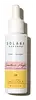
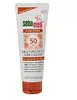
Solara Suncare Guardian Angel Super Peptide Sunscreen Milk SPF 50 Versus SebaMed Sun Care Multi Protect Sun Lotion SPF50
This hybrid sunscreen covers the full UV range and blocks ~98% of UVB at SPF 50.
This hybrid sunscreen covers the full UV range and blocks ~98% of UVB at SPF 50.


What's inside
What's inside
 Key Ingredients
Benefits
Concerns
Ingredients Side-by-side
Zinc Oxide 12%
Cosmetic Colorant


Water
Skin ConditioningC12-15 Alkyl Benzoate
AntimicrobialCaprylic/Capric Triglyceride
Masking


Jojoba Esters
Emollient

Propanediol
Solvent
Tridecyl Salicylate
Skin Conditioning
Methylheptyl Isostearate
Skin ConditioningPolyglyceryl-4 Diisostearate/Polyhydroxystearate/Sebacate
Emulsifying
Niacinamide
Smoothing









Methylpropanediol
SolventNylon-12
Glycerin
Humectant
Silica
Abrasive
Palmitoyl Pentapeptide-4
Skin Conditioning
Terminalia Bellerica Fruit
AstringentTerminalia Chebula Fruit Extract
Skin ConditioningTerminalia Ferdinandiana Fruit Extract
Antioxidant
Phyllanthus Emblica Fruit Extract
HumectantPleiogynium Timoriense Fruit Extract
Skin ConditioningPodocarpus Elatus Fruit Extract
Skin ConditioningUbiquinone
Antioxidant
Helianthus Annuus Extract
Emollient
Oryza Sativa Bran Extract
Skin Conditioning
Rosmarinus Officinalis Leaf Extract
AntimicrobialAllantoin
Skin Conditioning
Bisabolol
Antioxidant
Caprylyl Glycol
Emollient
Lecithin
Emollient
Coco-Caprylate
Emollient
Phenylpropanol
Masking

Sodium Chloride
MaskingSodium Hydroxide
BufferingTetrasodium Glutamate Diacetate
ChelatingTocopherol
Antioxidant
Tocopheryl Acetate
Antioxidant
Polyglyceryl-2 Dipolyhydroxystearate
Skin Conditioning
Zinc Oxide 12%, Water, C12-15 Alkyl Benzoate, Caprylic/Capric Triglyceride, Jojoba Esters, Propanediol, Tridecyl Salicylate, Methylheptyl Isostearate, Polyglyceryl-4 Diisostearate/Polyhydroxystearate/Sebacate, Niacinamide, Methylpropanediol, Nylon-12, Glycerin, Silica, Palmitoyl Pentapeptide-4, Terminalia Bellerica Fruit, Terminalia Chebula Fruit Extract, Terminalia Ferdinandiana Fruit Extract, Phyllanthus Emblica Fruit Extract, Pleiogynium Timoriense Fruit Extract, Podocarpus Elatus Fruit Extract, Ubiquinone, Helianthus Annuus Extract, Oryza Sativa Bran Extract, Rosmarinus Officinalis Leaf Extract, Allantoin, Bisabolol, Caprylyl Glycol, Lecithin, Coco-Caprylate, Phenylpropanol, Sodium Chloride, Sodium Hydroxide, Tetrasodium Glutamate Diacetate, Tocopherol, Tocopheryl Acetate, Polyglyceryl-2 Dipolyhydroxystearate
Water
Skin ConditioningOctocrylene
UV Absorber

Dibutyl Adipate
EmollientTitanium Dioxide
Cosmetic Colorant
C12-15 Alkyl Benzoate
AntimicrobialGlycerin
Humectant
Glyceryl Stearate
Emollient
Diethylamino Hydroxybenzoyl Hexyl Benzoate
UV Filter
Butyl Methoxydibenzoylmethane
UV Absorber
Dimethicone
Emollient
Vp/Eicosene Copolymer
Bis-Ethylhexyloxyphenol Methoxyphenyl Triazine
UV Absorber
Lauryl Glucoside
CleansingPolyglyceryl-2 Dipolyhydroxystearate
Skin Conditioning
Microcrystalline Cellulose
AbsorbentPanthenol
Skin Conditioning
Tocopheryl Acetate
Antioxidant
Diethylhexyl Butamido Triazone
UV Absorber
Inulin
Skin Conditioning
Lecithin
Emollient
Bisabolol
Antioxidant
Cetearyl Alcohol
Emollient

Cetyl Palmitate
Emollient
Cocoglycerides
Emollient
Sodium Cetearyl Sulfate
Cleansing
Silica
Abrasive
Cellulose Gum
Emulsion StabilisingXanthan Gum
EmulsifyingDisodium EDTA
ChelatingCitric Acid
Buffering
Sodium Hydroxide
BufferingParfum
Masking
Benzyl Alcohol
Perfuming


Dehydroacetic Acid
Preservative
Ethylhexylglycerin
Skin ConditioningPhenoxyethanol
Preservative
Sorbic Acid
Preservative
Water, Octocrylene, Dibutyl Adipate, Titanium Dioxide, C12-15 Alkyl Benzoate, Glycerin, Glyceryl Stearate, Diethylamino Hydroxybenzoyl Hexyl Benzoate, Butyl Methoxydibenzoylmethane, Dimethicone, Vp/Eicosene Copolymer, Bis-Ethylhexyloxyphenol Methoxyphenyl Triazine, Lauryl Glucoside, Polyglyceryl-2 Dipolyhydroxystearate, Microcrystalline Cellulose, Panthenol, Tocopheryl Acetate, Diethylhexyl Butamido Triazone, Inulin, Lecithin, Bisabolol, Cetearyl Alcohol, Cetyl Palmitate, Cocoglycerides, Sodium Cetearyl Sulfate, Silica, Cellulose Gum, Xanthan Gum, Disodium EDTA, Citric Acid, Sodium Hydroxide, Parfum, Benzyl Alcohol, Dehydroacetic Acid, Ethylhexylglycerin, Phenoxyethanol, Sorbic Acid
Ingredients Explained
These ingredients are found in both products.
Ingredients higher up in an ingredient list are typically present in a larger amount.
Bisabolol is a gentle skin conditioner, antioxidant, and soothing ingredient.
It's primary claim to fame is soothing and research shows topically applied bisabolol can quiet the chemical messengers that cause your skin to become inflamed, helping to sooth any irritation.
A clinical study found that applying 0.5% bisabolol daily for 8 weeks produced an average 9% decrease in skin pigmentation. Researchers found it can also suppress the process that leads to excess melanin production in skin.
In vitro studies found that bisabolol combined with propylene glycol significantly increased skin permeability by increasing lipid fluidity in the stratum corneum.
You'll likely see use concentrations quite low, usually 0.1-0.2%.
Overall, this is a well-tolerated ingredient that works well in formulas designed for sensitive, reactive, or post-procedure skin.
Learn more about BisabololC12-15 Alkyl Benzoate is a lightweight emollient made by combinig benzoic acid with fatty alcohols that are 12-15 carbons long.
In cosmetics, it plays several roles:
The Cosmetic Review Expert Panel has concluded the alkyl benzoate group to be safe as used in cosmetics; it wasn't found to be a skin irritant and unlikely to be absorbed due to its low water solubility.
This report recorded almost 1000 reported uses with concentrations up to 59% in leave-on products but your cosmetics will typically use 0.5-15% depending on the product.
It's often called a "SPF booster": this is because it keeps UV filters properly dissolved and evenly distributed to support a sunscreen's performance. It doesn't actually raise SPF on its own.
Overall, this ingredient is well tolerated.
This ingredient is fungal acne safe because it is an ester of benzoic acid.
Think of this ingredient as two parts stuck together: an oily part and an acid part. Malassezia only gets a meal when it can snip off a fatty acid to eat. With C12-15 Alkyl Benzoate, the acid part is benzoic acid, which isn't a fatty acid and which the yeast can't use as food.
Benzoic acid is actually used as a preservative to stop yeast from growing.
The oily part is a blend of C12-15 fatty alcohols but fatty alcohols in this size range can support only a little Malassezia growth (mostly for one species of Malassezia as well).
In the ingredient, those alcohols stay locked inside the molecule. The yeast can only reach them by snipping the benzoate bond, and that type of bond is harder for it to cut than a normal fatty bond.
So not much gets released. And whatever does get snipped comes packaged with benzoic acid, which discourages yeast growth.
Learn more about C12-15 Alkyl BenzoateGlycerin (or glycerol) is a compound naturally found in your skin. It's a powerhouse humectant that pulls water into the stratum corneum.
Topically, glycerin does several things at once:
Your skin makes glycerin on its own (mostly from sebaceous oil breakdown) and shuttles it to your outermost layer of skin, or your epidermis, via aquaporin-3.
Aquaporin-3 is a transporter that is essential for normal skin hydration, elasticity, and repair. Interestingly, mice lacking in AQP3 have dry and less elastic skin that can be fully corrected with glycerin.
This ingredient is non-irritating, plays well with almost every ingredient, and works across all skin types. Typical use is anywhere between 3-10% but can go up to 79% in some leave-on products.
Just know very high concentrations (>40%) can feel tacky in low humidity.
Glycerin is the name for this ingredient in American English. British English uses Glycerol/Glycerine.
Learn more about GlycerinLecithin is a term for a group of substances found in the cell membranes of plants, animals, and humans. They are made up of phospholipids.
Thanks to its amphiphilic structure (water-loving head and oil-loving tail), it is a true multitasker:
It plays well with most ingredients and is typically used at 0.1-1%. However, concentrations up to 50% have been reported in moisturizers.
Learn more about LecithinPolyglyceryl-2 Dipolyhydroxystearate isn't fungal acne safe.
Silica, also known as silicon dioxide, is a naturally occurring mineral. It is used as a fine, spherical, and porous powder in cosmetics.
Though it has exfoliant properties, the function of silica varies depending on the product.
The unique structure of silica enhances the spreadability and adds smoothness, making it a great texture enhancer.
It is also used as an active carrier, emulsifier, and mattifier due to its ability to absorb excess oil.
In some products, tiny microneedles called spicules are made from silica or hydrolyzed sponge. When you rub them in, they lightly polish away dead skin layers and enhance the penetration of active ingredients.
Learn more about SilicaSodium Hydroxide is also known as lye or caustic soda. It is used to adjust the pH of products; many ingredients require a specific pH to be effective.
In small amounts, sodium hydroxide is considered safe to use. However, large amounts may cause chemical burns due to its high alkaline.
Your skin has a natural pH and acid mantle. This acid mantle helps prevent harmful bacteria from breaking through. The acid mantle also helps keep your skin hydrated.
"Alkaline" refers to a high pH level. A low pH level would be considered acidic.
Learn more about Sodium HydroxideTocopheryl Acetate is a stable, shelf-friendly form of vitamin E.
Formulators love it because plain vitamin E oxidizes quickly once it hits air. This acetate version stays stable and resists going off, helping to extend a product's shelf life.
It's actually inactive on its own and works like a slow-release "storage" form; the enzymes in your skin called esterases gradually convert it into active vitamin E over time.
One in vivo study showed 5% of the acetate in the living layer of the epidermis converted to vitamin E after 5 days of application. This study also found the skin gained protection against UV damage even though the conversion was slow and small.
Once converted, vitamin E acts as a skin's main fat-soluble antioxidant that fights free radicals to protect skin from damage.
Topical vitamin E generally boosts the skin's photoprotection, and it reduced UV-damage in animal models.
This ingredient has some brightening potential but it's more of a prevention ingredient than spot-fader. Cell studies show it can slow down melanin production but it's worth noting that it's not the most powerful brightener out there.
Overall, it has a pretty solid safety profile and has been found to be non-irritating and non-comedogenic. Allergic reactions may happen but stay rare due to how widely the ingredient gets used.
The concentration will vary depending on the formula; industry data shows 0.1% in baby lotions, 3% in lipsticks, and 5% in foot powders. You can also find this ingredient at 100% in a pure vitamin E oil.
Most leave-on skincare keeps it at the lower end, often between 0.5-1%.
Learn more about Tocopheryl AcetateWater. It's the most common cosmetic ingredient of all. You'll usually see it at the top of ingredient lists, meaning that it makes up the largest part of the product.
So why is it so popular? Water most often acts as a solvent - this means that it helps dissolve other ingredients into the formulation.
You'll also recognize water as that liquid we all need to stay alive. If you see this, drink a glass of water. Remember to stay hydrated!
Learn more about Water

