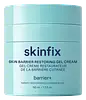
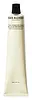
Skinfix Barrier+ Skin Barrier Restoring Gel Cream Versus Grown Alchemist Age-Repair Moisturiser Phyto-Peptide, White Tea Extract
This barrier-repair moisturizer is formulated around Squalane and Niacinamide to strengthen the skin barrier and hydrate skin.
This moisturizer is formulated around Camellia Sinensis Extract to calm irritation and reduce redness.


What's inside
What's inside
 Key Ingredients
Benefits
Concerns
Ingredients Side-by-side
Water
Skin ConditioningSqualane
Emollient


Propanediol
Solvent
Jojoba Oil/Macadamia Seed Oil Esters
Skin Conditioning
Triheptanoin
Skin ConditioningNiacinamide
Smoothing









Saccharide Isomerate
Humectant
Ammonium Acryloyldimethyltaurate/Vp Copolymer
Squalene
Emollient

Zinc PCA
Humectant
Hydrolyzed Hyaluronic Acid
Humectant
Glycerin
Humectant
Camellia Sinensis Seed Extract
Humectant
Allantoin
Skin Conditioning
Phytosteryl Macadamiate
Skin Conditioning
Phytosterols
Skin Conditioning
Acetyl Glutamine
Skin ConditioningLecithin
Emollient
Caprylyl Glycol
Emollient
Amylopectin
Sodium Hyaluronate
Humectant
Folic Acid
Skin ConditioningOligopeptide-3
Skin Conditioning
Bacillus/Soybean Ferment Extract
Skin ConditioningOligopeptide-1
Skin Conditioning
Oligopeptide-2
Skin Conditioning
Hexapeptide-11
Skin Conditioning
Tocopherol
Antioxidant

Lithothamnion Calcareum Extract
Skin ConditioningLactic Acid
Buffering


Glucose
Humectant
Acetyl Heptapeptide-4
Humectant
C14-22 Alcohols
Emulsion Stabilising
C12-20 Alkyl Glucoside
EmulsifyingEthylhexylglycerin
Skin ConditioningTrisodium Ethylenediamine Disuccinate
ChelatingPotassium Sorbate
Preservative
Citric Acid
Buffering
Sodium Citrate
BufferingPentylene Glycol
Skin Conditioning
Sodium Benzoate
Masking
Xanthan Gum
EmulsifyingPhenoxyethanol
Preservative
Water, Squalane, Propanediol, Jojoba Oil/Macadamia Seed Oil Esters, Triheptanoin, Niacinamide, Saccharide Isomerate, Ammonium Acryloyldimethyltaurate/Vp Copolymer, Squalene, Zinc PCA, Hydrolyzed Hyaluronic Acid, Glycerin, Camellia Sinensis Seed Extract, Allantoin, Phytosteryl Macadamiate, Phytosterols, Acetyl Glutamine, Lecithin, Caprylyl Glycol, Amylopectin, Sodium Hyaluronate, Folic Acid, Oligopeptide-3, Bacillus/Soybean Ferment Extract, Oligopeptide-1, Oligopeptide-2, Hexapeptide-11, Tocopherol, Lithothamnion Calcareum Extract, Lactic Acid, Glucose, Acetyl Heptapeptide-4, C14-22 Alcohols, C12-20 Alkyl Glucoside, Ethylhexylglycerin, Trisodium Ethylenediamine Disuccinate, Potassium Sorbate, Citric Acid, Sodium Citrate, Pentylene Glycol, Sodium Benzoate, Xanthan Gum, Phenoxyethanol
Water
Skin ConditioningVitis Vinifera Seed Oil
Emollient
Camellia Oleifera Seed Oil
Skin Conditioning
Glycerin
Humectant
Cetearyl Olivate
Cetyl Alcohol
Emollient
Sorbitan Olivate
Emulsifying
Khaya Senegalensis Bark Extract
Skin ProtectingAloe Barbadensis Leaf Extract
Emollient
Oligopeptide-1
Skin Conditioning
Maltodextrin
Absorbent
Sodium Hyaluronate
Humectant
Sodium Phytate
ChelatingVaccinium Macrocarpon Fruit Extract
AstringentCamellia Sinensis Extract
Antioxidant
Xanthan Gum
EmulsifyingCassia Angustifolia Seed Polysaccharide
Skin ConditioningHydrolyzed Wheat Protein
Skin ConditioningTocopherol
Antioxidant
Benzyl Alcohol
Perfuming


Dehydroacetic Acid
Preservative
Lavandula Angustifolia Oil
Masking
Carum Petroselinum Seed Oil
Masking
Geraniol
Perfuming
Limonene
Perfuming
Linalool
Perfuming
Water, Vitis Vinifera Seed Oil, Camellia Oleifera Seed Oil, Glycerin, Cetearyl Olivate, Cetyl Alcohol, Sorbitan Olivate, Khaya Senegalensis Bark Extract, Aloe Barbadensis Leaf Extract, Oligopeptide-1, Maltodextrin, Sodium Hyaluronate, Sodium Phytate, Vaccinium Macrocarpon Fruit Extract, Camellia Sinensis Extract, Xanthan Gum, Cassia Angustifolia Seed Polysaccharide, Hydrolyzed Wheat Protein, Tocopherol, Benzyl Alcohol, Dehydroacetic Acid, Lavandula Angustifolia Oil, Carum Petroselinum Seed Oil, Geraniol, Limonene, Linalool
Reviews
Ingredients Explained
These ingredients are found in both products.
Ingredients higher up in an ingredient list are typically present in a larger amount.
Glycerin (or glycerol) is a compound naturally found in your skin. It's a powerhouse humectant that pulls water into the stratum corneum.
Topically, glycerin does several things at once:
Your skin makes glycerin on its own (mostly from sebaceous oil breakdown) and shuttles it to your outermost layer of skin, or your epidermis, via aquaporin-3.
Aquaporin-3 is a transporter that is essential for normal skin hydration, elasticity, and repair. Interestingly, mice lacking in AQP3 have dry and less elastic skin that can be fully corrected with glycerin.
This ingredient is non-irritating, plays well with almost every ingredient, and works across all skin types. Typical use is anywhere between 3-10% but can go up to 79% in some leave-on products.
Just know very high concentrations (>40%) can feel tacky in low humidity.
Glycerin is the name for this ingredient in American English. British English uses Glycerol/Glycerine.
Learn more about GlycerinOligopeptide-1 is another name for Epidermal Growth Factor (EGF). In a formula, EGF works as a signaling ingredient.
EGF binds to receptors on your skin cells and tells keratinocytes/fibroblasts to divide, move, and rebuild the skin's support structure.
A 2012 open-label study on a barley-derived EGF serum reported statistically significant improvements in fine-lines, skin texture, pore size, and uneven skin tone, with changes showing up within the first month of 2x/daily use.
And a 2023 review found generally positive but modest results for growth factor products while pointing out that most trials are small, often industry-funded, and rarely test EGF on its own.
So, a fair summary of this ingredient would be "promising with real mechanistic backing, but not yet large-scale proof".
Concentration-wise, EGF is biologically active at very tiny amounts so finished products use it at low levels (think parts per million).
Raw material supplies usually sell a pre-diluted EGF solution and recommend adding roughly 1-5% of that solution to a formula.
Another practical catch: EGF is a fragile protein so it reacts badly to heat and the wrong pH. This just means it relies heavily on good packaging and a solid delivery system to stay active in a bottle.
Oligopeptide-1 and Sh-Oligopeptide-1. The "sh-" prefix just means "synthetic human" and it tells you that it's the lab grown version.
Learn more about Oligopeptide-1Sodium Hyaluronate is the salt form of hyaluronic acid. It is a long sugar chain that is naturally found in your skin, joints, and connective tissue that maintains hydration and elasticity.
In skincare, it works as a humectant. It pulls water from the environment and deeper layers of skin and binds it to the surface.
Interestingly, the size of the molecule affects its behavior:
Some clinical evidence links low molecular weight versions to improved wrinkle depth, elasticity, anti-inflammatory effects, and barrier repair.
Many serums use a blend of both weights so you can get surface hydration plus longer-lasting and deeper effects.
You'll typically see concentrations between 0.1-2% for this ingredient.
Learn more about Sodium HyaluronateTocopherol is a fat-soluble antioxidant known as Vitamin E.
You'll find this ingredient in the vast majority of skincare (for good reason). It works to neutralize free radicals, or unstable molecules generated by UV exposure, pollution, and other environmental stressors, before they can cause oxidative damage to your skin cells.
Topically applied tocopherol has been shown to protect against UV damage by ramping up the skin's own natural defense enzymes.
It also acts as a skin conditioning agent; some studies show that regular topical use can improve the skin's water-binding capacity over 2-4 weeks.
This ingredient is especially loved for being a team player. When combined with Vitamin C, the photoprotective effect of both ingredients roughly doubles and the combo also helps reduce UV-induced DNA damage.
This ingredient has some brightening potential but it's more of a prevention ingredient than spot-fader. Cell studies show it can slow down melanin production but it's worth noting that it's not the most powerful brightener out there.
In formulations, it also serves as a stabilizer that helps protect other oxidation-prone ingredients from degrading.
Concentrations usually range from 0.1-1% in most leave-on products.
Learn more about TocopherolWater. It's the most common cosmetic ingredient of all. You'll usually see it at the top of ingredient lists, meaning that it makes up the largest part of the product.
So why is it so popular? Water most often acts as a solvent - this means that it helps dissolve other ingredients into the formulation.
You'll also recognize water as that liquid we all need to stay alive. If you see this, drink a glass of water. Remember to stay hydrated!
Learn more about WaterXanthan gum is used as a stabilizer and thickener within cosmetic products. It helps give products a sticky, thick feeling - preventing them from being too runny.
On the technical side of things, xanthan gum is a polysaccharide - a combination consisting of multiple sugar molecules bonded together.
Xanthan gum is a pretty common and great ingredient. It is a natural, non-toxic, non-irritating ingredient that is also commonly used in food products.
Learn more about Xanthan Gum

