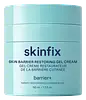
This barrier-repair moisturizer is formulated around Squalane and Niacinamide to strengthen the skin barrier and hydrate skin.
This calming day moisturizer is formulated around Houttuynia Cordata Extract and Centella Asiatica Extract to calm redness and hydrate skin.


What's inside
What's inside
 Key Ingredients
Benefits
Concerns
Ingredients Side-by-side
Water
Skin ConditioningSqualane
Emollient


Propanediol
Solvent
Jojoba Oil/Macadamia Seed Oil Esters
Skin Conditioning
Triheptanoin
Skin ConditioningNiacinamide
Smoothing









Saccharide Isomerate
Humectant
Ammonium Acryloyldimethyltaurate/Vp Copolymer
Squalene
Emollient

Zinc PCA
Humectant
Hydrolyzed Hyaluronic Acid
Humectant
Glycerin
Humectant
Camellia Sinensis Seed Extract
Humectant
Allantoin
Skin Conditioning
Phytosteryl Macadamiate
Skin Conditioning
Phytosterols
Skin Conditioning
Acetyl Glutamine
Skin ConditioningLecithin
Emollient
Caprylyl Glycol
Emollient
Amylopectin
Sodium Hyaluronate
Humectant
Folic Acid
Skin ConditioningOligopeptide-3
Skin Conditioning
Bacillus/Soybean Ferment Extract
Skin ConditioningOligopeptide-1
Skin Conditioning
Oligopeptide-2
Skin Conditioning
Hexapeptide-11
Skin Conditioning
Tocopherol
Antioxidant

Lithothamnion Calcareum Extract
Skin ConditioningLactic Acid
Buffering


Glucose
Humectant
Acetyl Heptapeptide-4
Humectant
C14-22 Alcohols
Emulsion Stabilising
C12-20 Alkyl Glucoside
EmulsifyingEthylhexylglycerin
Skin ConditioningTrisodium Ethylenediamine Disuccinate
ChelatingPotassium Sorbate
Preservative
Citric Acid
Buffering
Sodium Citrate
BufferingPentylene Glycol
Skin Conditioning
Sodium Benzoate
Masking
Xanthan Gum
EmulsifyingPhenoxyethanol
Preservative
Water, Squalane, Propanediol, Jojoba Oil/Macadamia Seed Oil Esters, Triheptanoin, Niacinamide, Saccharide Isomerate, Ammonium Acryloyldimethyltaurate/Vp Copolymer, Squalene, Zinc PCA, Hydrolyzed Hyaluronic Acid, Glycerin, Camellia Sinensis Seed Extract, Allantoin, Phytosteryl Macadamiate, Phytosterols, Acetyl Glutamine, Lecithin, Caprylyl Glycol, Amylopectin, Sodium Hyaluronate, Folic Acid, Oligopeptide-3, Bacillus/Soybean Ferment Extract, Oligopeptide-1, Oligopeptide-2, Hexapeptide-11, Tocopherol, Lithothamnion Calcareum Extract, Lactic Acid, Glucose, Acetyl Heptapeptide-4, C14-22 Alcohols, C12-20 Alkyl Glucoside, Ethylhexylglycerin, Trisodium Ethylenediamine Disuccinate, Potassium Sorbate, Citric Acid, Sodium Citrate, Pentylene Glycol, Sodium Benzoate, Xanthan Gum, Phenoxyethanol
Water
Skin ConditioningPropanediol
Solvent
Glycerin
Humectant
Sodium Hyaluronate
Humectant
Butylene Glycol
Humectant
Sorbitol
Humectant
Isohexadecane
EmollientCaprylic/Capric Triglyceride
Masking
Houttuynia Cordata Extract
Skin Conditioning
Betaine
Humectant
Centella Asiatica Extract
Cleansing
Glyceryl Stearate
Emollient
Salvia Officinalis Extract
Antimicrobial
Glycyrrhiza Glabra Root Extract
Bleaching
Sorghum Bicolor Leaf/Stem Extract
Skin ConditioningAspergillus Ferment
Skin ConditioningChlorphenesin
Antimicrobial
Arginine
Masking
Acrylates/C10-30 Alkyl Acrylate Crosspolymer
Emulsion StabilisingAllantoin
Skin Conditioning
Sorbitan Sesquioleate
Emulsifying
Ethylhexylglycerin
Skin ConditioningXanthan Gum
EmulsifyingGuaiazulene
Antimicrobial
Water, Propanediol, Glycerin, Sodium Hyaluronate, Butylene Glycol, Sorbitol, Isohexadecane, Caprylic/Capric Triglyceride, Houttuynia Cordata Extract, Betaine, Centella Asiatica Extract, Glyceryl Stearate, Salvia Officinalis Extract, Glycyrrhiza Glabra Root Extract, Sorghum Bicolor Leaf/Stem Extract, Aspergillus Ferment, Chlorphenesin, Arginine, Acrylates/C10-30 Alkyl Acrylate Crosspolymer, Allantoin, Sorbitan Sesquioleate, Ethylhexylglycerin, Xanthan Gum, Guaiazulene
Reviews
Ingredients Explained
These ingredients are found in both products.
Ingredients higher up in an ingredient list are typically present in a larger amount.
Allantoin is a soothing ingredient known for its protective and moisturizing properties; it's basically a quiet workhorse ingredient you can find in a huge range of cosmetics.
Though it can be derived from the comfrey plant, allantoin is produced synthetically for cosmetic products to ensure purity.
Research shows it can encourage your skin cells to turn over and renew by stimulating keratinocyte and fibroblast proliferation.
It also has mild keratolytic properties to help loosen and shed dead skin cells without being harsh.
Studies also suggest allantoin can help calm inflammation by dialing down some of the chemical signals your skin sends out when it is irritated.
This ingredient is typically used in the 0.1-0.5% range, and the FDA recognizes it as a skin protectant in OTC products up to 2%.
Overall, allantoin is a wonderful addition to most routines; it is stable across a wide pH range (~4-8), works well with other ingredients, and is considered non-sensitizing/non-irritating.
Fun fact: Allantoin is naturally occurring in comfrey root, beets, chamomile, and wheat sprouts. Our bodies even produce it as a byproduct of uric acid metabolism.
Learn more about AllantoinEthylhexylglycerin is created from glycerin. It is a multitasker ingredient that:
The CIR Expert Panel found minimal skin absorption or sensitization of any kind in a safety assessment. Though this ingredient is considered well-tolerated, a small number of cases of allergic dermatitis have been published since 2002. Just be sure to patch test if you are unsure.
Industry-reported use ranges from 8% in rinse-off products and 2% in leave-on formulations.
Learn more about EthylhexylglycerinGlycerin (or glycerol) is a compound naturally found in your skin. It's a powerhouse humectant that pulls water into the stratum corneum.
Topically, glycerin does several things at once:
Your skin makes glycerin on its own (mostly from sebaceous oil breakdown) and shuttles it to your outermost layer of skin, or your epidermis, via aquaporin-3.
Aquaporin-3 is a transporter that is essential for normal skin hydration, elasticity, and repair. Interestingly, mice lacking in AQP3 have dry and less elastic skin that can be fully corrected with glycerin.
This ingredient is non-irritating, plays well with almost every ingredient, and works across all skin types. Typical use is anywhere between 3-10% but can go up to 79% in some leave-on products.
Just know very high concentrations (>40%) can feel tacky in low humidity.
Glycerin is the name for this ingredient in American English. British English uses Glycerol/Glycerine.
Learn more about GlycerinPropanediol is an all-star ingredient. It softens, hydrates, and smooths the skin.
It’s often used to:
Propanediol is not likely to cause sensitivity and considered safe to use. It is derived from corn or petroleum with a clear color and no scent.
Learn more about PropanediolSodium Hyaluronate is the salt form of hyaluronic acid. It is a long sugar chain that is naturally found in your skin, joints, and connective tissue that maintains hydration and elasticity.
In skincare, it works as a humectant. It pulls water from the environment and deeper layers of skin and binds it to the surface.
Interestingly, the size of the molecule affects its behavior:
Some clinical evidence links low molecular weight versions to improved wrinkle depth, elasticity, anti-inflammatory effects, and barrier repair.
Many serums use a blend of both weights so you can get surface hydration plus longer-lasting and deeper effects.
You'll typically see concentrations between 0.1-2% for this ingredient.
Learn more about Sodium HyaluronateWater. It's the most common cosmetic ingredient of all. You'll usually see it at the top of ingredient lists, meaning that it makes up the largest part of the product.
So why is it so popular? Water most often acts as a solvent - this means that it helps dissolve other ingredients into the formulation.
You'll also recognize water as that liquid we all need to stay alive. If you see this, drink a glass of water. Remember to stay hydrated!
Learn more about WaterXanthan gum is used as a stabilizer and thickener within cosmetic products. It helps give products a sticky, thick feeling - preventing them from being too runny.
On the technical side of things, xanthan gum is a polysaccharide - a combination consisting of multiple sugar molecules bonded together.
Xanthan gum is a pretty common and great ingredient. It is a natural, non-toxic, non-irritating ingredient that is also commonly used in food products.
Learn more about Xanthan Gum

