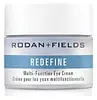
Rodan + Fields Redefine Multi-Function Eye Cream Versus e.l.f. cosmetics Bright + Brew-tiful Eye Cream
This anti-aging eye moisturizer is formulated around Ascorbic Acid and 3-O-Cetyl Ascorbic Acid to soften the look of wrinkles and brighten dull-looking skin.
This brightening eye moisturizer is formulated around Caffeine and 3-O-Ethyl Ascorbic Acid to brighten dull-looking skin and soften the look of wrinkles.

What's inside
What's inside
 Key Ingredients
Benefits
Concerns
Ingredients Side-by-side
Water
Skin ConditioningDimethicone
Emollient

Caprylic/Capric Triglyceride
Masking


Vinyl Dimethicone/Methicone Silsesquioxane Crosspolymer

Caprylic/Capric/Myristic/Stearic Triglyceride
EmollientGlycerin
Humectant
Bellis Perennis Extract
Skin ConditioningButylene Glycol
Humectant
Hdi/Trimethylol Hexyllactone Crosspolymer
Isononyl Isononanoate
EmollientSodium Chloride
MaskingTriethylhexanoin
MaskingCetyl PEG/PPG-10/1 Dimethicone
Emulsifying
Sodium Acetylated Hyaluronate
Humectant

Ascorbic Acid
Antioxidant




3-O-Cetyl Ascorbic Acid
Skin Conditioning
Phoenix Dactylifera Seed Extract
MoisturisingVitis Vinifera Juice Extract
Antioxidant
Hieracium Pilosella Extract
MaskingAvena Sativa Kernel Extract
Abrasive

Linolenic Acid
Cleansing



Oleic Acid
Emollient


Linoleic Acid
Cleansing
Methyl Carboxymethylphenyl Aminocarboxypropylphosphonate
Antioxidant
Tocopherol
Antioxidant
Isododecane
EmollientHydrogenated Polyisobutene
EmollientSilica
Abrasive
Palmitic Acid
Emollient
Stearic Acid
Cleansing
Polysilicone-11
PEG/PPG-18/18 Dimethicone
Emulsifying
Sodium Dehydroacetate
Preservative
Sodium Citrate
BufferingCitric Acid
Buffering
Disodium EDTA
Propanediol
Solvent
Sodium Benzoate
Masking
Potassium Sorbate
Preservative
CI 77891
Cosmetic ColorantMica
Cosmetic ColorantWater, Dimethicone, Caprylic/Capric Triglyceride, Vinyl Dimethicone/Methicone Silsesquioxane Crosspolymer, Caprylic/Capric/Myristic/Stearic Triglyceride, Glycerin, Bellis Perennis Extract, Butylene Glycol, Hdi/Trimethylol Hexyllactone Crosspolymer, Isononyl Isononanoate, Sodium Chloride, Triethylhexanoin, Cetyl PEG/PPG-10/1 Dimethicone, Sodium Acetylated Hyaluronate, Ascorbic Acid, 3-O-Cetyl Ascorbic Acid, Phoenix Dactylifera Seed Extract, Vitis Vinifera Juice Extract, Hieracium Pilosella Extract, Avena Sativa Kernel Extract, Linolenic Acid, Oleic Acid, Linoleic Acid, Methyl Carboxymethylphenyl Aminocarboxypropylphosphonate, Tocopherol, Isododecane, Hydrogenated Polyisobutene, Silica, Palmitic Acid, Stearic Acid, Polysilicone-11, PEG/PPG-18/18 Dimethicone, Sodium Dehydroacetate, Sodium Citrate, Citric Acid, Disodium EDTA, Propanediol, Sodium Benzoate, Potassium Sorbate, CI 77891, Mica
Water
Skin ConditioningSimmondsia Chinensis Seed Oil
Emollient
C9-12 Alkane
SolventGlycerin
Humectant
Dimethicone
Emollient
Dimer Dilinoleyl Dimer Dilinoleate
EmollientButyrospermum Parkii Butter
Skin Conditioning
Polyglyceryl-6 Distearate
Emulsifying
Caffeine
Skin Conditioning
Cyclodextrin
AbsorbentCandelilla/Jojoba/Rice Bran Polyglyceryl-3 Esters
Emulsifying
Polyacrylate-13
3-O-Ethyl Ascorbic Acid
Skin Conditioning
Dimethicone Crosspolymer
Emulsion Stabilising
Polyisobutene
Potassium Cetyl Phosphate
EmulsifyingHydroxyacetophenone
Antioxidant
1,2-Hexanediol
Skin Conditioning
Synthetic Fluorphlogopite
Xanthan Gum
EmulsifyingMica
Cosmetic ColorantTocopherol
Antioxidant
Dipotassium Glycyrrhizate
Humectant
Disodium EDTA
Acrylates/C10-30 Alkyl Acrylate Crosspolymer
Emulsion StabilisingPolysorbate 20
Emulsifying
Arginine
Masking
Sorbitan Isostearate
Emulsifying
Helianthus Annuus Seed Oil
Emollient
Tin Oxide
Abrasive
Propanediol
Solvent
Coffea Arabica Seed Extract
Masking
Sodium Benzoate
Masking
Potassium Sorbate
Preservative
CI 77891
Cosmetic ColorantCI 77491
Cosmetic ColorantWater, Simmondsia Chinensis Seed Oil, C9-12 Alkane, Glycerin, Dimethicone, Dimer Dilinoleyl Dimer Dilinoleate, Butyrospermum Parkii Butter, Polyglyceryl-6 Distearate, Caffeine, Cyclodextrin, Candelilla/Jojoba/Rice Bran Polyglyceryl-3 Esters, Polyacrylate-13, 3-O-Ethyl Ascorbic Acid, Dimethicone Crosspolymer, Polyisobutene, Potassium Cetyl Phosphate, Hydroxyacetophenone, 1,2-Hexanediol, Synthetic Fluorphlogopite, Xanthan Gum, Mica, Tocopherol, Dipotassium Glycyrrhizate, Disodium EDTA, Acrylates/C10-30 Alkyl Acrylate Crosspolymer, Polysorbate 20, Arginine, Sorbitan Isostearate, Helianthus Annuus Seed Oil, Tin Oxide, Propanediol, Coffea Arabica Seed Extract, Sodium Benzoate, Potassium Sorbate, CI 77891, CI 77491
Reviews
Ingredients Explained
These ingredients are found in both products.
Ingredients higher up in an ingredient list are typically present in a larger amount.
Ci 77891 is a white pigment from Titanium dioxide. It is naturally found in minerals such as rutile and ilmenite.
It's main function is to add a white color to cosmetics. It can also be mixed with other colors to create different shades.
Ci 77891 is commonly found in sunscreens due to its ability to block UV rays.
Learn more about CI 77891Dimethicone is a type of synthetic silicone created from natural materials such as quartz. It is also known as polydimethylsiloxane.
What it does:
Dimethicone comes in different viscosities:
Depending on the viscosity, dimethicone has different properties.
Ingredients lists don't always show which type is used, so we recommend reaching out to the brand if you have questions about the viscosity.
This ingredient is unlikely to cause irritation because it does not get absorbed into skin. However, people with silicone allergies should be careful about using this ingredient.
Note: Dimethicone may contribute to pilling. This is because it is not oil or water soluble, so pilling may occur when layered with products. When mixed with heavy oils in a formula, the outcome is also quite greasy.
Learn more about DimethiconeDisodium EDTA is a chelating agent. It grabs onto and deactivates metal ions that sneak into your products from water, packaging, or air.
This ingredient mainly works behind the scenes and helps with:
On top of that, this ingredient can counteract the effects of hard water by binding to the minerals in it.
One thing worth knowing is that Disodium EDTA has been shown to be a mild penetration enhancer. It can help other ingredients absorb into skin more effectively which can be a double-edged sword (great for actives, but can also make the active too strong if you have sensitive skin).
Clinical patch testing showed no significant skin irritation at typical use concentrations and minimal dermal absorption.
You'll most likely see this ingredient near the end of an ingredient list. It's typically found in concentrations less than 1%.
Learn more about Disodium EDTAGlycerin (or glycerol) is a compound naturally found in your skin. It's a powerhouse humectant that pulls water into the stratum corneum.
Topically, glycerin does several things at once:
Your skin makes glycerin on its own (mostly from sebaceous oil breakdown) and shuttles it to your outermost layer of skin, or your epidermis, via aquaporin-3.
Aquaporin-3 is a transporter that is essential for normal skin hydration, elasticity, and repair. Interestingly, mice lacking in AQP3 have dry and less elastic skin that can be fully corrected with glycerin.
This ingredient is non-irritating, plays well with almost every ingredient, and works across all skin types. Typical use is anywhere between 3-10% but can go up to 79% in some leave-on products.
Just know very high concentrations (>40%) can feel tacky in low humidity.
Glycerin is the name for this ingredient in American English. British English uses Glycerol/Glycerine.
Learn more about GlycerinMica is a naturally occurring mineral used to add shimmer and color in cosmetics. It can also help improve the texture of a product or give it an opaque, white/silver color.
Serecite is the name for very fine but ragged grains of mica.
This ingredient is often coated with metal oxides like titanium dioxide. Trace amounts of heavy metals may be found in mica, but these metals are not harmful in our personal products.
Mica has been used since prehistoric times throughout the world. Ancient Egyptian, Indian, Greek, Roman, Aztec, and Chinese civilizations have used mica.
Learn more about MicaPotassium Sorbate is a preservative used to prevent yeast and mold in products. It is commonly found in both cosmetic and food products.
This ingredient comes from potassium salt derived from sorbic acid. Sorbic acid is a natural antibiotic and effective against fungus.
Both potassium sorbate and sorbic acid can be found in baked goods, cheeses, dried meats, dried fruit, ice cream, pickles, wine, yogurt, and more.
You'll often find this ingredient used with other preservatives.
Learn more about Potassium SorbatePropanediol is an all-star ingredient. It softens, hydrates, and smooths the skin.
It’s often used to:
Propanediol is not likely to cause sensitivity and considered safe to use. It is derived from corn or petroleum with a clear color and no scent.
Learn more about PropanediolSodium Benzoate is a preservative. It's used in both cosmetic and food products to inhibit the growth of mold and bacteria. It is typically produced synthetically.
Both the US FDA and EU Health Committee have approved the use of sodium benzoate. In the US, levels of 0.1% (of the total product) are allowed.
Sodium benzoate works as a preservative by inhibiting the growth of bacteria inside of cells. It prevents the cell from fermenting a type of sugar using an enzyme called phosphofructokinase.
It is the salt of benzoic acid. Foods containing sodium benzoate include soda, salad dressings, condiments, fruit juices, wines, and snack foods.
Studies for using ascorbic acid and sodium benzoate in cosmetics are lacking, especially in skincare routines with multiple steps.
We always recommend speaking with a professional, such as a dermatologist, if you have any concerns.
Learn more about Sodium BenzoateTocopherol is a fat-soluble antioxidant known as Vitamin E.
You'll find this ingredient in the vast majority of skincare (for good reason). It works to neutralize free radicals, or unstable molecules generated by UV exposure, pollution, and other environmental stressors, before they can cause oxidative damage to your skin cells.
Topically applied tocopherol has been shown to protect against UV damage by ramping up the skin's own natural defense enzymes.
It also acts as a skin conditioning agent; some studies show that regular topical use can improve the skin's water-binding capacity over 2-4 weeks.
This ingredient is especially loved for being a team player. When combined with Vitamin C, the photoprotective effect of both ingredients roughly doubles and the combo also helps reduce UV-induced DNA damage.
This ingredient has some brightening potential but it's more of a prevention ingredient than spot-fader. Cell studies show it can slow down melanin production but it's worth noting that it's not the most powerful brightener out there.
In formulations, it also serves as a stabilizer that helps protect other oxidation-prone ingredients from degrading.
Concentrations usually range from 0.1-1% in most leave-on products.
Learn more about TocopherolWater. It's the most common cosmetic ingredient of all. You'll usually see it at the top of ingredient lists, meaning that it makes up the largest part of the product.
So why is it so popular? Water most often acts as a solvent - this means that it helps dissolve other ingredients into the formulation.
You'll also recognize water as that liquid we all need to stay alive. If you see this, drink a glass of water. Remember to stay hydrated!
Learn more about Water

