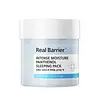
Real Barrier Intense Moisture Panthenol Sleeping Pack Versus S.NATURE Aqua Squalane Moisturizing Cream
This barrier-repair overnight mask is formulated around Panthenol and Niacinamide to strengthen the skin barrier and hydrate skin.

What's inside
What's inside
 Key Ingredients
Benefits
Concerns
No concerns
Ingredients Side-by-side
Water
Skin ConditioningBetaine
Humectant


Panthenol
Skin Conditioning

1,2-Hexanediol
Skin Conditioning
Niacinamide
Smoothing







Methylpropanediol
SolventCaprylic/Capric Triglyceride
Masking
Polyglyceryl-10 Laurate
Skin Conditioning

Morinda Citrifolia Leaf Extract
Skin ConditioningMorinda Citrifolia Flower Extract
Coccinia Indica Fruit Extract
Skin Conditioning
Hydrangea Serrata Leaf Extract
Skin ConditioningCarum Carvi Fruit Extract
Perfuming
Aloe Barbadensis Leaf Extract
Emollient
Curcuma Longa Root Extract
Antioxidant
Coral Extract
Skin ConditioningOcimum Sanctum Leaf Extract
Skin ConditioningFicus Carica Fruit Extract
Humectant
Centella Asiatica Extract
Cleansing
Lavandula Angustifolia Oil
Masking



Citrus Grandis Peel Oil
Masking

Rosmarinus Officinalis Leaf Oil
Masking
Helianthus Annuus Seed Oil
Emollient
Chamomilla Recutita Oil
Masking
Simmondsia Chinensis Seed Oil
Emollient
Sodium Hyaluronate
Humectant
Aniba Rosaeodora Wood Oil
Astringent
Hydrogenated Lecithin
Emulsifying
Ammonium Acryloyldimethyltaurate/Vp Copolymer
C13-15 Alkane
SolventXanthan Gum
EmulsifyingCarbomer
Emulsion StabilisingTromethamine
BufferingButylene Glycol
Humectant
Adenosine
Skin Conditioning
Cyamopsis Tetragonoloba Gum
Emulsion StabilisingAgar
MaskingLactobacillus
Skin ConditioningGlycerin
Humectant
Tocopherol
Antioxidant
Glycolipids
Skin ConditioningMyristoyl/Palmitoyl Oxostearamide/Arachamide Mea
Skin ConditioningEctoin
Skin Conditioning
Beta-Sitosterol
Emulsion Stabilising
Lysolecithin
EmulsifyingFucosterol
Antioxidant
Linoleic Acid
Cleansing
Trehalose
Humectant
Phospholipids
Skin Conditioning
Ceramide NP
Skin Conditioning
Sodium Acetylated Hyaluronate
Humectant
Hydrolyzed Hyaluronic Acid
Humectant
Phytosterols
Skin Conditioning
Ethylhexylglycerin
Skin ConditioningLimonene
Perfuming
Linalool
Perfuming
Water, Betaine, Panthenol, 1,2-Hexanediol, Niacinamide, Methylpropanediol, Caprylic/Capric Triglyceride, Polyglyceryl-10 Laurate, Morinda Citrifolia Leaf Extract, Morinda Citrifolia Flower Extract, Coccinia Indica Fruit Extract, Hydrangea Serrata Leaf Extract, Carum Carvi Fruit Extract, Aloe Barbadensis Leaf Extract, Curcuma Longa Root Extract, Coral Extract, Ocimum Sanctum Leaf Extract, Ficus Carica Fruit Extract, Centella Asiatica Extract, Lavandula Angustifolia Oil, Citrus Grandis Peel Oil, Rosmarinus Officinalis Leaf Oil, Helianthus Annuus Seed Oil, Chamomilla Recutita Oil, Simmondsia Chinensis Seed Oil, Sodium Hyaluronate, Aniba Rosaeodora Wood Oil, Hydrogenated Lecithin, Ammonium Acryloyldimethyltaurate/Vp Copolymer, C13-15 Alkane, Xanthan Gum, Carbomer, Tromethamine, Butylene Glycol, Adenosine, Cyamopsis Tetragonoloba Gum, Agar, Lactobacillus, Glycerin, Tocopherol, Glycolipids, Myristoyl/Palmitoyl Oxostearamide/Arachamide Mea, Ectoin, Beta-Sitosterol, Lysolecithin, Fucosterol, Linoleic Acid, Trehalose, Phospholipids, Ceramide NP, Sodium Acetylated Hyaluronate, Hydrolyzed Hyaluronic Acid, Phytosterols, Ethylhexylglycerin, Limonene, Linalool
Water
Skin ConditioningSqualane
Emollient
Glycerin
Humectant
1,2-Hexanediol
Skin Conditioning
Betaine
Humectant
Panthenol
Skin Conditioning
Sodium Hyaluronate
Humectant
Hydrolyzed Collagen
Emollient
Hydroxypropyltrimonium Hyaluronate
Hydrolyzed Hyaluronic Acid
Humectant
Sodium Acetylated Hyaluronate
Humectant
Acetyl Hexapeptide-8
Humectant
Adenosine
Skin Conditioning
Hyaluronic Acid
Humectant
Hydrolyzed Sodium Hyaluronate
Skin Conditioning
Sodium Hyaluronate Crosspolymer
Humectant
Potassium Hyaluronate
Skin ConditioningAcrylates/C10-30 Alkyl Acrylate Crosspolymer
Emulsion StabilisingArginine
Masking
Allantoin
Skin Conditioning
Xylitylglucoside
Humectant
Anhydroxylitol
Humectant
Xylitol
Humectant
Glucose
Humectant
Butylene Glycol
Humectant
Ammonium Acryloyldimethyltaurate/Vp Copolymer
Caprylyl Glycol
Emollient
Water, Squalane, Glycerin, 1,2-Hexanediol, Betaine, Panthenol, Sodium Hyaluronate, Hydrolyzed Collagen, Hydroxypropyltrimonium Hyaluronate, Hydrolyzed Hyaluronic Acid, Sodium Acetylated Hyaluronate, Acetyl Hexapeptide-8, Adenosine, Hyaluronic Acid, Hydrolyzed Sodium Hyaluronate, Sodium Hyaluronate Crosspolymer, Potassium Hyaluronate, Acrylates/C10-30 Alkyl Acrylate Crosspolymer, Arginine, Allantoin, Xylitylglucoside, Anhydroxylitol, Xylitol, Glucose, Butylene Glycol, Ammonium Acryloyldimethyltaurate/Vp Copolymer, Caprylyl Glycol
Reviews
Ingredients Explained
These ingredients are found in both products.
Ingredients higher up in an ingredient list are typically present in a larger amount.
1,2-Hexanediol is a synthetic liquid and another multi-functional powerhouse.
It is a:
- Humectant, drawing moisture into the skin
- Emollient, helping to soften skin
- Solvent, dispersing and stabilizing formulas
- Preservative booster, enhancing the antimicrobial activity of other preservatives
Adenosine is a purine nucleoside that your body already makes in every cell. In skincare, it acts mainly as a skin conditioning and anti-aging agent.
The way it works is fairly well mapped out:
Your skin has cells called fibroblasts that build collagen (the stuff that keeps skin firm and smooth). Adenosine basically flips a switch on these cells that tells them to get to work making more collagen and other proteins. These cells slow down on their own as skin ages, so Adenosine helps give them a little nudge to keep going.
The clinical backing is pretty solid too.
A blind, randomized, placebo-controlled trial of 126 women aged 45-65 tested a 0.1% cream twice daily and found real improvements in crow's feet and frown lines using a precise 3D skin-mapping technique; these changes showed up by week 3 and held at 2 months.
A later study using Adenosine-loaded dissolving microneedle patches reported gains in wrinkle depth, dermal density, elasticity, and hydration.
On concentrations, South Korea's Ministry of Food and Drug Safety has set 0.04% as the approved functional anti-wrinkle level. You'll typically see this ingredient used somewhere in the 0.04-0.1% range since it works at low doses.
This ingredient has been found safe for cosmetics with the data showing no irritation or sensitization.
Overall, this is a great ingredient for any anti-aging routine and has no photosensitizing effect, so it suits both AM and PM use.
Learn more about AdenosineAmmonium Acryloyldimethyltaurate/Vp Copolymer is a synthetically created polymer. It's used as a film-forming agent and used to thicken the consistency of products.
Think of it as a supportive ingredient that helps your gel-creams feel silky, "cloud cream-like", and spread evenly without being greasy.
The Cosmetic Ingredient Review (CIR) Expert Panel evaluated it (along with 22 other acryloyldimethyltaurate polymers) and concluded it's:
Due to its large molecular size, it sits on the surface of skin rather than penetrating it.
Learn more about Ammonium Acryloyldimethyltaurate/Vp CopolymerBetaine is a humectant. Like hyaluronic acid, it helps attract and retain moisture in the skin. It’s known for being gentle and for helping the skin maintain balanced hydration.
Betaine is mainly used to improve hydration and support calmer skin. It helps skin cells regulate water balance because it functions as an osmolyte.
Some studies suggest betaine may support making skin tone more even.
Fun fact: Betaine naturally exists in the skin and the body. In cosmetic products, it can be either plant-derived (most commonly from sugar beets) or synthetically produced for consistency and stability.
Betaine is also known as trimethylglycine.
Learn more about BetaineButylene Glycol (or BG) is used within cosmetic products for a few different reasons:
Overall, Butylene Glycol is a safe and well-rounded ingredient that works well with other ingredients.
Though this ingredient works well with most skin types, some people with sensitive skin may experience a reaction such as allergic rashes, closed comedones, or itchiness.
Learn more about Butylene GlycolGlycerin (or glycerol) is a compound naturally found in your skin. It's a powerhouse humectant that pulls water into the stratum corneum.
Topically, glycerin does several things at once:
Your skin makes glycerin on its own (mostly from sebaceous oil breakdown) and shuttles it to your outermost layer of skin, or your epidermis, via aquaporin-3.
Aquaporin-3 is a transporter that is essential for normal skin hydration, elasticity, and repair. Interestingly, mice lacking in AQP3 have dry and less elastic skin that can be fully corrected with glycerin.
This ingredient is non-irritating, plays well with almost every ingredient, and works across all skin types. Typical use is anywhere between 3-10% but can go up to 79% in some leave-on products.
Just know very high concentrations (>40%) can feel tacky in low humidity.
Glycerin is the name for this ingredient in American English. British English uses Glycerol/Glycerine.
Learn more about GlycerinHydrolyzed Hyaluronic Acid is hyaluronic acid (HA) that is broken down into lower molecular weight fragments.
It's a humectant that pulls and holds water in the skin to help with hydration, plumpness, and reduce transepidermal water loss.
Because hydrolyzed hyaluronic acid is smaller in size, it can slip past your outermost layer of skin more easily than full-sized HA.
Most formulations will combine all sizes to get the best of both worlds.
Typical usage levels range from 0.01-1%. Any percentage higher than 2% might become goopy and tacky.
Learn more about Hydrolyzed Hyaluronic AcidPanthenol is a common ingredient that helps hydrate and soothe the skin. It is found naturally in our skin and hair.
There are two forms of panthenol: D and L.
D-panthenol is also known as dexpanthenol. Most cosmetics use dexpanthenol or a mixture of D and L-panthenol.
Panthenol is famous due to its ability to go deeper into the skin's layers. Using this ingredient has numerous pros (and no cons):
Like hyaluronic acid, panthenol is a humectant. Humectants are able to bind and hold large amounts of water to keep skin hydrated.
This ingredient works well for wound healing. It works by increasing tissue in the wound and helps close open wounds.
Once oxidized, panthenol converts to pantothenic acid. Panthothenic acid is found in all living cells.
This ingredient is also referred to as pro-vitamin B5.
Learn more about PanthenolSodium Acetylated Hyaluronate is a type of Hyaluronic Acid.
Hyaluronic Acids help moisturize, soothe, and protect the skin.
Read about common types of Hyaluronic Acid here:
Learn more about Sodium Acetylated HyaluronateSodium Hyaluronate is the salt form of hyaluronic acid. It is a long sugar chain that is naturally found in your skin, joints, and connective tissue that maintains hydration and elasticity.
In skincare, it works as a humectant. It pulls water from the environment and deeper layers of skin and binds it to the surface.
Interestingly, the size of the molecule affects its behavior:
Some clinical evidence links low molecular weight versions to improved wrinkle depth, elasticity, anti-inflammatory effects, and barrier repair.
Many serums use a blend of both weights so you can get surface hydration plus longer-lasting and deeper effects.
You'll typically see concentrations between 0.1-2% for this ingredient.
Learn more about Sodium HyaluronateWater. It's the most common cosmetic ingredient of all. You'll usually see it at the top of ingredient lists, meaning that it makes up the largest part of the product.
So why is it so popular? Water most often acts as a solvent - this means that it helps dissolve other ingredients into the formulation.
You'll also recognize water as that liquid we all need to stay alive. If you see this, drink a glass of water. Remember to stay hydrated!
Learn more about Water

