
What's inside
What's inside
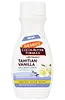 Key Ingredients
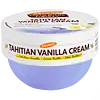
Benefits
Concerns
Ingredients Side-by-side
Water
Skin ConditioningButyrospermum Parkii Butter
Skin Conditioning






Cetyl Alcohol
Emollient

Palmitic Acid
Emollient
Isopropyl Myristate
Emollient
Propylene Glycol
Humectant
Stearic Acid
Cleansing
Parfum
Masking

Cocos Nucifera Oil
Masking
Vanilla Tahitensis Fruit Extract
Skin ConditioningVanilla Planifolia Fruit Extract
Skin Conditioning
Tocopherol
Antioxidant





Tocopheryl Acetate
Antioxidant
Theobroma Cacao Seed Butter
Emollient
Prunus Amygdalus Dulcis Oil
Skin Conditioning
Macadamia Ternifolia Seed Oil
Emollient
Gardenia Taitensis Flower Extract
Skin ConditioningSqualane
Emollient
Helianthus Annuus Seed Extract
Skin Conditioning
Carbomer
Emulsion StabilisingAminomethyl Propanol
BufferingCitric Acid
Buffering
Ethylhexylglycerin
Skin ConditioningPEG-40 Stearate
Emulsifying
Stearyl Alcohol
Emollient
Tetrasodium EDTA
ChelatingPhenoxyethanol
Preservative
Hexamethylindanopyran
Masking
Benzyl Benzoate
Antimicrobial
Vanillin
Masking
Trimethylbenzenepropanol
Masking
Water, Butyrospermum Parkii Butter, Cetyl Alcohol, Palmitic Acid, Isopropyl Myristate, Propylene Glycol, Stearic Acid, Parfum, Cocos Nucifera Oil, Vanilla Tahitensis Fruit Extract, Vanilla Planifolia Fruit Extract, Tocopherol, Tocopheryl Acetate, Theobroma Cacao Seed Butter, Prunus Amygdalus Dulcis Oil, Macadamia Ternifolia Seed Oil, Gardenia Taitensis Flower Extract, Squalane, Helianthus Annuus Seed Extract, Carbomer, Aminomethyl Propanol, Citric Acid, Ethylhexylglycerin, PEG-40 Stearate, Stearyl Alcohol, Tetrasodium EDTA, Phenoxyethanol, Hexamethylindanopyran, Benzyl Benzoate, Vanillin, Trimethylbenzenepropanol
Water
Skin ConditioningPropylene Glycol
Humectant
Cocos Nucifera Oil
Masking
Cetearyl Alcohol
Emollient
Ethylhexyl Palmitate
Emollient
Glycerin
Humectant
Palmitic Acid
Emollient
Stearic Acid
Cleansing
Parfum
Masking
Butyrospermum Parkii Butter
Skin Conditioning
Dimethicone
Emollient
Helianthus Annuus Seed Oil
Emollient
Vanilla Tahitensis Fruit Extract
Skin ConditioningVanilla Planifolia Fruit Extract
Skin Conditioning
Theobroma Cacao Seed Butter
Emollient
Tocopherol
Antioxidant
Tocopheryl Acetate
Antioxidant
Gardenia Taitensis Flower Extract
Skin ConditioningHelianthus Annuus Seed Extract
Skin Conditioning
Sodium Hyaluronate
Humectant
Acrylates/C10-30 Alkyl Acrylate Crosspolymer
Emulsion StabilisingDisodium EDTA
ChelatingEthylhexylglycerin
Skin ConditioningSodium Metabisulfite
Antioxidant
Sodium Sulfite
Preservative
Citric Acid
Buffering
Sodium Citrate
BufferingSaccharide Isomerate
Humectant
Aminomethyl Propanol
BufferingGlucuronic Acid
Buffering
Ceteareth-20
Cleansing
Carbomer
Emulsion StabilisingPhenoxyethanol
Preservative
Hexamethylindanopyran
Masking
Benzyl Benzoate
Antimicrobial
Vanillin
Masking
Trimethylbenzenepropanol
Masking
Water, Propylene Glycol, Cocos Nucifera Oil, Cetearyl Alcohol, Ethylhexyl Palmitate, Glycerin, Palmitic Acid, Stearic Acid, Parfum, Butyrospermum Parkii Butter, Dimethicone, Helianthus Annuus Seed Oil, Vanilla Tahitensis Fruit Extract, Vanilla Planifolia Fruit Extract, Theobroma Cacao Seed Butter, Tocopherol, Tocopheryl Acetate, Gardenia Taitensis Flower Extract, Helianthus Annuus Seed Extract, Sodium Hyaluronate, Acrylates/C10-30 Alkyl Acrylate Crosspolymer, Disodium EDTA, Ethylhexylglycerin, Sodium Metabisulfite, Sodium Sulfite, Citric Acid, Sodium Citrate, Saccharide Isomerate, Aminomethyl Propanol, Glucuronic Acid, Ceteareth-20, Carbomer, Phenoxyethanol, Hexamethylindanopyran, Benzyl Benzoate, Vanillin, Trimethylbenzenepropanol
Reviews
Ingredients Explained
These ingredients are found in both products.
Ingredients higher up in an ingredient list are typically present in a larger amount.
Aminomethyl Propanol is used to adjust the pH of products. It is also used as a base to create other organic compounds. Having a balanced pH is important for protecting your skin.
Aminomethyl propanol is safe to use in cosmetics up to 1%. It is soluble in water.
Benzyl Benzoate is usually created from the condensation of benzoic acid and benzyl alcohol. It is used as a preservative, solvent, and has a floral/balsamic scent in large amounts.
As a preservative, Benzyl Benzoate works against bacteria and fungus. It is often used to treat scabies and lice in medicine.
Solvents are used to keep ingredients together in a product. They can help dissolve ingredients to stable bases or help evenly distribute ingredients throughout the product.
Due to its fragrance, Benzyl Benzoate can be sensitizing and may cause contact dermatitis. It is a known EU allergen. We recommend speaking with a professional if you have any concerns.
Benzyl Benzoate can be naturally found in cranberries and peaches.
Learn more about Benzyl BenzoateThis ingredient is also known as shea butter. It is a plant-derived extract from the nuts of the Africa shea tree and one of the most well-studied emollients.
Because it has a high concentration of fatty acids (primarily oleic, stearic, and linoleic) it is able to form a protective barrier on the skin's surface. This helps seal in moisture and prevents transepidermal water loss (TEWL).
In vitro research found an increase in skin hydration by 58% and a decrease in TEWL by 37.8% after 24 hours of applying this ingredient (pretty impressive for a single ingredient!).
Besides hydration, shea butter also contains triterpenes that have anti-inflammatory potential. In particule, lupeol cinnamate has shown the highest anti-inflammatory activity in vivo.
Shea butter also contains vitamins A and E which may contribute to antioxidant activity.
While Shea Butter has an SPF rating of about 3-4, it is not a sunscreen replacement.
This ingredient may not be fungal acne safe because its fatty acids fall within the C11-C24 range that the Malassezia yeast can metabolize.
This ingredient shows up on a lot of "pore-clogging" lists but there's no real evidence behind that. It doesn't even have a comedogenic rating from an actual study; the numbers you'll find online come from blogs citing other blogs.
Ratings for other ingredients mostly come from a 1980s rabbit ear test. This test doesn't translate well to human skin or to real products because the ingredient sits at a much lower percentage.
Some people still find it breaks them out. So if that's you, definitely trust your skin. Just know this one's based on experience and not evidence.
Learn more about Butyrospermum Parkii ButterCarbomer is a synthetic thickening and gelling agent. It's basically the ingredient that gives a lot of serums, gels, creams, and sunscreens their smooth, non-sticky texture.
Although legally permitted at very high levels, carbomers are normally used at concentrations below 1%.
It also needs to be neutralized to actually thicken, and because it is a large molecule, it doesn't really penetrate the skin barrier.
Allergy-wise, the risk is very low. Clinical studies show carbomers have low potential for skin irritation/sensitization even at concentrations up to 100%.
A 2024 UK study patch-tested 1,302 patients and found true allergy to the parent group of carbomer to be rare with no confirmed relevant reactions.
Learn more about CarbomerCitric Acid is an alpha hydroxy acid (AHA) naturally found in citrus fruits like oranges, lemons, and limes.
Like other AHAs, citric acid can exfoliate skin by breaking down the bonds that hold dead skin cells together. This helps reveal smoother and brighter skin underneath.
However, this exfoliating effect only happens at high concentrations (20%) which can be hard to find in cosmetic products.
Due to this, citric acid is usually included in small amounts as a pH adjuster. This helps keep products slightly more acidic and compatible with skin's natural pH.
In skincare formulas, citric acid can:
While it can provide some skin benefits, research shows lactic acid and glycolic acid are generally more effective and less irritating exfoliants.
Most citric acid used in skincare today is made by fermenting sugars (usually from molasses). This synthetic version is identical to the natural citrus form but easier to stabilize and use in formulations.
Rosacea skin has a lower threshold for acids generally, with 62.5% of rosacea subjects in one study reacting to lactic acid in a sting test. This is why we mark citric acid as a potential rosacea trigger.
However, this ingredient shows up as a pH adjuster or chelator at roughly 0.1-1% in many products. These low levels are unlikely to be an issue for rosacea skin and becomes a potential trigger at exfoliating concentrations (20%). Because everybody's skin is unique, we recommend a patch test if you are unsure.
Learn more about Citric AcidThis ingredient is also known as coconut oil. It is a plant-derived ingredient with skin conditioning properties.
The fatty acid profile of coconut oil is mostly lauric acid (~54%), followed by capric, caprylic, palmitic, and myristic acids. This profile allows it to penetrate easily into skin, moisturize, and improve dry skin.
A double-blind study confirmed that extra virgin coconut oil is as effective as mineral oil for treating very dry skin. Another study found it outperformed mineral oil for mild to moderate atopic dermatitis in children.
Another study from 2018 found that virgin coconut oil can soothe inflammation and boost key skin barrier proteins. Just know this evidence is still only from lab settings and not human trials.
It has also been shown to reduce Staphylococcus aureus, a bacteria that commonly overgrows in people with eczema.
Clinical testing shows very minimal skin irritation and no evidence of sensitization or phototoxicity.
Coconut oil gets flagged as a "fragrance" because it has a natural mild scent (not because it's a synthetic perfume). The European Cosmetic ingredient database also lists "perfuming" as a function of this ingredient.
Just so you know, the term "fragrance" is completely unregulated. Some brands still use botanical extracts or essential oils in their "fragrance-free" formulas, but regulatory databases technically classify these under "fragrance".
Coconut oil has a tiny and useless bit of natural SPF. Early lab studies clocked it around SPF 7-8 but a more recent study found the real number closer to SPF 1.2. It also offers no meaningful UVA protection (SPF only overs UVB rays).
The comedogenic rating of 4/5 means it has a high potential to clog pores; but it's worth noting that comedogenicity is highly individual and ratings cannot predict how an overall formula will behave on skin.
Since lauric acid is the dominant fatty acid, this ingredient may not be fungal acne safe. The Malassezia yeast feeds on fatty acids with carbon chain lengths between 11-24, and lauric acid falls within these lengths (C12).
Learn more about Cocos Nucifera OilEthylhexylglycerin is created from glycerin. It is a multitasker ingredient that:
The CIR Expert Panel found minimal skin absorption or sensitization of any kind in a safety assessment. Though this ingredient is considered well-tolerated, a small number of cases of allergic dermatitis have been published since 2002. Just be sure to patch test if you are unsure.
Industry-reported use ranges from 8% in rinse-off products and 2% in leave-on formulations.
Learn more about EthylhexylglycerinWe don't have a description for Gardenia Taitensis Flower Extract yet.
Helianthus Annuus Seed Extract comes from sunflower seeds.
Sunflower seeds are rich in vitamin E. Studies show sunflowers contain antimicrobial and antioxidant properties.
The fatty acids found in sunflower seeds include (from highest amount to least): linoleic acid, myristic acid, palmitic acid, stearic acid, arachidic acid, oleic acid, and linolenic acid.
These fatty acids hydrate your skin. Emollients create a film on the skin to prevent moisture from escaping.
Learn more about Helianthus Annuus Seed ExtractThis ingredient is also known as Galaxolide. It is a synthetic fragrance used to add a "sweet musky floral" odor.
The EU Scientific Committee for Consumer Safety deems this ingredient to be an allergen and irritant.
Palmitic Acid is a fatty acid naturally found in our skin and in many plant and animal sources.
In cosmetics, it is usually derived from palm oil. It serves many purposes in skincare, acting as a cleanser, emollient, and emulsifier.
Interestingly, topically applied Palmitic Acid can be elongated into longer chain fatty acids and ceramides. A 2019 study found low levels of Palmitic Acid lead to slower development of cells, suggesting it plays a role in keeping your skin's renewal process on track.
The CIR (Cosmetic Ingredient Review) panel determined it safe as used in cosmetics at concentrations up to 13%. It is non-irritating and non-sensitizing in clinical studies.
The culprit behind fungal acne, the Malassezia yeast, feeds on fatty acids with carbon chain lengths between C11-C24. Palmitic Acid, at C16, falls right into that sweet spot.
In vitro studies have shown that Palmitic Acid is one of the fatty acids that induce rapid Malassezia growth in lab settings.
It's worth noting that what feeds yeast in a lab doesn't necessarily feed it on your face since formulation and your skin's chemistry play a bigger role.
This ingredient does have a comedogenic rating of 2, but this doesn't mean a formula with this ingredient will clog pores.
Human testing has proved that any finished product with a comedogenic ingredient won't automatically make you break out; it really comes down to concentration, formula, and your skin.
Learn more about Palmitic AcidParfum is a catch-all term for an ingredient or more that is used to give a scent to products.
Also called "fragrance", this ingredient can be a blend of hundreds of chemicals or plant oils. This means every product with "fragrance" or "parfum" in the ingredients list is a different mixture.
For instance, Habanolide is a proprietary trade name for a specific aroma chemical. When used as a fragrance ingredient in cosmetics, most aroma chemicals fall under the broad labeling category of “FRAGRANCE” or “PARFUM” according to EU and US regulations.
The term 'parfum' or 'fragrance' is not regulated in many countries. In many cases, it is up to the brand to define this term.
For instance, many brands choose to label themselves as "fragrance-free" because they are not using synthetic fragrances. However, their products may still contain ingredients such as essential oils that are considered a fragrance by INCI standards.
One example is Calendula flower extract. Calendula is an essential oil that still imparts a scent or 'fragrance'.
Depending on the blend, the ingredients in the mixture can cause allergies and sensitivities on the skin. Some ingredients that are known EU allergens include linalool and citronellol.
Parfum can also be used to mask or cover an unpleasant scent.
The bottom line is: not all fragrances/parfum/ingredients are created equally. If you are worried about fragrances, we recommend taking a closer look at an ingredient. And of course, we always recommend speaking with a professional.
Learn more about ParfumPhenoxyethanol is one of the most widely used preservatives in skincare (and for good reason!).
It has a large spectrum of antimicrobial activity and especially effective bacteria, yeast, and mold while only having a weak effect on your skin's natural microbiome.
On a cellular level, it disrupts the cell membranes of microbes by poking holes that make the cell leak. This shuts down the chemical reactions the microbe needs to make energy so it can no longer survive.
Another perk of this ingredient is that it stays functional across a wide pH range (3-10).
You'll often see it paired with boosters like Ethylhexylglycerin; one study showed that a 1:9 ratio of Ethylhexylglycerin to Phenoxyethanol damages bacterial membranes as effectively as doubling the Phenoxyethanol concentration on its own.
Typical use concentrations range from 0.3-1% depending on the formula, and this ingredient is capped at 1% int the EU.
Safety-wise, the fear mongering does not hold up to the evidence. The EU's Scientific Committee on Consumer Safety and FDA consider it safe as a preservative at up to 1%, including for children of all ages.
Adverse systemic effects only showed up in animal studies at exposures roughly 200x higher than what people get from cosmetics. And despite its very widespread use, this ingredient is a rare sensitizer and allergic reactions are uncommon.
Learn more about PhenoxyethanolPropylene Glycol is a synthetic, colorless, odorless liquid that has been a staple in cosmetics for decades. It is a skin conditioning agent, humectant, and solvent.
As a humectant, it draw water to the skin to reduce flaking and restore suppleness. It's also a solvent that helps dissolve other actives and keeps formulas stable across temperature changes.
The CIR Expert Panel has confirmed this ingredient to be nontoxic and clinical studies show no sensitization at cosmetic use concentrations.
True allergic reactions are quite rare: a 15-year retrospective study of 6,751 patients found only 0.31% had a positive reaction (and less than half were considered clinically relevant).
It seemed that when sensitization does occur, it's most commonly linked to topical medication (like corticosteroids) and not cosmetics. Allergic contact dermatitis also appears largely limited to individuals with underlying skin conditions.
Overall, propylene glycol is a well-studied ingredient that most people can tolerate without issue.
Learn more about Propylene GlycolStearic Acid is a fatty acid that is already found in your skin. It's one of the free fatty acids that works alongside ceramides and cholesterols to maintain your barrier.
In cosmetics, it is a multitasker:
Safety-wise, the CIR Expert Panel has concluded it to be safe in cosmetics when formulated to be non-irritating and non-sensitizing.
Free stearic acid is a C18 fatty acid that the Malassezia yeast can substrate, so this ingredient may not be fungal acne safe.
This ingredient does have a comedogenic rating of 2-3, but this doesn't mean a formula with this ingredient will clog pores.
Human testing has proved that any finished product with this ingredient won't automatically make you break out; it really comes down to concentration, formula, and your skin.
Learn more about Stearic AcidThis ingredient is also known as Cocoa butter; it's the fat pressed out of roasted cocoa beans.
Cocoa butter is solid at room temperature and melts right around body temperature, which is why it feels waxy in the jar and slippery on skin.
It has a very saturated profile (stearic acid ~34 to 36%, oleic acid ~30 to 40%, and palmitic acid ~24 to 29%) that makes it a strong occlusive: it sits on top and slows water escaping from skin.
Concentration data shows that it can show up anywhere from a few percent in lotions up to 100% in balms, and the FDA lists cocoa butter as an OTC skin protectant active at 50-100%.
The CIR has reviewed it and concluded it to be safe as used in cosmetics.
This is one of the ingredients with a comedogenic score of 4/5 from the rabbit ear test. Just know that a later human study did find that finished products containing high-comedogenic ingredients like cocoa butter did not increase microcomedone formation.
The fair call here is that this ingredient is most likely fine on body or low-percentage formulas, but can potentially be riskier as a heavy leave-on facial product if you break out easily.
Cocoa butter may not be fungal acne safe; it is a triglyceride of C16-18 fatty acids that the Malassezia yeast can metabolize.
Allergies to cocoa butter are rare and uncommon, but a few cases have been documented (mostly in cases where the person ate chocolate). So if you have a tree nut allergy, be sure to patch test or avoid.
Learn more about Theobroma Cacao Seed ButterTocopherol is a fat-soluble antioxidant known as Vitamin E.
You'll find this ingredient in the vast majority of skincare (for good reason). It works to neutralize free radicals, or unstable molecules generated by UV exposure, pollution, and other environmental stressors, before they can cause oxidative damage to your skin cells.
Topically applied tocopherol has been shown to protect against UV damage by ramping up the skin's own natural defense enzymes.
It also acts as a skin conditioning agent; some studies show that regular topical use can improve the skin's water-binding capacity over 2-4 weeks.
This ingredient is especially loved for being a team player. When combined with Vitamin C, the photoprotective effect of both ingredients roughly doubles and the combo also helps reduce UV-induced DNA damage.
This ingredient has some brightening potential but it's more of a prevention ingredient than spot-fader. Cell studies show it can slow down melanin production but it's worth noting that it's not the most powerful brightener out there.
In formulations, it also serves as a stabilizer that helps protect other oxidation-prone ingredients from degrading.
Concentrations usually range from 0.1-1% in most leave-on products.
Learn more about TocopherolTocopheryl Acetate is a stable, shelf-friendly form of vitamin E.
Formulators love it because plain vitamin E oxidizes quickly once it hits air. This acetate version stays stable and resists going off, helping to extend a product's shelf life.
It's actually inactive on its own and works like a slow-release "storage" form; the enzymes in your skin called esterases gradually convert it into active vitamin E over time.
One in vivo study showed 5% of the acetate in the living layer of the epidermis converted to vitamin E after 5 days of application. This study also found the skin gained protection against UV damage even though the conversion was slow and small.
Once converted, vitamin E acts as a skin's main fat-soluble antioxidant that fights free radicals to protect skin from damage.
Topical vitamin E generally boosts the skin's photoprotection, and it reduced UV-damage in animal models.
This ingredient has some brightening potential but it's more of a prevention ingredient than spot-fader. Cell studies show it can slow down melanin production but it's worth noting that it's not the most powerful brightener out there.
Overall, it has a pretty solid safety profile and has been found to be non-irritating and non-comedogenic. Allergic reactions may happen but stay rare due to how widely the ingredient gets used.
The concentration will vary depending on the formula; industry data shows 0.1% in baby lotions, 3% in lipsticks, and 5% in foot powders. You can also find this ingredient at 100% in a pure vitamin E oil.
Most leave-on skincare keeps it at the lower end, often between 0.5-1%.
Learn more about Tocopheryl AcetateTrimethylbenzenepropanol is a fragrance. It can cause irritation.
Vanilla Planifolia Fruit Extract comes from the vanilla orchid native to central America. It is a skin-soothing ingredient.
This ingredient is skin-soothing and contains polyphenols that give it antioxidant properties.
This ingredient is not known to sensitize or irritate skin (unlike Vanilla Tahitensis). Vanilla tahitensis has shown to irritate skin in low amounts.
Learn more about Vanilla Planifolia Fruit ExtractVanilla Tahitensis Fruit Extract comes from the vanilla plant now cultivated in the South Pacific.
This ingredient is known to sensitize and irritate skin.
If you are looking for a non-irritating vanilla, check out Vanilla Planifolia
Learn more about Vanilla Tahitensis Fruit ExtractVanillin is the main compound of the vanilla bean. It is naturally occuring but can also be artificially created.
This ingredient exhibits antioxidant properties but is also a known skin-irritant.
Vanillism is the term of contact-dermatitis associated with the vanilla plant. The sap of the vanilla plant triggers skin irritation, swelling, and redness.
Learn more about VanillinWater. It's the most common cosmetic ingredient of all. You'll usually see it at the top of ingredient lists, meaning that it makes up the largest part of the product.
So why is it so popular? Water most often acts as a solvent - this means that it helps dissolve other ingredients into the formulation.
You'll also recognize water as that liquid we all need to stay alive. If you see this, drink a glass of water. Remember to stay hydrated!
Learn more about Water

