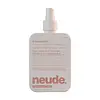
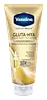
Neude Skin Smmmoothie Ultimate Skin Pampering & Repairing Spray Body Lotion Versus Vaseline Gluta-Hya Serum Burst UV Lotion Flawless Bright


What's inside
What's inside
 Key Ingredients
Benefits
Concerns
Ingredients Side-by-side
Water
Skin ConditioningCyclopentasiloxane
Emollient
Glyceryl Stearate
Emollient

PEG-100 Stearate
Surfactant
Cocos Nucifera Oil
Masking






Butyrospermum Parkii Butter
Skin Conditioning
Yogurt
Skin ProtectingNiacinamide
Smoothing










Propanediol
Solvent
Theobroma Cacao Seed Butter
Emollient
Olea Europaea Fruit Oil
Masking
Prunus Amygdalus Dulcis Oil
Skin Conditioning
Cetyl Alcohol
Emollient
Lactic Acid
Buffering

Salicylic Acid
Masking


Potassium Sorbate
Preservative
Sodium Benzoate
Masking
Betaine
Humectant
Parfum
Masking
Phospholipids
Skin Conditioning
Sphingolipids
Emollient
Sodium Gluconate
Skin ConditioningHyaluronic Acid
Humectant
Water, Cyclopentasiloxane, Glyceryl Stearate, PEG-100 Stearate, Cocos Nucifera Oil, Butyrospermum Parkii Butter, Yogurt, Niacinamide, Propanediol, Theobroma Cacao Seed Butter, Olea Europaea Fruit Oil, Prunus Amygdalus Dulcis Oil, Cetyl Alcohol, Lactic Acid, Salicylic Acid, Potassium Sorbate, Sodium Benzoate, Betaine, Parfum, Phospholipids, Sphingolipids, Sodium Gluconate, Hyaluronic Acid
Water
Skin ConditioningEthylhexyl Methoxycinnamate
UV Absorber

Glycerin
Humectant
Niacinamide
Smoothing
Butyl Methoxydibenzoylmethane
UV Absorber
Glutathione
Sodium Hyaluronate
Humectant
Retinyl Palmitate
Skin Conditioning
Helianthus Annuus Seed Oil
Emollient
Glycine
Buffering
Cystine
MaskingSodium PCA
Humectant
Petrolatum
Emollient
Triethanolamine
BufferingPhenoxyethanol
Preservative
Dimethicone
Emollient
Cyclopentasiloxane
Emollient
Acrylates/C10-30 Alkyl Acrylate Crosspolymer
Emulsion StabilisingParfum
Masking
Methylparaben
Preservative
Propylparaben
Preservative
Styrene/Acrylates Copolymer
Disodium EDTA
Coco-Glucoside
Cleansing
BHT
Antioxidant
Benzoic Acid
Masking
Citric Acid
Buffering
Potassium Hydroxide
BufferingPotassium Carbonate
BufferingTocopherol
Antioxidant
Potassium Chloride
Iron Oxides
Water, Ethylhexyl Methoxycinnamate, Glycerin, Niacinamide, Butyl Methoxydibenzoylmethane, Glutathione, Sodium Hyaluronate, Retinyl Palmitate, Helianthus Annuus Seed Oil, Glycine, Cystine, Sodium PCA, Petrolatum, Triethanolamine, Phenoxyethanol, Dimethicone, Cyclopentasiloxane, Acrylates/C10-30 Alkyl Acrylate Crosspolymer, Parfum, Methylparaben, Propylparaben, Styrene/Acrylates Copolymer, Disodium EDTA, Coco-Glucoside, BHT, Benzoic Acid, Citric Acid, Potassium Hydroxide, Potassium Carbonate, Tocopherol, Potassium Chloride, Iron Oxides
Reviews
Ingredients Explained
These ingredients are found in both products.
Ingredients higher up in an ingredient list are typically present in a larger amount.
Cyclopentasiloxane (D5) is a lightweight silicone that mostly acts as an emollient and solvent in cosmetics. Its the reason your products feel silky, fast-spreading, and non-greasy.
Since D5 is volatile, it does its thing and then evaporates off the skin quickly.
The safety profile of this ingredient is reassuring; the US CIR Expert Panel concluded D5 is safe as used in cosmetics and Health Canada concluded that D5 is not harmful to human health or the environment as currently used in cosmetics
There's a study that people mention about D5 in a rat study showing tumors. This study is related to long-term inhalation of high D5 levels.
Regulatory bodies have judged this study to be not applicable in topical skincare since skin absorption of D5 is very low and we're not really inhaling huge amounts of D5.
The only restriction for this ingredient is environmental. The European Chemicals Agency (ECHA) restricted D5 in wash-off cosmetics at or above 0.1% due to their persistence in water.
Learn more about CyclopentasiloxaneNiacinamide is a multitasking form of vitamin B3 that strengthens the skin barrier, reduces pores and dark spots, regulates oil, and improves signs of aging.
And the best part? It's gentle and well-tolerated by most skin types, including sensitive and reactive skin.
You might have heard of "niacin flush", or the reddening of skin that causes itchiness. Niacinamide has not been found to cause this.
In very rare cases, some individuals may not be able to tolerate niacinamide at all or experience an allergic reaction to it.
If you are experiencing flaking, irritation, and dryness with this ingredient, be sure to double check all your products as this ingredient can be found in all categories of skincare.
When incorporating niacinamide into your routine, look out for concentration amounts. Typically, 5% niacinamide provides benefits such as fading dark spots. However, if you have sensitive skin, it is better to begin with a smaller concentration.
When you apply niacinamide to your skin, your body converts it into nicotinamide adenine dinucleotide (NAD). NAD is an essential coenzyme that is already found in your cells as "fuel" and powers countless biological processes.
In your skin, NAD helps repair cell damage, produce new healthy cells, support collagen production, strengthen the skin barrier, and fight environmental stressors (like UV and pollution).
Our natural NAD levels start to decline with age, leading to slower skin repair, visible aging, and a weaker skin barrier. By providing your skin niacinamide, you're recharging your skin's NAD levels. This leads to stronger, healthier, and younger looking skin.
Another name for vitamin B3 is nicotinamide. This vitamin is water-soluble and our bodies don't store it. We obtain Vitamin B3 from either food or skincare. Meat, fish, wheat, yeast, and leafy greens contain vitamin B3.
The type of niacinamide used in skincare is synthetically created.
Learn more about NiacinamideParfum is a catch-all term for an ingredient or more that is used to give a scent to products.
Also called "fragrance", this ingredient can be a blend of hundreds of chemicals or plant oils. This means every product with "fragrance" or "parfum" in the ingredients list is a different mixture.
For instance, Habanolide is a proprietary trade name for a specific aroma chemical. When used as a fragrance ingredient in cosmetics, most aroma chemicals fall under the broad labeling category of “FRAGRANCE” or “PARFUM” according to EU and US regulations.
The term 'parfum' or 'fragrance' is not regulated in many countries. In many cases, it is up to the brand to define this term.
For instance, many brands choose to label themselves as "fragrance-free" because they are not using synthetic fragrances. However, their products may still contain ingredients such as essential oils that are considered a fragrance by INCI standards.
One example is Calendula flower extract. Calendula is an essential oil that still imparts a scent or 'fragrance'.
Depending on the blend, the ingredients in the mixture can cause allergies and sensitivities on the skin. Some ingredients that are known EU allergens include linalool and citronellol.
Parfum can also be used to mask or cover an unpleasant scent.
The bottom line is: not all fragrances/parfum/ingredients are created equally. If you are worried about fragrances, we recommend taking a closer look at an ingredient. And of course, we always recommend speaking with a professional.
Learn more about ParfumWater. It's the most common cosmetic ingredient of all. You'll usually see it at the top of ingredient lists, meaning that it makes up the largest part of the product.
So why is it so popular? Water most often acts as a solvent - this means that it helps dissolve other ingredients into the formulation.
You'll also recognize water as that liquid we all need to stay alive. If you see this, drink a glass of water. Remember to stay hydrated!
Learn more about Water

