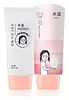
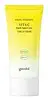
Midha Rice Tone Up Cream Versus Goodal Green Tangerine Vita C Dark Spot Tone Up Sun Cream SPF 50+ PA++++
This brightening moisturizer is formulated around Niacinamide to brighten dull-looking skin and calm redness.
This hybrid sunscreen covers the full UV range and blocks ~98% of UVB at SPF 50.

What's inside
What's inside
 Key Ingredients
Benefits
Concerns
Ingredients Side-by-side
Oryza Sativa Bran Water 70%
Masking
Butylene Glycol
Humectant

Glycerin
Humectant
Niacinamide
Smoothing









Methyl Trimethicone
Skin Conditioning
Isohexadecane
EmollientTitanium Dioxide
Cosmetic Colorant

1,2-Hexanediol
Skin Conditioning
Sodium Acrylate/Sodium Acryloyldimethyl Taurate Copolymer
Emulsion StabilisingWater
Skin ConditioningPhenyl Trimethicone
Skin Conditioning
Polyisobutene
Sodium Stearoyl Glutamate
CleansingSodium Polyacrylate
Absorbent
Hydrogenated Polydecene
EmollientOryza Sativa Bran Extract
Skin Conditioning
Xanthium Strumarium Fruit Extract
Skin ConditioningPortulaca Oleracea Extract
Skin Conditioning
Morinda Citrifolia Extract
AstringentGinkgo Biloba Leaf Extract
Skin Conditioning
Avena Sativa Seed Extract
Skin ConditioningOpuntia Humifusa Stem Extract
Antioxidant
Akebia Quinata Extract
Skin ConditioningHydroxyethyl Acrylate/Sodium Acryloyldimethyl Taurate Copolymer
Emulsion StabilisingCaprylyl/Capryl Glucoside
CleansingSorbitan Oleate
Emulsifying



Triethoxycaprylylsilane
Allantoin
Skin Conditioning
Citric Acid
Buffering
Adenosine
Skin Conditioning
Aluminum Hydroxide
EmollientDisodium EDTA
Trideceth-6
EmulsifyingSorbitan Isostearate
Emulsifying
Hydroxyacetophenone
Antioxidant
Caprylyl Glycol
Emollient
Pentylene Glycol
Skin Conditioning
Oryza Sativa Bran Water 70%, Butylene Glycol, Glycerin, Niacinamide, Methyl Trimethicone, Isohexadecane, Titanium Dioxide, 1,2-Hexanediol, Sodium Acrylate/Sodium Acryloyldimethyl Taurate Copolymer, Water, Phenyl Trimethicone, Polyisobutene, Sodium Stearoyl Glutamate, Sodium Polyacrylate, Hydrogenated Polydecene, Oryza Sativa Bran Extract, Xanthium Strumarium Fruit Extract, Portulaca Oleracea Extract, Morinda Citrifolia Extract, Ginkgo Biloba Leaf Extract, Avena Sativa Seed Extract, Opuntia Humifusa Stem Extract, Akebia Quinata Extract, Hydroxyethyl Acrylate/Sodium Acryloyldimethyl Taurate Copolymer, Caprylyl/Capryl Glucoside, Sorbitan Oleate, Triethoxycaprylylsilane, Allantoin, Citric Acid, Adenosine, Aluminum Hydroxide, Disodium EDTA, Trideceth-6, Sorbitan Isostearate, Hydroxyacetophenone, Caprylyl Glycol, Pentylene Glycol
Water
Skin ConditioningCyclopentasiloxane
Emollient
Zinc Oxide
Cosmetic Colorant
Ethylhexyl Methoxycinnamate
UV Absorber
CI 77891
Cosmetic ColorantCyclohexasiloxane
Emollient
Ethylhexyl Salicylate
UV Absorber
Octocrylene
UV Absorber
Butylene Glycol
Humectant
Diphenylsiloxy Phenyl Trimethicone
Skin Conditioning
Dipropylene Glycol
HumectantNiacinamide
Smoothing
Phenyl Trimethicone
Skin Conditioning
Polyglyceryl-3 Polydimethylsiloxyethyl Dimethicone
Skin Conditioning
Arbutin
Antioxidant
Sorbitan Isostearate
Emulsifying
Acrylates Copolymer
Citrus Aurantium Bergamia Fruit Oil
Masking

Citrus Aurantium Dulcis Peel Oil
Masking
Citrus Tangerina Extract
TonicPolymethyl Methacrylate
Polymethylsilsesquioxane
Disteardimonium Hectorite
StabilisingVinyl Dimethicone/Methicone Silsesquioxane Crosspolymer
Dimethicone/Vinyl Dimethicone Crosspolymer
Skin Conditioning
Aluminum Hydroxide
EmollientMagnesium Sulfate
Stearic Acid
Cleansing
Cetearyl Dimethicone/Vinyl Dimethicone Crosspolymer
Emollient
Dimethicone
Emollient
Caprylyl Glycol
Emollient
Hydroxyacetophenone
Antioxidant
Adenosine
Skin Conditioning
Sodium Ascorbyl Phosphate
Antioxidant
1,2-Hexanediol
Skin Conditioning
Ethylhexylglycerin
Skin ConditioningDisodium EDTA
Limonene
Perfuming
Linalool
Perfuming
Water, Cyclopentasiloxane, Zinc Oxide, Ethylhexyl Methoxycinnamate, CI 77891, Cyclohexasiloxane, Ethylhexyl Salicylate, Octocrylene, Butylene Glycol, Diphenylsiloxy Phenyl Trimethicone, Dipropylene Glycol, Niacinamide, Phenyl Trimethicone, Polyglyceryl-3 Polydimethylsiloxyethyl Dimethicone, Arbutin, Sorbitan Isostearate, Acrylates Copolymer, Citrus Aurantium Bergamia Fruit Oil, Citrus Aurantium Dulcis Peel Oil, Citrus Tangerina Extract, Polymethyl Methacrylate, Polymethylsilsesquioxane, Disteardimonium Hectorite, Vinyl Dimethicone/Methicone Silsesquioxane Crosspolymer, Dimethicone/Vinyl Dimethicone Crosspolymer, Aluminum Hydroxide, Magnesium Sulfate, Stearic Acid, Cetearyl Dimethicone/Vinyl Dimethicone Crosspolymer, Dimethicone, Caprylyl Glycol, Hydroxyacetophenone, Adenosine, Sodium Ascorbyl Phosphate, 1,2-Hexanediol, Ethylhexylglycerin, Disodium EDTA, Limonene, Linalool
Ingredients Explained
These ingredients are found in both products.
Ingredients higher up in an ingredient list are typically present in a larger amount.
1,2-Hexanediol is a synthetic liquid and another multi-functional powerhouse.
It is a:
- Humectant, drawing moisture into the skin
- Emollient, helping to soften skin
- Solvent, dispersing and stabilizing formulas
- Preservative booster, enhancing the antimicrobial activity of other preservatives
Adenosine is a purine nucleoside that your body already makes in every cell. In skincare, it acts mainly as a skin conditioning and anti-aging agent.
The way it works is fairly well mapped out:
Your skin has cells called fibroblasts that build collagen (the stuff that keeps skin firm and smooth). Adenosine basically flips a switch on these cells that tells them to get to work making more collagen and other proteins. These cells slow down on their own as skin ages, so Adenosine helps give them a little nudge to keep going.
The clinical backing is pretty solid too.
A blind, randomized, placebo-controlled trial of 126 women aged 45-65 tested a 0.1% cream twice daily and found real improvements in crow's feet and frown lines using a precise 3D skin-mapping technique; these changes showed up by week 3 and held at 2 months.
A later study using Adenosine-loaded dissolving microneedle patches reported gains in wrinkle depth, dermal density, elasticity, and hydration.
On concentrations, South Korea's Ministry of Food and Drug Safety has set 0.04% as the approved functional anti-wrinkle level. You'll typically see this ingredient used somewhere in the 0.04-0.1% range since it works at low doses.
This ingredient has been found safe for cosmetics with the data showing no irritation or sensitization.
Overall, this is a great ingredient for any anti-aging routine and has no photosensitizing effect, so it suits both AM and PM use.
Learn more about AdenosineAluminum Hydroxide is a form of aluminum. It can be naturally found in nature as the mineral gibbsite. In cosmetics, Aluminum Hydroxide is used as a colorant, pH adjuster, and absorbent.
As a colorant, Aluminum Hydroxide may add opacity, or reduce the transparency. Aluminum hydroxide is contains both basic and acidic properties.
According to manufacturers, this ingredient is an emollient and humectant. This means it helps hydrate the skin.
In medicine, this ingredient is used to help relieve heartburn and help heal ulcers.
There is currently no credible scientific evidence linking aluminum hydroxide in cosmetics to increased cancer risk.
Major health organizations allow the use of aluminum hydroxide in personal care products and have not flagged it as a carcinogenic risk at typical usage levels.
Learn more about Aluminum HydroxideButylene Glycol (or BG) is used within cosmetic products for a few different reasons:
Overall, Butylene Glycol is a safe and well-rounded ingredient that works well with other ingredients.
Though this ingredient works well with most skin types, some people with sensitive skin may experience a reaction such as allergic rashes, closed comedones, or itchiness.
Learn more about Butylene GlycolCaprylyl Glycol is a humectant, skin conditioner, emollient, and preservative booster derived from either caprylic acid or synthetically created.
Typical use levels vary from 0.3-1% as a preservative booster and go up to 2% to condition skin.
Because it is not a free-fatty acid, this ingredient is fungal acne safe (there's nothing for Malassezia to feed on).
Learn more about Caprylyl GlycolDisodium EDTA is a chelating agent. It grabs onto and deactivates metal ions that sneak into your products from water, packaging, or air.
This ingredient mainly works behind the scenes and helps with:
On top of that, this ingredient can counteract the effects of hard water by binding to the minerals in it.
One thing worth knowing is that Disodium EDTA has been shown to be a mild penetration enhancer. It can help other ingredients absorb into skin more effectively which can be a double-edged sword (great for actives, but can also make the active too strong if you have sensitive skin).
Clinical patch testing showed no significant skin irritation at typical use concentrations and minimal dermal absorption.
You'll most likely see this ingredient near the end of an ingredient list. It's typically found in concentrations less than 1%.
Learn more about Disodium EDTAHydroxyacetophenone is a small phenolic molecule that earns its place in a formulas as an antioxidant and preservative booster.
As a phenol, it is able to neutralize free radicals to protect both the product and the skin from oxidative stress.
Though it can't kill microbes on its own, it works as a good supporting agent when combined with other preservatives like Phenoxyethanol or 1,2-Hexanediol.
This ingredient naturally occurs as piceol in Norwegian spruce needles (~0.4-1.1% dry weight and in cloudberries). Though the cosmetic-grade material is synthesized for purity and consistency.
You'll usually see it used at low levels and suppliers recommend up to 1% added to a water phase.
Safety testing was done at concentrations like 0.05% in SPF products and 0.5% in a Human Repeated Insult Patch Test. The safety evidence is assuring; this ingredient is safe for cosmetics in current use and also holds safety status as a food flavoring as well.
An honest caveat: the "soothing" and "anti-inflammatory" claims come mostly from supplier marketing rather than published clinical trials. The Cosmetic Ingredient Review's own literature search found no useful efficacy studies on this ingredient.
So the antioxidant and preservative-boosting roles are the well supported ones while the calming benefit is plausible but thinly evidenced.
Overall, this is a well-tolerated, low-irritation multitasker that quietly helps a formula stay fresh and stable.
Learn more about HydroxyacetophenoneNiacinamide is a multitasking form of vitamin B3 that strengthens the skin barrier, reduces pores and dark spots, regulates oil, and improves signs of aging.
And the best part? It's gentle and well-tolerated by most skin types, including sensitive and reactive skin.
You might have heard of "niacin flush", or the reddening of skin that causes itchiness. Niacinamide has not been found to cause this.
In very rare cases, some individuals may not be able to tolerate niacinamide at all or experience an allergic reaction to it.
If you are experiencing flaking, irritation, and dryness with this ingredient, be sure to double check all your products as this ingredient can be found in all categories of skincare.
When incorporating niacinamide into your routine, look out for concentration amounts. Typically, 5% niacinamide provides benefits such as fading dark spots. However, if you have sensitive skin, it is better to begin with a smaller concentration.
When you apply niacinamide to your skin, your body converts it into nicotinamide adenine dinucleotide (NAD). NAD is an essential coenzyme that is already found in your cells as "fuel" and powers countless biological processes.
In your skin, NAD helps repair cell damage, produce new healthy cells, support collagen production, strengthen the skin barrier, and fight environmental stressors (like UV and pollution).
Our natural NAD levels start to decline with age, leading to slower skin repair, visible aging, and a weaker skin barrier. By providing your skin niacinamide, you're recharging your skin's NAD levels. This leads to stronger, healthier, and younger looking skin.
Another name for vitamin B3 is nicotinamide. This vitamin is water-soluble and our bodies don't store it. We obtain Vitamin B3 from either food or skincare. Meat, fish, wheat, yeast, and leafy greens contain vitamin B3.
The type of niacinamide used in skincare is synthetically created.
Learn more about NiacinamidePhenyl Trimethicone is a silicon-based polymer. It is derived from silica.
Phenyl Trimethicone is used as an emollient and prevents products from foaming.
As an emollient, it helps trap moisture in the skin. It is considered an occlusive.
Learn more about Phenyl TrimethiconeSorbitan Isostearate is an emulsifer. It is created from isostearic acid and sorbitol.
As an emulsifier, it keeps the water and oil ingredients from separating. This keeps formulas stable and smooth.
In a 24 hour occlusive patch test on 56 subjects, 10% sorbitan isostearate was completely non-irritating. Most formulas use less than 10%.
Because it's a fatty acid ester, it may not be fungal acne safe since the Malassezia yeast can utilize it as a nutrient source.
Learn more about Sorbitan IsostearateWater. It's the most common cosmetic ingredient of all. You'll usually see it at the top of ingredient lists, meaning that it makes up the largest part of the product.
So why is it so popular? Water most often acts as a solvent - this means that it helps dissolve other ingredients into the formulation.
You'll also recognize water as that liquid we all need to stay alive. If you see this, drink a glass of water. Remember to stay hydrated!
Learn more about Water

