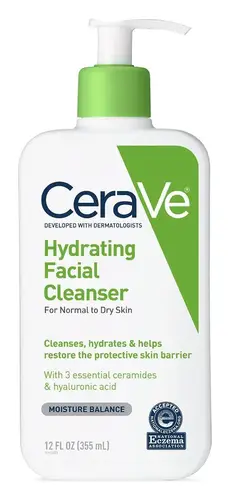
This mild cream makeup remover is made to dissolve makeup, sunscreen, and daily buildup.
This lactic acid cream cleanser is formulated around Lactic Acid to exfoliate and smooth skin.


What's inside
What's inside
 Key Ingredients
Benefits
Concerns
Ingredients Side-by-side
Water
Skin ConditioningHydrogenated Polyisobutene
EmollientTriethylhexanoin
MaskingDipropylene Glycol
HumectantIsododecane
EmollientCaprylic/Capric Triglyceride
Masking


Polyglyceryl-3 Distearate
Emulsifying

1,2-Hexanediol
Skin Conditioning
C12-14 Pareth-12
EmulsifyingGlyceryl Stearate
Emollient
Sodium Stearoyl Glutamate
CleansingPolyacrylate Crosspolymer-6
Emulsion StabilisingGlyceryl Stearate Citrate
Emollient
Simmondsia Chinensis Seed Oil
Emollient

Limnanthes Alba Seed Oil
Skin Conditioning
Xanthan Gum
EmulsifyingCitric Acid
Buffering

Caprylyl Glycol
Emollient
Ethylhexylglycerin
Skin ConditioningDisodium EDTA
ChelatingPropanediol
Solvent
Camellia Sinensis Leaf Extract
Antimicrobial





Butylene Glycol
Humectant
Glyceryl Caprylate
EmollientPolyglyceryl-10 Stearate
Skin Conditioning
Glycerin
Humectant
Inulin Lauryl Carbamate
Emulsion StabilisingTocopherol
Antioxidant

Water, Hydrogenated Polyisobutene, Triethylhexanoin, Dipropylene Glycol, Isododecane, Caprylic/Capric Triglyceride, Polyglyceryl-3 Distearate, 1,2-Hexanediol, C12-14 Pareth-12, Glyceryl Stearate, Sodium Stearoyl Glutamate, Polyacrylate Crosspolymer-6, Glyceryl Stearate Citrate, Simmondsia Chinensis Seed Oil, Limnanthes Alba Seed Oil, Xanthan Gum, Citric Acid, Caprylyl Glycol, Ethylhexylglycerin, Disodium EDTA, Propanediol, Camellia Sinensis Leaf Extract, Butylene Glycol, Glyceryl Caprylate, Polyglyceryl-10 Stearate, Glycerin, Inulin Lauryl Carbamate, Tocopherol
Calendula Officinalis Flower/Leaf/Stem Juice
Skin ConditioningDecyl Glucoside
Cleansing
Sodium Lauroyl Lactylate
EmulsifyingShea Butter Glycerides
Emulsifying
Maltooligosyl Glucoside
Skin ConditioningHydrogenated Starch Hydrolysate
HumectantDiglycerin
Humectant
Water
Skin ConditioningLactic Acid
Buffering


Glycerin
Humectant
Oenothera Biennis Oil
Emollient
Opuntia Ficus-Indica Stem
HumectantPassiflora Edulis Seed Oil
Emollient
Pyrus Malus Seed Oil
Emollient
Ricinus Communis Seed Oil
Masking
Simmondsia Chinensis Seed Oil
Emollient
Squalane
Emollient
Vitis Vinifera Seed Oil
Emollient
Magnolia Officinalis Bark Extract
Antimicrobial
Chamomilla Recutita Flower Extract
Masking
Borago Officinalis Leaf Extract
Skin ConditioningCalendula Officinalis Flower Extract
Masking
Lavandula Angustifolia Extract
Skin Conditioning
Medicago Sativa Extract
TonicHelianthus Annuus Seed Oil
Emollient
Cetyl Palmitate
Emollient
Sorbitan Palmitate
Emulsifying
Cetearyl Olivate
Sorbitan Olivate
Emulsifying
Sodium Anisate
AntimicrobialGlyceryl Caprylate
EmollientPhenethyl Alcohol
MaskingSodium Levulinate
Skin ConditioningSclerotium Gum
Emulsion StabilisingCalendula Officinalis Flower/Leaf/Stem Juice, Decyl Glucoside, Sodium Lauroyl Lactylate, Shea Butter Glycerides, Maltooligosyl Glucoside, Hydrogenated Starch Hydrolysate, Diglycerin, Water, Lactic Acid, Glycerin, Oenothera Biennis Oil, Opuntia Ficus-Indica Stem, Passiflora Edulis Seed Oil, Pyrus Malus Seed Oil, Ricinus Communis Seed Oil, Simmondsia Chinensis Seed Oil, Squalane, Vitis Vinifera Seed Oil, Magnolia Officinalis Bark Extract, Chamomilla Recutita Flower Extract, Borago Officinalis Leaf Extract, Calendula Officinalis Flower Extract, Lavandula Angustifolia Extract, Medicago Sativa Extract, Helianthus Annuus Seed Oil, Cetyl Palmitate, Sorbitan Palmitate, Cetearyl Olivate, Sorbitan Olivate, Sodium Anisate, Glyceryl Caprylate, Phenethyl Alcohol, Sodium Levulinate, Sclerotium Gum
Reviews
Alternatives
Ingredients Explained
These ingredients are found in both products.
Ingredients higher up in an ingredient list are typically present in a larger amount.
Glycerin (or glycerol) is a compound naturally found in your skin. It's a powerhouse humectant that pulls water into the stratum corneum.
Topically, glycerin does several things at once:
Your skin makes glycerin on its own (mostly from sebaceous oil breakdown) and shuttles it to your outermost layer of skin, or your epidermis, via aquaporin-3.
Aquaporin-3 is a transporter that is essential for normal skin hydration, elasticity, and repair. Interestingly, mice lacking in AQP3 have dry and less elastic skin that can be fully corrected with glycerin.
This ingredient is non-irritating, plays well with almost every ingredient, and works across all skin types. Typical use is anywhere between 3-10% but can go up to 79% in some leave-on products.
Just know very high concentrations (>40%) can feel tacky in low humidity.
Glycerin is the name for this ingredient in American English. British English uses Glycerol/Glycerine.
Learn more about GlycerinGlyceryl Caprylate comes from glycerin and caprylic acid. It is an emollient, co-emulsifier, and preservative booster.
Its short C8 fatty acid chain makes it behave differently from its longer-chain emollient cousins like Glyceryl Stearate. It feels more lightweight, fast-absorbing, and silky instead of rich and waxy.
As a co-emulsifier, its "head" and "tail" sit at the oil-water interface. But overall, the short C8 tail and not being water soluble means it doesn't really have the muscle to emulsify a formula on its own. That's why you'll often see it paired with a primary emulsifier like Cetearyl Glucoside.
Interestingly, Glyceryl Caprylate acts as a preservative booster. This is because its fatty-acid backbone disrupts microbial lipid membranes. It shows excellent activity against bacteria and yeast but is weaker against mold.
Typical concentrations range from 0.5-1% and this ingredient is generally non-irritating.
Because this ingredient has a C8 fatty acid chain, it is outside the range that the Malassezia yeast metabolizes (making it fungal acne safe).
Learn more about Glyceryl CaprylateJojoba oil is one of the most well-studied plant-derived ingredients in cosmetics. It is an emollient with a special structure.
Because it is made up of 97-98% wax esters, it closely mirrors the linear monoesters found in human sebum. This makes it skin compatible, non-greasy, and lightweight.
Unlike other plant oils, jojoba wax doesn't easily penetrate skin. It mostly works in the uppermost layers as an emollient. This just means it forms a light barrier on the skin to help retain moisture.
Formulations with jojoba esters up to 90% reduced transepidermal water loss (TEWL) and increased barrier recovery by 81% (outperforming bisabolol at 47%).
Besides barrier support, the science also suggests jojoba to have anti-inflammatory effects and potential applications for skin infections, aging, and wound healing.
Fun fact: Indigenous cultures have used jojoba as a moisturizer and to help treat burns for centuries.
Fungal acne: The Malassezia yeast is known to metabolize fatty acids in the C11-24 range and jojoba's dominant fatty acid components fall into this range. This ingredient may not be fungal acne safe.
Learn more about Simmondsia Chinensis Seed OilWater. It's the most common cosmetic ingredient of all. You'll usually see it at the top of ingredient lists, meaning that it makes up the largest part of the product.
So why is it so popular? Water most often acts as a solvent - this means that it helps dissolve other ingredients into the formulation.
You'll also recognize water as that liquid we all need to stay alive. If you see this, drink a glass of water. Remember to stay hydrated!
Learn more about Water