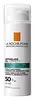
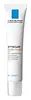
La Roche-Posay Anthelios Oil Correct Daily Gel-Cream SPF50+ Versus La Roche-Posay Effaclar Duo [+] SPF 30
This hybrid sunscreen covers the full UV range and blocks ~98% of UVB at SPF 50.
This acne day moisturizer is formulated around Niacinamide and Zinc PCA to clear breakouts and balance excess oil.

What's inside
What's inside
 Key Ingredients
Benefits
Concerns
Ingredients Side-by-side
Water
Skin ConditioningSilica
Abrasive


Isopropyl Palmitate
Emollient




Bis-Ethylhexyloxyphenol Methoxyphenyl Triazine
UV Absorber
Ethylhexyl Salicylate
UV Absorber
Ethylhexyl Triazone
UV Absorber
Butyl Methoxydibenzoylmethane
UV Absorber
Dicaprylyl Ether
Emollient
Niacinamide
Smoothing









Drometrizole Trisiloxane
UV Absorber
Phenylbenzimidazole Sulfonic Acid
UV Absorber
Diisopropyl Adipate
EmollientTriethanolamine
BufferingGlycerin
Humectant
Zea Mays Starch
Absorbent
Diisopropyl Sebacate
EmollientDiethylamino Hydroxybenzoyl Hexyl Benzoate
UV Filter
Pentylene Glycol
Skin Conditioning
Tocopherol
Antioxidant

Sodium Stearoyl Glutamate
CleansingPerlite
Absorbent
Acrylates/C10-30 Alkyl Acrylate Crosspolymer
Emulsion StabilisingCaprylyl Glycol
Emollient
CI 15510
Cosmetic ColorantCitrus Aurantium Dulcis Peel Oil
Masking

CI 16035
Cosmetic ColorantInulin Lauryl Carbamate
Emulsion StabilisingIsopropyl Lauroyl Sarcosinate
Skin ConditioningP-Anisic Acid
MaskingSalicylic Acid
Masking



Silica Silylate
Emollient
Sodium Polyacrylate
Absorbent
Terephthalylidene Dicamphor Sulfonic Acid
UV Absorber
Titanium Dioxide
Cosmetic Colorant
Trisodium Ethylenediamine Disuccinate
Tromethamine
BufferingXanthan Gum
EmulsifyingZinc PCA
Humectant
Parfum
Masking

Water, Silica, Isopropyl Palmitate, Bis-Ethylhexyloxyphenol Methoxyphenyl Triazine, Ethylhexyl Salicylate, Ethylhexyl Triazone, Butyl Methoxydibenzoylmethane, Dicaprylyl Ether, Niacinamide, Drometrizole Trisiloxane, Phenylbenzimidazole Sulfonic Acid, Diisopropyl Adipate, Triethanolamine, Glycerin, Zea Mays Starch, Diisopropyl Sebacate, Diethylamino Hydroxybenzoyl Hexyl Benzoate, Pentylene Glycol, Tocopherol, Sodium Stearoyl Glutamate, Perlite, Acrylates/C10-30 Alkyl Acrylate Crosspolymer, Caprylyl Glycol, CI 15510, Citrus Aurantium Dulcis Peel Oil, CI 16035, Inulin Lauryl Carbamate, Isopropyl Lauroyl Sarcosinate, P-Anisic Acid, Salicylic Acid, Silica Silylate, Sodium Polyacrylate, Terephthalylidene Dicamphor Sulfonic Acid, Titanium Dioxide, Trisodium Ethylenediamine Disuccinate, Tromethamine, Xanthan Gum, Zinc PCA, Parfum
Water
Skin ConditioningOctocrylene
UV Absorber
Glycerin
Humectant
Homosalate
Skin Conditioning
Ethylhexyl Salicylate
UV Absorber
Alcohol Denat.
Antimicrobial
Niacinamide
Smoothing
Butyl Methoxydibenzoylmethane
UV Absorber
Dimethicone
Emollient
Sorbitan Stearate
Emulsifying
Silica
Abrasive
Isopropyl Lauroyl Sarcosinate
Skin ConditioningStyrene/Acrylates Copolymer
Propylene Glycol
Humectant
Potassium Cetyl Phosphate
EmulsifyingDiisopropyl Sebacate
EmollientPEG-20
HumectantPEG-8 Laurate
Emulsifying
Zinc PCA
Humectant
Dimethicone/Vinyl Dimethicone Crosspolymer
Skin Conditioning
2-Oleamido-1,3-Octadecanediol
Skin ConditioningInulin Lauryl Carbamate
Emulsion StabilisingCarnosine
Skin Conditioning
Poloxamer 338
EmulsifyingAmmonium Polyacryloyldimethyl Taurate
Emulsion StabilisingDisodium EDTA
Sucrose Cocoate
Emulsifying
Capryloyl Salicylic Acid
Exfoliating
Xanthan Gum
EmulsifyingT-Butyl Alcohol
Perfuming
BHT
Antioxidant
Salicylic Acid
Masking
Parfum
Masking
Water, Octocrylene, Glycerin, Homosalate, Ethylhexyl Salicylate, Alcohol Denat., Niacinamide, Butyl Methoxydibenzoylmethane, Dimethicone, Sorbitan Stearate, Silica, Isopropyl Lauroyl Sarcosinate, Styrene/Acrylates Copolymer, Propylene Glycol, Potassium Cetyl Phosphate, Diisopropyl Sebacate, PEG-20, PEG-8 Laurate, Zinc PCA, Dimethicone/Vinyl Dimethicone Crosspolymer, 2-Oleamido-1,3-Octadecanediol, Inulin Lauryl Carbamate, Carnosine, Poloxamer 338, Ammonium Polyacryloyldimethyl Taurate, Disodium EDTA, Sucrose Cocoate, Capryloyl Salicylic Acid, Xanthan Gum, T-Butyl Alcohol, BHT, Salicylic Acid, Parfum
Reviews
Ingredients Explained
These ingredients are found in both products.
Ingredients higher up in an ingredient list are typically present in a larger amount.
Also known as Avobenzone, this ingredient is an oil-soluble used to absorb the full spectrum of UVA rays (peak 357 nm).
It's one of the most effective UVA filters available but has a major caveat of photostability: avobenzone is susceptible to photodegradation.
This means it can lose efficacy when exposed to sunlight without the help of a stabilizing agent.
Studies show antioxidants (like vitamin E or vitamin C) and some UV filters (like octocrylene and Tinosorb S) can meaningfully improve its stability in a formulation.
The maximum allowable concentration according to regulation is 3% in the US + Canada, and 5% in the EU, Australia, China, Korea, and ASEAN countries.
It has a well-support safety profile: a comprehensive 2025 review found minimal toxicity with no evidence of carcinogenicity.
Overall, avobenzone is a safe and regulated ingredient used in sunscreen for over 40 years.
Learn more about Butyl MethoxydibenzoylmethaneWe don't have a description for Diisopropyl Sebacate yet.
Ethylhexyl Salicylate (also called Octisalate or Octyl Salicylate) is an oil-soluble organic UV filter that's been used in sunscreen since the 1950's.
It absorbs UVB light in the 280-320 nm range with a peak absorbance around 306 nm.
You'll often see it paired with other UV filters to boost overall SPF because octisalate is a fairly week filter on its own.
The reason you'll see it so often is because it can help solubilize and stabilize the trickier filters like oxybenzone and avobenzone.
Unlike these filters, octisalate has pretty good photostability and doesn't create skin-damaging free radicals when exposed to sunlight.
The fatty-alcohol part of the molecule also gives it a light, emollient feel so it doubles as a nice texture enhancer.
Usage levels vary around the world:
Safety-wise, this ingredient has a pretty reassuring track record. The EU's Scientific Committee on Consumer Products (SCCP) found very low skin penetration in human skin tests and negative results for irritation, phototoxicity, and photoallergy.
The real-world allergy risk is pretty low too; a 2012 European study of 1,031 people recorded only 2 reactions to it (a rate of 0.19%).
You might have seen scary headlines about sunscreen getting into your blood.
In 2019, the FDA found that several chemical filters can absorb through the skin and show up in the bloodstream at small but measurable levels.
Here's the important part: these tiny levels are just a cutoff the FDA uses to decide which ingredients need more testing and doesn't mean anything harmful was found.
The researchers were clear that the results are no reason to stop wearing sunscreen.
Learn more about Ethylhexyl SalicylateGlycerin (or glycerol) is a compound naturally found in your skin. It's a powerhouse humectant that pulls water into the stratum corneum.
Topically, glycerin does several things at once:
Your skin makes glycerin on its own (mostly from sebaceous oil breakdown) and shuttles it to your outermost layer of skin, or your epidermis, via aquaporin-3.
Aquaporin-3 is a transporter that is essential for normal skin hydration, elasticity, and repair. Interestingly, mice lacking in AQP3 have dry and less elastic skin that can be fully corrected with glycerin.
This ingredient is non-irritating, plays well with almost every ingredient, and works across all skin types. Typical use is anywhere between 3-10% but can go up to 79% in some leave-on products.
Just know very high concentrations (>40%) can feel tacky in low humidity.
Glycerin is the name for this ingredient in American English. British English uses Glycerol/Glycerine.
Learn more about GlycerinInulin Lauryl Carbamate is a plant-derived emulsifier and emulsion stabilizer.
It has an interesting party trick: one end of the molecule grabs onto oil while the long (sugar) chains of the molecule wrap around each little oil droplet to hold water against it.
This keeps everything from separating in a formula and also breaks down the oily into tiny droplets so your skin can't feel them (also why these formulas feel light and non-greasy).
Typical usage dose ranges anywhere from 0.2-4.8% depending on how much oil is in the formula, and this ingredient works across a wide pH (4-11) + temperature range.
Safety-wise, it's pretty solid. It is reported as a non-irritant and is even recommended for sensitive-skin and sun care.
Learn more about Inulin Lauryl CarbamateWe don't have a description for Isopropyl Lauroyl Sarcosinate yet.
Niacinamide is a multitasking form of vitamin B3 that strengthens the skin barrier, reduces pores and dark spots, regulates oil, and improves signs of aging.
And the best part? It's gentle and well-tolerated by most skin types, including sensitive and reactive skin.
You might have heard of "niacin flush", or the reddening of skin that causes itchiness. Niacinamide has not been found to cause this.
In very rare cases, some individuals may not be able to tolerate niacinamide at all or experience an allergic reaction to it.
If you are experiencing flaking, irritation, and dryness with this ingredient, be sure to double check all your products as this ingredient can be found in all categories of skincare.
When incorporating niacinamide into your routine, look out for concentration amounts. Typically, 5% niacinamide provides benefits such as fading dark spots. However, if you have sensitive skin, it is better to begin with a smaller concentration.
When you apply niacinamide to your skin, your body converts it into nicotinamide adenine dinucleotide (NAD). NAD is an essential coenzyme that is already found in your cells as "fuel" and powers countless biological processes.
In your skin, NAD helps repair cell damage, produce new healthy cells, support collagen production, strengthen the skin barrier, and fight environmental stressors (like UV and pollution).
Our natural NAD levels start to decline with age, leading to slower skin repair, visible aging, and a weaker skin barrier. By providing your skin niacinamide, you're recharging your skin's NAD levels. This leads to stronger, healthier, and younger looking skin.
Another name for vitamin B3 is nicotinamide. This vitamin is water-soluble and our bodies don't store it. We obtain Vitamin B3 from either food or skincare. Meat, fish, wheat, yeast, and leafy greens contain vitamin B3.
The type of niacinamide used in skincare is synthetically created.
Learn more about NiacinamideParfum is a catch-all term for an ingredient or more that is used to give a scent to products.
Also called "fragrance", this ingredient can be a blend of hundreds of chemicals or plant oils. This means every product with "fragrance" or "parfum" in the ingredients list is a different mixture.
For instance, Habanolide is a proprietary trade name for a specific aroma chemical. When used as a fragrance ingredient in cosmetics, most aroma chemicals fall under the broad labeling category of “FRAGRANCE” or “PARFUM” according to EU and US regulations.
The term 'parfum' or 'fragrance' is not regulated in many countries. In many cases, it is up to the brand to define this term.
For instance, many brands choose to label themselves as "fragrance-free" because they are not using synthetic fragrances. However, their products may still contain ingredients such as essential oils that are considered a fragrance by INCI standards.
One example is Calendula flower extract. Calendula is an essential oil that still imparts a scent or 'fragrance'.
Depending on the blend, the ingredients in the mixture can cause allergies and sensitivities on the skin. Some ingredients that are known EU allergens include linalool and citronellol.
Parfum can also be used to mask or cover an unpleasant scent.
The bottom line is: not all fragrances/parfum/ingredients are created equally. If you are worried about fragrances, we recommend taking a closer look at an ingredient. And of course, we always recommend speaking with a professional.
Learn more about ParfumSalicylic Acid (also known as beta hydroxy acid or BHA) is a well-known ingredient for treating skin that struggles with acne and clogged pores. It exfoliates both the skin's surface and deep within the pores to help clear out buildup, control oil, and reduce inflammation.
Unlike AHAs (alpha hydroxy acids), salicylic acid is oil-soluble. This allows it to penetrate into pores which makes it especially effective for treating blackheads and preventing future breakouts.
Salicylic acid is also known for its soothing properties. It has a similar structure to aspirin and can calm inflamed or irritated skin, making it a good option for acne-prone skin that is also sensitive.
Concentrations of 0.5-2% are recognized by the U.S. FDA as an over-the-counter topical acne product.
It can cause irritation and/or dryness if one's skin already has a compromised moisture barrier, so it's best to focus on repairing that before introducing this ingredient into your routine.
While salicylic acid does not increase sun sensitivity, it’s still important to wear sunscreen daily to protect your skin.
If you are looking for the ingredient called BHA or Butylated Hydroxyanisole, click here.
Learn more about Salicylic AcidSilica, also known as silicon dioxide, is a naturally occurring mineral. It is used as a fine, spherical, and porous powder in cosmetics.
Though it has exfoliant properties, the function of silica varies depending on the product.
The unique structure of silica enhances the spreadability and adds smoothness, making it a great texture enhancer.
It is also used as an active carrier, emulsifier, and mattifier due to its ability to absorb excess oil.
In some products, tiny microneedles called spicules are made from silica or hydrolyzed sponge. When you rub them in, they lightly polish away dead skin layers and enhance the penetration of active ingredients.
Learn more about SilicaWater. It's the most common cosmetic ingredient of all. You'll usually see it at the top of ingredient lists, meaning that it makes up the largest part of the product.
So why is it so popular? Water most often acts as a solvent - this means that it helps dissolve other ingredients into the formulation.
You'll also recognize water as that liquid we all need to stay alive. If you see this, drink a glass of water. Remember to stay hydrated!
Learn more about WaterXanthan gum is used as a stabilizer and thickener within cosmetic products. It helps give products a sticky, thick feeling - preventing them from being too runny.
On the technical side of things, xanthan gum is a polysaccharide - a combination consisting of multiple sugar molecules bonded together.
Xanthan gum is a pretty common and great ingredient. It is a natural, non-toxic, non-irritating ingredient that is also commonly used in food products.
Learn more about Xanthan GumZinc PCA is a clever two-in-one molecule: the zinc salt of pyrrolidone carboxylic acid (PCA).
Think of it as two useful things bonded together; the PCA half is one of your skin's own natural moisturizing factors (NMF) so it helps hold water in the upper layers. On the other hand, the zinc half does the heavy lifting on oil and bacteria.
The zinc part slows down an enzyme that turns testosterone into DHT, the hormone that tells your oil glands to pump out more sebum. Less of that signal means less oil. It also gently fights acne-causing bacteria and soothes redness/irritation.
This is why Zinc PCA often shows up in products for oily, breakout-prone skin and greasy scalps.
One lab study also hinted it might have a small anti-aging perk because it seemed to protect collagen from UVA damage and even helped the skin make a bit more of it. That last bit is still early research done in a dish and not real skin, so take it as a nice bonus rather than a promise for now.
As for scar healing, the picture is more "maybe" than a firm yes. Zinc itself plays a real role in wound repair because it is a cofactor for the enzymes involved in collagen building, calming inflammation, and helping new skin cells cover a wound. Lower zinc levels are also linked to slower healing.
Most of the scar healing research is on zinc oxide or oral zinc rather than zinc PCA specifically, with a focus on healing fresh wounds instead of scars that are already there.
Direct evidence that zinc PCA improves the look of established scars is still limited at this time. Though it would be fair to say zinc PCA supports the general skin-repair environment thanks to its zinc content .
This ingredient is water-soluble and plays nicely with other actives like niacinamide and salicylic acid. It works best at mildly acidic formulas (~4-6 pH) and is effective at low levels. Around 0.1% is enough to be active and finished products commonly use it anywhere up to 4%.
Overall, this is a well-tolerated, low-drama multitasker that suits oily and acne-prone skin.
Learn more about Zinc PCA

