Kiehl's Pure Vitality Skin Renewing Cream Versus Kiehl's Hydro-Plumping Re-Texturizing Serum Concentrate
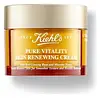
This smoothing moisturizer is formulated around Panax Ginseng Root Extract and Salicylic Acid to refine skin texture and hydrate skin.
This hydrating serum is formulated around Panthenol and Ascorbyl Glucoside to hydrate skin.

What's inside
What's inside
 Key Ingredients
Benefits
Concerns
Ingredients Side-by-side
Water
Skin ConditioningGlycerin
Humectant


Propanediol
Solvent
Dicaprylyl Ether
Emollient
Glyceryl Stearate
Emollient

Lauroyl Lysine
Skin Conditioning
Butyrospermum Parkii Butter
Skin Conditioning


Undecane
EmollientCetearyl Alcohol
Emollient

Arginine
Masking
Hydrogenated Lecithin
Emulsifying
Tridecane
Perfuming

Mel Extract
MoisturisingMica
Cosmetic ColorantPanax Ginseng Root Extract
Emollient

Cera Alba
Emollient
Capryloyl Glycine
CleansingTocopherol
Antioxidant




Citric Acid
Buffering
Sclerotium Gum
Emulsion StabilisingXanthan Gum
EmulsifyingSalicylic Acid
Masking






Potassium Sorbate
Preservative
Cedrus Atlantica Bark Oil
Masking


Leuconostoc/Radish Root Ferment Filtrate
Antimicrobial
Glycine Soja Oil
Emollient
Adenosine
Skin Conditioning
Caramel
Cosmetic ColorantCananga Odorata Flower Oil
Masking
Vanilla Planifolia Fruit Extract
Skin Conditioning
Bulnesia Sarmientoi Wood Oil
Masking
Citrus Aurantium Dulcis Peel Oil
Masking
Pelargonium Graveolens Flower Oil
Masking
Limonene
Perfuming
Benzyl Benzoate
Antimicrobial
Farnesol
Perfuming
Helianthus Annuus Seed Oil
Emollient
Water, Glycerin, Propanediol, Dicaprylyl Ether, Glyceryl Stearate, Lauroyl Lysine, Butyrospermum Parkii Butter, Undecane, Cetearyl Alcohol, Arginine, Hydrogenated Lecithin, Tridecane, Mel Extract, Mica, Panax Ginseng Root Extract, Cera Alba, Capryloyl Glycine, Tocopherol, Citric Acid, Sclerotium Gum, Xanthan Gum, Salicylic Acid, Potassium Sorbate, Cedrus Atlantica Bark Oil, Leuconostoc/Radish Root Ferment Filtrate, Glycine Soja Oil, Adenosine, Caramel, Cananga Odorata Flower Oil, Vanilla Planifolia Fruit Extract, Bulnesia Sarmientoi Wood Oil, Citrus Aurantium Dulcis Peel Oil, Pelargonium Graveolens Flower Oil, Limonene, Benzyl Benzoate, Farnesol, Helianthus Annuus Seed Oil
Water
Skin ConditioningCyclohexasiloxane
Emollient
Alcohol Denat.
Antimicrobial
Glycerin
Humectant
Butylene Glycol
Humectant
Dimethicone
Emollient
Zea Mays Germ Oil
Emollient
Panthenol
Skin Conditioning
Triethanolamine
BufferingAscorbyl Glucoside
Antioxidant
Glyceryl Linoleate
Emollient
Phenoxyethanol
Preservative
Polyperfluoromethylisopropyl Ether
Skin ConditioningPolyacrylamide
Dimethiconol
Emollient
Glyceryl Oleate
Emollient
Carbomer
Emulsion StabilisingCetyl Alcohol
Emollient
C13-14 Isoparaffin
Emollient
Parfum
Masking
Acrylates/C10-30 Alkyl Acrylate Crosspolymer
Emulsion StabilisingMethylparaben
Preservative

Glycine Soja Oil
Emollient
Caffeine
Skin Conditioning
Tocopherol
Antioxidant
Hydrogenated Lecithin
Emulsifying
Castanea Sativa Seed Extract
Skin ConditioningBenzophenone-4
UV Absorber
Menthol
Masking
Limonene
Perfuming
PEG-100 Stearate
Surfactant
Glyceryl Stearate
Emollient
Laureth-7
EmulsifyingHydrolyzed Soy Protein
Humectant
Potassium Cetyl Phosphate
EmulsifyingButylparaben
Masking
Disodium EDTA
ChelatingEthylparaben
Preservative
Glyceryl Linolenate
Emollient
Propylparaben
Preservative
Citrus Aurantium Dulcis Juice
Skin ConditioningCitrus Aurantium Dulcis Fruit Extract
MaskingCitrus Limon Juice
Skin Conditioning
Linalool
Perfuming
Citral
Perfuming
CI 42090
Cosmetic ColorantCI 14700
Cosmetic ColorantWater, Cyclohexasiloxane, Alcohol Denat., Glycerin, Butylene Glycol, Dimethicone, Zea Mays Germ Oil, Panthenol, Triethanolamine, Ascorbyl Glucoside, Glyceryl Linoleate, Phenoxyethanol, Polyperfluoromethylisopropyl Ether, Polyacrylamide, Dimethiconol, Glyceryl Oleate, Carbomer, Cetyl Alcohol, C13-14 Isoparaffin, Parfum, Acrylates/C10-30 Alkyl Acrylate Crosspolymer, Methylparaben, Glycine Soja Oil, Caffeine, Tocopherol, Hydrogenated Lecithin, Castanea Sativa Seed Extract, Benzophenone-4, Menthol, Limonene, PEG-100 Stearate, Glyceryl Stearate, Laureth-7, Hydrolyzed Soy Protein, Potassium Cetyl Phosphate, Butylparaben, Disodium EDTA, Ethylparaben, Glyceryl Linolenate, Propylparaben, Citrus Aurantium Dulcis Juice, Citrus Aurantium Dulcis Fruit Extract, Citrus Limon Juice, Linalool, Citral, CI 42090, CI 14700
Ingredients Explained
These ingredients are found in both products.
Ingredients higher up in an ingredient list are typically present in a larger amount.
Glycerin (or glycerol) is a compound naturally found in your skin. It's a powerhouse humectant that pulls water into the stratum corneum.
Topically, glycerin does several things at once:
Your skin makes glycerin on its own (mostly from sebaceous oil breakdown) and shuttles it to your outermost layer of skin, or your epidermis, via aquaporin-3.
Aquaporin-3 is a transporter that is essential for normal skin hydration, elasticity, and repair. Interestingly, mice lacking in AQP3 have dry and less elastic skin that can be fully corrected with glycerin.
This ingredient is non-irritating, plays well with almost every ingredient, and works across all skin types. Typical use is anywhere between 3-10% but can go up to 79% in some leave-on products.
Just know very high concentrations (>40%) can feel tacky in low humidity.
Glycerin is the name for this ingredient in American English. British English uses Glycerol/Glycerine.
Learn more about GlycerinGlyceryl Stearate is made by reacting glycerin with stearic acid (typically sourced from plant oils like palm or coconut). It's an emulsifier, emollient, and mild occlusive.
Emulsifiers help ingredients like oil and water stay mixed so your formula stays nicely blended and uniform in texture.
This ingredient is typically used in concentrations between 1-10%. Studies have found it to be non-sensitizing, non-phototoxic, and non-photoallergenic.
A close cousin of this ingredient is Glyceryl Stearate SE ("self-emulsifying"). This just has a small amount of sodium or potassium stearate added so it can emulsify without a co-emulsifier.
Since this ingredient is an ester of a C18 fatty acid, it may not be fungal acne safe. The Malassezia yeast can potentially metabolize within the C11-C24 range.
Fun fact: The human body also creates Glyceryl Stearate naturally.
Learn more about Glyceryl StearateGlycine Soja Oil is a plant-derived oil from soybean seeds. Like other oils, it is rich in essential fatty acids (mostly linoleic and oleic) that support skin hydration and barrier function.
The fatty acids are able to integrate into the lipid matrix of the stratum corneum to help soften skin and reduce water loss.
On top of that, soybean oil is rich in vitamins like vitamin E, a potent antioxidant.
Research on soybean's active components also point to anti-inflammatory, collagen-stimulating, antioxidant activity, and protection against UV-induced oxidative damage.
Most of this research applies to the broader soybean plant and not just the oil fraction alone.
This ingredient does carry a comedogenic rating of 3 from the old rabbit-ear assay. Just remember testing finished products in humans showed that formulas built with "comedogenic" ingredients are not necessarily comedogenic themselves. It's worth patch testing if you're breakout prone, and always listen to your skin.
Because this ingredient is a saturated triglyceride, it may not be fungal acne safe. This is because Malassezia breaks down sebum triglycerides into fatty acids it can consume, making this ingredient a possible source for the yeast.
Learn more about Glycine Soja OilHydrogenated Lecithin is a more stable version of lecithin.
It's made by taking lecithin (a phospholipid commonly found in soybeans and egg yolks) and hydrogenating it. This just means the unsaturated fatty acids are turned into saturated ones so they don't go bad as easily.
This ingredient is an emollient, emulsifier, and penetration enhancer. As an emollient, it helps soften and hydrate skin by trapping moisture within. As an emulsifier, it prevents oil and water ingredients from separating.
Hydrogenated Lecithin can form tiny spherical structures made of phospholipid bilayers called liposomes. These liposomes are able to capture compounds inside their structure and deliver them through the skin barrier.
Because phospholipids are a natural component of our cell membranes, this ingredient is inherently compatible with skin.
A 2021 study found lecithin-based surfactants were less harsh and more tolerable comared to Sodium Lauryl Sulfate (SLS).
Learn more about Hydrogenated LecithinLimonene is the compound that gives citrus peel its smell.
In skincare, it shows up as a standalone fragrance ingredient or as a natural compound of citrus and other essential oils.
You'll typically see this ingredient used in very small amounts; anything above 0.001% in a leave-on product or 0.01% in a rinse-off has to be named on the label in the EU. The citrus oils that carry it sit around 0.5-1% in a finished formula.
Fresh limonene is a weak allergen; the real issue is that it slowly reacts with air and then breaks down from oxidation to create hydroperoxides (which are strong sensitizers). This is why suppliers are required to keep the peroxide value below 20 mmol.
Positive reactions in people being investigated for eczema vary:
It's worth skipping if you have a known fragrance allergy or a compromised barrier, but the risk is low for most people.
Older or long-opened products are also more likely to bother you than fresh ones due to oxidation.
Learn more about LimoneneTocopherol is a fat-soluble antioxidant known as Vitamin E.
You'll find this ingredient in the vast majority of skincare (for good reason). It works to neutralize free radicals, or unstable molecules generated by UV exposure, pollution, and other environmental stressors, before they can cause oxidative damage to your skin cells.
Topically applied tocopherol has been shown to protect against UV damage by ramping up the skin's own natural defense enzymes.
It also acts as a skin conditioning agent; some studies show that regular topical use can improve the skin's water-binding capacity over 2-4 weeks.
This ingredient is especially loved for being a team player. When combined with Vitamin C, the photoprotective effect of both ingredients roughly doubles and the combo also helps reduce UV-induced DNA damage.
This ingredient has some brightening potential but it's more of a prevention ingredient than spot-fader. Cell studies show it can slow down melanin production but it's worth noting that it's not the most powerful brightener out there.
In formulations, it also serves as a stabilizer that helps protect other oxidation-prone ingredients from degrading.
Concentrations usually range from 0.1-1% in most leave-on products.
Learn more about TocopherolWater. It's the most common cosmetic ingredient of all. You'll usually see it at the top of ingredient lists, meaning that it makes up the largest part of the product.
So why is it so popular? Water most often acts as a solvent - this means that it helps dissolve other ingredients into the formulation.
You'll also recognize water as that liquid we all need to stay alive. If you see this, drink a glass of water. Remember to stay hydrated!
Learn more about Water

