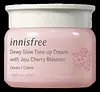
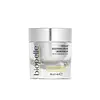
innisfree Dewy Glow Tone-Up Cream With Jeju Cherry Blossom Versus Biopelle Tensage Soothing Cream Moisturizer
This brightening day moisturizer is formulated around Niacinamide to brighten dull-looking skin.
This calming moisturizer is formulated around Snail Secretion Filtrate and Squalane to calm redness and hydrate skin.


What's inside
What's inside
 Key Ingredients
Benefits
Concerns
Ingredients Side-by-side
Water
Skin ConditioningGlycerin
Humectant


Propanediol
Solvent
Dipropylene Glycol
HumectantNiacinamide
Smoothing









Betaine
Humectant
1,2-Hexanediol
Skin Conditioning
Carbomer
Emulsion StabilisingTromethamine
BufferingAmmonium Acryloyldimethyltaurate/Beheneth-25 Methacrylate Crosspolymer
Emulsion StabilisingDisodium EDTA
ChelatingEthylhexylglycerin
Skin ConditioningParfum
Masking




Prunus Yedoensis Leaf Extract
Skin ConditioningTocopherol
Antioxidant

Water
Skin ConditioningCoconut Alkanes
Emollient

Butylene Glycol
Humectant
Glycerin
Humectant
Snail Secretion Filtrate
Skin Conditioning
Cetyl Alcohol
Emollient

Glyceryl Stearate
Emollient
Squalane
Emollient
Phenoxyethanol
Preservative
Propanediol
Solvent
Lecithin
Emollient
Sodium Acrylates Copolymer
Sodium Polyacrylate
Absorbent
Propylene Glycol
Humectant
Carbomer
Emulsion StabilisingCoco-Caprylate/Caprate
Emollient
Polysorbate 20
Emulsifying
Palmitoyl Tripeptide-7 Hcl
Skin Conditioning
Palmitoyl Tripeptide-1
Skin Conditioning
Dimethyl Isosorbide
SolventGlycosaminoglycans
EmollientHydrolyzed Soy Protein
Humectant
Maltodextrin
Absorbent
Potassium Sorbate
Preservative
Saccharide Isomerate
Humectant
Ethylhexylglycerin
Skin ConditioningPEG-7 Glyceryl Cocoate
Emulsifying
Pentylene Glycol
Skin Conditioning
Hexylene Glycol
EmulsifyingSodium Phytate
ChelatingTocopherol
Antioxidant
Sodium Acetylated Hyaluronate
Humectant
Caprylyl Glycol
Emollient
Sodium Hyaluronate
Humectant
Fructose
Humectant
Glucose
Humectant
Trisodium Ethylenediamine Disuccinate
ChelatingSodium Hyaluronate Crosspolymer
Humectant
Dehydroxanthan Gum
Emulsion StabilisingUrea
Buffering
Aminoethylphosphinic Acid
Skin ConditioningHydrolyzed Caesalpinia Spinosa Gum
AbsorbentParfum
Masking
Yeast Amino Acids
HumectantHydrolyzed Sodium Hyaluronate
Skin Conditioning
Betaine
Humectant
Inositol
Humectant
Taurine
BufferingTrehalose
Humectant
Decarboxy Carnosine Hcl
Skin ConditioningCamellia Sinensis Leaf Extract
Antimicrobial
Glycyrrhiza Glabra Root Extract
Bleaching
Caesalpinia Spinosa Gum
Skin ConditioningDextrin
AbsorbentSucrose
Humectant
Ganoderma Lucidum Extract
Skin Protecting
Dextran
Palmitoyl Tripeptide-8
Skin Conditioning
Citric Acid
Buffering
Sodium Citrate
BufferingAlanine
Masking
Aspartic Acid
Masking
Glutamic Acid
Humectant
Hexyl Nicotinate
EmollientAcetyl Hexapeptide-8
Humectant
Hexapeptide-10
Humectant
Water, Coconut Alkanes, Butylene Glycol, Glycerin, Snail Secretion Filtrate, Cetyl Alcohol, Glyceryl Stearate, Squalane, Phenoxyethanol, Propanediol, Lecithin, Sodium Acrylates Copolymer, Sodium Polyacrylate, Propylene Glycol, Carbomer, Coco-Caprylate/Caprate, Polysorbate 20, Palmitoyl Tripeptide-7 Hcl, Palmitoyl Tripeptide-1, Dimethyl Isosorbide, Glycosaminoglycans, Hydrolyzed Soy Protein, Maltodextrin, Potassium Sorbate, Saccharide Isomerate, Ethylhexylglycerin, PEG-7 Glyceryl Cocoate, Pentylene Glycol, Hexylene Glycol, Sodium Phytate, Tocopherol, Sodium Acetylated Hyaluronate, Caprylyl Glycol, Sodium Hyaluronate, Fructose, Glucose, Trisodium Ethylenediamine Disuccinate, Sodium Hyaluronate Crosspolymer, Dehydroxanthan Gum, Urea, Aminoethylphosphinic Acid, Hydrolyzed Caesalpinia Spinosa Gum, Parfum, Yeast Amino Acids, Hydrolyzed Sodium Hyaluronate, Betaine, Inositol, Taurine, Trehalose, Decarboxy Carnosine Hcl, Camellia Sinensis Leaf Extract, Glycyrrhiza Glabra Root Extract, Caesalpinia Spinosa Gum, Dextrin, Sucrose, Ganoderma Lucidum Extract, Dextran, Palmitoyl Tripeptide-8, Citric Acid, Sodium Citrate, Alanine, Aspartic Acid, Glutamic Acid, Hexyl Nicotinate, Acetyl Hexapeptide-8, Hexapeptide-10
Ingredients Explained
These ingredients are found in both products.
Ingredients higher up in an ingredient list are typically present in a larger amount.
Betaine is a humectant. Like hyaluronic acid, it helps attract and retain moisture in the skin. It’s known for being gentle and for helping the skin maintain balanced hydration.
Betaine is mainly used to improve hydration and support calmer skin. It helps skin cells regulate water balance because it functions as an osmolyte.
Some studies suggest betaine may support making skin tone more even.
Fun fact: Betaine naturally exists in the skin and the body. In cosmetic products, it can be either plant-derived (most commonly from sugar beets) or synthetically produced for consistency and stability.
Betaine is also known as trimethylglycine.
Learn more about BetaineCarbomer is a synthetic thickening and gelling agent. It's basically the ingredient that gives a lot of serums, gels, creams, and sunscreens their smooth, non-sticky texture.
Although legally permitted at very high levels, carbomers are normally used at concentrations below 1%.
It also needs to be neutralized to actually thicken, and because it is a large molecule, it doesn't really penetrate the skin barrier.
Allergy-wise, the risk is very low. Clinical studies show carbomers have low potential for skin irritation/sensitization even at concentrations up to 100%.
A 2024 UK study patch-tested 1,302 patients and found true allergy to the parent group of carbomer to be rare with no confirmed relevant reactions.
Learn more about CarbomerEthylhexylglycerin is created from glycerin. It is a multitasker ingredient that:
The CIR Expert Panel found minimal skin absorption or sensitization of any kind in a safety assessment. Though this ingredient is considered well-tolerated, a small number of cases of allergic dermatitis have been published since 2002. Just be sure to patch test if you are unsure.
Industry-reported use ranges from 8% in rinse-off products and 2% in leave-on formulations.
Learn more about EthylhexylglycerinGlycerin (or glycerol) is a compound naturally found in your skin. It's a powerhouse humectant that pulls water into the stratum corneum.
Topically, glycerin does several things at once:
Your skin makes glycerin on its own (mostly from sebaceous oil breakdown) and shuttles it to your outermost layer of skin, or your epidermis, via aquaporin-3.
Aquaporin-3 is a transporter that is essential for normal skin hydration, elasticity, and repair. Interestingly, mice lacking in AQP3 have dry and less elastic skin that can be fully corrected with glycerin.
This ingredient is non-irritating, plays well with almost every ingredient, and works across all skin types. Typical use is anywhere between 3-10% but can go up to 79% in some leave-on products.
Just know very high concentrations (>40%) can feel tacky in low humidity.
Glycerin is the name for this ingredient in American English. British English uses Glycerol/Glycerine.
Learn more about GlycerinParfum is a catch-all term for an ingredient or more that is used to give a scent to products.
Also called "fragrance", this ingredient can be a blend of hundreds of chemicals or plant oils. This means every product with "fragrance" or "parfum" in the ingredients list is a different mixture.
For instance, Habanolide is a proprietary trade name for a specific aroma chemical. When used as a fragrance ingredient in cosmetics, most aroma chemicals fall under the broad labeling category of “FRAGRANCE” or “PARFUM” according to EU and US regulations.
The term 'parfum' or 'fragrance' is not regulated in many countries. In many cases, it is up to the brand to define this term.
For instance, many brands choose to label themselves as "fragrance-free" because they are not using synthetic fragrances. However, their products may still contain ingredients such as essential oils that are considered a fragrance by INCI standards.
One example is Calendula flower extract. Calendula is an essential oil that still imparts a scent or 'fragrance'.
Depending on the blend, the ingredients in the mixture can cause allergies and sensitivities on the skin. Some ingredients that are known EU allergens include linalool and citronellol.
Parfum can also be used to mask or cover an unpleasant scent.
The bottom line is: not all fragrances/parfum/ingredients are created equally. If you are worried about fragrances, we recommend taking a closer look at an ingredient. And of course, we always recommend speaking with a professional.
Learn more about ParfumPropanediol is an all-star ingredient. It softens, hydrates, and smooths the skin.
It’s often used to:
Propanediol is not likely to cause sensitivity and considered safe to use. It is derived from corn or petroleum with a clear color and no scent.
Learn more about PropanediolTocopherol is a fat-soluble antioxidant known as Vitamin E.
You'll find this ingredient in the vast majority of skincare (for good reason). It works to neutralize free radicals, or unstable molecules generated by UV exposure, pollution, and other environmental stressors, before they can cause oxidative damage to your skin cells.
Topically applied tocopherol has been shown to protect against UV damage by ramping up the skin's own natural defense enzymes.
It also acts as a skin conditioning agent; some studies show that regular topical use can improve the skin's water-binding capacity over 2-4 weeks.
This ingredient is especially loved for being a team player. When combined with Vitamin C, the photoprotective effect of both ingredients roughly doubles and the combo also helps reduce UV-induced DNA damage.
This ingredient has some brightening potential but it's more of a prevention ingredient than spot-fader. Cell studies show it can slow down melanin production but it's worth noting that it's not the most powerful brightener out there.
In formulations, it also serves as a stabilizer that helps protect other oxidation-prone ingredients from degrading.
Concentrations usually range from 0.1-1% in most leave-on products.
Learn more about TocopherolWater. It's the most common cosmetic ingredient of all. You'll usually see it at the top of ingredient lists, meaning that it makes up the largest part of the product.
So why is it so popular? Water most often acts as a solvent - this means that it helps dissolve other ingredients into the formulation.
You'll also recognize water as that liquid we all need to stay alive. If you see this, drink a glass of water. Remember to stay hydrated!
Learn more about Water


