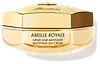
This anti-aging day moisturizer is formulated around Royal Jelly and Palmitoyl Hexapeptide-12 to soften the look of wrinkles.

What's inside
What's inside
 Key Ingredients
Benefits
Concerns
Ingredients Side-by-side
Water
Skin ConditioningGlycerin
Humectant


Propanediol
Solvent
C15-19 Alkane
SolventIsononyl Isononanoate
EmollientMel
EmollientJojoba Esters
Emollient

Glyceryl Stearate
Emollient
PEG-100 Stearate
Surfactant
Cellulose
Absorbent
Ammonium Acryloyldimethyltaurate/Vp Copolymer
Cetyl Alcohol
Emollient

Dimethicone
Emollient
Stearyl Alcohol
Emollient
Royal Jelly

Phenoxyethanol
Preservative
Ascorbyl Glucoside
Antioxidant



Caprylyl Glycol
Emollient
Steareth-21
CleansingParfum
Masking



Butyrospermum Parkii Butter
Skin Conditioning

Acrylates/C10-30 Alkyl Acrylate Crosspolymer
Emulsion StabilisingAvena Sativa Kernel Extract
Abrasive

Tocopheryl Acetate
Antioxidant
Xanthan Gum
EmulsifyingSodium Hydroxide
BufferingTetrasodium EDTA
ChelatingGlyceryl Polymethacrylate
Centella Asiatica Leaf Extract
Skin Conditioning
Sodium Hyaluronate
Humectant
Glycyrrhiza Glabra Root Extract
Bleaching
PEG-8
HumectantTocopherol
Antioxidant
Sodium Benzoate
Masking
Hyaluronic Acid
Humectant
Butylene Glycol
Humectant
Sodium Lactate
Buffering
Zingiber Officinale Root Extract
Masking
BHT
Antioxidant
Palmitoyl Hexapeptide-12
Skin Conditioning
Citric Acid
Buffering
Water, Glycerin, Propanediol, C15-19 Alkane, Isononyl Isononanoate, Mel, Jojoba Esters, Glyceryl Stearate, PEG-100 Stearate, Cellulose, Ammonium Acryloyldimethyltaurate/Vp Copolymer, Cetyl Alcohol, Dimethicone, Stearyl Alcohol, Royal Jelly, Phenoxyethanol, Ascorbyl Glucoside, Caprylyl Glycol, Steareth-21, Parfum, Butyrospermum Parkii Butter, Acrylates/C10-30 Alkyl Acrylate Crosspolymer, Avena Sativa Kernel Extract, Tocopheryl Acetate, Xanthan Gum, Sodium Hydroxide, Tetrasodium EDTA, Glyceryl Polymethacrylate, Centella Asiatica Leaf Extract, Sodium Hyaluronate, Glycyrrhiza Glabra Root Extract, PEG-8, Tocopherol, Sodium Benzoate, Hyaluronic Acid, Butylene Glycol, Sodium Lactate, Zingiber Officinale Root Extract, BHT, Palmitoyl Hexapeptide-12, Citric Acid
Water
Skin ConditioningPropanediol
Solvent
Butylene Glycol
Humectant
Pentylene Glycol
Skin Conditioning
Glycerin
Humectant
Royal Jelly
Mel
EmollientPPG-26-Buteth-26
Skin ConditioningSaccharide Isomerate
Humectant
Panthenol
Skin Conditioning
Zinc PCA
Humectant


PEG-40 Hydrogenated Castor Oil
Emulsifying
Chlorphenesin
Antimicrobial
Polyquaternium-51
Skin Conditioning
Fructose
Humectant
Maltodextrin
Absorbent
Cassia Alata Leaf Extract
AstringentXanthan Gum
EmulsifyingParfum
Masking
Aesculus Hippocastanum Extract
Antioxidant
Saccharomyces Cerevisiae Extract
Skin Conditioning
Simmondsia Chinensis Seed Oil
Emollient
Citric Acid
Buffering
Sodium Citrate
BufferingTocopherol
Antioxidant
1,2-Hexanediol
Skin Conditioning
Caprylyl Glycol
Emollient
Potassium Sorbate
Preservative
Water, Propanediol, Butylene Glycol, Pentylene Glycol, Glycerin, Royal Jelly, Mel, PPG-26-Buteth-26, Saccharide Isomerate, Panthenol, Zinc PCA, PEG-40 Hydrogenated Castor Oil, Chlorphenesin, Polyquaternium-51, Fructose, Maltodextrin, Cassia Alata Leaf Extract, Xanthan Gum, Parfum, Aesculus Hippocastanum Extract, Saccharomyces Cerevisiae Extract, Simmondsia Chinensis Seed Oil, Citric Acid, Sodium Citrate, Tocopherol, 1,2-Hexanediol, Caprylyl Glycol, Potassium Sorbate
Ingredients Explained
These ingredients are found in both products.
Ingredients higher up in an ingredient list are typically present in a larger amount.
Butylene Glycol (or BG) is used within cosmetic products for a few different reasons:
Overall, Butylene Glycol is a safe and well-rounded ingredient that works well with other ingredients.
Though this ingredient works well with most skin types, some people with sensitive skin may experience a reaction such as allergic rashes, closed comedones, or itchiness.
Learn more about Butylene GlycolCaprylyl Glycol is a humectant, skin conditioner, emollient, and preservative booster derived from either caprylic acid or synthetically created.
Typical use levels vary from 0.3-1% as a preservative booster and go up to 2% to condition skin.
Because it is not a free-fatty acid, this ingredient is fungal acne safe (there's nothing for Malassezia to feed on).
Learn more about Caprylyl GlycolCitric Acid is an alpha hydroxy acid (AHA) naturally found in citrus fruits like oranges, lemons, and limes.
Like other AHAs, citric acid can exfoliate skin by breaking down the bonds that hold dead skin cells together. This helps reveal smoother and brighter skin underneath.
However, this exfoliating effect only happens at high concentrations (20%) which can be hard to find in cosmetic products.
Due to this, citric acid is usually included in small amounts as a pH adjuster. This helps keep products slightly more acidic and compatible with skin's natural pH.
In skincare formulas, citric acid can:
While it can provide some skin benefits, research shows lactic acid and glycolic acid are generally more effective and less irritating exfoliants.
Most citric acid used in skincare today is made by fermenting sugars (usually from molasses). This synthetic version is identical to the natural citrus form but easier to stabilize and use in formulations.
Rosacea skin has a lower threshold for acids generally, with 62.5% of rosacea subjects in one study reacting to lactic acid in a sting test. This is why we mark citric acid as a potential rosacea trigger.
However, this ingredient shows up as a pH adjuster or chelator at roughly 0.1-1% in many products. These low levels are unlikely to be an issue for rosacea skin and becomes a potential trigger at exfoliating concentrations (20%). Because everybody's skin is unique, we recommend a patch test if you are unsure.
Learn more about Citric AcidGlycerin (or glycerol) is a compound naturally found in your skin. It's a powerhouse humectant that pulls water into the stratum corneum.
Topically, glycerin does several things at once:
Your skin makes glycerin on its own (mostly from sebaceous oil breakdown) and shuttles it to your outermost layer of skin, or your epidermis, via aquaporin-3.
Aquaporin-3 is a transporter that is essential for normal skin hydration, elasticity, and repair. Interestingly, mice lacking in AQP3 have dry and less elastic skin that can be fully corrected with glycerin.
This ingredient is non-irritating, plays well with almost every ingredient, and works across all skin types. Typical use is anywhere between 3-10% but can go up to 79% in some leave-on products.
Just know very high concentrations (>40%) can feel tacky in low humidity.
Glycerin is the name for this ingredient in American English. British English uses Glycerol/Glycerine.
Learn more about GlycerinThis ingredient is another INCI name for honey.
Honey mostly shows up in skincare as a humectant and skin conditioning agent. This is because its natural sugars (fructose and glucose) help hold onto water so skin feels softer and more hydrated.
Beyond hydration, honey also has antibacterial and wound-supporting properties. Its antibacterial action comes from a mix of things:
Manuka-type honey has an extra bacteria-killing compound called methylglyoxal, while all Honey contains a natural antibacterial protein called bee defensin-1.
Honey also nudges your immune cells to release signals that start the healing process. This is why medical-grade Honey is actually used in real wound dressings.
Just keep in mind that most of the strong clinical evidence is for wound care and not everyday cosmetic claims.
On concentrations and safety:
According to industry data, honey is used up to 22% in paste/mud packs, 7% as a honey extract in body/hand products, and face skincare levels sit well below that.
A human repeat insult patch test of 7% honey extract in 112 subjects showed no sensitization.
Allergy-wise, honey itself is a rare sensitizer. The bigger culprit is usually propolis that sometimes tags along in less-refined honey.
People allergic to propolis, conifer, poplar, salicylates, or Balsam of Peru are advised to avoid this ingredient due to shared allergens.
You might see this ingredient listed as either Honey or Mel. (they're the same thing). Mel is simply the Latin word for honey.
A lot of people wonder if Honey is vegan, and technically it isn't.
Honey is made by bees; they gather nectar and their natural enzymes turn it into the Honey we know. So because it comes from an animal, it doesn't fit a vegan lifestyle.
And please remember to be kind to bees :). They're vital to so many ecosystems, and many species are struggling so they're worth protecting.
Learn more about MelParfum is a catch-all term for an ingredient or more that is used to give a scent to products.
Also called "fragrance", this ingredient can be a blend of hundreds of chemicals or plant oils. This means every product with "fragrance" or "parfum" in the ingredients list is a different mixture.
For instance, Habanolide is a proprietary trade name for a specific aroma chemical. When used as a fragrance ingredient in cosmetics, most aroma chemicals fall under the broad labeling category of “FRAGRANCE” or “PARFUM” according to EU and US regulations.
The term 'parfum' or 'fragrance' is not regulated in many countries. In many cases, it is up to the brand to define this term.
For instance, many brands choose to label themselves as "fragrance-free" because they are not using synthetic fragrances. However, their products may still contain ingredients such as essential oils that are considered a fragrance by INCI standards.
One example is Calendula flower extract. Calendula is an essential oil that still imparts a scent or 'fragrance'.
Depending on the blend, the ingredients in the mixture can cause allergies and sensitivities on the skin. Some ingredients that are known EU allergens include linalool and citronellol.
Parfum can also be used to mask or cover an unpleasant scent.
The bottom line is: not all fragrances/parfum/ingredients are created equally. If you are worried about fragrances, we recommend taking a closer look at an ingredient. And of course, we always recommend speaking with a professional.
Learn more about ParfumPropanediol is an all-star ingredient. It softens, hydrates, and smooths the skin.
It’s often used to:
Propanediol is not likely to cause sensitivity and considered safe to use. It is derived from corn or petroleum with a clear color and no scent.
Learn more about PropanediolRoyal Jelly Extract is a secretion made by worker honeybees. This secretion is white and described as creamy.
This compound has antibacterial, anti-aging, antioxidant, and anti-inflammatory properties. The antibacterial property makes Royal Jelly helpful in wound-healing.
Antioxidants help protect our skin against free radical molecules. These molecules may damage our skin's DNA. Two antioxidant compounds found in royal jelly are ferulic acid and quercetin.
Compounds found in royal jelly include: sulfur, calcium, zinc, iron, and B vitamins.
Royal Jelly is derived from honeybees. This means it is not vegan.
Learn more about Royal JellyTocopherol is a fat-soluble antioxidant known as Vitamin E.
You'll find this ingredient in the vast majority of skincare (for good reason). It works to neutralize free radicals, or unstable molecules generated by UV exposure, pollution, and other environmental stressors, before they can cause oxidative damage to your skin cells.
Topically applied tocopherol has been shown to protect against UV damage by ramping up the skin's own natural defense enzymes.
It also acts as a skin conditioning agent; some studies show that regular topical use can improve the skin's water-binding capacity over 2-4 weeks.
This ingredient is especially loved for being a team player. When combined with Vitamin C, the photoprotective effect of both ingredients roughly doubles and the combo also helps reduce UV-induced DNA damage.
This ingredient has some brightening potential but it's more of a prevention ingredient than spot-fader. Cell studies show it can slow down melanin production but it's worth noting that it's not the most powerful brightener out there.
In formulations, it also serves as a stabilizer that helps protect other oxidation-prone ingredients from degrading.
Concentrations usually range from 0.1-1% in most leave-on products.
Learn more about TocopherolWater. It's the most common cosmetic ingredient of all. You'll usually see it at the top of ingredient lists, meaning that it makes up the largest part of the product.
So why is it so popular? Water most often acts as a solvent - this means that it helps dissolve other ingredients into the formulation.
You'll also recognize water as that liquid we all need to stay alive. If you see this, drink a glass of water. Remember to stay hydrated!
Learn more about WaterXanthan gum is used as a stabilizer and thickener within cosmetic products. It helps give products a sticky, thick feeling - preventing them from being too runny.
On the technical side of things, xanthan gum is a polysaccharide - a combination consisting of multiple sugar molecules bonded together.
Xanthan gum is a pretty common and great ingredient. It is a natural, non-toxic, non-irritating ingredient that is also commonly used in food products.
Learn more about Xanthan Gum

