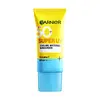
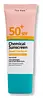
Garnier Super UV Cooling Watergel Sunscreen SPF 50+ Versus The Raw Cera-Shield Chemical Sunscreen SPF 50+
This chemical sunscreen covers the full UV range and blocks ~98% of UVB at SPF 50.
This chemical sunscreen covers the full UV range and blocks ~98% of UVB at SPF 50.


What's inside
What's inside
 Key Ingredients
Benefits
Concerns
Ingredients Side-by-side
Water
Skin ConditioningEthylhexyl Methoxycinnamate
UV Absorber


Alcohol Denat.
Antimicrobial



Isopropyl Palmitate
Emollient


Diethylamino Hydroxybenzoyl Hexyl Benzoate
UV Filter
Bis-Ethylhexyloxyphenol Methoxyphenyl Triazine
Skin Conditioning
Ethylhexyl Triazone
UV Absorber
Silica
Abrasive


Dipropylene Glycol
HumectantCoco-Caprylate/Caprate
Emollient
Cetearyl Alcohol
Emollient
Diisopropyl Sebacate
EmollientCI 42090
Cosmetic ColorantTocopherol
Antioxidant







Ascorbyl Glucoside
Antioxidant

Hydroxyacetophenone
Antioxidant
Sodium Stearoyl Glutamate
CleansingSodium Dodecylbenzenesulfonate
CleansingPhenoxyethanol
Preservative
PEG-20
HumectantPEG-8 Laurate
Emulsifying
Trisodium Ethylenediamine Disuccinate
Ammonium Acryloyldimethyltaurate/Vp Copolymer
Limonene
Perfuming

Menthol
Masking
Xanthan Gum
EmulsifyingLinalool
Perfuming
Isocetyl Stearate
Emollient
Parfum
Masking
Carbomer
Emulsion StabilisingGeraniol
Perfuming
Cetearyl Glucoside
Emulsifying
Citrus Limon Fruit Extract
Masking
Potassium Hydroxide
BufferingBHT
Antioxidant
Citral
Perfuming
Inulin Lauryl Carbamate
Emulsion StabilisingStyrene/Acrylates Copolymer
Glycerin
Humectant
Water, Ethylhexyl Methoxycinnamate, Alcohol Denat., Isopropyl Palmitate, Diethylamino Hydroxybenzoyl Hexyl Benzoate, Bis-Ethylhexyloxyphenol Methoxyphenyl Triazine, Ethylhexyl Triazone, Silica, Dipropylene Glycol, Coco-Caprylate/Caprate, Cetearyl Alcohol, Diisopropyl Sebacate, CI 42090, Tocopherol, Ascorbyl Glucoside, Hydroxyacetophenone, Sodium Stearoyl Glutamate, Sodium Dodecylbenzenesulfonate, Phenoxyethanol, PEG-20, PEG-8 Laurate, Trisodium Ethylenediamine Disuccinate, Ammonium Acryloyldimethyltaurate/Vp Copolymer, Limonene, Menthol, Xanthan Gum, Linalool, Isocetyl Stearate, Parfum, Carbomer, Geraniol, Cetearyl Glucoside, Citrus Limon Fruit Extract, Potassium Hydroxide, BHT, Citral, Inulin Lauryl Carbamate, Styrene/Acrylates Copolymer, Glycerin
Water
Skin ConditioningButyloctyl Salicylate
Skin Conditioning
Diethylamino Hydroxybenzoyl Hexyl Benzoate
UV Filter
Nylon-12
Dibutyl Adipate
EmollientPhenethyl Benzoate
Emollient
Ethylhexyl Triazone
UV Absorber
Polysilicone-15
UV Filter
Bis-Ethylhexyloxyphenol Methoxyphenyl Triazine
Skin Conditioning
Silica
Abrasive
Polyglyceryl-6 Stearate
Emollient
Terephthalylidene Dicamphor Sulfonic Acid
UV Absorber
1,2-Hexanediol
Skin Conditioning
C20-22 Alkyl Phosphate
EmulsifyingTromethamine
BufferingCaprylic/Capric Triglyceride
Masking
C20-22 Alcohols
Emulsion Stabilising
Allantoin
Skin Conditioning
Hydroxyacetophenone
Antioxidant
Sodium Polyacryloyldimethyl Taurate
Emulsion StabilisingPolyacrylate Crosspolymer-6
Emulsion StabilisingHydrogenated Poly(C6-20 Olefin)
Abrasive
Pvp
Emulsion StabilisingPolyglyceryl-6 Behenate
Emulsion Stabilising
Hdi/Trimethylol Hexyllactone Crosspolymer
T-Butyl Alcohol
Perfuming
Hydrogenated Lecithin
Emulsifying
Cetearyl Alcohol
Emollient
Stearic Acid
Cleansing
Ceramide NP
Skin Conditioning
Ceramide Ns
Skin Conditioning
Cholesterol
Emollient
Phytosphingosine
Skin Conditioning
Ceramide AP
Skin Conditioning
Ceramide As
Skin Conditioning
Ceramide EOP
Skin Conditioning
Water, Butyloctyl Salicylate, Diethylamino Hydroxybenzoyl Hexyl Benzoate, Nylon-12, Dibutyl Adipate, Phenethyl Benzoate, Ethylhexyl Triazone, Polysilicone-15, Bis-Ethylhexyloxyphenol Methoxyphenyl Triazine, Silica, Polyglyceryl-6 Stearate, Terephthalylidene Dicamphor Sulfonic Acid, 1,2-Hexanediol, C20-22 Alkyl Phosphate, Tromethamine, Caprylic/Capric Triglyceride, C20-22 Alcohols, Allantoin, Hydroxyacetophenone, Sodium Polyacryloyldimethyl Taurate, Polyacrylate Crosspolymer-6, Hydrogenated Poly(C6-20 Olefin), Pvp, Polyglyceryl-6 Behenate, Hdi/Trimethylol Hexyllactone Crosspolymer, T-Butyl Alcohol, Hydrogenated Lecithin, Cetearyl Alcohol, Stearic Acid, Ceramide NP, Ceramide Ns, Cholesterol, Phytosphingosine, Ceramide AP, Ceramide As, Ceramide EOP
Ingredients Explained
These ingredients are found in both products.
Ingredients higher up in an ingredient list are typically present in a larger amount.
This ingredient is better known as bemotrizinol or Tinosorb S and is one of the best broad-spectrum UV filters in modern sunscreen.
It works by absorbing UV light across a whole range (280-400 nm) with peaks around 310 nm (UVB) and 340-345 nm (UVA). This means it covers UVB plus the deeper UVA wavelengths that drive photoaging and pigmentation.
Another pro?
It's exceptionally photostable, barely degrades in sunlight, and acts as a "bodyguard" for less stable filters.
That's why you'll see it paired with avobenzone or octinoxate; this team up ensures they keep working through sun exposure.
Safety reviews have been reassuring across the board. This ingredient shows low absorption through the skin, rarely irritates, and lab studies found it doesn't act like a hormone in the body (a concern that's been raised about some older sunscreen filters).
On maximum concentrations:
In 2026, the US F.D.A finally added it as an OTC sunscreen ingredient at concentrations up to 6% for adults / children 6 months and older
Learn more about Bis-Ethylhexyloxyphenol Methoxyphenyl TriazineCetearyl alcohol is a waxy mixture of two fatty alcohols: cetyl alcohol and stearyl alcohol. It is an emollient and emulsifier.
Despite having "alcohol" in its name, it has nothing to do with drying solvent alcohols; the FDA also allows "alcohol-free" products to contain fatty alcohols like this ingredient.
It plays several roles in a formula:
Typical use levels for this ingredient sit around 1-10% and the Cosmetic Ingredient Review Expert Panel has affirmed safety at concentrations up to 25% in leave-on products.
Multiple assessments have found it to be non-irritating and non-sensitizing to most people.
However, there have been some cases of allergic contact dermatitis in patients with chronically compromised skin barriers.
Cetearyl alcohol has a comedogenic rating of 2 and irritancy rating of 1. Both of these numbers come from the 1989 study that used rabbit ears; a "2" means mildly comedogenic and a "1" means low irritancy.
Here's the catch: rabbit skin is more sensitive than human skin and throws a lot of false positives. A 1996 reappraisal found that ingredients rated 1-2 in the rabbit ear tests are generally safe for humans.
Remember comedogenic ratings are unable to assess the entire formula of a product or how it will react on your skin. Just be sure to patch test if you are unsure about certain ingredients.
This ingredient is not fungal acne safe. Cetearyl alcohol is a fatty alcohol with chain lengths that fall within the range that Malassezia can metabolize.
A 2019 study has also observed Malassezia growth in the presence of this ingredient, confirming it to be not-fungal acne safe.
Learn more about Cetearyl AlcoholDiethylamino Hydroxybenzoyl Hexyl Benzoate (DHHB) is a chemical UV-A absorber. It is formulated for high UVA protection (320-400 nm).
DHHB is well-liked for:
DHHB has been approved by the EU, Japan, Taiwan, and South America for use up to 10%. Unfortunately, it has not been approved for use in the US or Canada due to slow regulatory processes.
This ingredient is soluble in oils, fats, and lipids.
Learn more about Diethylamino Hydroxybenzoyl Hexyl BenzoateEthylhexyl Triazone (aka Octyl Triazone) is an oil-soluble organic UVB filter. It has peak absorption around 314 nm, right in the middle of the UVB range.
This ingredient is described as one of the most effective UVB filters available and small concentrations are enough to deliver a high SPF thanks to its strong UV absorbing power.
Formulators love it for its stability; its ability to filter UV stays practically unchanged even under intense radiation and it can also help boost the photostability of less stable filters like avobenzone.
It's also a great pick for water resistant products because it's insoluble in water and has a good affinity for keratin.
Because it's a big, heavy molecule, the European Scientific Committee has found to to have very low dermal penetration and negative results for allergenicity.
In vitro testing also showed a low absorption rate and clean results on irritation.
Typical use levels are 1-5% with 5% being the maximum in the EU, Japan, and other markets that allow it. However, this ingredient is not approved yet in the US or Canada.
Learn more about Ethylhexyl TriazoneHydroxyacetophenone is a small phenolic molecule that earns its place in a formulas as an antioxidant and preservative booster.
As a phenol, it is able to neutralize free radicals to protect both the product and the skin from oxidative stress.
Though it can't kill microbes on its own, it works as a good supporting agent when combined with other preservatives like Phenoxyethanol or 1,2-Hexanediol.
This ingredient naturally occurs as piceol in Norwegian spruce needles (~0.4-1.1% dry weight and in cloudberries). Though the cosmetic-grade material is synthesized for purity and consistency.
You'll usually see it used at low levels and suppliers recommend up to 1% added to a water phase.
Safety testing was done at concentrations like 0.05% in SPF products and 0.5% in a Human Repeated Insult Patch Test. The safety evidence is assuring; this ingredient is safe for cosmetics in current use and also holds safety status as a food flavoring as well.
An honest caveat: the "soothing" and "anti-inflammatory" claims come mostly from supplier marketing rather than published clinical trials. The Cosmetic Ingredient Review's own literature search found no useful efficacy studies on this ingredient.
So the antioxidant and preservative-boosting roles are the well supported ones while the calming benefit is plausible but thinly evidenced.
Overall, this is a well-tolerated, low-irritation multitasker that quietly helps a formula stay fresh and stable.
Learn more about HydroxyacetophenoneSilica, also known as silicon dioxide, is a naturally occurring mineral. It is used as a fine, spherical, and porous powder in cosmetics.
Though it has exfoliant properties, the function of silica varies depending on the product.
The unique structure of silica enhances the spreadability and adds smoothness, making it a great texture enhancer.
It is also used as an active carrier, emulsifier, and mattifier due to its ability to absorb excess oil.
In some products, tiny microneedles called spicules are made from silica or hydrolyzed sponge. When you rub them in, they lightly polish away dead skin layers and enhance the penetration of active ingredients.
Learn more about SilicaWater. It's the most common cosmetic ingredient of all. You'll usually see it at the top of ingredient lists, meaning that it makes up the largest part of the product.
So why is it so popular? Water most often acts as a solvent - this means that it helps dissolve other ingredients into the formulation.
You'll also recognize water as that liquid we all need to stay alive. If you see this, drink a glass of water. Remember to stay hydrated!
Learn more about Water

