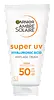
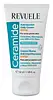
Garnier Ambre Solaire Anti-Age Super UV Protection Cream SPF50 Versus Revuele Ceramide Anti-Blemish Daily Cream SPF 50
This chemical sunscreen covers the full UV range and blocks ~98% of UVB at SPF 50.
This acne day moisturizer is formulated around Ceramide NP and Gluconolactone to clear breakouts and strengthen the skin barrier.


What's inside
What's inside
 Key Ingredients
Benefits
Concerns
Ingredients Side-by-side
Water
Skin ConditioningC12-15 Alkyl Benzoate
AntimicrobialGlycerin
Humectant


Octocrylene
UV Absorber



Niacinamide
Smoothing









Butyl Methoxydibenzoylmethane
UV Absorber
Dimethicone
Emollient
Ethylhexyl Triazone
UV Absorber
Silica
Abrasive
Aluminum Starch Octenylsuccinate
Absorbent
Vinyl Dimethicone/Methicone Silsesquioxane Crosspolymer
Terephthalylidene Dicamphor Sulfonic Acid
UV Absorber
Potassium Cetyl Phosphate
EmulsifyingDrometrizole Trisiloxane
UV Absorber
PEG-100 Stearate
Surfactant

Stearyl Alcohol
Emollient
Glyceryl Stearate
Emollient
Tocopherol
Antioxidant

Hydroxyacetophenone
Antioxidant
Hydrolyzed Hyaluronic Acid
Humectant
Phenylethyl Resorcinol
Antioxidant
Triethanolamine
BufferingTrisodium Ethylenediamine Disuccinate
ChelatingPoloxamer 338
EmulsifyingAmmonium Polyacryloyldimethyl Taurate
Emulsion StabilisingXanthan Gum
EmulsifyingCaprylyl Glycol
Emollient
Capryloyl Salicylic Acid
Exfoliating
Water, C12-15 Alkyl Benzoate, Glycerin, Octocrylene, Niacinamide, Butyl Methoxydibenzoylmethane, Dimethicone, Ethylhexyl Triazone, Silica, Aluminum Starch Octenylsuccinate, Vinyl Dimethicone/Methicone Silsesquioxane Crosspolymer, Terephthalylidene Dicamphor Sulfonic Acid, Potassium Cetyl Phosphate, Drometrizole Trisiloxane, PEG-100 Stearate, Stearyl Alcohol, Glyceryl Stearate, Tocopherol, Hydroxyacetophenone, Hydrolyzed Hyaluronic Acid, Phenylethyl Resorcinol, Triethanolamine, Trisodium Ethylenediamine Disuccinate, Poloxamer 338, Ammonium Polyacryloyldimethyl Taurate, Xanthan Gum, Caprylyl Glycol, Capryloyl Salicylic Acid
Water
Skin ConditioningHomosalate
Skin Conditioning
Ethylhexyl Dimethyl Paba
UV Absorber
Ethylhexyl Salicylate
UV Absorber
Butyl Methoxydibenzoylmethane
UV Absorber
Terephthalylidene Dicamphor Sulfonic Acid
UV Absorber
Phenylbenzimidazole Sulfonic Acid
UV Absorber
C12-15 Alkyl Benzoate
AntimicrobialCetearyl Alcohol
Emollient


Glycerin
Humectant
Polymethylsilsesquioxane
Dimethicone
Emollient
Isohexadecane
EmollientCetearyl Methicone
Skin Conditioning
PEG-40 Stearate
Emulsifying
Steareth-2
EmulsifyingSteareth-21
CleansingGlyceryl Stearate Se
Emulsifying
Caprylic/Capric Triglyceride
Masking
PEG-7 Glyceryl Cocoate
Emulsifying
PEG-60 Hydrogenated Castor Oil
Emulsifying
Ceramide Ng
Skin Conditioning
Ceramide NP
Skin Conditioning
Gluconolactone
Chelating
Niacinamide
Smoothing
Zinc Oxide
Cosmetic Colorant
Glyceryl Stearate
Emollient
Ceteareth-20
Cleansing
Ceteareth-12
EmulsifyingCetyl Palmitate
Emollient
Betaine
Humectant
Phenoxyethanol
Preservative
Allantoin
Skin Conditioning
Triethanolamine
BufferingAcrylates/C10-30 Alkyl Acrylate Crosspolymer
Emulsion StabilisingSodium Benzoate
Masking
Citric Acid
Buffering
Calcium Gluconate
HumectantWater, Homosalate, Ethylhexyl Dimethyl Paba, Ethylhexyl Salicylate, Butyl Methoxydibenzoylmethane, Terephthalylidene Dicamphor Sulfonic Acid, Phenylbenzimidazole Sulfonic Acid, C12-15 Alkyl Benzoate, Cetearyl Alcohol, Glycerin, Polymethylsilsesquioxane, Dimethicone, Isohexadecane, Cetearyl Methicone, PEG-40 Stearate, Steareth-2, Steareth-21, Glyceryl Stearate Se, Caprylic/Capric Triglyceride, PEG-7 Glyceryl Cocoate, PEG-60 Hydrogenated Castor Oil, Ceramide Ng, Ceramide NP, Gluconolactone, Niacinamide, Zinc Oxide, Glyceryl Stearate, Ceteareth-20, Ceteareth-12, Cetyl Palmitate, Betaine, Phenoxyethanol, Allantoin, Triethanolamine, Acrylates/C10-30 Alkyl Acrylate Crosspolymer, Sodium Benzoate, Citric Acid, Calcium Gluconate
Reviews
Ingredients Explained
These ingredients are found in both products.
Ingredients higher up in an ingredient list are typically present in a larger amount.
Also known as Avobenzone, this ingredient is an oil-soluble used to absorb the full spectrum of UVA rays (peak 357 nm).
It's one of the most effective UVA filters available but has a major caveat of photostability: avobenzone is susceptible to photodegradation.
This means it can lose efficacy when exposed to sunlight without the help of a stabilizing agent.
Studies show antioxidants (like vitamin E or vitamin C) and some UV filters (like octocrylene and Tinosorb S) can meaningfully improve its stability in a formulation.
The maximum allowable concentration according to regulation is 3% in the US + Canada, and 5% in the EU, Australia, China, Korea, and ASEAN countries.
It has a well-support safety profile: a comprehensive 2025 review found minimal toxicity with no evidence of carcinogenicity.
Overall, avobenzone is a safe and regulated ingredient used in sunscreen for over 40 years.
Learn more about Butyl MethoxydibenzoylmethaneC12-15 Alkyl Benzoate is a lightweight emollient made by combinig benzoic acid with fatty alcohols that are 12-15 carbons long.
In cosmetics, it plays several roles:
The Cosmetic Review Expert Panel has concluded the alkyl benzoate group to be safe as used in cosmetics; it wasn't found to be a skin irritant and unlikely to be absorbed due to its low water solubility.
This report recorded almost 1000 reported uses with concentrations up to 59% in leave-on products but your cosmetics will typically use 0.5-15% depending on the product.
It's often called a "SPF booster": this is because it keeps UV filters properly dissolved and evenly distributed to support a sunscreen's performance. It doesn't actually raise SPF on its own.
Overall, this ingredient is well tolerated.
This ingredient is fungal acne safe because it is an ester of benzoic acid.
Think of this ingredient as two parts stuck together: an oily part and an acid part. Malassezia only gets a meal when it can snip off a fatty acid to eat. With C12-15 Alkyl Benzoate, the acid part is benzoic acid, which isn't a fatty acid and which the yeast can't use as food.
Benzoic acid is actually used as a preservative to stop yeast from growing.
The oily part is a blend of C12-15 fatty alcohols but fatty alcohols in this size range can support only a little Malassezia growth (mostly for one species of Malassezia as well).
In the ingredient, those alcohols stay locked inside the molecule. The yeast can only reach them by snipping the benzoate bond, and that type of bond is harder for it to cut than a normal fatty bond.
So not much gets released. And whatever does get snipped comes packaged with benzoic acid, which discourages yeast growth.
Learn more about C12-15 Alkyl BenzoateDimethicone is a type of synthetic silicone created from natural materials such as quartz. It is also known as polydimethylsiloxane.
What it does:
Dimethicone comes in different viscosities:
Depending on the viscosity, dimethicone has different properties.
Ingredients lists don't always show which type is used, so we recommend reaching out to the brand if you have questions about the viscosity.
This ingredient is unlikely to cause irritation because it does not get absorbed into skin. However, people with silicone allergies should be careful about using this ingredient.
Note: Dimethicone may contribute to pilling. This is because it is not oil or water soluble, so pilling may occur when layered with products. When mixed with heavy oils in a formula, the outcome is also quite greasy.
Learn more about DimethiconeGlycerin (or glycerol) is a compound naturally found in your skin. It's a powerhouse humectant that pulls water into the stratum corneum.
Topically, glycerin does several things at once:
Your skin makes glycerin on its own (mostly from sebaceous oil breakdown) and shuttles it to your outermost layer of skin, or your epidermis, via aquaporin-3.
Aquaporin-3 is a transporter that is essential for normal skin hydration, elasticity, and repair. Interestingly, mice lacking in AQP3 have dry and less elastic skin that can be fully corrected with glycerin.
This ingredient is non-irritating, plays well with almost every ingredient, and works across all skin types. Typical use is anywhere between 3-10% but can go up to 79% in some leave-on products.
Just know very high concentrations (>40%) can feel tacky in low humidity.
Glycerin is the name for this ingredient in American English. British English uses Glycerol/Glycerine.
Learn more about GlycerinGlyceryl Stearate is made by reacting glycerin with stearic acid (typically sourced from plant oils like palm or coconut). It's an emulsifier, emollient, and mild occlusive.
Emulsifiers help ingredients like oil and water stay mixed so your formula stays nicely blended and uniform in texture.
This ingredient is typically used in concentrations between 1-10%. Studies have found it to be non-sensitizing, non-phototoxic, and non-photoallergenic.
A close cousin of this ingredient is Glyceryl Stearate SE ("self-emulsifying"). This just has a small amount of sodium or potassium stearate added so it can emulsify without a co-emulsifier.
Since this ingredient is an ester of a C18 fatty acid, it may not be fungal acne safe. The Malassezia yeast can potentially metabolize within the C11-C24 range.
Fun fact: The human body also creates Glyceryl Stearate naturally.
Learn more about Glyceryl StearateNiacinamide is a multitasking form of vitamin B3 that strengthens the skin barrier, reduces pores and dark spots, regulates oil, and improves signs of aging.
And the best part? It's gentle and well-tolerated by most skin types, including sensitive and reactive skin.
You might have heard of "niacin flush", or the reddening of skin that causes itchiness. Niacinamide has not been found to cause this.
In very rare cases, some individuals may not be able to tolerate niacinamide at all or experience an allergic reaction to it.
If you are experiencing flaking, irritation, and dryness with this ingredient, be sure to double check all your products as this ingredient can be found in all categories of skincare.
When incorporating niacinamide into your routine, look out for concentration amounts. Typically, 5% niacinamide provides benefits such as fading dark spots. However, if you have sensitive skin, it is better to begin with a smaller concentration.
When you apply niacinamide to your skin, your body converts it into nicotinamide adenine dinucleotide (NAD). NAD is an essential coenzyme that is already found in your cells as "fuel" and powers countless biological processes.
In your skin, NAD helps repair cell damage, produce new healthy cells, support collagen production, strengthen the skin barrier, and fight environmental stressors (like UV and pollution).
Our natural NAD levels start to decline with age, leading to slower skin repair, visible aging, and a weaker skin barrier. By providing your skin niacinamide, you're recharging your skin's NAD levels. This leads to stronger, healthier, and younger looking skin.
Another name for vitamin B3 is nicotinamide. This vitamin is water-soluble and our bodies don't store it. We obtain Vitamin B3 from either food or skincare. Meat, fish, wheat, yeast, and leafy greens contain vitamin B3.
The type of niacinamide used in skincare is synthetically created.
Learn more about NiacinamideTerephthalylidene Dicamphor Sulfonic Acid (aka ecamsule or Mexoryl SX) is a water-soluble organic UV filter developed and patented by L'Oreal back in 1982.
It's one of the better UVA protectors out there and shields skin across a broad UVA range (~290-390 nm) with peak absorption right around 345 nm.
This peak absorption happens to be the exact type of UVA light that sinks deepest into skin and does the most to cause aging and dark spots.
Ecamsule works by soaking up UV rays and turning them into a tiny bit of harmless heat. The molecule basically flips, releases that energy as heat, then snaps back to its original shape and does it all over again. This is also why it's so stable in sunlight and doesn't break down or wear out the way some filters do.
The clinical backing for this ingredient is solid as well:
A large 2008 review by Fourtanier & colleagues (2008) pulled together human trials showing ecamsule-containing sunscreens prevented UV-induced pigmentation, DNA damage, and signs of aging.
That built on earlier work by Seite et al. (1998) that found it protected skin from repeated low-level UVA exposure. And a controlled study by DeLeo et al. (2009) showed that even an SPF 40 cream with ecamsule helped prevent sun-triggered rash even under the real sun.
On concentrations:
Because this ingredient is an acid, it has to be neutralized so it doesn't tank the product's pH.
Safety-wise, it's pretty well tolerated. There are some rare cases of mild irritation mostly in people with sensitivities towards camphor derivatives.
A 2019 FDA study found that volunteers who slathered on sunscreen heavily for several days had tiny amounts of ecamsule show up in their blood. This was slightly above the level at which the FDA asks for extra safety testing; this just means the FDA wants more safety studies done and not evidence that anything harmful actually happens. No problems were found and dermatologists still recommend using sunscreen.
Learn more about Terephthalylidene Dicamphor Sulfonic AcidTriethanolamine (TEA) is an emulsifier and pH adjuster. It is created using ethylene oxide and ammonia. This gives Triethanolamine a nitrogen core and a similar scent to ammonia.
As an emulsifier, it prevents ingredients from separating and enhances texture by adding volume to a product.
PH adjusters are common in cosmetic products. The pH of a product can affect the effectiveness of other ingredients. A product with a high pH may also irritate the skin.
If you are looking for the tea leaf ingredient, click here.
Learn more about TriethanolamineWater. It's the most common cosmetic ingredient of all. You'll usually see it at the top of ingredient lists, meaning that it makes up the largest part of the product.
So why is it so popular? Water most often acts as a solvent - this means that it helps dissolve other ingredients into the formulation.
You'll also recognize water as that liquid we all need to stay alive. If you see this, drink a glass of water. Remember to stay hydrated!
Learn more about Water

