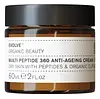
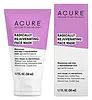
Evolve Organic Beauty Multi Peptide 360 Anti-Ageing Cream Versus Acure Radically Rejuvenating Face Mask
This wash off mask is made with Aloe Barbadensis Leaf Juice and Kaolin for a rinse-off oil-control boost.


What's inside
What's inside
 Key Ingredients
Benefits
Concerns
Ingredients Side-by-side
Water
Skin ConditioningCaprylic/Capric Triglyceride
Masking


Isoamyl Laurate
Emollient

Glycerin
Humectant
Cetearyl Alcohol
Emollient



Glyceryl Stearate
Emollient
Candelilla/Jojoba/Rice Bran Polyglyceryl-3 Esters
Emulsifying
Theobroma Grandiflorum Seed Butter
Skin Conditioning
Helianthus Annuus Seed Oil
Emollient
Caryodendron Orinocense Seed Oil
Emollient
Hydrolyzed Plukenetia Volubilis Seed Extract
Emulsion StabilisingOpuntia Ficus-Indica Stem Extract
Skin Conditioning
Sodium Hyaluronate
Humectant


Aloe Barbadensis Leaf Juice Powder
Skin Conditioning
Dipalmitoyl Hydroxyproline
Skin Conditioning
Sodium Stearoyl Lactylate
EmulsifyingMicrocrystalline Cellulose
AbsorbentSodium Levulinate
Skin ConditioningVanilla Planifolia Fruit Oil
Emollient
Rosa Damascena Flower Oil
Masking



Citrus Nobilis Peel Oil Expressed
Perfuming
Sodium Dehydroacetate
Preservative
Cetearyl Glucoside
Emulsifying
Xanthan Gum
EmulsifyingCellulose Gum
Emulsion StabilisingSodium Anisate
AntimicrobialTocopherol
Antioxidant



Disodium Phosphate
BufferingSodium Benzoate
Masking
Limonene
Perfuming
Linalool
Perfuming
Water, Caprylic/Capric Triglyceride, Isoamyl Laurate, Glycerin, Cetearyl Alcohol, Glyceryl Stearate, Candelilla/Jojoba/Rice Bran Polyglyceryl-3 Esters, Theobroma Grandiflorum Seed Butter, Helianthus Annuus Seed Oil, Caryodendron Orinocense Seed Oil, Hydrolyzed Plukenetia Volubilis Seed Extract, Opuntia Ficus-Indica Stem Extract, Sodium Hyaluronate, Aloe Barbadensis Leaf Juice Powder, Dipalmitoyl Hydroxyproline, Sodium Stearoyl Lactylate, Microcrystalline Cellulose, Sodium Levulinate, Vanilla Planifolia Fruit Oil, Rosa Damascena Flower Oil, Citrus Nobilis Peel Oil Expressed, Sodium Dehydroacetate, Cetearyl Glucoside, Xanthan Gum, Cellulose Gum, Sodium Anisate, Tocopherol, Disodium Phosphate, Sodium Benzoate, Limonene, Linalool
Water
Skin ConditioningAloe Barbadensis Leaf Juice
Skin Conditioning
Sodium Methyl Cocoyl Taurate
Cleansing
Glycerin
Humectant
Kaolin
Abrasive



Sodium Lauroamphoacetate
CleansingSodium Lauroyl Lactylate
EmulsifyingCitrus Limon Peel Oil
Masking
Glyceryl Laurate
Emollient
Sodium Levulinate
Skin ConditioningCellulose Gum
Emulsion StabilisingSodium Cocoyl Isethionate
Cleansing
Citric Acid
Buffering
Carrageenan
Olea Europaea Fruit Oil
Masking
Jojoba Esters
Emollient
Iron Oxides
Chlorella Pyrenoidosa Extract
Skin ConditioningRicinus Communis Seed Oil
Masking
Hydrogenated Jojoba Oil
Abrasive
Argania Spinosa Callus Culture Extract
Skin ConditioningEuterpe Oleracea Fruit Extract
Rosa Canina Fruit Extract
Astringent
Punica Granatum Extract
AstringentVaccinium Angustifolium Fruit Extract
Skin Protecting
Calendula Officinalis Flower Extract
Masking
Chamomilla Recutita Flower Extract
Masking
Glycyrrhiza Glabra Root Extract
Bleaching
Aegle Marmelos Root Powder
Skin ConditioningNelumbo Nucifera Callus Culture Extract
Antimicrobial
Potassium Sorbate
Preservative
Isomalt
HumectantLecithin
Emollient
Sodium Benzoate
Masking
Pelargonium Graveolens Flower Oil
Masking
Water, Aloe Barbadensis Leaf Juice, Sodium Methyl Cocoyl Taurate, Glycerin, Kaolin, Sodium Lauroamphoacetate, Sodium Lauroyl Lactylate, Citrus Limon Peel Oil, Glyceryl Laurate, Sodium Levulinate, Cellulose Gum, Sodium Cocoyl Isethionate, Citric Acid, Carrageenan, Olea Europaea Fruit Oil, Jojoba Esters, Iron Oxides, Chlorella Pyrenoidosa Extract, Ricinus Communis Seed Oil, Hydrogenated Jojoba Oil, Argania Spinosa Callus Culture Extract, Euterpe Oleracea Fruit Extract, Rosa Canina Fruit Extract, Punica Granatum Extract, Vaccinium Angustifolium Fruit Extract, Calendula Officinalis Flower Extract, Chamomilla Recutita Flower Extract, Glycyrrhiza Glabra Root Extract, Aegle Marmelos Root Powder, Nelumbo Nucifera Callus Culture Extract, Potassium Sorbate, Isomalt, Lecithin, Sodium Benzoate, Pelargonium Graveolens Flower Oil
Alternatives
Ingredients Explained
These ingredients are found in both products.
Ingredients higher up in an ingredient list are typically present in a larger amount.
Cellulose Gum is a water-soluble polymer that comes from cellulose. It is used to change the texture of a product and to help stabilize emulsions.
As an emulsifier, cellulose gum specifically thicken the texture of water-based products.
This ingredient is considered hypoallergenic and non-toxic. Cellulose Gum can be found in cosmetics, food, and other household goods such as paper products.
Learn more about Cellulose GumGlycerin (or glycerol) is a compound naturally found in your skin. It's a powerhouse humectant that pulls water into the stratum corneum.
Topically, glycerin does several things at once:
Your skin makes glycerin on its own (mostly from sebaceous oil breakdown) and shuttles it to your outermost layer of skin, or your epidermis, via aquaporin-3.
Aquaporin-3 is a transporter that is essential for normal skin hydration, elasticity, and repair. Interestingly, mice lacking in AQP3 have dry and less elastic skin that can be fully corrected with glycerin.
This ingredient is non-irritating, plays well with almost every ingredient, and works across all skin types. Typical use is anywhere between 3-10% but can go up to 79% in some leave-on products.
Just know very high concentrations (>40%) can feel tacky in low humidity.
Glycerin is the name for this ingredient in American English. British English uses Glycerol/Glycerine.
Learn more about GlycerinSodium Benzoate is a preservative. It's used in both cosmetic and food products to inhibit the growth of mold and bacteria. It is typically produced synthetically.
Both the US FDA and EU Health Committee have approved the use of sodium benzoate. In the US, levels of 0.1% (of the total product) are allowed.
Sodium benzoate works as a preservative by inhibiting the growth of bacteria inside of cells. It prevents the cell from fermenting a type of sugar using an enzyme called phosphofructokinase.
It is the salt of benzoic acid. Foods containing sodium benzoate include soda, salad dressings, condiments, fruit juices, wines, and snack foods.
Studies for using ascorbic acid and sodium benzoate in cosmetics are lacking, especially in skincare routines with multiple steps.
We always recommend speaking with a professional, such as a dermatologist, if you have any concerns.
Learn more about Sodium BenzoateSodium levulinate is the a sodium salt of Levulinic Acid. Oncedissolved in an aqueous solution, the two ingredients become identical. It is usually derived from renewable plant sources like corn starch or sugarcane.
In skincare, it mostly acts as a skin conditioning agent that keeps skin soft and hydrated. It also acts as a preservative booster by inhibiting the growth of mold, yeast, and bacteria.
It's often paired with Sodium Anisate as the two create a broad-spectrum preservative system that is popular in "natural" formulations.
This ingredient is water-soluble.
The CIR Expert Panel for Cosmetic Ingredient Safety has concluded this ingredient to be non-irritated and there are no restrictions for use in EU cosmetics. The FDA also allows this ingredient to be used as a food-grade flavoring agent.
Learn more about Sodium LevulinateWater. It's the most common cosmetic ingredient of all. You'll usually see it at the top of ingredient lists, meaning that it makes up the largest part of the product.
So why is it so popular? Water most often acts as a solvent - this means that it helps dissolve other ingredients into the formulation.
You'll also recognize water as that liquid we all need to stay alive. If you see this, drink a glass of water. Remember to stay hydrated!
Learn more about Water

