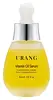
This barrier-repair serum is formulated around Simmondsia Chinensis Seed Oil and Tocopherol to strengthen the skin barrier and soften the look of wrinkles.


What's inside
What's inside
 Key Ingredients
Benefits
Concerns
Ingredients Side-by-side
Water
Skin ConditioningCaprylic/Capric Triglyceride
Masking


Isoamyl Laurate
Emollient

Glycerin
Humectant
Cetearyl Alcohol
Emollient



Glyceryl Stearate
Emollient
Candelilla/Jojoba/Rice Bran Polyglyceryl-3 Esters
Emulsifying
Theobroma Grandiflorum Seed Butter
Skin Conditioning
Helianthus Annuus Seed Oil
Emollient
Caryodendron Orinocense Seed Oil
Emollient
Hydrolyzed Plukenetia Volubilis Seed Extract
Emulsion StabilisingOpuntia Ficus-Indica Stem Extract
Skin Conditioning
Sodium Hyaluronate
Humectant


Aloe Barbadensis Leaf Juice Powder
Skin Conditioning
Dipalmitoyl Hydroxyproline
Skin Conditioning
Sodium Stearoyl Lactylate
EmulsifyingMicrocrystalline Cellulose
AbsorbentSodium Levulinate
Skin ConditioningVanilla Planifolia Fruit Oil
Emollient
Rosa Damascena Flower Oil
Masking



Citrus Nobilis Peel Oil Expressed
Perfuming
Sodium Dehydroacetate
Preservative
Cetearyl Glucoside
Emulsifying
Xanthan Gum
EmulsifyingCellulose Gum
Emulsion StabilisingSodium Anisate
AntimicrobialTocopherol
Antioxidant



Disodium Phosphate
BufferingSodium Benzoate
Masking
Limonene
Perfuming
Linalool
Perfuming
Water, Caprylic/Capric Triglyceride, Isoamyl Laurate, Glycerin, Cetearyl Alcohol, Glyceryl Stearate, Candelilla/Jojoba/Rice Bran Polyglyceryl-3 Esters, Theobroma Grandiflorum Seed Butter, Helianthus Annuus Seed Oil, Caryodendron Orinocense Seed Oil, Hydrolyzed Plukenetia Volubilis Seed Extract, Opuntia Ficus-Indica Stem Extract, Sodium Hyaluronate, Aloe Barbadensis Leaf Juice Powder, Dipalmitoyl Hydroxyproline, Sodium Stearoyl Lactylate, Microcrystalline Cellulose, Sodium Levulinate, Vanilla Planifolia Fruit Oil, Rosa Damascena Flower Oil, Citrus Nobilis Peel Oil Expressed, Sodium Dehydroacetate, Cetearyl Glucoside, Xanthan Gum, Cellulose Gum, Sodium Anisate, Tocopherol, Disodium Phosphate, Sodium Benzoate, Limonene, Linalool
Ingredients Explained
These ingredients are found in both products.
Ingredients higher up in an ingredient list are typically present in a larger amount.
Limonene is the compound that gives citrus peel its smell.
In skincare, it shows up as a standalone fragrance ingredient or as a natural compound of citrus and other essential oils.
You'll typically see this ingredient used in very small amounts; anything above 0.001% in a leave-on product or 0.01% in a rinse-off has to be named on the label in the EU. The citrus oils that carry it sit around 0.5-1% in a finished formula.
Fresh limonene is a weak allergen; the real issue is that it slowly reacts with air and then breaks down from oxidation to create hydroperoxides (which are strong sensitizers). This is why suppliers are required to keep the peroxide value below 20 mmol.
Positive reactions in people being investigated for eczema vary:
It's worth skipping if you have a known fragrance allergy or a compromised barrier, but the risk is low for most people.
Older or long-opened products are also more likely to bother you than fresh ones due to oxidation.
Learn more about LimoneneLinalool is a small, naturally occurring scent molecule found in plants like lavender, coriander, bergamot, and more.
It is one of the two most-used fragrance ingredients in cosmetics and added purely for smell. Since it's not used for a skin benefit, there's no "effective dose". Concentration depends on the fragrance load of the product.
The EU requires it to be named on the label above 0.001% in leave-on and 0.01% in rinse-off products.
Fresh linalool is a weak sensitizer but air exposure turns some of it into hydroperoxides, which are strong sensitizers. Those oxidation products are the actual allergy concern.
Patch-test clinics see positive reactions to linalool hydroperoxides in about 4% to 12% of dermatitis patients depending on country and test concentration.
Resassuringly, one analytical study found hydroperoxide levels in real fragranced products to be orders of magnitude below what induced sensitization in animal studies with no evidence of oxidation building up during normal storage.
The practical takeaway is that linalool is fine for most people but worth avoiding if you have a confirmed fragrance contact allergy or a badly compromised barrier.
Products stored a long time after opening are also the high-risk scenario since that is when oxidation happens.
The scent of linalool is described as floral, spicy tropical, and citrus-like.
Learn more about LinaloolTocopherol is a fat-soluble antioxidant known as Vitamin E.
You'll find this ingredient in the vast majority of skincare (for good reason). It works to neutralize free radicals, or unstable molecules generated by UV exposure, pollution, and other environmental stressors, before they can cause oxidative damage to your skin cells.
Topically applied tocopherol has been shown to protect against UV damage by ramping up the skin's own natural defense enzymes.
It also acts as a skin conditioning agent; some studies show that regular topical use can improve the skin's water-binding capacity over 2-4 weeks.
This ingredient is especially loved for being a team player. When combined with Vitamin C, the photoprotective effect of both ingredients roughly doubles and the combo also helps reduce UV-induced DNA damage.
This ingredient has some brightening potential but it's more of a prevention ingredient than spot-fader. Cell studies show it can slow down melanin production but it's worth noting that it's not the most powerful brightener out there.
In formulations, it also serves as a stabilizer that helps protect other oxidation-prone ingredients from degrading.
Concentrations usually range from 0.1-1% in most leave-on products.
Learn more about Tocopherol

