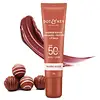
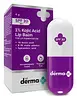
Dot & Key Skincare Barrier Repair Ceramide + Peptide Lip Balm SPF 50+ PA+++ Versus The Derma Co 1% Kojic Acid Lip Balm With Alpha Arbutin & Hyaluronic Acid
This barrier-repair lip moisturizer is formulated around Ricinus Communis Seed Oil and Ceramide NP to strengthen the lip barrier and hydrate lips.
This brightening lip moisturizer is formulated around Sodium Hyaluronate and Alpha-Arbutin to fade the look of dark spots and brighten dull-looking skin.

What's inside
What's inside
 Key Ingredients
Benefits
Concerns
Ingredients Side-by-side
Ricinus Communis Seed Oil
Masking




Bis-Diglyceryl Polyacyladipate-2
Emollient
Ethylhexyl Methoxycinnamate
UV Absorber


Diethylamino Hydroxybenzoyl Hexyl Benzoate
UV Filter
Hydrogenated Soy Polyglycerides
Skin ConditioningC15-23 Alkane
SolventHydrogenated Polyisobutene
EmollientSorbitan Olivate
Emulsifying
Ethylhexyl Triazone
UV Absorber
Colour
Laminaria Digitata Extract
Skin Protecting


Hydrogenated Lecithin
Emulsifying
Cetyl-Pg Hydroxyethyl Palmitamide
Skin ConditioningCeramide EOP
Skin Conditioning



Ceramide Ns
Skin Conditioning
Ceramide NP
Skin Conditioning
Ceramide As
Skin Conditioning
Ceramide AP
Skin Conditioning
Cholesterol
Emollient
1,2-Hexanediol
Skin Conditioning
Persea Gratissima Oil
Skin Conditioning
Water
Skin ConditioningAcetyl Hexapeptide-8
Humectant
Caprylyl Glycol
Emollient
Ascorbyl Palmitate
Antioxidant



Tocopheryl Acetate
Antioxidant
Butyrospermum Parkii Butter
Skin Conditioning
Theobroma Cacao Seed Butter
Emollient
Pentaerythrityl Tetra-Di-T-Butyl Hydroxyhydrocinnamate
Antioxidant
Sucralose
Skin ConditioningAroma

Phenoxyethanol
Preservative
Ricinus Communis Seed Oil, Bis-Diglyceryl Polyacyladipate-2, Ethylhexyl Methoxycinnamate, Diethylamino Hydroxybenzoyl Hexyl Benzoate, Hydrogenated Soy Polyglycerides, C15-23 Alkane, Hydrogenated Polyisobutene, Sorbitan Olivate, Ethylhexyl Triazone, Colour, Laminaria Digitata Extract, Hydrogenated Lecithin, Cetyl-Pg Hydroxyethyl Palmitamide, Ceramide EOP, Ceramide Ns, Ceramide NP, Ceramide As, Ceramide AP, Cholesterol, 1,2-Hexanediol, Persea Gratissima Oil, Water, Acetyl Hexapeptide-8, Caprylyl Glycol, Ascorbyl Palmitate, Tocopheryl Acetate, Butyrospermum Parkii Butter, Theobroma Cacao Seed Butter, Pentaerythrityl Tetra-Di-T-Butyl Hydroxyhydrocinnamate, Sucralose, Aroma, Phenoxyethanol
Beeswax
Emulsion Stabilising
Cocos Nucifera Oil
Masking
Butyrospermum Parkii Butter
Skin Conditioning
Ricinus Communis Seed Oil
Masking
Ethylhexyl Methoxycinnamate
UV Absorber
Euphorbia Cerifera Cera
Astringent
Theobroma Cacao Seed Butter
Emollient
Prunus Amygdalus Dulcis Oil
Skin Conditioning
Rubus Idaeus Seed Oil
Emollient
Simmondsia Chinensis Seed Oil
Emollient
Olea Europaea Fruit Oil
Masking
Calendula Officinalis Flower Oil
Masking
Copernicia Cerifera Wax
Persea Gratissima Oil
Skin Conditioning
Dicaprylyl Carbonate
EmollientCetearyl Olivate
Sorbitan Olivate
Emulsifying
Zinc Oxide
Cosmetic Colorant
Titanium Dioxide
Cosmetic Colorant
Kojic Dipalmitate
Emollient
Sodium Hyaluronate
Humectant
Alpha-Arbutin
Antioxidant

Caprylyl Methicone
Skin Conditioning
Tocopherol
Antioxidant
Helianthus Annuus Seed Oil
Emollient
Zea Mays Oil
Emulsifying
Macadamia Integrifolia Seed Oil
Skin Conditioning
Beeswax, Cocos Nucifera Oil, Butyrospermum Parkii Butter, Ricinus Communis Seed Oil, Ethylhexyl Methoxycinnamate, Euphorbia Cerifera Cera, Theobroma Cacao Seed Butter, Prunus Amygdalus Dulcis Oil, Rubus Idaeus Seed Oil, Simmondsia Chinensis Seed Oil, Olea Europaea Fruit Oil, Calendula Officinalis Flower Oil, Copernicia Cerifera Wax, Persea Gratissima Oil, Dicaprylyl Carbonate, Cetearyl Olivate, Sorbitan Olivate, Zinc Oxide, Titanium Dioxide, Kojic Dipalmitate, Sodium Hyaluronate, Alpha-Arbutin, Caprylyl Methicone, Tocopherol, Helianthus Annuus Seed Oil, Zea Mays Oil, Macadamia Integrifolia Seed Oil
Ingredients Explained
These ingredients are found in both products.
Ingredients higher up in an ingredient list are typically present in a larger amount.
This ingredient is also known as shea butter. It is a plant-derived extract from the nuts of the Africa shea tree and one of the most well-studied emollients.
Because it has a high concentration of fatty acids (primarily oleic, stearic, and linoleic) it is able to form a protective barrier on the skin's surface. This helps seal in moisture and prevents transepidermal water loss (TEWL).
In vitro research found an increase in skin hydration by 58% and a decrease in TEWL by 37.8% after 24 hours of applying this ingredient (pretty impressive for a single ingredient!).
Besides hydration, shea butter also contains triterpenes that have anti-inflammatory potential. In particule, lupeol cinnamate has shown the highest anti-inflammatory activity in vivo.
Shea butter also contains vitamins A and E which may contribute to antioxidant activity.
While Shea Butter has an SPF rating of about 3-4, it is not a sunscreen replacement.
This ingredient may not be fungal acne safe because its fatty acids fall within the C11-C24 range that the Malassezia yeast can metabolize.
This ingredient shows up on a lot of "pore-clogging" lists but there's no real evidence behind that. It doesn't even have a comedogenic rating from an actual study; the numbers you'll find online come from blogs citing other blogs.
Ratings for other ingredients mostly come from a 1980s rabbit ear test. This test doesn't translate well to human skin or to real products because the ingredient sits at a much lower percentage.
Some people still find it breaks them out. So if that's you, definitely trust your skin. Just know this one's based on experience and not evidence.
Learn more about Butyrospermum Parkii ButterThis ingredient is also known as Octinoxate and is one of the oldest and most widely used chemical UV filters in skincare.
It has a simple job: soap up UVB radiation (290-320 nm), the wavelengths responsible for sunburn and a big chunk of long-term sun damage.
In formulas, it's always paired with a separate UVA filter because octinoxate solely protects skin from UVB.
Because it's an oil-soluble liquid, it's easy to blend into the oil phase of lotions/creams and gives a cosmetically elegant feel.
The one quirk about formulating this ingredient is photostability; the molecule slowly changes shape into a less effective version when sunlight hits it. So the longer you're in the sun, the weaker its protection gets. The drop can be more than 30% in some formulas.
It also doesn't play nice with Avobenzone (the common UVA filter) since avobenzone destabilizes octinoxate and the two degrade each other. But don't worry: brands have solved this issue by adding photostabilizers like Tinosorb S to prevent degradation and keep SPF stable under heavy UV exposure.
The maximum allowed level is 10% in the EU and Australia, 7.5% in the US and Canada, and 20% in Japan.
The Cosmetic Ingredient Review Panel has concluded this ingredient to be safe in cosmetics up to 10%.
One last thing worth knowing for context:
Octinoxate has been the subject of ongoing review in Europe where the Scientific Committee on Consumer Safety's (SCCS) 2025 final opinion is that this ingredient is an endocrine-active substance.
Lab and animal studies suggest it can act a bit like a hormone in the body (mildly mimicking estrogen and slightly blocking male hormones). It's important to know this hasn't really been shown to happen in everyday human use.
This ingredient is also banned in Hawaii over coral reef concerns.
Learn more about Ethylhexyl MethoxycinnamateThis ingredient is also known as Avocado oil. It's the cold-pressed oil from the flesh of the avocado fruit packed with fatty acids (mostly oleic acid).
The rich fatty acid profile allows it to function as a skin conditioning agent and emollient; it helps soften and smooth skin while reducing water loss.
Preclinical research has found that topical avocado oil increased collagen synthesis and reduced inflammation during wound healing, giving it some skin-repairing credibility.
The unsaponifiable fraction of the oil is also interesting: studies on avocado unsaponifiables showed that it helped skin produce more collagen and other structural compounds that support healing.
The CIR Expert Panel has found this ingredient to be non-irritating in formulations.
This ingredient may not be fungal acne safe. This is because the oleic acid content falls within the range that Malassezia can use as a food source.
This ingredient does have a comedogenic rating of 0-3, but this doesn't mean a formula with this ingredient will clog pores. Human testing has proved that any finished product with a comedogenic ingredient won't automatically make you break out; it really comes down to concentration, formula, and your skin.
Learn more about Persea Gratissima OilThis ingredient is also known as castor oil. It is a skin conditioning ingredient.
The star component of castor oil is ricinoleic acid, an unusual fatty acid that makes up ~80-92% of its composition.
In skincare, it is an emollient that dries down to a solid film with water-binding properties. This helps keep skin hydrated and helps reduce transepidermal water loss (TEWL).
A 2026 dermatology review pulls together its broader uses:
Human clinical testing found this ingredient to be non-irritating and non-sensitizing.
Because castor oil contains fatty acids in the C11-24 range, this ingredient may not be fungal acne safe.
At this time, the literature does not support castor oil in regrowing hair. A 2022 systematic review found no strong evidence that it supports hair growth and only weak evidence that it improves hair shine.
Castor oil itself carries "perfuming" and "masking" function tags according to the official CosIng database. This is because of its mild odor and odor-dampening properties.
Learn more about Ricinus Communis Seed OilSorbitan Olivate is created from the fatty acids in olive oil and sorbitol.
This ingredient is an oil in water emulsifier. It helps stabilize a product by preventing oils and waters from separating. Sorbitan Olivate also helps hydrate the skin.
This ingredient is also known as part of Olivem 1000, with Cetearyl Olivate being the other part.
According to a manufacturer, this ingredient helps preserve the natural microbiome of skin. Having a healthy microbiome helps keep our skin healthy and protects against harmful bacteria.
Please note, having a healthy microbiome is different from fungal acne; a healthy microbiome includes small amounts of yeast that normally live on your skin without causing problems.
Fungal acne happens when one type of yeast (Malassezia) grows out of control. This is usually because it's feeding on certain oils or fatty acids. Due to the olive oil base, this ingredient may not be fungal acne safe.
Learn more about Sorbitan OlivateThis ingredient is also known as Cocoa butter; it's the fat pressed out of roasted cocoa beans.
Cocoa butter is solid at room temperature and melts right around body temperature, which is why it feels waxy in the jar and slippery on skin.
It has a very saturated profile (stearic acid ~34 to 36%, oleic acid ~30 to 40%, and palmitic acid ~24 to 29%) that makes it a strong occlusive: it sits on top and slows water escaping from skin.
Concentration data shows that it can show up anywhere from a few percent in lotions up to 100% in balms, and the FDA lists cocoa butter as an OTC skin protectant active at 50-100%.
The CIR has reviewed it and concluded it to be safe as used in cosmetics.
This is one of the ingredients with a comedogenic score of 4/5 from the rabbit ear test. Just know that a later human study did find that finished products containing high-comedogenic ingredients like cocoa butter did not increase microcomedone formation.
The fair call here is that this ingredient is most likely fine on body or low-percentage formulas, but can potentially be riskier as a heavy leave-on facial product if you break out easily.
Cocoa butter may not be fungal acne safe; it is a triglyceride of C16-18 fatty acids that the Malassezia yeast can metabolize.
Allergies to cocoa butter are rare and uncommon, but a few cases have been documented (mostly in cases where the person ate chocolate). So if you have a tree nut allergy, be sure to patch test or avoid.
Learn more about Theobroma Cacao Seed Butter

