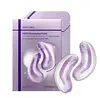
This brightening eye mask is formulated around Niacinamide and Sodium DNA to brighten dull-looking skin and soften the look of wrinkles.
This anti-aging eye mask is formulated around Niacinamide and Sodium DNA to soften the look of wrinkles.

What's inside
What's inside
 Key Ingredients

Benefits
Concerns
Ingredients Side-by-side
Water
Skin ConditioningGlycerin
Humectant


Niacinamide
Smoothing









Agar
MaskingButylene Glycol
Humectant
Cetyl Ethylhexanoate
EmollientDipropylene Glycol
HumectantCaprylyl/Capryl Glucoside
CleansingHydroxyacetophenone
Antioxidant
Squalane
Emollient
Chondrus Crispus Extract
Skin Conditioning
Glucomannan
Skin ConditioningCaprylyl Glycol
Emollient
Ascophyllum Nodosum Extract
Skin Conditioning

Cellulose Gum
Emulsion StabilisingEpilobium Angustifolium Flower/Leaf/Stem Extract
Skin Conditioning1,2-Hexanediol
Skin Conditioning
Mica
Cosmetic ColorantCalcium Lactate
AstringentCI 77891
Cosmetic ColorantCalcium Aluminum Borosilicate
Adenosine
Skin Conditioning
CI 77007
Cosmetic ColorantSynthetic Fluorphlogopite
Maltodextrin
Absorbent
CI 77491
Cosmetic ColorantTetrasodium Glutamate Diacetate
ChelatingSodium Hyaluronate
Humectant
Sodium DNA
Skin Conditioning
Caffeine
Skin Conditioning
Menthoxypropanediol
Masking

Glutathione
Dimethyl Isosorbide
SolventAsiaticoside
Antioxidant
Madecassic Acid
Skin Conditioning
Asiatic Acid
Skin Conditioning
Dipotassium Glycyrrhizate
Humectant
Ethylhexylglycerin
Skin ConditioningHydroxypinacolone Retinoate
Skin Conditioning
Tin Oxide
Abrasive
Centella Asiatica Extract
Cleansing
Hydrogenated Lecithin
Emulsifying
Potassium Hyaluronate
Skin ConditioningGlycine Soja Sterols
Emollient
Xanthan Gum
EmulsifyingSolanum Lycopersicum Fruit Extract
Antioxidant
Retinol
Skin Conditioning
Hydrolyzed Sodium Hyaluronate
Skin Conditioning
Hyaluronic Acid
Humectant
Sodium Acetylated Hyaluronate
Humectant
Acetyl Hexapeptide-1
Skin Conditioning
Nelumbo Nucifera Leaf Extract
Skin ConditioningWater, Glycerin, Niacinamide, Agar, Butylene Glycol, Cetyl Ethylhexanoate, Dipropylene Glycol, Caprylyl/Capryl Glucoside, Hydroxyacetophenone, Squalane, Chondrus Crispus Extract, Glucomannan, Caprylyl Glycol, Ascophyllum Nodosum Extract, Cellulose Gum, Epilobium Angustifolium Flower/Leaf/Stem Extract, 1,2-Hexanediol, Mica, Calcium Lactate, CI 77891, Calcium Aluminum Borosilicate, Adenosine, CI 77007, Synthetic Fluorphlogopite, Maltodextrin, CI 77491, Tetrasodium Glutamate Diacetate, Sodium Hyaluronate, Sodium DNA, Caffeine, Menthoxypropanediol, Glutathione, Dimethyl Isosorbide, Asiaticoside, Madecassic Acid, Asiatic Acid, Dipotassium Glycyrrhizate, Ethylhexylglycerin, Hydroxypinacolone Retinoate, Tin Oxide, Centella Asiatica Extract, Hydrogenated Lecithin, Potassium Hyaluronate, Glycine Soja Sterols, Xanthan Gum, Solanum Lycopersicum Fruit Extract, Retinol, Hydrolyzed Sodium Hyaluronate, Hyaluronic Acid, Sodium Acetylated Hyaluronate, Acetyl Hexapeptide-1, Nelumbo Nucifera Leaf Extract
Water
Skin ConditioningButylene Glycol
Humectant
Glycerin
Humectant
Niacinamide
Smoothing
1,2-Hexanediol
Skin Conditioning
Hydroxyacetophenone
Antioxidant
Trehalose
Humectant
Glycereth-25 PCA Isostearate
Emulsifying
Sodium DNA
Skin Conditioning
Xanthan Gum
EmulsifyingEthylhexylglycerin
Skin ConditioningPropanediol
Solvent
Adenosine
Skin Conditioning
Disodium EDTA
ChelatingZea Mays Kernel Extract
Biosaccharide Gum-1
Humectant
Hyaluronic Acid
Humectant
Fructan
Skin ConditioningHydrolyzed Hyaluronic Acid
Humectant
Sodium Hyaluronate
Humectant
Glucose
Humectant
Ascorbic Acid
Antioxidant
Hydrolyzed Sodium DNA
Skin ConditioningSaccharide Isomerate
Humectant
Brassica Oleracea Italica Extract
AstringentTripeptide-1
Skin Conditioning
Myrothamnus Flabellifolia Leaf/Stem Extract
HumectantSodium Hyaluronate Crosspolymer
Humectant
Alcohol Denat.
Antimicrobial

Caffeine
Skin Conditioning
Cholesterol
Emollient
Hydrogenated Lecithin
Emulsifying
Pantothenic Acid
Skin ConditioningTetrahexyldecyl Ascorbate
Antioxidant
Citric Acid
Buffering
Sodium Citrate
BufferingGallic Acid
Antioxidant
Phosphatidylcholine
EmulsifyingSodium Dilauramidoglutamide Lysine
HumectantAcetyl Hexapeptide-8
Humectant
Polyglutamic Acid
Skin Conditioning
Xylose
HumectantWater, Butylene Glycol, Glycerin, Niacinamide, 1,2-Hexanediol, Hydroxyacetophenone, Trehalose, Glycereth-25 PCA Isostearate, Sodium DNA, Xanthan Gum, Ethylhexylglycerin, Propanediol, Adenosine, Disodium EDTA, Zea Mays Kernel Extract, Biosaccharide Gum-1, Hyaluronic Acid, Fructan, Hydrolyzed Hyaluronic Acid, Sodium Hyaluronate, Glucose, Ascorbic Acid, Hydrolyzed Sodium DNA, Saccharide Isomerate, Brassica Oleracea Italica Extract, Tripeptide-1, Myrothamnus Flabellifolia Leaf/Stem Extract, Sodium Hyaluronate Crosspolymer, Alcohol Denat., Caffeine, Cholesterol, Hydrogenated Lecithin, Pantothenic Acid, Tetrahexyldecyl Ascorbate, Citric Acid, Sodium Citrate, Gallic Acid, Phosphatidylcholine, Sodium Dilauramidoglutamide Lysine, Acetyl Hexapeptide-8, Polyglutamic Acid, Xylose
Reviews
Ingredients Explained
These ingredients are found in both products.
Ingredients higher up in an ingredient list are typically present in a larger amount.
1,2-Hexanediol is a synthetic liquid and another multi-functional powerhouse.
It is a:
- Humectant, drawing moisture into the skin
- Emollient, helping to soften skin
- Solvent, dispersing and stabilizing formulas
- Preservative booster, enhancing the antimicrobial activity of other preservatives
Adenosine is a purine nucleoside that your body already makes in every cell. In skincare, it acts mainly as a skin conditioning and anti-aging agent.
The way it works is fairly well mapped out:
Your skin has cells called fibroblasts that build collagen (the stuff that keeps skin firm and smooth). Adenosine basically flips a switch on these cells that tells them to get to work making more collagen and other proteins. These cells slow down on their own as skin ages, so Adenosine helps give them a little nudge to keep going.
The clinical backing is pretty solid too.
A blind, randomized, placebo-controlled trial of 126 women aged 45-65 tested a 0.1% cream twice daily and found real improvements in crow's feet and frown lines using a precise 3D skin-mapping technique; these changes showed up by week 3 and held at 2 months.
A later study using Adenosine-loaded dissolving microneedle patches reported gains in wrinkle depth, dermal density, elasticity, and hydration.
On concentrations, South Korea's Ministry of Food and Drug Safety has set 0.04% as the approved functional anti-wrinkle level. You'll typically see this ingredient used somewhere in the 0.04-0.1% range since it works at low doses.
This ingredient has been found safe for cosmetics with the data showing no irritation or sensitization.
Overall, this is a great ingredient for any anti-aging routine and has no photosensitizing effect, so it suits both AM and PM use.
Learn more about AdenosineButylene Glycol (or BG) is used within cosmetic products for a few different reasons:
Overall, Butylene Glycol is a safe and well-rounded ingredient that works well with other ingredients.
Though this ingredient works well with most skin types, some people with sensitive skin may experience a reaction such as allergic rashes, closed comedones, or itchiness.
Learn more about Butylene GlycolCaffeine is a naturally occurring plant compound found in coffee beans, tea leaves, cocoa pods, and guarana.
As an antioxidant, caffeine protects your skin from free radical damage caused by UV exposure and envionrmnetal stressors.
Early research also shows that caffeine can help calm redness, soothe irritated skin, and support hair growth by stimulating microcirculation in the scalp.
You might have seen eye creams marketing caffeine as a depuffing ingredient. This is because it is a vasoconstrictor meaning it can temporarily constrict blood vessels, though clinical evidence for this specific use is still limited.
Most skincare products contain this ingredient at concentrations between 1-6%. It is able to penetrate skin easily regardless of skin type or thickness.
Just so you know, a very small number of case reports describe caffeine-induced allergy. This ingredient is generally well-tolerated, non-irritating, and non-sensitizing for the majority of people.
Learn more about CaffeineEthylhexylglycerin is created from glycerin. It is a multitasker ingredient that:
The CIR Expert Panel found minimal skin absorption or sensitization of any kind in a safety assessment. Though this ingredient is considered well-tolerated, a small number of cases of allergic dermatitis have been published since 2002. Just be sure to patch test if you are unsure.
Industry-reported use ranges from 8% in rinse-off products and 2% in leave-on formulations.
Learn more about EthylhexylglycerinGlycerin (or glycerol) is a compound naturally found in your skin. It's a powerhouse humectant that pulls water into the stratum corneum.
Topically, glycerin does several things at once:
Your skin makes glycerin on its own (mostly from sebaceous oil breakdown) and shuttles it to your outermost layer of skin, or your epidermis, via aquaporin-3.
Aquaporin-3 is a transporter that is essential for normal skin hydration, elasticity, and repair. Interestingly, mice lacking in AQP3 have dry and less elastic skin that can be fully corrected with glycerin.
This ingredient is non-irritating, plays well with almost every ingredient, and works across all skin types. Typical use is anywhere between 3-10% but can go up to 79% in some leave-on products.
Just know very high concentrations (>40%) can feel tacky in low humidity.
Glycerin is the name for this ingredient in American English. British English uses Glycerol/Glycerine.
Learn more about GlycerinHyaluronic acid (HA) is a glycosaminoglycan (basically a long sugar chain) that your skin already makes on its own. In your skin, HA lives in the extracellular matrix and acts as the body's moisture reservoir.
Topically, HA is a humectant that binds water and helps skin look more plump, smooth, and hydrated.
The only catch is that HA isn't a single thing; it actually comes in a wide range of molecular weights (~50 - 2,000+ kDA) and size matters.
Some clinical evidence links low molecular weight versions to improved wrinkle depth, elasticity, anti-inflammatory effects, and barrier repair.
This is why the best HA serums blend the two sizes together so you get the best of both worlds.
The majority of cosmetic HA is produced by bacterial fermentation, typically using Streptococcus or Bacillus strains. Typical use levels in skincare sit around 0.1-2%.
A clinical study using a 0.2% low-molecular weight HA gel showed improvement in facial seborrheic dermatitis with excellent tolerance.
These are some other common types of Hyaluronic Acid:
Learn more about Hyaluronic AcidHydrogenated Lecithin is a more stable version of lecithin.
It's made by taking lecithin (a phospholipid commonly found in soybeans and egg yolks) and hydrogenating it. This just means the unsaturated fatty acids are turned into saturated ones so they don't go bad as easily.
This ingredient is an emollient, emulsifier, and penetration enhancer. As an emollient, it helps soften and hydrate skin by trapping moisture within. As an emulsifier, it prevents oil and water ingredients from separating.
Hydrogenated Lecithin can form tiny spherical structures made of phospholipid bilayers called liposomes. These liposomes are able to capture compounds inside their structure and deliver them through the skin barrier.
Because phospholipids are a natural component of our cell membranes, this ingredient is inherently compatible with skin.
A 2021 study found lecithin-based surfactants were less harsh and more tolerable comared to Sodium Lauryl Sulfate (SLS).
Learn more about Hydrogenated LecithinHydroxyacetophenone is a small phenolic molecule that earns its place in a formulas as an antioxidant and preservative booster.
As a phenol, it is able to neutralize free radicals to protect both the product and the skin from oxidative stress.
Though it can't kill microbes on its own, it works as a good supporting agent when combined with other preservatives like Phenoxyethanol or 1,2-Hexanediol.
This ingredient naturally occurs as piceol in Norwegian spruce needles (~0.4-1.1% dry weight and in cloudberries). Though the cosmetic-grade material is synthesized for purity and consistency.
You'll usually see it used at low levels and suppliers recommend up to 1% added to a water phase.
Safety testing was done at concentrations like 0.05% in SPF products and 0.5% in a Human Repeated Insult Patch Test. The safety evidence is assuring; this ingredient is safe for cosmetics in current use and also holds safety status as a food flavoring as well.
An honest caveat: the "soothing" and "anti-inflammatory" claims come mostly from supplier marketing rather than published clinical trials. The Cosmetic Ingredient Review's own literature search found no useful efficacy studies on this ingredient.
So the antioxidant and preservative-boosting roles are the well supported ones while the calming benefit is plausible but thinly evidenced.
Overall, this is a well-tolerated, low-irritation multitasker that quietly helps a formula stay fresh and stable.
Learn more about HydroxyacetophenoneNiacinamide is a multitasking form of vitamin B3 that strengthens the skin barrier, reduces pores and dark spots, regulates oil, and improves signs of aging.
And the best part? It's gentle and well-tolerated by most skin types, including sensitive and reactive skin.
You might have heard of "niacin flush", or the reddening of skin that causes itchiness. Niacinamide has not been found to cause this.
In very rare cases, some individuals may not be able to tolerate niacinamide at all or experience an allergic reaction to it.
If you are experiencing flaking, irritation, and dryness with this ingredient, be sure to double check all your products as this ingredient can be found in all categories of skincare.
When incorporating niacinamide into your routine, look out for concentration amounts. Typically, 5% niacinamide provides benefits such as fading dark spots. However, if you have sensitive skin, it is better to begin with a smaller concentration.
When you apply niacinamide to your skin, your body converts it into nicotinamide adenine dinucleotide (NAD). NAD is an essential coenzyme that is already found in your cells as "fuel" and powers countless biological processes.
In your skin, NAD helps repair cell damage, produce new healthy cells, support collagen production, strengthen the skin barrier, and fight environmental stressors (like UV and pollution).
Our natural NAD levels start to decline with age, leading to slower skin repair, visible aging, and a weaker skin barrier. By providing your skin niacinamide, you're recharging your skin's NAD levels. This leads to stronger, healthier, and younger looking skin.
Another name for vitamin B3 is nicotinamide. This vitamin is water-soluble and our bodies don't store it. We obtain Vitamin B3 from either food or skincare. Meat, fish, wheat, yeast, and leafy greens contain vitamin B3.
The type of niacinamide used in skincare is synthetically created.
Learn more about NiacinamideSodium DNA is an emerging anti-aging ingredient.
It is created by taking deoxyribonucleic acid (DNA) and purifying it with sodium hydroxide.
The DNA is extracted from several different animal sources, including: calf thymus, the gonadic tissue of a male sturgeon, or herring / salmon sperm.
You have probably seen this ingredient in anti-aging skincare. But what is it?
DNA is composed of nucleotides, or chemical building blocks. Nucleotides include adenine (A), thymine (T), guanine (G), and cytosine (C). Talk about a flashback to biology! Nucleosides are formed from these nucleotides.
The science behind Sodium DNA is based on an ingredient called Polydeoxyribonucleotide or PDRN.
PDRN are DNA fragments mainly extracted from the sperm cells of trout or salmon. Meaning, PDRN can be derived from Sodium DNA.
PDRN consists of chains of nucleotides and nucleosides mentioned above. They can range anywhere from 80 - 2000 pairs.
Studies show PDRN has the following properties:
Most of the research on PDRN has been done using injectable forms. That’s important, because PDRN is a large molecule and doesn’t absorb well through the skin. So if you’re applying it topically, the effects are likely to be much milder.
Still, topical Sodium DNA is emerging as a trendy anti-aging ingredient. It’s generally well-tolerated and offers good biocompatibility with human skin, making it a low-risk addition to most routines.
Further studies are needed to truly confirm this ingredients anti-aging ability (Remember, retinol has decades of research!).
Sodium DNA may be sourced from fish, animal tissue, or plants. Since this isn’t always disclosed, we recommend asking the brand directly if the ingredient’s origin is important to you.
Learn more about Sodium DNASodium Hyaluronate is the salt form of hyaluronic acid. It is a long sugar chain that is naturally found in your skin, joints, and connective tissue that maintains hydration and elasticity.
In skincare, it works as a humectant. It pulls water from the environment and deeper layers of skin and binds it to the surface.
Interestingly, the size of the molecule affects its behavior:
Some clinical evidence links low molecular weight versions to improved wrinkle depth, elasticity, anti-inflammatory effects, and barrier repair.
Many serums use a blend of both weights so you can get surface hydration plus longer-lasting and deeper effects.
You'll typically see concentrations between 0.1-2% for this ingredient.
Learn more about Sodium HyaluronateWater. It's the most common cosmetic ingredient of all. You'll usually see it at the top of ingredient lists, meaning that it makes up the largest part of the product.
So why is it so popular? Water most often acts as a solvent - this means that it helps dissolve other ingredients into the formulation.
You'll also recognize water as that liquid we all need to stay alive. If you see this, drink a glass of water. Remember to stay hydrated!
Learn more about WaterXanthan gum is used as a stabilizer and thickener within cosmetic products. It helps give products a sticky, thick feeling - preventing them from being too runny.
On the technical side of things, xanthan gum is a polysaccharide - a combination consisting of multiple sugar molecules bonded together.
Xanthan gum is a pretty common and great ingredient. It is a natural, non-toxic, non-irritating ingredient that is also commonly used in food products.
Learn more about Xanthan Gum

