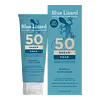
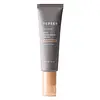
Blue Lizard Sheer Mineral Sunscreen Lotion for Face SPF 50 Versus Versed Good Defense Daily Sunscreen SPF 50
This mineral sunscreen covers the full UV range and blocks ~98% of UVB at SPF 50.
This chemical sunscreen covers most of the UV range, lighter on the deep UVA that drives aging.

What's inside
What's inside
 Key Ingredients
Benefits
Concerns
Ingredients Side-by-side
Titanium Dioxide 8%
Cosmetic Colorant

Zinc Oxide 10%
Cosmetic Colorant
1,2-Hexanediol
Skin Conditioning
Alanine
Masking
Aloe Barbadensis Leaf Juice
Skin Conditioning

Alumina
Abrasive
Aluminum Stearate
Cosmetic ColorantAnetholea Anisata Leaf Extract
Skin ConditioningArginine
Masking
Aspartic Acid
Masking
Butyrospermum Parkii Butter
Skin Conditioning





C12-15 Alkyl Benzoate
AntimicrobialCaprylic/Capric Triglyceride
Masking
Caprylyl Glycol
Emollient
Diisopropyl Sebacate
EmollientGlycerin
Humectant
Glycine
Buffering
Glycine Soja Oil
Emollient

Hibiscus Sabdariffa Flower Extract
Skin ConditioningHistidine
Humectant
Hydroxyacetophenone
Antioxidant
Isoleucine
Skin ConditioningIsostearyl Alcohol
Emollient
Isostearyl Isostearate
Emollient
Oryza Sativa Extract
Absorbent
Oryza Sativa Germ Extract
EmollientPCA
Humectant
Phenylalanine
Masking
Polyglyceryl-3 Diisostearate
Emulsifying
Polyglyceryl-3 Polyricinoleate
Emulsifying
Polyhydroxystearic Acid
Emulsifying
Pongamia Pinnata Seed Extract
Skin ConditioningProline
Skin Conditioning
Rosa Canina Fruit Oil
Emollient
Sclerocarya Birrea Seed Oil
Humectant
Serine
Masking
Sodium Chloride
MaskingSodium Hyaluronate
Humectant
Sodium Lactate
Buffering
Sodium PCA
Humectant
Sorbitan Isostearate
Emulsifying
Squalane
Emollient
Tasmannia Lanceolata Leaf Extract
Skin ConditioningThreonine
Tocopheryl Acetate
Antioxidant

Triethoxycaprylylsilane

Valine
MaskingVp/Hexadecene Copolymer
Water
Skin ConditioningXanthan Gum
EmulsifyingTitanium Dioxide 8%, Zinc Oxide 10%, 1,2-Hexanediol, Alanine, Aloe Barbadensis Leaf Juice, Alumina, Aluminum Stearate, Anetholea Anisata Leaf Extract, Arginine, Aspartic Acid, Butyrospermum Parkii Butter, C12-15 Alkyl Benzoate, Caprylic/Capric Triglyceride, Caprylyl Glycol, Diisopropyl Sebacate, Glycerin, Glycine, Glycine Soja Oil, Hibiscus Sabdariffa Flower Extract, Histidine, Hydroxyacetophenone, Isoleucine, Isostearyl Alcohol, Isostearyl Isostearate, Oryza Sativa Extract, Oryza Sativa Germ Extract, PCA, Phenylalanine, Polyglyceryl-3 Diisostearate, Polyglyceryl-3 Polyricinoleate, Polyhydroxystearic Acid, Pongamia Pinnata Seed Extract, Proline, Rosa Canina Fruit Oil, Sclerocarya Birrea Seed Oil, Serine, Sodium Chloride, Sodium Hyaluronate, Sodium Lactate, Sodium PCA, Sorbitan Isostearate, Squalane, Tasmannia Lanceolata Leaf Extract, Threonine, Tocopheryl Acetate, Triethoxycaprylylsilane, Valine, Vp/Hexadecene Copolymer, Water, Xanthan Gum
Butyl Methoxydibenzoylmethane 3%
UV Absorber
Homosalate 7.3%
Skin Conditioning
Ethylhexyl Salicylate 5%
UV Absorber
Water
Skin ConditioningCaprylic/Capric Triglyceride
Masking
Butyloctyl Salicylate
Skin Conditioning
Ethylhexyl Methoxycrylene
Skin Conditioning
Dipropylene Glycol
HumectantBetaine
Humectant
Shorea Stenoptera Seed Butter
Emollient
Vp/Hexadecene Copolymer
Ceramide NP
Skin Conditioning
Arginine
Masking
Serine
Masking
Alanine
Masking
Glycine
Buffering
Threonine
Proline
Skin Conditioning
Valine
MaskingHistidine
Humectant
Isoleucine
Skin ConditioningPhenylalanine
Masking
Aspartic Acid
Masking
Spirodela Polyrhiza Extract
Skin ConditioningPCA
Humectant
Sodium PCA
Humectant
Bisabolol
Antioxidant
Hydroxyacetophenone
Antioxidant
Dibutyl Lauroyl Glutamide
Skin ConditioningDibutyl Ethylhexanoyl Glutamide
Skin ConditioningGlycolipids
Skin ConditioningDipotassium Glycyrrhizate
Humectant
Sodium Lactate
Buffering
Ammonium Acryloyldimethyltaurate/Vp Copolymer
Carbomer
Emulsion StabilisingPentylene Glycol
Skin Conditioning
Tromethamine
BufferingPhenoxyethanol
Preservative
Butyl Methoxydibenzoylmethane 3%, Homosalate 7.3%, Ethylhexyl Salicylate 5%, Water, Caprylic/Capric Triglyceride, Butyloctyl Salicylate, Ethylhexyl Methoxycrylene, Dipropylene Glycol, Betaine, Shorea Stenoptera Seed Butter, Vp/Hexadecene Copolymer, Ceramide NP, Arginine, Serine, Alanine, Glycine, Threonine, Proline, Valine, Histidine, Isoleucine, Phenylalanine, Aspartic Acid, Spirodela Polyrhiza Extract, PCA, Sodium PCA, Bisabolol, Hydroxyacetophenone, Dibutyl Lauroyl Glutamide, Dibutyl Ethylhexanoyl Glutamide, Glycolipids, Dipotassium Glycyrrhizate, Sodium Lactate, Ammonium Acryloyldimethyltaurate/Vp Copolymer, Carbomer, Pentylene Glycol, Tromethamine, Phenoxyethanol
Reviews
Ingredients Explained
These ingredients are found in both products.
Ingredients higher up in an ingredient list are typically present in a larger amount.
Alanine is an amino acid and is already found in the human body. Our skin uses alanine to build collagen, elastin, and keratin.
Arginine is a semi-essential amino acid. This just means our bodies can product a bit on its own, but sometimes needs a little boost from food sources.
It is a part of your skin's natural moisturizing factor (NMF), or the water-loving molecules in your outermost layer of skin (stratum corneum) that keeps everything hydrated and happy.
Here's an interesting thing about Arginine: your skin converts it into urea through the Krebs-Henseleit urea cycle. Urea is one of the most effective humectants your skin naturally produces.
A clinical study showed applying 2.5% arginine hydrochloride to atopic dermatitis skin showed significant urea levels in the stratum corneum and improved moisture in just four weeks.
Arginine is also a precursor to nitric oxide; nitric oxide improves microcirculation and supports wound healing and collagen synthesis.
One study found that an amino acid complex containing Arginine reduced skin irritation, improved hydration, and accelerated skin repair in clinical / in-vivo studies.
Arginine itself is an amino acid and not a fatty acid, oil, or ester. On its own, it's not a direct food source for Malassezia, or the yeast that causes fungal acne.
Learn more about ArginineAspartic Acid is an amino acid that our bodies produce naturally. It is an antioxidant.
Our body uses Aspartic Acid to help build collagen and elastin. It also plays a role in hydrating skin.
Caprylic/Capric Triglyceride (aka MCT Oil) is a lightweight emollient, solvent, and texture enhancer. It is considered a skin-softener by helping to prevent moisture loss.
Though it behaves like an oil, it is not technically one due to its chemical composition. One perk of this ingredient is that it is very stable, resistant to oxidation, and unlikely to go rancid.
In practice, that translates to a long shelf life and a consistently elegant skin feel.
While there is an assumption Caprylic Triglyceride can clog pores due to it being derived from coconut oil, there is no research supporting this. Just patch test if you have concerns.
Fractionated coconut oil and MCT Oil are both listed as Caprylic/Capric Triglyceride according to INCI. This is because INCI names are based on the ingredient’s final chemical composition and not its marketing name or source.
This ingredient is treated as the gold standard fungal acne safe oil. Even though it is coconut derived, the problematic lauric acid is stripped out.
This leaves just caprylic (C8) and capric (C10) acid. These chain lengths actually trend antifungal; a 2020 study found caprylic acid was enough to disrupt Malassezia furfur cell membrane, with a caprylic acid derivative damaging membrane structures at concentrations as low as 0.2%.
Learn more about Caprylic/Capric TriglycerideGlycine is the smallest amino acid and a key building block of collagen. It's part if your skin's Natural Moisturizing Factor (NMF), or the water-loving molecules in your outermost layer of skin (stratum corneum) that keeps everything hydrated and happy.
A study from 2022 found that an amino acid complex featuring taurine, arginine, and glycine significantly reduced skin irritation, improved redness, and accelerated the skin repair process.
Histidine is a semi-essential amino acid used by our bodies to create protein. It has humectant and skin conditioning properties.
Our bodies use histidine to create filaggrin - filaggrin is a structural protein that the skin uses in maintaining skin barrier.
One study found histidine and carnosine to be a dynamic duo for your skin:
Oral histidine has also been found to help with filaggrin-deficit skin disorders such as atopic dermatitis.
Why is it considered a semi-essential amino acid? This is because adults are able to create it but children must get it from their diet.
Learn more about HistidineHydroxyacetophenone is a small phenolic molecule that earns its place in a formulas as an antioxidant and preservative booster.
As a phenol, it is able to neutralize free radicals to protect both the product and the skin from oxidative stress.
Though it can't kill microbes on its own, it works as a good supporting agent when combined with other preservatives like Phenoxyethanol or 1,2-Hexanediol.
This ingredient naturally occurs as piceol in Norwegian spruce needles (~0.4-1.1% dry weight and in cloudberries). Though the cosmetic-grade material is synthesized for purity and consistency.
You'll usually see it used at low levels and suppliers recommend up to 1% added to a water phase.
Safety testing was done at concentrations like 0.05% in SPF products and 0.5% in a Human Repeated Insult Patch Test. The safety evidence is assuring; this ingredient is safe for cosmetics in current use and also holds safety status as a food flavoring as well.
An honest caveat: the "soothing" and "anti-inflammatory" claims come mostly from supplier marketing rather than published clinical trials. The Cosmetic Ingredient Review's own literature search found no useful efficacy studies on this ingredient.
So the antioxidant and preservative-boosting roles are the well supported ones while the calming benefit is plausible but thinly evidenced.
Overall, this is a well-tolerated, low-irritation multitasker that quietly helps a formula stay fresh and stable.
Learn more about HydroxyacetophenoneIsoleucine is an amino acid that helps reinforce our skin barrier. This amino acid plays a role in creating protein for the body.
Fun fact: Isoleucine is found in meat, fish, dairy, legumes, and nuts.
PCA is an amino acid derivative and one of the star players in your skin's own Natural Moisturizing Factor (NMF).
The NMF is the built-in cocktail of small molecules that keeps your outer layer of skin hydrated and your body makes it naturally.
This is why it works so well topically; PCA is a humectant that holds water in the stratum corneum and studies link higher skin PCA levels to better hydration + lower water loss. Interestingly, people show more PCA in summer and in normal vs dry skin.
Most of the benefits of this ingredient are related to hydration, softness, and barrier support.
A long-running review found that formulas with at least 2% PCA or its salts improved dry skin over both the short and long term. And the zinc salt is also used for its mild antimicrobial and astringent properties.
The salt forms are more common in cosmetics (like sodium PCA).
This ingredient is compatible with basically everything and pairs well with other humectants like glycerin or hyaluronic acid.
Usage-wise, it's typically used at low percentages (~0.2-2%).
The Cosmetic Ingredient Review Expert Panel has concluded PCA and its salts are safe as used and is non-irritating on skin even at high concentrations.
Learn more about PCAPhenylalanine is an amino acid. It is a skin soothing and hydrating ingredient. Amino acids play a crucial role in wound healing and skin hydration.
This ingredient is also used to help even out skin tone due to its ability to disrupt the melanin production process.
Two structures of phenylalanine exist: L-phenylalanine and D-phenylalanine. L-phenylalanine is essential, this means our bodies cannot produce it naturally and we must get it from foods. Our bodies convert D-phenylalanine to neurotransmitters, and D-phenylalanine is found in our bodies naturally.
Some foods that contain L-phenylalanine include eggs, soybeans, beef, milk.
Learn more about PhenylalanineProline is a non-essential amino acid, meaning your body can make it on its own. In skincare, it is a skin conditioning ingredient that keeps skin soft and hydrated.
It makes up about 23% of the collagen molecule (collagen is the protein responsible for keeping your skin firm) and is involved in your skin's natural hyaluronic acid production. When applied topically, proline can penetrate the skin fairly well due to its small molecular size.
Reviews of this ingredient have found it to be neither a dermal irritant nor a sensitizer.
Fun fact: Proline can be found in protein-rich foods like meat, fish, eggs, and dairy.
Learn more about ProlineSerine is a non-essential amino acid (your body makes it on its own!). It is a major player in your skin's natural moisturizing factor (NMF), or the water-loving molecules in your outermost layer of skin (stratum corneum) that keeps everything hydrated and happy.
Serine is one of your NMF's most abundant components that works as a skin-identical humectant. Its hydroxyl group grabs onto water molecules to boost hydration without any heaviness or occlusion.
Research on a hydrogel with serine confirmed this serine got delivered to your stratum corneum and demonstrated enhanced skin moisturization.
Interestingly serine also helps your skin produce filaggrin, a protein that keeps your skin barrier strong and used to create collagen.
Learn more about SerineSodium Lactate is the sodium salt of lactic acid, an AHA. It is a humectant and sometimes used to adjust the pH of a product.
This ingredient is part of our skin's NMF, or natural moisturizing factor. Our NMF is essential for the hydration of our top skin layers and plasticity of skin. NMF also influences our skin's natural acid mantle and pH, which protects our skin from harmful bacteria.
High percentages of Sodium Lactate can have an exfoliating effect.
Fun fact: Sodium Lactate is produced from fermented sugar.
Learn more about Sodium LactateSodium PCA (the salt of PCA) is one of the most well-established humectants in skincare.
Why is it so special? Your skin already makes it naturally; it's a natural component of your skin's Natural Moisturizing Factor (NMF), or the mix of water-binding compounds inside your skin cells that keeps things soft and hydrated.
As a cosmetic ingredient, it grabs water and holds it in the upper layers of skin to smooth roughness and ease dehydration.
There's some clinical support for the NMF approach with a study showing that a cream built to mimic the skin's NMF significantly boosted hydration.
Safety-wise, this ingredient non-irritating, non-comedogenic, and non-phototoxic in testing, with minimal skin absorption.
It also works really well with other hydrators like glycerin or hyaluronic acid, and typical usage is somewhere between 0.2-4%.
Learn more about Sodium PCAThreonine is an amino-acid. It helps hydrate the skin and has antioxidant benefits.
Our skin uses threonine for creating collagen and elastin. Humans are not able to create threonine and must get it through eating foods such as fish, lentils, poultry, sesame seeds, and more.
Valine is one of the essential amino acids (meaning your body can't make it on its own and has to get it from food).
In skincare, it's usually synthetically-made or pulled from plant proteins like soy.
It's one of the small building blocks that make up your skin's natural moisturizing factor (NMF), or the built-in system that helps skin hold onto water. So its main job in a formula is to give the skin gentle hydration and help it feel more comfortable.
Typical amounts are very tiny: roughly 0.00004%-0.5% in leave on products and up to 1% in rinse-off ones.
The Cosmetic Ingredient Review panel has looked at this ingredient and found no evidence of it being a skin irritant or allergen at cosmetic levels.
Learn more about ValineVP/Hexadecene Copolymer is a synthetic film-forming agent. It has both water and oil loving properties, allowing it to create a flexible, even film on the skin.
This ingredient helps enhance texture, smoothness, and wear resistance in makeup products while reducing tackiness.
Water. It's the most common cosmetic ingredient of all. You'll usually see it at the top of ingredient lists, meaning that it makes up the largest part of the product.
So why is it so popular? Water most often acts as a solvent - this means that it helps dissolve other ingredients into the formulation.
You'll also recognize water as that liquid we all need to stay alive. If you see this, drink a glass of water. Remember to stay hydrated!
Learn more about Water

