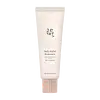
This chemical sunscreen covers most of the UV range, lighter on the deep UVA that drives aging.
This chemical sunscreen covers the full UV range and blocks ~98% of UVB at SPF 50.

What's inside
What's inside
 Key Ingredients
Benefits
Concerns
Ingredients Side-by-side
Water
Skin ConditioningHomosalate
Skin Conditioning

Butyloctyl Salicylate
Skin Conditioning
Octocrylene
UV Absorber

Ethylhexyl Salicylate
UV Absorber
Dipropylene Glycol
HumectantDiethylhexyl 2,6-Naphthalate
EmollientPolymethylsilsesquioxane

Butyl Methoxydibenzoylmethane
UV Absorber
Glycerin
Humectant


Caprylyl Methicone
Skin Conditioning
1,2-Hexanediol
Skin Conditioning
Silica
Abrasive


Vp/Eicosene Copolymer
Pentylene Glycol
Skin Conditioning
Behenyl Alcohol
Emollient
Poly C10-30 Alkyl Acrylate
Emulsion StabilisingPolyglyceryl-3 Methylglucose Distearate
Emulsifying

Cetearyl Alcohol
Emollient


Glyceryl Stearate
Emollient
Inulin Lauryl Carbamate
Emulsion StabilisingTromethamine
BufferingCarbomer
Emulsion StabilisingAcrylates/C10-30 Alkyl Acrylate Crosspolymer
Emulsion StabilisingSodium Stearoyl Glutamate
CleansingEthylhexylglycerin
Skin ConditioningPolyacrylate Crosspolymer-6
Emulsion StabilisingOryza Sativa Extract
Absorbent


T-Butyl Alcohol
Perfuming



Tocopherol
Antioxidant



Water, Homosalate, Butyloctyl Salicylate, Octocrylene, Ethylhexyl Salicylate, Dipropylene Glycol, Diethylhexyl 2,6-Naphthalate, Polymethylsilsesquioxane, Butyl Methoxydibenzoylmethane, Glycerin, Caprylyl Methicone, 1,2-Hexanediol, Silica, Vp/Eicosene Copolymer, Pentylene Glycol, Behenyl Alcohol, Poly C10-30 Alkyl Acrylate, Polyglyceryl-3 Methylglucose Distearate, Cetearyl Alcohol, Glyceryl Stearate, Inulin Lauryl Carbamate, Tromethamine, Carbomer, Acrylates/C10-30 Alkyl Acrylate Crosspolymer, Sodium Stearoyl Glutamate, Ethylhexylglycerin, Polyacrylate Crosspolymer-6, Oryza Sativa Extract, T-Butyl Alcohol, Tocopherol
Water
Skin ConditioningPropanediol
Solvent
Dibutyl Adipate
EmollientDicaprylyl Carbonate
EmollientDiethylamino Hydroxybenzoyl Hexyl Benzoate
UV Filter
Ethylhexyl Triazone
UV Absorber
Bis-Ethylhexyloxyphenol Methoxyphenyl Triazine
UV Absorber
Amylopectin
Butylene Glycol
Humectant
Methylene Bis-Benzotriazolyl Tetramethylbutylphenol
UV Filter
Glycerin
Humectant
Behenyl Alcohol
Emollient
Poly C10-30 Alkyl Acrylate
Emulsion StabilisingPolyglyceryl-3 Methylglucose Distearate
Emulsifying
Sodium Acrylates Crosspolymer-2
AbsorbentCarbomer
Emulsion StabilisingTromethamine
BufferingDecyl Glucoside
Cleansing
Acrylates/C10-30 Alkyl Acrylate Crosspolymer
Emulsion StabilisingBisabolol
Antioxidant
Panthenol
Skin Conditioning
Caprylhydroxamic Acid
ChelatingCentella Asiatica Extract
Cleansing
Tocopherol
Antioxidant
Ceramide NP
Skin Conditioning
Dipropylene Glycol
HumectantCholesterol
Emollient
Propylene Glycol
Humectant
Xanthan Gum
EmulsifyingGlyceryl Stearate
Emollient
Ceramide As
Skin Conditioning
Ceramide AP
Skin Conditioning
Ceramide Ns
Skin Conditioning
Hydrogenated Lecithin
Emulsifying
Ceramide EOP
Skin Conditioning
Water, Propanediol, Dibutyl Adipate, Dicaprylyl Carbonate, Diethylamino Hydroxybenzoyl Hexyl Benzoate, Ethylhexyl Triazone, Bis-Ethylhexyloxyphenol Methoxyphenyl Triazine, Amylopectin, Butylene Glycol, Methylene Bis-Benzotriazolyl Tetramethylbutylphenol, Glycerin, Behenyl Alcohol, Poly C10-30 Alkyl Acrylate, Polyglyceryl-3 Methylglucose Distearate, Sodium Acrylates Crosspolymer-2, Carbomer, Tromethamine, Decyl Glucoside, Acrylates/C10-30 Alkyl Acrylate Crosspolymer, Bisabolol, Panthenol, Caprylhydroxamic Acid, Centella Asiatica Extract, Tocopherol, Ceramide NP, Dipropylene Glycol, Cholesterol, Propylene Glycol, Xanthan Gum, Glyceryl Stearate, Ceramide As, Ceramide AP, Ceramide Ns, Hydrogenated Lecithin, Ceramide EOP
Reviews
Ingredients Explained
These ingredients are found in both products.
Ingredients higher up in an ingredient list are typically present in a larger amount.
Acrylates/C10-30 Alkyl Acrylate Crosspolymer is a synthetic polymer. It is used to thicken, emulsify, and improve the texture of products.
As an emulsifier, it helps stabilize oil-in-water emulsions to give products an elegant feel when applied.
It can also form a thin protective film on skin. One study found that a formula using this polymer helped slow down how quickly other ingredients (like DEET) were absorbed through skin.
A 2024 study of over 1,300 patients confirmed that sensitization to this ingredient is rare. It is also non-mutagenic and has a clean track record.
Learn more about Acrylates/C10-30 Alkyl Acrylate CrosspolymerBehenyl Alcohol is a type of fatty alcohol (these are different from the drying, solvent alcohols).
Fatty Alcohols have hydrating properties and are most often used as an emollient or to thicken a product. They are usually derived from natural fats and oils; behenyl alcohol is derived from the fats of vegetable oils.
Emollients help keep your skin soft and hydrated by creating a film that traps moisture in.
In 2000, Behenyl Alcohol was approved by the US as medicine to reduce the duration of cold sores.
Learn more about Behenyl AlcoholCarbomer is a synthetic thickening and gelling agent. It's basically the ingredient that gives a lot of serums, gels, creams, and sunscreens their smooth, non-sticky texture.
Although legally permitted at very high levels, carbomers are normally used at concentrations below 1%.
It also needs to be neutralized to actually thicken, and because it is a large molecule, it doesn't really penetrate the skin barrier.
Allergy-wise, the risk is very low. Clinical studies show carbomers have low potential for skin irritation/sensitization even at concentrations up to 100%.
A 2024 UK study patch-tested 1,302 patients and found true allergy to the parent group of carbomer to be rare with no confirmed relevant reactions.
Learn more about CarbomerDipropylene Glycol is a synthetically created humectant, stabilizer, and solvent.
This ingredient helps:
Dipropylene glycol is technically an alcohol, but it belongs to the glycol family (often considered part of the ‘good’ alcohols). This means it is hydrating and gentle on skin unlike drying solvent alcohols like denatured alcohol.
As a masking agent, Dipropylene Glycol can be used to cover the smell of other ingredients. However, it does not have a scent.
Studies show Dipropylene Glycol is considered safe to use in skincare.
Learn more about Dipropylene GlycolGlycerin (or glycerol) is a compound naturally found in your skin. It's a powerhouse humectant that pulls water into the stratum corneum.
Topically, glycerin does several things at once:
Your skin makes glycerin on its own (mostly from sebaceous oil breakdown) and shuttles it to your outermost layer of skin, or your epidermis, via aquaporin-3.
Aquaporin-3 is a transporter that is essential for normal skin hydration, elasticity, and repair. Interestingly, mice lacking in AQP3 have dry and less elastic skin that can be fully corrected with glycerin.
This ingredient is non-irritating, plays well with almost every ingredient, and works across all skin types. Typical use is anywhere between 3-10% but can go up to 79% in some leave-on products.
Just know very high concentrations (>40%) can feel tacky in low humidity.
Glycerin is the name for this ingredient in American English. British English uses Glycerol/Glycerine.
Learn more about GlycerinGlyceryl Stearate is made by reacting glycerin with stearic acid (typically sourced from plant oils like palm or coconut). It's an emulsifier, emollient, and mild occlusive.
Emulsifiers help ingredients like oil and water stay mixed so your formula stays nicely blended and uniform in texture.
This ingredient is typically used in concentrations between 1-10%. Studies have found it to be non-sensitizing, non-phototoxic, and non-photoallergenic.
A close cousin of this ingredient is Glyceryl Stearate SE ("self-emulsifying"). This just has a small amount of sodium or potassium stearate added so it can emulsify without a co-emulsifier.
Since this ingredient is an ester of a C18 fatty acid, it may not be fungal acne safe. The Malassezia yeast can potentially metabolize within the C11-C24 range.
Fun fact: The human body also creates Glyceryl Stearate naturally.
Learn more about Glyceryl StearatePoly C10-30 Alkyl Acrylate is a synthetic polymer. It's a long chain built from acrylic acid units and each unit carries a fatty "tail" derived form a C10-30 alcohol.
Those oil-loving tails allow this ingredient to thicken oil phases, hold emulsions together, and cuts the tacky/greasy feel of heavy formulas.
Typical use levels sit around 0.1-3%, with 0.3-3% more common in leave-on emulsions.
This ingredient was reviewed as part of a group of 126 acrylates and concluded to be safe by the Cosmetic Ingredient Review Expert Panel.
Though acrylate contact allergy is real and well-documented, allergy risk is quite low. The cases of documented contact allergy are caused by unreacted monomers (more commonly found in gel nails, dental resins, and adhesives).
Learn more about Poly C10-30 Alkyl AcrylatePolyglyceryl-3 Methylglucose Distearate is a plant-derived emulsifier whose only job is to keep the oily and watery parts of a formula blended so it doesn't separate into layers.
It's compatible with a wide-range of active ingredients and especially good at making emulsions survive heat/freeze cycles.
Typical use concentrations range from 2-3% and it works across a pH of 4.5-8.5.
This ingredient has been found safe to use in cosmetics and has a low irritation profile.
Because it's build on stearic acid, it may not be fungal acne safe. Stearic acid is a C18 fatty acid that falls within the range (C11-24) that Malassezia can feed on.
Learn more about Polyglyceryl-3 Methylglucose DistearateTocopherol is a fat-soluble antioxidant known as Vitamin E.
You'll find this ingredient in the vast majority of skincare (for good reason). It works to neutralize free radicals, or unstable molecules generated by UV exposure, pollution, and other environmental stressors, before they can cause oxidative damage to your skin cells.
Topically applied tocopherol has been shown to protect against UV damage by ramping up the skin's own natural defense enzymes.
It also acts as a skin conditioning agent; some studies show that regular topical use can improve the skin's water-binding capacity over 2-4 weeks.
This ingredient is especially loved for being a team player. When combined with Vitamin C, the photoprotective effect of both ingredients roughly doubles and the combo also helps reduce UV-induced DNA damage.
This ingredient has some brightening potential but it's more of a prevention ingredient than spot-fader. Cell studies show it can slow down melanin production but it's worth noting that it's not the most powerful brightener out there.
In formulations, it also serves as a stabilizer that helps protect other oxidation-prone ingredients from degrading.
Concentrations usually range from 0.1-1% in most leave-on products.
Learn more about TocopherolTromethamine (aka THAM) is a synthetic amino acid that shows up in skincare as a helper ingredient.
It functions as a pH adjuster to help neutralize acidic ingredients and set a formula's pH to the right spot.
This matters a lot because a lot of actives (like vitamin C) needs a specific pH to work well and feel comfortable on skin.
Concentration use ranges from 0.1-1.0% depending on the formula.
Learn more about TromethamineWater. It's the most common cosmetic ingredient of all. You'll usually see it at the top of ingredient lists, meaning that it makes up the largest part of the product.
So why is it so popular? Water most often acts as a solvent - this means that it helps dissolve other ingredients into the formulation.
You'll also recognize water as that liquid we all need to stay alive. If you see this, drink a glass of water. Remember to stay hydrated!
Learn more about Water

