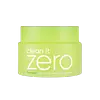
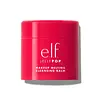
Banila Co Clean It Zero Cleansing Balm Versus e.l.f. cosmetics Jelly Pop Makeup Melting Cleansing Balm
This oil-based makeup remover is made to dissolve makeup, sunscreen, and daily buildup.
This oil-based makeup remover is made to dissolve makeup, sunscreen, and daily buildup.


What's inside
What's inside
 Key Ingredients
Benefits
Concerns
Ingredients Side-by-side
Ethylhexyl Stearate
Emollient




Cetyl Ethylhexanoate
EmollientSorbeth-30 Tetraoleate
Emulsifying
Synthetic Wax
Abrasive
Water
Skin ConditioningButyrospermum Parkii Butter
Skin Conditioning

Silica
Abrasive

Butylene Glycol
Humectant
Parfum
Masking


Titanium Dioxide
Cosmetic Colorant

Glyceryl Caprylate
EmollientCaprylyl Glycol
Emollient
Persea Gratissima Oil
Skin Conditioning
Simmondsia Chinensis Seed Oil
Emollient
Squalane
Emollient
Sorbitan Sesquioleate
Emulsifying
Pentaerythrityl Tetra-Di-T-Butyl Hydroxyhydrocinnamate
Antioxidant
Polyglyceryl-3 Polyricinoleate
Emulsifying
Gardenia Florida Fruit Extract
Skin ConditioningPanthenol
Skin Conditioning

Glycerin
Humectant
Onsen-Sui
Aluminum Hydroxide
EmollientTriethoxycaprylylsilane

1,2-Hexanediol
Skin Conditioning
Lactobacillus Ferment
Skin Conditioning
Palmitic Acid
Emollient
Stearic Acid
Cleansing
Ethylhexyl Stearate, Cetyl Ethylhexanoate, Sorbeth-30 Tetraoleate, Synthetic Wax, Water, Butyrospermum Parkii Butter, Silica, Butylene Glycol, Parfum, Titanium Dioxide, Glyceryl Caprylate, Caprylyl Glycol, Persea Gratissima Oil, Simmondsia Chinensis Seed Oil, Squalane, Sorbitan Sesquioleate, Pentaerythrityl Tetra-Di-T-Butyl Hydroxyhydrocinnamate, Polyglyceryl-3 Polyricinoleate, Gardenia Florida Fruit Extract, Panthenol, Glycerin, Onsen-Sui, Aluminum Hydroxide, Triethoxycaprylylsilane, 1,2-Hexanediol, Lactobacillus Ferment, Palmitic Acid, Stearic Acid
Cetyl Ethylhexanoate
EmollientTriethylhexanoin
MaskingHydrogenated Polydecene
EmollientPEG-20 Glyceryl Triisostearate
Emollient
Synthetic Wax
Abrasive
PEG-10 Isostearate
Emulsifying
Water
Skin ConditioningParfum
Masking
Phenoxyethanol
Preservative
Caprylyl Glycol
Emollient
Ethylhexylglycerin
Skin ConditioningButylene Glycol
Humectant
Hydrolyzed Sodium Hyaluronate
Skin Conditioning
Glycerin
Humectant
Sodium Lauroyl Lactylate
EmulsifyingCarbomer
Emulsion StabilisingCitrullus Lanatus Fruit Extract
Skin Conditioning
Ceramide NP
Skin Conditioning
Ceramide AP
Skin Conditioning
Phytosphingosine
Skin Conditioning
Polysorbate 20
Emulsifying
Cholesterol
Emollient
Xanthan Gum
EmulsifyingPalmitoyl Tripeptide-1
Skin Conditioning

Palmitoyl Tetrapeptide-7
Skin Conditioning
Ceramide EOP
Skin Conditioning
Hexyl Cinnamal
Perfuming
Linalool
Perfuming
Cetyl Ethylhexanoate, Triethylhexanoin, Hydrogenated Polydecene, PEG-20 Glyceryl Triisostearate, Synthetic Wax, PEG-10 Isostearate, Water, Parfum, Phenoxyethanol, Caprylyl Glycol, Ethylhexylglycerin, Butylene Glycol, Hydrolyzed Sodium Hyaluronate, Glycerin, Sodium Lauroyl Lactylate, Carbomer, Citrullus Lanatus Fruit Extract, Ceramide NP, Ceramide AP, Phytosphingosine, Polysorbate 20, Cholesterol, Xanthan Gum, Palmitoyl Tripeptide-1, Palmitoyl Tetrapeptide-7, Ceramide EOP, Hexyl Cinnamal, Linalool
Reviews
Ingredients Explained
These ingredients are found in both products.
Ingredients higher up in an ingredient list are typically present in a larger amount.
Butylene Glycol (or BG) is used within cosmetic products for a few different reasons:
Overall, Butylene Glycol is a safe and well-rounded ingredient that works well with other ingredients.
Though this ingredient works well with most skin types, some people with sensitive skin may experience a reaction such as allergic rashes, closed comedones, or itchiness.
Learn more about Butylene GlycolCaprylyl Glycol is a humectant, skin conditioner, emollient, and preservative booster derived from either caprylic acid or synthetically created.
Typical use levels vary from 0.3-1% as a preservative booster and go up to 2% to condition skin.
Because it is not a free-fatty acid, this ingredient is fungal acne safe (there's nothing for Malassezia to feed on).
Learn more about Caprylyl GlycolCetyl Ethylhexanoate is an emollient ester. It comes from cetearyl alcohol and 2-ethylhexanoic acid.
Cetyl Ethylhexanoate is an emollient that adds a velvety feel to skin without being greasy or oily. Emollients help trap moisture into your skin, keeping your skin soft and hydrated.
Glycerin (or glycerol) is a compound naturally found in your skin. It's a powerhouse humectant that pulls water into the stratum corneum.
Topically, glycerin does several things at once:
Your skin makes glycerin on its own (mostly from sebaceous oil breakdown) and shuttles it to your outermost layer of skin, or your epidermis, via aquaporin-3.
Aquaporin-3 is a transporter that is essential for normal skin hydration, elasticity, and repair. Interestingly, mice lacking in AQP3 have dry and less elastic skin that can be fully corrected with glycerin.
This ingredient is non-irritating, plays well with almost every ingredient, and works across all skin types. Typical use is anywhere between 3-10% but can go up to 79% in some leave-on products.
Just know very high concentrations (>40%) can feel tacky in low humidity.
Glycerin is the name for this ingredient in American English. British English uses Glycerol/Glycerine.
Learn more about GlycerinParfum is a catch-all term for an ingredient or more that is used to give a scent to products.
Also called "fragrance", this ingredient can be a blend of hundreds of chemicals or plant oils. This means every product with "fragrance" or "parfum" in the ingredients list is a different mixture.
For instance, Habanolide is a proprietary trade name for a specific aroma chemical. When used as a fragrance ingredient in cosmetics, most aroma chemicals fall under the broad labeling category of “FRAGRANCE” or “PARFUM” according to EU and US regulations.
The term 'parfum' or 'fragrance' is not regulated in many countries. In many cases, it is up to the brand to define this term.
For instance, many brands choose to label themselves as "fragrance-free" because they are not using synthetic fragrances. However, their products may still contain ingredients such as essential oils that are considered a fragrance by INCI standards.
One example is Calendula flower extract. Calendula is an essential oil that still imparts a scent or 'fragrance'.
Depending on the blend, the ingredients in the mixture can cause allergies and sensitivities on the skin. Some ingredients that are known EU allergens include linalool and citronellol.
Parfum can also be used to mask or cover an unpleasant scent.
The bottom line is: not all fragrances/parfum/ingredients are created equally. If you are worried about fragrances, we recommend taking a closer look at an ingredient. And of course, we always recommend speaking with a professional.
Learn more about ParfumSynthetic Wax is a manufactured hydrocarbon wax. In formulas, it works as an occlusive emollient that helps reduce water loss and improves the spreadability of products.
Research comparing synthetic wax to traditional mineral-derived products found that formulas containing it perform as well for skin hydration.
It is considered non-comedogenic and vegan-friendly.
This ingredient has a well-established safety record by the CIR Expert Panel for Cosmetic Ingredient Safety.
Synthetic Waxes are straight/branched-chain hydrocarbons with no ester bond or fatty acids. That means there is nothing for the Malassezia yeast to feed on.
Learn more about Synthetic WaxWater. It's the most common cosmetic ingredient of all. You'll usually see it at the top of ingredient lists, meaning that it makes up the largest part of the product.
So why is it so popular? Water most often acts as a solvent - this means that it helps dissolve other ingredients into the formulation.
You'll also recognize water as that liquid we all need to stay alive. If you see this, drink a glass of water. Remember to stay hydrated!
Learn more about Water

