WonderDewi Cica Amino Acid Cleanser
A face cleanser with 41 ingredients, including PHA and ceramides.
This mild gel cleanser is made to cleanse while calming and soothing your skin.
We independently verify ingredients, backed by peer-reviewed research. Suggest an update.
What's inside
Ingredients List
Water
Skin ConditioningSodium Cocoyl Alaninate
Surfactant
Disodium Laureth Sulfosuccinate
CleansingGlycerin
Humectant


Lauryl Glucoside
CleansingAcrylates Copolymer
Butylene Glycol
Humectant
Disodium Cocoamphodiacetate
Cleansing1,2-Hexanediol
Skin Conditioning
Sodium Chloride
MaskingHexylene Glycol
EmulsifyingCaprylyl Glycol
Emollient
Coco-Glucoside
Cleansing
Dipropylene Glycol
HumectantTromethamine
BufferingChlorella Vulgaris Extract
Skin ConditioningGlucose
Humectant
Fructooligosaccharides
Humectant
CI 77891
Cosmetic ColorantFructose
Humectant
Centella Asiatica Leaf Extract
Skin Conditioning


Gluconolactone
Chelating





Sodium Cocoyl Isethionate
Cleansing
Propanediol
Solvent
Sodium Phytate
ChelatingPolyglyceryl-10 Isostearate
Skin Conditioning

Ceramide NP
Skin Conditioning
Ceramide Ng
Skin Conditioning
Ceramide Ns
Skin Conditioning
Ceramide AP
Skin Conditioning
Ceramide As
Skin Conditioning
Ceramide EOP
Skin Conditioning
Polyglyceryl-10 Oleate
Skin Conditioning
Cholesterol
Emollient
Quillaja Saponaria Bark Extract
CleansingHydrogenated Lecithin
Emulsifying
Cetearyl Alcohol
Emollient


Citric Acid
Buffering
Stearic Acid
Cleansing
Ethylhexylglycerin
Skin ConditioningPhytosphingosine
Skin Conditioning
Water, Sodium Cocoyl Alaninate, Disodium Laureth Sulfosuccinate, Glycerin, Lauryl Glucoside, Acrylates Copolymer, Butylene Glycol, Disodium Cocoamphodiacetate, 1,2-Hexanediol, Sodium Chloride, Hexylene Glycol, Caprylyl Glycol, Coco-Glucoside, Dipropylene Glycol, Tromethamine, Chlorella Vulgaris Extract, Glucose, Fructooligosaccharides, CI 77891, Fructose, Centella Asiatica Leaf Extract, Gluconolactone, Sodium Cocoyl Isethionate, Propanediol, Sodium Phytate, Polyglyceryl-10 Isostearate, Ceramide NP, Ceramide Ng, Ceramide Ns, Ceramide AP, Ceramide As, Ceramide EOP, Polyglyceryl-10 Oleate, Cholesterol, Quillaja Saponaria Bark Extract, Hydrogenated Lecithin, Cetearyl Alcohol, Citric Acid, Stearic Acid, Ethylhexylglycerin, Phytosphingosine
Key Ingredients
Benefits
Concerns
Ingredients Explained
Water. It's the most common cosmetic ingredient of all. You'll usually see it at the top of ingredient lists, meaning that it makes up the largest part of the product.
So why is it so popular? Water most often acts as a solvent - this means that it helps dissolve other ingredients into the formulation.
You'll also recognize water as that liquid we all need to stay alive. If you see this, drink a glass of water. Remember to stay hydrated!
Learn more about WaterThis ingredient is a surfactant and foam producer.
This ingredient is a cleansing agent, surfactant, and foam booster. It considered an alternative to traditional sulfates (Sulfosuccinate) and is allowed in "sulfate-free" products.
According to a manufacturer, this ingredient is mild and can be used in baby and bath options.
Glycerin (or glycerol) is a compound naturally found in your skin. It's a powerhouse humectant that pulls water into the stratum corneum.
Topically, glycerin does several things at once:
Your skin makes glycerin on its own (mostly from sebaceous oil breakdown) and shuttles it to your outermost layer of skin, or your epidermis, via aquaporin-3.
Aquaporin-3 is a transporter that is essential for normal skin hydration, elasticity, and repair. Interestingly, mice lacking in AQP3 have dry and less elastic skin that can be fully corrected with glycerin.
This ingredient is non-irritating, plays well with almost every ingredient, and works across all skin types. Typical use is anywhere between 3-10% but can go up to 79% in some leave-on products.
Just know very high concentrations (>40%) can feel tacky in low humidity.
Glycerin is the name for this ingredient in American English. British English uses Glycerol/Glycerine.
Learn more about GlycerinLauryl Glucoside sugar- and lipid-based cleansing agent. It is created from glucose and lauryl alcohol.
This ingredient is a surfactant, making it easier to rinse oil, dirt, and other pollutants away.
A British study found lauryl glucoside to cause skin sensitivity for some people. We recommend speaking with a professional if you have concerns.
Other names for this ingredient include "Lauryl Polyglucose", "Lauryl glycoside", and "D-Glucopyranoside".
Learn more about Lauryl GlucosideAcrylates Copolymer is used as a film-forming agent and texture enhancer.
After applied, Acrylates Copolymer forms a thin film cover that helps skin feel more soft. It can help sunscreens become more water-resistant.
It is also used to make a product more thick.
Learn more about Acrylates CopolymerButylene Glycol (or BG) is used within cosmetic products for a few different reasons:
Overall, Butylene Glycol is a safe and well-rounded ingredient that works well with other ingredients.
Though this ingredient works well with most skin types, some people with sensitive skin may experience a reaction such as allergic rashes, closed comedones, or itchiness.
Learn more about Butylene GlycolDisodium Cocoamphodiacetate is a surfactant and helps cleanse skin. It is created from the fatty acids of coconut oil.
Surfactants help rinse oil, dirt, and other pollutants easily from skin. It has a faint fruit-like scent.
1,2-Hexanediol is a synthetic liquid and another multi-functional powerhouse.
It is a:
- Humectant, drawing moisture into the skin
- Emollient, helping to soften skin
- Solvent, dispersing and stabilizing formulas
- Preservative booster, enhancing the antimicrobial activity of other preservatives
Chances are, you eat sodium chloride every day. Sodium Chloride is also known as table salt. This ingredient has many purposes in skincare: thickener, emulsifier, and exfoliator.
You'll most likely find this ingredient in cleansers where it is used to create a gel-like texture. As an emulsifier, it also prevents ingredients from separating.
You might see people debate whether Sodium Chloride is comedogenic, but there actually haven't been any comedogenic tests done on it. Either way, the overall formulation of a product matters a lot more than any single ingredient.
You might see this ingredient used in scrubs as a primary exfoliating ingredient.
Learn more about Sodium ChlorideHexylene Glycol is a multitasker ingredient that works as a solvent, humectant, emulsifier, viscosity reducer, and preservative booster.
It is able to dissolve both water and oil-soluble ingredients to stabilize tricky actives and make products spread more easily.
As a humectant, it pulls water into the skin. But it's a pretty minor moisturizing ingredient compared to other humectants, like glycerin.
Interestingly, it can act as a mild penetration enhancer. One in vitro study on human skin found a 12% concentration upped the absorption of mometasone furoate (a medicinal ingredient used to treat inflammatory skin conditions) up to 7%.
This ingredient is typically used at levels of 0.1-10% depending on the role it's playing.
A patch test study on eczema patients didn't find a significant increase in irritation versus the control group, but the potential for irritation rises at higher concentrations.
Learn more about Hexylene GlycolCaprylyl Glycol is a humectant, skin conditioner, emollient, and preservative booster derived from either caprylic acid or synthetically created.
Typical use levels vary from 0.3-1% as a preservative booster and go up to 2% to condition skin.
Because it is not a free-fatty acid, this ingredient is fungal acne safe (there's nothing for Malassezia to feed on).
Learn more about Caprylyl GlycolCoco-Glucoside is a surfactant, or a cleansing ingredient. It is made from glucose and coconut oil.
Surfactants help gather dirt, oil, and other pollutants from your skin to be rinsed away.
This ingredient is considered gentle and non-comedogenic. However, it may still be irritating for some.
Learn more about Coco-GlucosideDipropylene Glycol is a synthetically created humectant, stabilizer, and solvent.
This ingredient helps:
Dipropylene glycol is technically an alcohol, but it belongs to the glycol family (often considered part of the ‘good’ alcohols). This means it is hydrating and gentle on skin unlike drying solvent alcohols like denatured alcohol.
As a masking agent, Dipropylene Glycol can be used to cover the smell of other ingredients. However, it does not have a scent.
Studies show Dipropylene Glycol is considered safe to use in skincare.
Learn more about Dipropylene GlycolTromethamine (aka THAM) is a synthetic amino acid that shows up in skincare as a helper ingredient.
It functions as a pH adjuster to help neutralize acidic ingredients and set a formula's pH to the right spot.
This matters a lot because a lot of actives (like vitamin C) needs a specific pH to work well and feel comfortable on skin.
Concentration use ranges from 0.1-1.0% depending on the formula.
Learn more about TromethamineChlorella Vulgaris Extract comes from a single-celled green freshwater algae.
The version used in skincare is almost always a water or glycerin-based extract that is basically the algae's amino acids, peptides, sugars, and chlorophyll pigments.
It acts as a skin-conditioning agent and the research behind it at this time is mostly lab-dish rather than human trials.
Isolated Chlorella peptides inhibit collagenase and elastase (the enzymes that chew up collagen and elastin) and mop up free radicals in test-tube assays. Another study found a Chlorella gel sped up wound healing in mice. Many of the firming or dark-circle claims come from the ingredient supplier's own studies.
Suppliers suggest using 1-2% of the trade version (Water/Glycerin + Chlorella Vulgaris Extract) in a finished formula which means the actual algae solids are a fraction of a percent.
Allergy risk is low and topical reactions are rare; the 2020 anaphylaxis case came from eating Chlorella supplements and not from putting it on skin.
However, patch testing is sensible if you have reacted to algae before.
The "chlorella is high in iodine so it breaks you out" line borrows from marine seaweed. Freshwater Chlorella isn't a notable iodine source unless it's deliberately grown in iodine-enriched medium.
Just so you know, many lists give algae a comedogenic rating of 5 and that number doesn't come from anywhere; it's not in the original rabbit-ear studies that most comedogenic ratings trace back to.
The reasoning behind the reputation is that seaweed is high in iodine and iodine can trigger acne-like breakouts when eaten. This traces back to a 1976 letter in Archives of Dermatology describing two women whose breakouts cleared after they stopped taking high-dose kelp supplements orally.
And the reaction of these two women wasn't clogged pores at all: it was an iodine-triggered pustular rash. Later research found normal dietary iodine doesn't meaningfully affect acne either and nobody has shown topical algae delivers enough iodine to matter.
Learn more about Chlorella Vulgaris ExtractGlucose is a simple sugar (a monosaccharide). In skincare, it is mostly a humectant and skin conditioning agent.
Mechanistically, it has multiple hydroxyl groups that hydrogen-bond to water. This pulls moisture into the upper layers of skin to keep the surface soft and hydrated.
It's worth knowing sugars are already a natural component of the skin's NMF (natural moisturizing factor) so it's a molecule that your stratum corneum is well-acquainted with.
Just so you know, glucose is hydrophilic (water-loving) and the stratum corneum is a strong barrier to hydrophilic compounds. This just means penetration is slow and most of the action is happening on the surface.
Gram-to-gram, glucose is not as efficient as a humectant as glycerin. This is why you'll likely see glycose paired with stronger humectants for a bigger hydration payoff.
In skincare, glucose is typically derived from corn or other starch sources.
Learn more about GlucoseFructooligosaccharides (FOS) are a type of prebiotic sugar with humectant and skin conditioning properties. As a humectant, they help attract and hold moisture in the skin.
FOS essentially acts as a food source for the "good" bacteria on your skin and make it harder for "bad" bacteria to thrive. A 2022 study using a reconstructured human skin model found that just 1% of FOS was enough to shift the bacteria balance in favor of beneficial species. This suggests it could help support a healthier skin microbiome over time.
This ingredient has a low sensitization risk and testing shows it does not classify as a skin irritant or sensitizer.
FOS are usually produced from sugar beets and can also be found in foods like bananas, garlic, and onions.
Learn more about FructooligosaccharidesCi 77891 is a white pigment from Titanium dioxide. It is naturally found in minerals such as rutile and ilmenite.
It's main function is to add a white color to cosmetics. It can also be mixed with other colors to create different shades.
Ci 77891 is commonly found in sunscreens due to its ability to block UV rays.
Learn more about CI 77891Centella Asiatica Leaf Extract comes from the leaves of an herb plant native to Southeast Asia. Centella Asiatica is rich in antioxidants and amino acids. It can help reduce irritation and soothe the skin.
Many active components found in centella asiatica, such as Madecassic Acid and Asiaticoside, encourage the skin to naturally produce hyaluronic acid. This helps keep our skin hydrated. Many of these components also show antioxidant activity and may help reduce the signs of aging.
Research shows centella asiatica can help increase Type I collagen production by increasing fibroblast production. Fibroblast helps form connective tissue.
The combination of all these properties makes centella asiatica leaf extract effective at soothing the skin.
Other components of centella asiatica leaf extract include Vitamin A, vitamin C, several B vitamins, and Asiatic Acid.
Recent studies found madecassoside may help prevent damage from UV rays by preventing UV-induced inflammation. Further research is needed.
This plant has been used as a medicine and in food for many centuries. As a medicine, it is used to treat burns, scratches, and wounds.
Learn more about Centella Asiatica Leaf ExtractGluconolactone is a PHA. PHAs are a great gentle alternative to traditional AHAs.
When applied, Gluconolactone has the same affect on skin as AHAs such as lactic acid. It helps dissolve the dead skin cells in the top layer of your skin. This improves texture and brightens the skin.
PHAs are more gentle than AHAs due to their larger structure. They do not penetrate as deeply as AHAs and take a longer time to dissolve dead cells. Studies show PHAs do not cause as much irritation.
Gluconolactone has some interesting properties:
In a 2004 study, Gluconolactone was found to prevent UV damage in mouse skin cells and has not been found to increase sun sensitivity. However, we still recommend wearing SPF daily.
This ingredient is is an created by reacting gluconic acid with an alcohol.
Learn more about GluconolactoneSodium cocoyl isethionate is a natural ingredient from coconut oil. It is an ultra gentle cleanser that gives a nice foam without drying the skin or impacting the skin barrier.
The amount of foam created depends on the amount of sodium cocoyl isethionate used in the product.
This ingredient also helps improve the spreadability of a product.
This ingredient hasn’t been shown in studies to feed fungal acne yeast.
Learn more about Sodium Cocoyl IsethionatePropanediol is an all-star ingredient. It softens, hydrates, and smooths the skin.
It’s often used to:
Propanediol is not likely to cause sensitivity and considered safe to use. It is derived from corn or petroleum with a clear color and no scent.
Learn more about PropanediolSodium Phytate is the sodium salt of Phytic acid, a compound that plants store phosphorus in. It's the plant-derived alternative to ingredients like Disodium EDTA.
In skincare, this ingredient is a chelator that grabs onto trace metal ions like iron and copper that sneak into formulas through water/raw materials.
Those metals speed up oxidation so binding them keeps oils, fragrance, and actives from going off, stops color changes, and helps the preservative system work harder.
Survey data shows usage levels range from 0.0099%-0.5% in leave-on products, 0.025%-0.3% in rinse-off, and up to 0.05% in eye-area products. Suppliers typically recommend a range between 0.05-0.5%.
Learn more about Sodium PhytatePolyglyceryl-10 Isostearate isn't fungal acne safe.
Ceramide NP (formerly known as Ceramide 3) is one of the skin's naturally occurring lipids.
Since ceramides are the major lipid components of the skin, they are crucial for maintaining skin barrier and hydration. Ceramide NP most closely mirrors the dominant kind in human skin amongst ceramide subtypes.
This ceramide works by slotting into gaps within the stratum corneum's lipid matrix to limit trans-epidermal water loss (TEWL) and shield the skin against external irritants.
A study with 312 patients found that using a ceramide-containing routine for 4 weeks reduced the severity of atopic dermatitis by over 61%.
Another clinical study in subjects aged 60 and older found that a ceramide body wash and moisturizer improved skin dryness and itchy skin in 15 days.
Overall, ceramides are considered non-irritating and safety tests have found little to no observable adverse effects from using this ingredient.
Ceramide NP is usually sourced from plants (like soybean or rice bran), or produced synthetically.
Learn more about Ceramide NPCeramide NG is a type of Ceramide. The NG stands for a sphinganine base.
Ceramides are intercellular lipids naturally found in our skin that bonds dead skin cells together to create a barrier. They are known for their ability to hold water and thus are a great ingredient for dry skin.
Ceramides are an important building block for our skin barrier. A stronger barrier helps the skin look more firm and hydrated. By bolstering the skin ceramides act as a barrier against irritating ingredients. This can help with inflammation as well.
If you would like to eat ceramides, sweet potatoes contain a small amount.
Read more about other common types of ceramides here:
Ceramide AP
Ceramide EOP
Ceramide NP
Ceramide NS is formally known as Ceramide 2. It is one of the major ceramides in the stratum corneum (outermost layer of skin) plays a role in forming a protective barrier.
Due to its structure, skin lipids can be packed tightly and in turn, this strengthens the barrier and reduces water loss.
Studies show conditions like atopic dermatitis can worsen when ceramide NS levels are low.
Learn more about Ceramide NsCeramide AP is is a skin-identical lipid that mimics what your skin already makes naturally. Ceramides help maintain epidermal integrity and barrier function.
You'll often see this ingredient paired with other ceramides (like ceramide NP), cholesterol, or fatty acids because this combination best mimics the natural lipid mix your skin already has.
The skin's ability to produce ceramides gets disrupted in skin conditions like eczema. This in turn weakens the skin barrier and applying ceramides topically has been shown to replenish what's been lost to restore barrier function.
Most of the studies with Ceramide AP test it as part of a multi-ceramide complex; studies reinforce ceramide AP's role in rebalancing ceramides in skin and improving skin hydration.
Learn more about Ceramide APCeramide AS is formally known as Ceramides 4 and 5.
Ceramides are intercellular lipids naturally found in our skin that bonds dead skin cells together to create a barrier. They are known for their ability to hold water and thus are a great ingredient for dry skin.
Ceramide EOP is formally known as Ceramide 1.
It is naturally found in skin and part of the intercellular "mortar" holding everything together in your outermost layer.
EOP stands for a linked Ester fatty acid, a linked Omega hydroxy fatty acid, and the Phytosphingosine base.
What makes Ceramide EOP special is its ultra-long fatty acid chain; this unique structure allows it to bridge the lipid layers in your skin barrier to prevent water loss (something no other ceramide can do).
Low levels of Ceramide EOP have been found in people with eczema and psoriasis.
Using it together with other ceramides, cholesterol, and linoleic acid have been shown to meaningfully improve hydration and reduce water loss.
In one clinical study, a regimen using Ceramide EOP, NP, and AP led to significant symptom improvements in patients with eczema, psoriasis, and dry skin in just 4 weeks.
You'll usually see concentrations between 0.1-0.5% in formulations. Overall, this is a well-tolerated and safe ingredient for cosmetic use.
Learn more about Ceramide EOPPolyglyceryl-10 Oleate is made by combining ten units of glycerin with oleic acid.
According to a manufacturer, it is a low-irritation and hydrophilic (water loving) skin conditioning agent. It also improves the sensory feel and texture of a product.
Fungal acne note:
Since this ingredient is made from oleic acid, it might not be fungal acne safe. The Malassezia yeast survives by eating certain fats, including oleic acid.
However, it should be noted this oleic acid is chemically bound to a large polyglycerol molecule, so it might not trigger fungal acne for everyone.
Learn more about Polyglyceryl-10 OleateCholesterol is a lipid that is naturally found in human skin and is one of the three key components of your skin barrier. In skincare, it is an emollient and barrier-repairing ingredient.
It works by fitting directly into the lipid layers of skin to help restore structure and reduce transepidermal water loss (TEWL).
This is a great ingredient for dry, compromised, or aging skin; our skin starts to produce less cholesterol with age.
Research shows cholesterol works best in combination with ceramides and fatty acids, the other two major components in your skin barrier.
Cholesterol is also a well-establish penetration enhancer and can help other actives absorb more effectively.
Cosmetic-grade cholesterol is usually derived from lanolin but plant and synthetic options also exist. We recommend reaching out to the brand if you have questions about their source of cholesterol.
Learn more about CholesterolWe don't have a description for Quillaja Saponaria Bark Extract yet.
Hydrogenated Lecithin is a more stable version of lecithin.
It's made by taking lecithin (a phospholipid commonly found in soybeans and egg yolks) and hydrogenating it. This just means the unsaturated fatty acids are turned into saturated ones so they don't go bad as easily.
This ingredient is an emollient, emulsifier, and penetration enhancer. As an emollient, it helps soften and hydrate skin by trapping moisture within. As an emulsifier, it prevents oil and water ingredients from separating.
Hydrogenated Lecithin can form tiny spherical structures made of phospholipid bilayers called liposomes. These liposomes are able to capture compounds inside their structure and deliver them through the skin barrier.
Because phospholipids are a natural component of our cell membranes, this ingredient is inherently compatible with skin.
A 2021 study found lecithin-based surfactants were less harsh and more tolerable comared to Sodium Lauryl Sulfate (SLS).
Learn more about Hydrogenated LecithinCetearyl alcohol is a waxy mixture of two fatty alcohols: cetyl alcohol and stearyl alcohol. It is an emollient and emulsifier.
Despite having "alcohol" in its name, it has nothing to do with drying solvent alcohols; the FDA also allows "alcohol-free" products to contain fatty alcohols like this ingredient.
It plays several roles in a formula:
Typical use levels for this ingredient sit around 1-10% and the Cosmetic Ingredient Review Expert Panel has affirmed safety at concentrations up to 25% in leave-on products.
Multiple assessments have found it to be non-irritating and non-sensitizing to most people.
However, there have been some cases of allergic contact dermatitis in patients with chronically compromised skin barriers.
Cetearyl alcohol has a comedogenic rating of 2 and irritancy rating of 1. Both of these numbers come from the 1989 study that used rabbit ears; a "2" means mildly comedogenic and a "1" means low irritancy.
Here's the catch: rabbit skin is more sensitive than human skin and throws a lot of false positives. A 1996 reappraisal found that ingredients rated 1-2 in the rabbit ear tests are generally safe for humans.
Remember comedogenic ratings are unable to assess the entire formula of a product or how it will react on your skin. Just be sure to patch test if you are unsure about certain ingredients.
This ingredient is not fungal acne safe. Cetearyl alcohol is a fatty alcohol with chain lengths that fall within the range that Malassezia can metabolize.
A 2019 study has also observed Malassezia growth in the presence of this ingredient, confirming it to be not-fungal acne safe.
Learn more about Cetearyl AlcoholCitric Acid is an alpha hydroxy acid (AHA) naturally found in citrus fruits like oranges, lemons, and limes.
Like other AHAs, citric acid can exfoliate skin by breaking down the bonds that hold dead skin cells together. This helps reveal smoother and brighter skin underneath.
However, this exfoliating effect only happens at high concentrations (20%) which can be hard to find in cosmetic products.
Due to this, citric acid is usually included in small amounts as a pH adjuster. This helps keep products slightly more acidic and compatible with skin's natural pH.
In skincare formulas, citric acid can:
While it can provide some skin benefits, research shows lactic acid and glycolic acid are generally more effective and less irritating exfoliants.
Most citric acid used in skincare today is made by fermenting sugars (usually from molasses). This synthetic version is identical to the natural citrus form but easier to stabilize and use in formulations.
Rosacea skin has a lower threshold for acids generally, with 62.5% of rosacea subjects in one study reacting to lactic acid in a sting test. This is why we mark citric acid as a potential rosacea trigger.
However, this ingredient shows up as a pH adjuster or chelator at roughly 0.1-1% in many products. These low levels are unlikely to be an issue for rosacea skin and becomes a potential trigger at exfoliating concentrations (20%). Because everybody's skin is unique, we recommend a patch test if you are unsure.
Learn more about Citric AcidStearic Acid is a fatty acid that is already found in your skin. It's one of the free fatty acids that works alongside ceramides and cholesterols to maintain your barrier.
In cosmetics, it is a multitasker:
Safety-wise, the CIR Expert Panel has concluded it to be safe in cosmetics when formulated to be non-irritating and non-sensitizing.
Free stearic acid is a C18 fatty acid that the Malassezia yeast can substrate, so this ingredient may not be fungal acne safe.
This ingredient does have a comedogenic rating of 2-3, but this doesn't mean a formula with this ingredient will clog pores.
Human testing has proved that any finished product with this ingredient won't automatically make you break out; it really comes down to concentration, formula, and your skin.
Learn more about Stearic AcidEthylhexylglycerin is created from glycerin. It is a multitasker ingredient that:
The CIR Expert Panel found minimal skin absorption or sensitization of any kind in a safety assessment. Though this ingredient is considered well-tolerated, a small number of cases of allergic dermatitis have been published since 2002. Just be sure to patch test if you are unsure.
Industry-reported use ranges from 8% in rinse-off products and 2% in leave-on formulations.
Learn more about EthylhexylglycerinPhytosphingosine is a phospholipid naturally found in our skin as a building block for ceramides.. It helps moisturize, soothe, and protect skin.
Phytosphingosine contributes to your skin's natural moisturizing factor (NMF). The NMF is responsible for hydration, a strong barrier, and plasticity. Our NMF decreases with age. Increasing NMF leads to more healthy and hydrated skin.
Studies show products formulated with NMF ingredients help strengthen our skin's barrier. Having a healthy skin barrier reduces irritation and increases hydration. Our skin barrier is responsible for having plump and firm skin. It also helps protect our skin against infection, allergies, and inflammation.
Fun fact: Phytosphingosine is abundant in plants and fungi.
More ingredients that help boost collagen in skin:
Learn more about PhytosphingosineReviews
No written reviews yet. Be the first to review this product.
Recent searches
Search reviews by skin type, ingredient, or keyword.
Where it's from
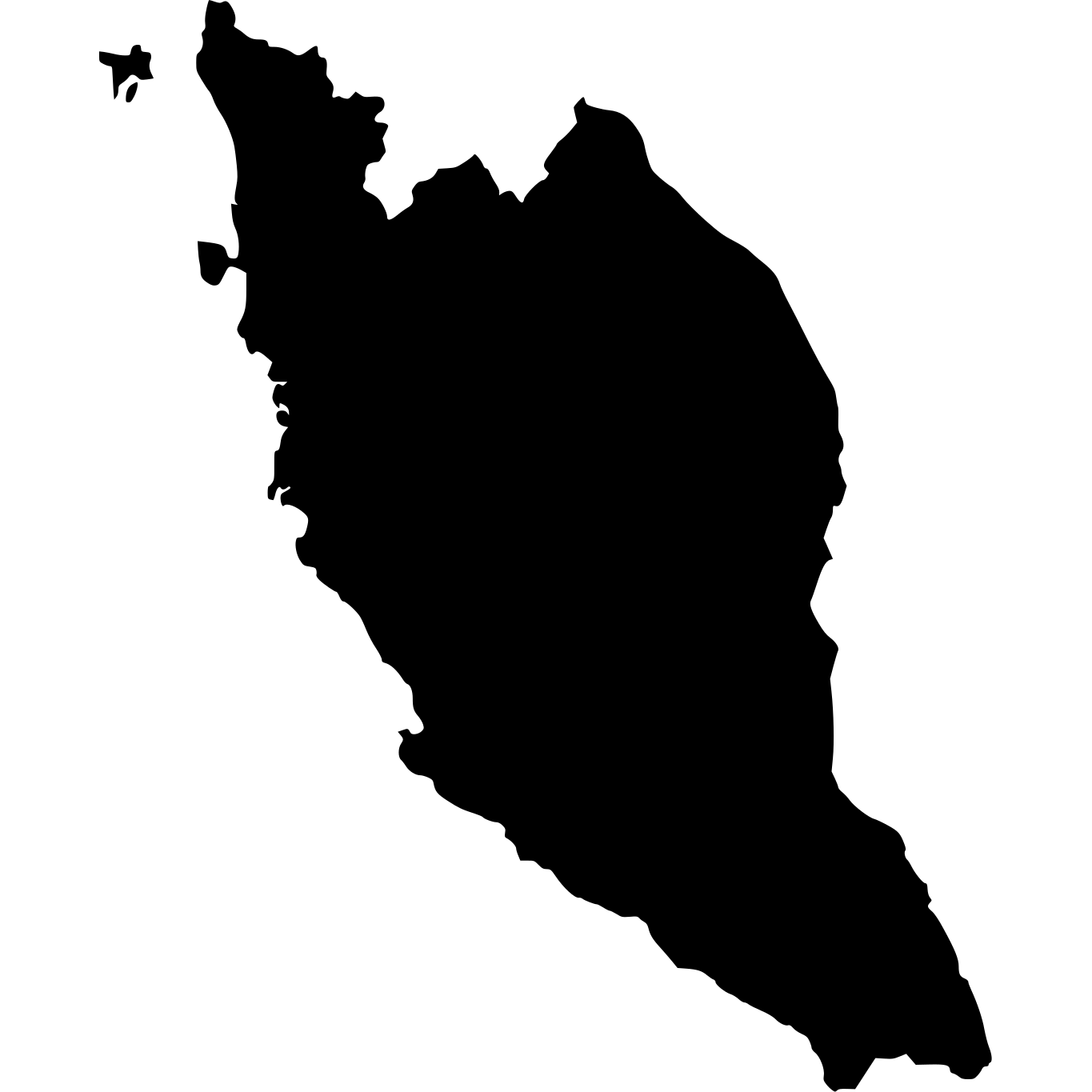
WonderDewi is a Malaysian brand

We're dedicated to providing you with the most up-to-date and science-backed ingredient info out there.
The data we've presented on this page has been verified by a member of the SkinSort Team.
Read more about us· Updated June 23, 2026 • Added by nadinekerosene


