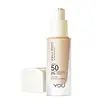
Y.O.U Cloud Touch Acne Defense Skin Tint SPF 50 Versus Esqa Minimalist Blurring Serum Skin Tint SPF 35 PA++

What's inside
What's inside
 Key Ingredients
Benefits
Concerns
Ingredients Side-by-side
Water
Skin ConditioningGlycerin
Humectant


C13-16 Isoparaffin
Solvent
Dimethicone
Emollient
Isononyl Isononanoate
EmollientCetyl Ethylhexanoate
EmollientTrimethylsiloxysilicate
Emollient
Niacinamide
Smoothing









Isododecane
EmollientZinc Oxide
Cosmetic Colorant

Cetyl PEG/PPG-10/1 Dimethicone
Emulsifying
Sodium Chloride
MaskingLauryl PEG-10 Tris(Trimethylsiloxy)Silylethyl Dimethicone
Emulsifying
Synthetic Fluorphlogopite
1,2-Hexanediol
Skin Conditioning
Hydroxyacetophenone
Antioxidant
Sorbitan Sesquioleate
Emulsifying

Aluminum Hydroxide
EmollientTriethoxycaprylylsilane
Disteardimonium Hectorite
StabilisingSilica
Abrasive
Parfum
Masking



Disodium EDTA
ChelatingTin Oxide
Abrasive
Camellia Sinensis Leaf Extract
Antimicrobial
Olea Europaea Fruit Oil
Masking

Butylene Glycol
Humectant
Ceramide NP
Skin Conditioning
Centella Asiatica Extract
Cleansing
Lactobacillus/Soybean Ferment Extract
Skin ConditioningTocopherol
Antioxidant
Viscum Album Leaf Extract
SoothingImperata Cylindrica Root Extract
Skin ConditioningPolygonum Cuspidatum Root Extract
Antioxidant
Scutellaria Baicalensis Root Extract
Astringent
Glycyrrhiza Glabra Root Extract
Bleaching
Rosmarinus Officinalis Leaf Extract
AntimicrobialChamomilla Recutita Leaf Extract
Masking
CI 77891
Cosmetic ColorantCI 77492
Cosmetic ColorantCI 77491
Cosmetic ColorantCI 77499
Cosmetic ColorantWater, Glycerin, C13-16 Isoparaffin, Dimethicone, Isononyl Isononanoate, Cetyl Ethylhexanoate, Trimethylsiloxysilicate, Niacinamide, Isododecane, Zinc Oxide, Cetyl PEG/PPG-10/1 Dimethicone, Sodium Chloride, Lauryl PEG-10 Tris(Trimethylsiloxy)Silylethyl Dimethicone, Synthetic Fluorphlogopite, 1,2-Hexanediol, Hydroxyacetophenone, Sorbitan Sesquioleate, Aluminum Hydroxide, Triethoxycaprylylsilane, Disteardimonium Hectorite, Silica, Parfum, Disodium EDTA, Tin Oxide, Camellia Sinensis Leaf Extract, Olea Europaea Fruit Oil, Butylene Glycol, Ceramide NP, Centella Asiatica Extract, Lactobacillus/Soybean Ferment Extract, Tocopherol, Viscum Album Leaf Extract, Imperata Cylindrica Root Extract, Polygonum Cuspidatum Root Extract, Scutellaria Baicalensis Root Extract, Glycyrrhiza Glabra Root Extract, Rosmarinus Officinalis Leaf Extract, Chamomilla Recutita Leaf Extract, CI 77891, CI 77492, CI 77491, CI 77499
Water
Skin ConditioningDimethicone
Emollient
Cyclopentasiloxane
Emollient
Titanium Dioxide
Cosmetic Colorant
Ethylhexyl Methoxycinnamate
UV Absorber
Ethylhexyl Salicylate
UV Absorber
Synthetic Fluorphlogopite
Butylene Glycol
Humectant
Lauryl PEG-9 Polydimethylsiloxyethyl Dimethicone
Skin Conditioning
Pentylene Glycol
Skin Conditioning
C30-45 Alkyl Cetearyl Dimethicone Crosspolymer
Emollient
Boron Nitride
Absorbent
Caprylyl Methicone
Skin Conditioning
PEG-10 Dimethicone
Skin Conditioning
Phenyl Trimethicone
Skin Conditioning
Polyglyceryl-3 Polydimethylsiloxyethyl Dimethicone
Skin Conditioning
Magnesium Sulfate
Dimethicone Crosspolymer
Emulsion Stabilising
Phenoxyethanol
Preservative
Kaolin
Abrasive
Triethoxycaprylylsilane
Methylpropanediol
SolventAluminum Hydroxide
EmollientDiphenylsiloxy Phenyl Trimethicone
Skin Conditioning
Lauric Acid
Cleansing
Sodium Hyaluronate
Humectant
Lauryl Alcohol Diphosphonic Acid
Emulsion StabilisingEthylhexylglycerin
Skin ConditioningDisteardimonium Hectorite
StabilisingDisodium EDTA
ChelatingBHT
Antioxidant
Tocopherol
Antioxidant
Allantoin
Skin Conditioning
Panthenol
Skin Conditioning
Propylene Glycol
Humectant
Camellia Sinensis Leaf Extract
Antimicrobial
1,2-Hexanediol
Skin Conditioning
Copper Tripeptide-1
Skin Conditioning
Acetyl Hexapeptide-8
Humectant
CI 77492
Cosmetic ColorantCI 77491
Cosmetic ColorantCI 77499
Cosmetic ColorantWater, Dimethicone, Cyclopentasiloxane, Titanium Dioxide, Ethylhexyl Methoxycinnamate, Ethylhexyl Salicylate, Synthetic Fluorphlogopite, Butylene Glycol, Lauryl PEG-9 Polydimethylsiloxyethyl Dimethicone, Pentylene Glycol, C30-45 Alkyl Cetearyl Dimethicone Crosspolymer, Boron Nitride, Caprylyl Methicone, PEG-10 Dimethicone, Phenyl Trimethicone, Polyglyceryl-3 Polydimethylsiloxyethyl Dimethicone, Magnesium Sulfate, Dimethicone Crosspolymer, Phenoxyethanol, Kaolin, Triethoxycaprylylsilane, Methylpropanediol, Aluminum Hydroxide, Diphenylsiloxy Phenyl Trimethicone, Lauric Acid, Sodium Hyaluronate, Lauryl Alcohol Diphosphonic Acid, Ethylhexylglycerin, Disteardimonium Hectorite, Disodium EDTA, BHT, Tocopherol, Allantoin, Panthenol, Propylene Glycol, Camellia Sinensis Leaf Extract, 1,2-Hexanediol, Copper Tripeptide-1, Acetyl Hexapeptide-8, CI 77492, CI 77491, CI 77499
Reviews
Ingredients Explained
These ingredients are found in both products.
Ingredients higher up in an ingredient list are typically present in a larger amount.
1,2-Hexanediol is a synthetic liquid and another multi-functional powerhouse.
It is a:
- Humectant, drawing moisture into the skin
- Emollient, helping to soften skin
- Solvent, dispersing and stabilizing formulas
- Preservative booster, enhancing the antimicrobial activity of other preservatives
Aluminum Hydroxide is a form of aluminum. It can be naturally found in nature as the mineral gibbsite. In cosmetics, Aluminum Hydroxide is used as a colorant, pH adjuster, and absorbent.
As a colorant, Aluminum Hydroxide may add opacity, or reduce the transparency. Aluminum hydroxide is contains both basic and acidic properties.
According to manufacturers, this ingredient is an emollient and humectant. This means it helps hydrate the skin.
In medicine, this ingredient is used to help relieve heartburn and help heal ulcers.
There is currently no credible scientific evidence linking aluminum hydroxide in cosmetics to increased cancer risk.
Major health organizations allow the use of aluminum hydroxide in personal care products and have not flagged it as a carcinogenic risk at typical usage levels.
Learn more about Aluminum HydroxideButylene Glycol (or BG) is used within cosmetic products for a few different reasons:
Overall, Butylene Glycol is a safe and well-rounded ingredient that works well with other ingredients.
Though this ingredient works well with most skin types, some people with sensitive skin may experience a reaction such as allergic rashes, closed comedones, or itchiness.
Learn more about Butylene GlycolCamellia Sinensis Leaf Extract (tea extract) is one of the most well-researched plant extracts in skincare with an impressive resume.
Black tea, green tea, and oolong tea are all harvested from the Camellia Sinensis plant.
Studies show green tea extract and its catechins (like epigallocatechin gallate (EGCG)) help your skin cells product energy more efficiently and reducing the number of free-radicals that can damage your skin from the inside.
In lab-grown skin models, this translated to younger, healthier, and stronger skin.
There's also good sun protection data; researchers saw less DNA damage and redness on human skin when green tea was applied before UVB exposure. And the more they applied, the better the protection.
Needless to say, this ingredient shouldn't replace your sunscreen. But it is a great supportive ingredient that you can already find in many sunscreens and antioxidant serums.
A 2009 study found a 2% green tea lotion was effective for mild-to-moderate acne thanks to its anti-inflammatory and mild antimicrobial activity.
The quality of the extract matters a lot here:
Good extracts contain 50-90% catechins while lower quality ones are mostly there for marketing. We recommend reaching out to the brand if you have questions about the quality or source of their ingredients.
Human Repeated Insult Patch Testing showed no irritation or sensitization at use concentrations (0.86% in leave-on products and up to 30% as leaf water).
Learn more about Camellia Sinensis Leaf ExtractCi 77491 is also hydrated iron III oxide. It's sole purpose is to give a red/pink hue to products.
Iron III oxides are classified as inorganic chemicals for coloring.
Synthetically created Ci 77491 is considered safer than those naturally found. This is because the synthetically created version may contain less impurities. Iron oxides are generally non-toxic and non-allergenic.
Learn more about CI 77491CI 77492 is also hydrated iron III oxide. It's sole purpose is to give a yellow hue to products.
Iron III oxides are classified as inorganic chemicals for coloring.
Synthetically created CI 77492 is considered safer than those naturally found. This is because the synthetically created version may contain less impurities. Iron oxides are generally non-toxic and non-allergenic.
Learn more about CI 77492Ci 77499 is also hydrated iron III oxide. It is created from mixing red and black iron oxides. This helps give shades of darkness to a product.
Iron III oxides are classified as inorganic chemicals for coloring.
Dimethicone is a type of synthetic silicone created from natural materials such as quartz. It is also known as polydimethylsiloxane.
What it does:
Dimethicone comes in different viscosities:
Depending on the viscosity, dimethicone has different properties.
Ingredients lists don't always show which type is used, so we recommend reaching out to the brand if you have questions about the viscosity.
This ingredient is unlikely to cause irritation because it does not get absorbed into skin. However, people with silicone allergies should be careful about using this ingredient.
Note: Dimethicone may contribute to pilling. This is because it is not oil or water soluble, so pilling may occur when layered with products. When mixed with heavy oils in a formula, the outcome is also quite greasy.
Learn more about DimethiconeDisodium EDTA is a chelating agent. It grabs onto and deactivates metal ions that sneak into your products from water, packaging, or air.
This ingredient mainly works behind the scenes and helps with:
On top of that, this ingredient can counteract the effects of hard water by binding to the minerals in it.
One thing worth knowing is that Disodium EDTA has been shown to be a mild penetration enhancer. It can help other ingredients absorb into skin more effectively which can be a double-edged sword (great for actives, but can also make the active too strong if you have sensitive skin).
Clinical patch testing showed no significant skin irritation at typical use concentrations and minimal dermal absorption.
You'll most likely see this ingredient near the end of an ingredient list. It's typically found in concentrations less than 1%.
Learn more about Disodium EDTADisteardimonium Hectorite comes from the clay mineral named hectorite. It is used to add thickness to a product.
It can also help stabilize a product by helping to disperse other ingredients.
Hectorite is a rare, white clay mineral.
Learn more about Disteardimonium HectoriteSynthetic Fluorphlogopite is the synthethic version of mica. It consists of fluorine, aluminum and silicate.
Synthetic Fluorphlogopite is used to add volume to products.
It is considered non-irritating on the skin.
Learn more about Synthetic FluorphlogopiteTocopherol is a fat-soluble antioxidant known as Vitamin E.
You'll find this ingredient in the vast majority of skincare (for good reason). It works to neutralize free radicals, or unstable molecules generated by UV exposure, pollution, and other environmental stressors, before they can cause oxidative damage to your skin cells.
Topically applied tocopherol has been shown to protect against UV damage by ramping up the skin's own natural defense enzymes.
It also acts as a skin conditioning agent; some studies show that regular topical use can improve the skin's water-binding capacity over 2-4 weeks.
This ingredient is especially loved for being a team player. When combined with Vitamin C, the photoprotective effect of both ingredients roughly doubles and the combo also helps reduce UV-induced DNA damage.
This ingredient has some brightening potential but it's more of a prevention ingredient than spot-fader. Cell studies show it can slow down melanin production but it's worth noting that it's not the most powerful brightener out there.
In formulations, it also serves as a stabilizer that helps protect other oxidation-prone ingredients from degrading.
Concentrations usually range from 0.1-1% in most leave-on products.
Learn more about TocopherolTriethoxycaprylylsilane is a silicon-based surface modifier that makes sunscreens feel silky and makeup stay put.
Its main job is to coat mineral particles like titanium dioxide, zinc oxide, and color pigments in a thin, oily layer so they spread smoothly, don't clump, and stick to skin better.
This ingredient is typically used at low levels (up to 2.5% in eyeshadow and 1% in lipstick).
Learn more about TriethoxycaprylylsilaneWater. It's the most common cosmetic ingredient of all. You'll usually see it at the top of ingredient lists, meaning that it makes up the largest part of the product.
So why is it so popular? Water most often acts as a solvent - this means that it helps dissolve other ingredients into the formulation.
You'll also recognize water as that liquid we all need to stay alive. If you see this, drink a glass of water. Remember to stay hydrated!
Learn more about Water

