Vichy LiftActiv Supreme Anti-Wrinkle and Firming Eye Cream Versus No7 Lift & Luminate Triple Action Eye Cream
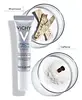
This anti-aging eye moisturizer is formulated around Caffeine and Adenosine to soften the look of wrinkles.
This anti-aging eye moisturizer is formulated around Ascorbyl Glucoside and Retinyl Palmitate to soften the look of wrinkles and brighten dull-looking skin.


What's inside
What's inside
 Key Ingredients
Benefits
Concerns
Ingredients Side-by-side
Water
Skin ConditioningDimethicone
Emollient

Hydrogenated Polyisobutene
EmollientGlycerin
Humectant

Cetyl Alcohol
Emollient



Glyceryl Stearate
Emollient
Polymethyl Acrylate
Methyl Methacrylate
PEG-40 Stearate
Emulsifying
Cera Alba
Emollient


Beeswax
Emulsion Stabilising
Potassium Cetyl Phosphate
EmulsifyingStearic Acid
Cleansing
Stearyl Alcohol
Emollient
Sorbitan Tristearate
EmulsifyingTriethanolamine
BufferingCaffeine
Skin Conditioning

Methylparaben
Preservative


Silica
Abrasive


Sodium Benzoate
Masking
Sodium Dextran Sulfate
Gel FormingMyristyl Alcohol
Emollient
Escin
TonicPalmitic Acid
Emollient
Rhamnose
HumectantPhenoxyethanol
Preservative
Adenosine
Skin Conditioning
Magnesium Ascorbyl Phosphate
Antioxidant




Tocopheryl Acetate
Antioxidant
Poloxamer 338
EmulsifyingAscorbyl Glucoside
Antioxidant
Hydrolyzed Rice Protein
Skin ConditioningPentylene Glycol
Skin Conditioning
Water, Dimethicone, Hydrogenated Polyisobutene, Glycerin, Cetyl Alcohol, Glyceryl Stearate, Polymethyl Acrylate, Methyl Methacrylate, PEG-40 Stearate, Cera Alba, Beeswax, Potassium Cetyl Phosphate, Stearic Acid, Stearyl Alcohol, Sorbitan Tristearate, Triethanolamine, Caffeine, Methylparaben, Silica, Sodium Benzoate, Sodium Dextran Sulfate, Myristyl Alcohol, Escin, Palmitic Acid, Rhamnose, Phenoxyethanol, Adenosine, Magnesium Ascorbyl Phosphate, Tocopheryl Acetate, Poloxamer 338, Ascorbyl Glucoside, Hydrolyzed Rice Protein, Pentylene Glycol
Water
Skin ConditioningGlycerin
Humectant
Cyclopentasiloxane
Emollient
Butyrospermum Parkii Butter
Skin Conditioning
Cyclohexasiloxane
Emollient
Butylene Glycol
Humectant
Cetearyl Alcohol
Emollient
Alcohol Denat.
Antimicrobial


Polyacrylamide
Glyceryl Stearate
Emollient
Stearic Acid
Cleansing
Palmitic Acid
Emollient
PEG-100 Stearate
Surfactant
Phenoxyethanol
Preservative
Boron Nitride
Absorbent
C13-14 Isoparaffin
Emollient
Methylparaben
Preservative
Ascorbyl Glucoside
Antioxidant
Propylene Glycol
Humectant
Laureth-7
EmulsifyingTocopheryl Acetate
Antioxidant
Sodium Hyaluronate
Humectant
Pentylene Glycol
Skin Conditioning
Ethylparaben
Preservative
Hibiscus Abelmoschus Extract
MaskingRetinyl Palmitate
Skin Conditioning

Phyllanthus Emblica Fruit Extract
HumectantHydrolyzed Rice Protein
Skin ConditioningTetrasodium EDTA
ChelatingSorbitan Laurate
Emulsifying
Potassium Hydroxide
BufferingHesperidin Methyl Chalcone
Antioxidant
Panax Ginseng Root Extract
Emollient
Carbomer
Emulsion StabilisingSteareth-20
CleansingDimethylmethoxy Chromanol
Antioxidant
Xanthan Gum
EmulsifyingPolysorbate 20
Emulsifying
Hydroxyethylcellulose
Emulsion StabilisingAcetyl Dipeptide-1 Cetyl Ester
Skin Conditioning
Morus Alba Leaf Extract
Skin ConditioningSodium Benzoate
Masking
Chlorhexidine Digluconate
Antimicrobial
Tocopherol
Antioxidant
Potassium Sorbate
Preservative
Dipeptide-2
Skin Conditioning
Palmitoyl Tetrapeptide-7
Skin Conditioning
Palmitoyl Tripeptide-1
Skin Conditioning
Water, Glycerin, Cyclopentasiloxane, Butyrospermum Parkii Butter, Cyclohexasiloxane, Butylene Glycol, Cetearyl Alcohol, Alcohol Denat., Polyacrylamide, Glyceryl Stearate, Stearic Acid, Palmitic Acid, PEG-100 Stearate, Phenoxyethanol, Boron Nitride, C13-14 Isoparaffin, Methylparaben, Ascorbyl Glucoside, Propylene Glycol, Laureth-7, Tocopheryl Acetate, Sodium Hyaluronate, Pentylene Glycol, Ethylparaben, Hibiscus Abelmoschus Extract, Retinyl Palmitate, Phyllanthus Emblica Fruit Extract, Hydrolyzed Rice Protein, Tetrasodium EDTA, Sorbitan Laurate, Potassium Hydroxide, Hesperidin Methyl Chalcone, Panax Ginseng Root Extract, Carbomer, Steareth-20, Dimethylmethoxy Chromanol, Xanthan Gum, Polysorbate 20, Hydroxyethylcellulose, Acetyl Dipeptide-1 Cetyl Ester, Morus Alba Leaf Extract, Sodium Benzoate, Chlorhexidine Digluconate, Tocopherol, Potassium Sorbate, Dipeptide-2, Palmitoyl Tetrapeptide-7, Palmitoyl Tripeptide-1
Ingredients Explained
These ingredients are found in both products.
Ingredients higher up in an ingredient list are typically present in a larger amount.
Ascorbyl Glucoside (AA-2G) is one of the most stable vitamin C derivatives out there.
It's made by attaching a glucose molecule to ascorbic acid; this glucose "cap" shields the vitamin C from air, light, heat, and metal ions that normally cause pure ascorbic acid to oxidize.
Once on your skin, the enzyme alpha-glucosidase snips off the glucose and gradually releases active ascorbic acid right where it's needed. Basically, it behaves like a slow-release pro-vitamin C with less of a stinging that high-strength ascorbic acid can cause.
The research supports the classic vitamin C benefits as well. In lab and human studies, AA-2G slowed down the skin's production of melanin (the pigment behind dark spots) and helped shield skin cells against sun damage better than ascorbyl phosphate.
These studies also showed AA-2G released vitamin C over a longer period.
A frequently cited manufacturer trial found that a 2% AA-2G face cream significantly improved wrinkle depth and skin roughness after 45 days.
And in 2009, a clinical trial showed it meaningfully lightened dark patches on the gums compared to a placebo.
There's also collagen-synthesis support (since vitamin C is a required cofactor for that) and an antioxidant effect too.
Typical usage is usually between 0.5-5% and most studies/products land around 2%.
AA-2G performs best when formulated at a mildly acidic pH (~5-7) which is much gentler than the pH that pure vitamin C demands (~2.5-3.5).
Just one thing worth knowing: the in-skin conversation rate is only about 55-60% by weight. So a 5% AA-2G product delivers roughly 2.75-3% of actual active vitamin C. On top of that, skin absorption is relatively low because the ingredient is water-soluble.
Learn more about Ascorbyl GlucosideGlycerin (or glycerol) is a compound naturally found in your skin. It's a powerhouse humectant that pulls water into the stratum corneum.
Topically, glycerin does several things at once:
Your skin makes glycerin on its own (mostly from sebaceous oil breakdown) and shuttles it to your outermost layer of skin, or your epidermis, via aquaporin-3.
Aquaporin-3 is a transporter that is essential for normal skin hydration, elasticity, and repair. Interestingly, mice lacking in AQP3 have dry and less elastic skin that can be fully corrected with glycerin.
This ingredient is non-irritating, plays well with almost every ingredient, and works across all skin types. Typical use is anywhere between 3-10% but can go up to 79% in some leave-on products.
Just know very high concentrations (>40%) can feel tacky in low humidity.
Glycerin is the name for this ingredient in American English. British English uses Glycerol/Glycerine.
Learn more about GlycerinGlyceryl Stearate is made by reacting glycerin with stearic acid (typically sourced from plant oils like palm or coconut). It's an emulsifier, emollient, and mild occlusive.
Emulsifiers help ingredients like oil and water stay mixed so your formula stays nicely blended and uniform in texture.
This ingredient is typically used in concentrations between 1-10%. Studies have found it to be non-sensitizing, non-phototoxic, and non-photoallergenic.
A close cousin of this ingredient is Glyceryl Stearate SE ("self-emulsifying"). This just has a small amount of sodium or potassium stearate added so it can emulsify without a co-emulsifier.
Since this ingredient is an ester of a C18 fatty acid, it may not be fungal acne safe. The Malassezia yeast can potentially metabolize within the C11-C24 range.
Fun fact: The human body also creates Glyceryl Stearate naturally.
Learn more about Glyceryl StearateHydrolyzed Rice Protein is protein extracted from rice. This ingredient is rich in antioxidants and peptides.
Studies show this ingredient may help with blocking the melanin creation process when skin is exposed to UV.
Methylparaben is a synthetic preservative and one of the most widely used in the world. It has a simple, but important job: prevent your products from going bad by stopping bacteria, yeast, and mold from growing.
Typical use levels are low, often 0.1-0.3%.
This is also one of the most heavily studied preservatives out there and major regulatory bodies have repeatedly given it the green light.
In 2023, the EU's Scientific Committee on Consumer Safety (SCCS) confirmed that this ingredient is safe up to 0.4% on its own, of up to 0.8% when mixed with other paraben esters.
Here's the science behind the noise behind parabens/hormones as well:
Methylparaben shows very weak estrogen-like activity in vitro tests (more than 1,000x weaker than your body's own estradiol). In vivo (live-organism) studies don't support a meaningful endocrine-disrupting effect either.
You get a stronger estrogenic effect from eating tofu, actually.
It's also a low sensitizer and allergic reactions are uncommon; they usually happen on damage or broken skin.
There is a caveat: France has proposed to formally re-examine its endocrine classification in 2025 so the regulatory conversation isn't fully closed as of yet.
But as it stands today, this ingredient is considered safe at permitted levels.
Learn more about MethylparabenPalmitic Acid is a fatty acid naturally found in our skin and in many plant and animal sources.
In cosmetics, it is usually derived from palm oil. It serves many purposes in skincare, acting as a cleanser, emollient, and emulsifier.
Interestingly, topically applied Palmitic Acid can be elongated into longer chain fatty acids and ceramides. A 2019 study found low levels of Palmitic Acid lead to slower development of cells, suggesting it plays a role in keeping your skin's renewal process on track.
The CIR (Cosmetic Ingredient Review) panel determined it safe as used in cosmetics at concentrations up to 13%. It is non-irritating and non-sensitizing in clinical studies.
The culprit behind fungal acne, the Malassezia yeast, feeds on fatty acids with carbon chain lengths between C11-C24. Palmitic Acid, at C16, falls right into that sweet spot.
In vitro studies have shown that Palmitic Acid is one of the fatty acids that induce rapid Malassezia growth in lab settings.
It's worth noting that what feeds yeast in a lab doesn't necessarily feed it on your face since formulation and your skin's chemistry play a bigger role.
This ingredient does have a comedogenic rating of 2, but this doesn't mean a formula with this ingredient will clog pores.
Human testing has proved that any finished product with a comedogenic ingredient won't automatically make you break out; it really comes down to concentration, formula, and your skin.
Learn more about Palmitic AcidPentylene Glycol (1,2-pentanediol) is a multitasking little diol with three main roles in a formula:
Research on alkanediols (the family pentylene glycol belongs to) show they work by disrupting microbial cell membranes. This disruption helps the primary preservative system in a product work more effectively at lower doses.
On the safety side, the Cosmetic Ingredient Review Expert Panel has concluded this ingredient to be safe as used in current cosmetic practices + concentrations.
Typical use levels in a formula run about 1-5%.
Learn more about Pentylene GlycolPhenoxyethanol is one of the most widely used preservatives in skincare (and for good reason!).
It has a large spectrum of antimicrobial activity and especially effective bacteria, yeast, and mold while only having a weak effect on your skin's natural microbiome.
On a cellular level, it disrupts the cell membranes of microbes by poking holes that make the cell leak. This shuts down the chemical reactions the microbe needs to make energy so it can no longer survive.
Another perk of this ingredient is that it stays functional across a wide pH range (3-10).
You'll often see it paired with boosters like Ethylhexylglycerin; one study showed that a 1:9 ratio of Ethylhexylglycerin to Phenoxyethanol damages bacterial membranes as effectively as doubling the Phenoxyethanol concentration on its own.
Typical use concentrations range from 0.3-1% depending on the formula, and this ingredient is capped at 1% int the EU.
Safety-wise, the fear mongering does not hold up to the evidence. The EU's Scientific Committee on Consumer Safety and FDA consider it safe as a preservative at up to 1%, including for children of all ages.
Adverse systemic effects only showed up in animal studies at exposures roughly 200x higher than what people get from cosmetics. And despite its very widespread use, this ingredient is a rare sensitizer and allergic reactions are uncommon.
Learn more about PhenoxyethanolSodium Benzoate is a preservative. It's used in both cosmetic and food products to inhibit the growth of mold and bacteria. It is typically produced synthetically.
Both the US FDA and EU Health Committee have approved the use of sodium benzoate. In the US, levels of 0.1% (of the total product) are allowed.
Sodium benzoate works as a preservative by inhibiting the growth of bacteria inside of cells. It prevents the cell from fermenting a type of sugar using an enzyme called phosphofructokinase.
It is the salt of benzoic acid. Foods containing sodium benzoate include soda, salad dressings, condiments, fruit juices, wines, and snack foods.
Studies for using ascorbic acid and sodium benzoate in cosmetics are lacking, especially in skincare routines with multiple steps.
We always recommend speaking with a professional, such as a dermatologist, if you have any concerns.
Learn more about Sodium BenzoateStearic Acid is a fatty acid that is already found in your skin. It's one of the free fatty acids that works alongside ceramides and cholesterols to maintain your barrier.
In cosmetics, it is a multitasker:
Safety-wise, the CIR Expert Panel has concluded it to be safe in cosmetics when formulated to be non-irritating and non-sensitizing.
Free stearic acid is a C18 fatty acid that the Malassezia yeast can substrate, so this ingredient may not be fungal acne safe.
This ingredient does have a comedogenic rating of 2-3, but this doesn't mean a formula with this ingredient will clog pores.
Human testing has proved that any finished product with this ingredient won't automatically make you break out; it really comes down to concentration, formula, and your skin.
Learn more about Stearic AcidTocopheryl Acetate is a stable, shelf-friendly form of vitamin E.
Formulators love it because plain vitamin E oxidizes quickly once it hits air. This acetate version stays stable and resists going off, helping to extend a product's shelf life.
It's actually inactive on its own and works like a slow-release "storage" form; the enzymes in your skin called esterases gradually convert it into active vitamin E over time.
One in vivo study showed 5% of the acetate in the living layer of the epidermis converted to vitamin E after 5 days of application. This study also found the skin gained protection against UV damage even though the conversion was slow and small.
Once converted, vitamin E acts as a skin's main fat-soluble antioxidant that fights free radicals to protect skin from damage.
Topical vitamin E generally boosts the skin's photoprotection, and it reduced UV-damage in animal models.
This ingredient has some brightening potential but it's more of a prevention ingredient than spot-fader. Cell studies show it can slow down melanin production but it's worth noting that it's not the most powerful brightener out there.
Overall, it has a pretty solid safety profile and has been found to be non-irritating and non-comedogenic. Allergic reactions may happen but stay rare due to how widely the ingredient gets used.
The concentration will vary depending on the formula; industry data shows 0.1% in baby lotions, 3% in lipsticks, and 5% in foot powders. You can also find this ingredient at 100% in a pure vitamin E oil.
Most leave-on skincare keeps it at the lower end, often between 0.5-1%.
Learn more about Tocopheryl AcetateWater. It's the most common cosmetic ingredient of all. You'll usually see it at the top of ingredient lists, meaning that it makes up the largest part of the product.
So why is it so popular? Water most often acts as a solvent - this means that it helps dissolve other ingredients into the formulation.
You'll also recognize water as that liquid we all need to stay alive. If you see this, drink a glass of water. Remember to stay hydrated!
Learn more about Water

