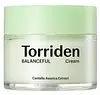
This calming moisturizer is formulated around Centella Asiatica Extract and Madecassoside to calm redness and strengthen the skin barrier.
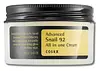
This barrier-repair moisturizer is formulated around Snail Secretion Filtrate and Allantoin to strengthen the skin barrier and hydrate skin.

What's inside
What's inside
 Key Ingredients
Benefits
Concerns
Ingredients Side-by-side
Water
Skin ConditioningButylene Glycol
Humectant

Glycerin
Humectant
Heptyl Undecylenate
Emollient1,2-Hexanediol
Skin Conditioning
Centella Asiatica Extract
Cleansing



Madecassic Acid
Skin Conditioning
Asiaticoside
Antioxidant
Asiatic Acid
Skin Conditioning
Madecassoside
Antioxidant
Panthenol
Skin Conditioning
Allantoin
Skin Conditioning
Hydrolyzed Hyaluronic Acid
Humectant
Swertia Japonica Extract
Skin ConditioningNymphaea Caerulea Flower Extract
Skin ConditioningLactobacillus Ferment
Skin Conditioning
Althaea Rosea Flower Extract
Skin ConditioningCarthamus Tinctorius Flower Extract
Skin ConditioningBetaine
Humectant
Caprylic/Capric Triglyceride
Masking
Cetearyl Alcohol
Emollient





Propanediol
Solvent
C14-22 Alcohols
Emulsion Stabilising
Dipeptide-2
Skin Conditioning
Acrylates/C10-30 Alkyl Acrylate Crosspolymer
Emulsion StabilisingHydroxyethyl Acrylate/Sodium Acryloyldimethyl Taurate Copolymer
Emulsion StabilisingSodium Polyacrylate
Absorbent
Glyceryl Acrylate/Acrylic Acid Copolymer
HumectantPvm/Ma Copolymer
Emulsion StabilisingSorbitan Isostearate
Emulsifying
Polyglyceryl-3 Polyricinoleate
Emulsifying
Isopentyldiol
Humectant
Capryloyl Salicylic Acid
Exfoliating




C12-20 Alkyl Glucoside
EmulsifyingPolyglyceryl-4 Oleate
Emulsifying
Sodium Stearoyl Glutamate
CleansingSodium Surfactin
CleansingCaproic Acid
Cleansing

Xanthan Gum
EmulsifyingTromethamine
BufferingSodium Acetate
BufferingDisodium EDTA
ChelatingEthylhexylglycerin
Skin ConditioningGardenia Florida Fruit Extract
Skin ConditioningWater, Butylene Glycol, Glycerin, Heptyl Undecylenate, 1,2-Hexanediol, Centella Asiatica Extract, Madecassic Acid, Asiaticoside, Asiatic Acid, Madecassoside, Panthenol, Allantoin, Hydrolyzed Hyaluronic Acid, Swertia Japonica Extract, Nymphaea Caerulea Flower Extract, Lactobacillus Ferment, Althaea Rosea Flower Extract, Carthamus Tinctorius Flower Extract, Betaine, Caprylic/Capric Triglyceride, Cetearyl Alcohol, Propanediol, C14-22 Alcohols, Dipeptide-2, Acrylates/C10-30 Alkyl Acrylate Crosspolymer, Hydroxyethyl Acrylate/Sodium Acryloyldimethyl Taurate Copolymer, Sodium Polyacrylate, Glyceryl Acrylate/Acrylic Acid Copolymer, Pvm/Ma Copolymer, Sorbitan Isostearate, Polyglyceryl-3 Polyricinoleate, Isopentyldiol, Capryloyl Salicylic Acid, C12-20 Alkyl Glucoside, Polyglyceryl-4 Oleate, Sodium Stearoyl Glutamate, Sodium Surfactin, Caproic Acid, Xanthan Gum, Tromethamine, Sodium Acetate, Disodium EDTA, Ethylhexylglycerin, Gardenia Florida Fruit Extract
Snail Secretion Filtrate
Skin Conditioning
Betaine
Humectant
Caprylic/Capric Triglyceride
Masking
Butylene Glycol
Humectant
Cetearyl Olivate
Sorbitan Olivate
Emulsifying
Cetearyl Alcohol
Emollient
Carbomer
Emulsion StabilisingEthyl Hexanediol
SolventPhenoxyethanol
Preservative
Arginine
Masking
Dimethicone
Emollient
Sodium Polyacrylate
Absorbent
Sodium Hyaluronate
Humectant
Allantoin
Skin Conditioning
Palmitic Acid
Emollient
Panthenol
Skin Conditioning
Xanthan Gum
EmulsifyingStearic Acid
Cleansing
Adenosine
Skin Conditioning
Water
Skin ConditioningMyristic Acid
Cleansing
Snail Secretion Filtrate, Betaine, Caprylic/Capric Triglyceride, Butylene Glycol, Cetearyl Olivate, Sorbitan Olivate, Cetearyl Alcohol, Carbomer, Ethyl Hexanediol, Phenoxyethanol, Arginine, Dimethicone, Sodium Polyacrylate, Sodium Hyaluronate, Allantoin, Palmitic Acid, Panthenol, Xanthan Gum, Stearic Acid, Adenosine, Water, Myristic Acid
Reviews
Ingredients Explained
These ingredients are found in both products.
Ingredients higher up in an ingredient list are typically present in a larger amount.
Allantoin is a soothing ingredient known for its protective and moisturizing properties; it's basically a quiet workhorse ingredient you can find in a huge range of cosmetics.
Though it can be derived from the comfrey plant, allantoin is produced synthetically for cosmetic products to ensure purity.
Research shows it can encourage your skin cells to turn over and renew by stimulating keratinocyte and fibroblast proliferation.
It also has mild keratolytic properties to help loosen and shed dead skin cells without being harsh.
Studies also suggest allantoin can help calm inflammation by dialing down some of the chemical signals your skin sends out when it is irritated.
This ingredient is typically used in the 0.1-0.5% range, and the FDA recognizes it as a skin protectant in OTC products up to 2%.
Overall, allantoin is a wonderful addition to most routines; it is stable across a wide pH range (~4-8), works well with other ingredients, and is considered non-sensitizing/non-irritating.
Fun fact: Allantoin is naturally occurring in comfrey root, beets, chamomile, and wheat sprouts. Our bodies even produce it as a byproduct of uric acid metabolism.
Learn more about AllantoinBetaine is a humectant. Like hyaluronic acid, it helps attract and retain moisture in the skin. It’s known for being gentle and for helping the skin maintain balanced hydration.
Betaine is mainly used to improve hydration and support calmer skin. It helps skin cells regulate water balance because it functions as an osmolyte.
Some studies suggest betaine may support making skin tone more even.
Fun fact: Betaine naturally exists in the skin and the body. In cosmetic products, it can be either plant-derived (most commonly from sugar beets) or synthetically produced for consistency and stability.
Betaine is also known as trimethylglycine.
Learn more about BetaineButylene Glycol (or BG) is used within cosmetic products for a few different reasons:
Overall, Butylene Glycol is a safe and well-rounded ingredient that works well with other ingredients.
Though this ingredient works well with most skin types, some people with sensitive skin may experience a reaction such as allergic rashes, closed comedones, or itchiness.
Learn more about Butylene GlycolCaprylic/Capric Triglyceride (aka MCT Oil) is a lightweight emollient, solvent, and texture enhancer. It is considered a skin-softener by helping to prevent moisture loss.
Though it behaves like an oil, it is not technically one due to its chemical composition. One perk of this ingredient is that it is very stable, resistant to oxidation, and unlikely to go rancid.
In practice, that translates to a long shelf life and a consistently elegant skin feel.
While there is an assumption Caprylic Triglyceride can clog pores due to it being derived from coconut oil, there is no research supporting this. Just patch test if you have concerns.
Fractionated coconut oil and MCT Oil are both listed as Caprylic/Capric Triglyceride according to INCI. This is because INCI names are based on the ingredient’s final chemical composition and not its marketing name or source.
This ingredient is treated as the gold standard fungal acne safe oil. Even though it is coconut derived, the problematic lauric acid is stripped out.
This leaves just caprylic (C8) and capric (C10) acid. These chain lengths actually trend antifungal; a 2020 study found caprylic acid was enough to disrupt Malassezia furfur cell membrane, with a caprylic acid derivative damaging membrane structures at concentrations as low as 0.2%.
Learn more about Caprylic/Capric TriglycerideCetearyl alcohol is a waxy mixture of two fatty alcohols: cetyl alcohol and stearyl alcohol. It is an emollient and emulsifier.
Despite having "alcohol" in its name, it has nothing to do with drying solvent alcohols; the FDA also allows "alcohol-free" products to contain fatty alcohols like this ingredient.
It plays several roles in a formula:
Typical use levels for this ingredient sit around 1-10% and the Cosmetic Ingredient Review Expert Panel has affirmed safety at concentrations up to 25% in leave-on products.
Multiple assessments have found it to be non-irritating and non-sensitizing to most people.
However, there have been some cases of allergic contact dermatitis in patients with chronically compromised skin barriers.
Cetearyl alcohol has a comedogenic rating of 2 and irritancy rating of 1. Both of these numbers come from the 1989 study that used rabbit ears; a "2" means mildly comedogenic and a "1" means low irritancy.
Here's the catch: rabbit skin is more sensitive than human skin and throws a lot of false positives. A 1996 reappraisal found that ingredients rated 1-2 in the rabbit ear tests are generally safe for humans.
Remember comedogenic ratings are unable to assess the entire formula of a product or how it will react on your skin. Just be sure to patch test if you are unsure about certain ingredients.
This ingredient is not fungal acne safe. Cetearyl alcohol is a fatty alcohol with chain lengths that fall within the range that Malassezia can metabolize.
A 2019 study has also observed Malassezia growth in the presence of this ingredient, confirming it to be not-fungal acne safe.
Learn more about Cetearyl AlcoholPanthenol is a common ingredient that helps hydrate and soothe the skin. It is found naturally in our skin and hair.
There are two forms of panthenol: D and L.
D-panthenol is also known as dexpanthenol. Most cosmetics use dexpanthenol or a mixture of D and L-panthenol.
Panthenol is famous due to its ability to go deeper into the skin's layers. Using this ingredient has numerous pros (and no cons):
Like hyaluronic acid, panthenol is a humectant. Humectants are able to bind and hold large amounts of water to keep skin hydrated.
This ingredient works well for wound healing. It works by increasing tissue in the wound and helps close open wounds.
Once oxidized, panthenol converts to pantothenic acid. Panthothenic acid is found in all living cells.
This ingredient is also referred to as pro-vitamin B5.
Learn more about PanthenolSodium Polyacrylate is the sodium salt of polyacrylic acid. It is used as an absorber, emollient, and stabilizer.
This ingredient is a super-absorbent polymer - meaning it can absorb 100 to 1000 times its mass in water. As an emollient, Sodium Polyacrylate helps soften and soothe skin. Emollients work by creating a barrier to trap moisture in. This helps keep your skin hydrated.
Water. It's the most common cosmetic ingredient of all. You'll usually see it at the top of ingredient lists, meaning that it makes up the largest part of the product.
So why is it so popular? Water most often acts as a solvent - this means that it helps dissolve other ingredients into the formulation.
You'll also recognize water as that liquid we all need to stay alive. If you see this, drink a glass of water. Remember to stay hydrated!
Learn more about WaterXanthan gum is used as a stabilizer and thickener within cosmetic products. It helps give products a sticky, thick feeling - preventing them from being too runny.
On the technical side of things, xanthan gum is a polysaccharide - a combination consisting of multiple sugar molecules bonded together.
Xanthan gum is a pretty common and great ingredient. It is a natural, non-toxic, non-irritating ingredient that is also commonly used in food products.
Learn more about Xanthan Gum

