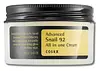
This barrier-repair moisturizer is formulated around Snail Secretion Filtrate and Allantoin to strengthen the skin barrier and hydrate skin.
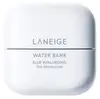
This moisturizer is formulated around Limnanthes Alba Seed Oil and Hydrolyzed Hyaluronic Acid to hydrate skin.

What's inside
What's inside
 Key Ingredients
Benefits
Concerns
Ingredients Side-by-side
Snail Secretion Filtrate
Skin Conditioning





Betaine
Humectant
Caprylic/Capric Triglyceride
Masking
Butylene Glycol
Humectant
Cetearyl Olivate


Sorbitan Olivate
Emulsifying
Cetearyl Alcohol
Emollient



Carbomer
Emulsion StabilisingEthyl Hexanediol
SolventPhenoxyethanol
Preservative
Arginine
Masking
Dimethicone
Emollient
Sodium Polyacrylate
Absorbent
Sodium Hyaluronate
Humectant

Allantoin
Skin Conditioning
Palmitic Acid
Emollient
Panthenol
Skin Conditioning
Xanthan Gum
EmulsifyingStearic Acid
Cleansing
Adenosine
Skin Conditioning
Water
Skin ConditioningMyristic Acid
Cleansing
Snail Secretion Filtrate, Betaine, Caprylic/Capric Triglyceride, Butylene Glycol, Cetearyl Olivate, Sorbitan Olivate, Cetearyl Alcohol, Carbomer, Ethyl Hexanediol, Phenoxyethanol, Arginine, Dimethicone, Sodium Polyacrylate, Sodium Hyaluronate, Allantoin, Palmitic Acid, Panthenol, Xanthan Gum, Stearic Acid, Adenosine, Water, Myristic Acid
Water
Skin ConditioningPropanediol
Solvent
Glycerin
Humectant
Limnanthes Alba Seed Oil
Skin Conditioning
Betaine
Humectant
Behenyl Alcohol
Emollient
1,2-Hexanediol
Skin Conditioning
Carbomer
Emulsion StabilisingTromethamine
BufferingJojoba Esters
Emollient
Arachidyl Alcohol
Emollient
Glyceryl Caprylate
EmollientButylene Glycol
Humectant
Ethylhexylglycerin
Skin ConditioningDisodium EDTA
ChelatingArachidyl Glucoside
EmulsifyingMentha Arvensis Leaf Extract
MaskingParfum
Masking


Hydrolyzed Hyaluronic Acid
Humectant
Malachite Extract
Antioxidant
Aureobasidium Pullulans Ferment
Skin ConditioningTocopherol
Antioxidant


Undaria Pinnatifida Extract
Skin ConditioningWater, Propanediol, Glycerin, Limnanthes Alba Seed Oil, Betaine, Behenyl Alcohol, 1,2-Hexanediol, Carbomer, Tromethamine, Jojoba Esters, Arachidyl Alcohol, Glyceryl Caprylate, Butylene Glycol, Ethylhexylglycerin, Disodium EDTA, Arachidyl Glucoside, Mentha Arvensis Leaf Extract, Parfum, Hydrolyzed Hyaluronic Acid, Malachite Extract, Aureobasidium Pullulans Ferment, Tocopherol, Undaria Pinnatifida Extract
Reviews
Ingredients Explained
These ingredients are found in both products.
Ingredients higher up in an ingredient list are typically present in a larger amount.
Betaine is a humectant. Like hyaluronic acid, it helps attract and retain moisture in the skin. It’s known for being gentle and for helping the skin maintain balanced hydration.
Betaine is mainly used to improve hydration and support calmer skin. It helps skin cells regulate water balance because it functions as an osmolyte.
Some studies suggest betaine may support making skin tone more even.
Fun fact: Betaine naturally exists in the skin and the body. In cosmetic products, it can be either plant-derived (most commonly from sugar beets) or synthetically produced for consistency and stability.
Betaine is also known as trimethylglycine.
Learn more about BetaineButylene Glycol (or BG) is used within cosmetic products for a few different reasons:
Overall, Butylene Glycol is a safe and well-rounded ingredient that works well with other ingredients.
Though this ingredient works well with most skin types, some people with sensitive skin may experience a reaction such as allergic rashes, closed comedones, or itchiness.
Learn more about Butylene GlycolCarbomer is a synthetic thickening and gelling agent. It's basically the ingredient that gives a lot of serums, gels, creams, and sunscreens their smooth, non-sticky texture.
Although legally permitted at very high levels, carbomers are normally used at concentrations below 1%.
It also needs to be neutralized to actually thicken, and because it is a large molecule, it doesn't really penetrate the skin barrier.
Allergy-wise, the risk is very low. Clinical studies show carbomers have low potential for skin irritation/sensitization even at concentrations up to 100%.
A 2024 UK study patch-tested 1,302 patients and found true allergy to the parent group of carbomer to be rare with no confirmed relevant reactions.
Learn more about CarbomerWater. It's the most common cosmetic ingredient of all. You'll usually see it at the top of ingredient lists, meaning that it makes up the largest part of the product.
So why is it so popular? Water most often acts as a solvent - this means that it helps dissolve other ingredients into the formulation.
You'll also recognize water as that liquid we all need to stay alive. If you see this, drink a glass of water. Remember to stay hydrated!
Learn more about Water

