
What's inside
What's inside
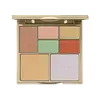 Key Ingredients
Benefits
Concerns
Ingredients Side-by-side
Serica Powder
Skin ConditioningLauroyl Lysine
Skin Conditioning
Zinc Stearate
Cosmetic ColorantPolymethyl Methacrylate
Octyldodecyl Stearoyl Stearate
Emollient

Nylon-12

Silica
Abrasive

Phenoxyethanol
Preservative
Mica
Cosmetic ColorantIron Oxides
CI 77007
Cosmetic ColorantCI 19140
Cosmetic ColorantCI 75470
Cosmetic ColorantCI 77742
Cosmetic ColorantCaprylic/Capric Triglyceride
Masking


Octyldodecanol
Emollient
Euphorbia Cerifera Wax
Copernicia Cerifera Wax
Jojoba Esters
Emollient
Polyethylene
Abrasive
Disteardimonium Hectorite
StabilisingPropylene Carbonate
SolventRetinyl Palmitate
Skin Conditioning



Tocopheryl Acetate
Antioxidant

Ascorbyl Palmitate
Antioxidant
Montmorillonite
AbsorbentIllite
Abrasive
Dimethicone
Emollient
Kaolin
Abrasive
Titanium Dioxide
Cosmetic Colorant
CI 77288
Cosmetic ColorantCI 42090
Cosmetic ColorantCI 15850
Cosmetic ColorantSerica Powder, Lauroyl Lysine, Zinc Stearate, Polymethyl Methacrylate, Octyldodecyl Stearoyl Stearate, Nylon-12, Silica, Phenoxyethanol, Mica, Iron Oxides, CI 77007, CI 19140, CI 75470, CI 77742, Caprylic/Capric Triglyceride, Octyldodecanol, Euphorbia Cerifera Wax, Copernicia Cerifera Wax, Jojoba Esters, Polyethylene, Disteardimonium Hectorite, Propylene Carbonate, Retinyl Palmitate, Tocopheryl Acetate, Ascorbyl Palmitate, Montmorillonite, Illite, Dimethicone, Kaolin, Titanium Dioxide, CI 77288, CI 42090, CI 15850
Water
Skin ConditioningCyclopentasiloxane
Emollient
Propylene Glycol
Humectant
Zinc Oxide
Cosmetic Colorant
Octyldodecyl Neopentanoate
EmollientGlycerin
Humectant
Titanium Dioxide
Cosmetic Colorant
Butylene Glycol
Humectant
Phenoxyethanol
Preservative
Carbomer
Emulsion StabilisingMica
Cosmetic ColorantPEG/PPG-18/18 Dimethicone
Emulsifying
Dimethicone
Emollient
Sodium Hydroxide
BufferingCI 77891
Cosmetic ColorantAluminum Hydroxide
EmollientStearic Acid
Cleansing
CI 77491
Cosmetic ColorantCI 77288
Cosmetic ColorantBoron Nitride
Absorbent
Caprylyl Glycol
Emollient
CI 77492
Cosmetic ColorantCI 77007
Cosmetic ColorantSodium Dehydroacetate
Preservative
Methylparaben
Preservative
Phytantriol
HumectantGlyceryl Acrylate/Acrylic Acid Copolymer
HumectantDisodium EDTA
Triethoxycaprylylsilane
Hexylene Glycol
EmulsifyingPalmitic Acid
Emollient
Propylparaben
Preservative
Dextrin Palmitate
Emulsifying
Tetrahexyldecyl Ascorbate
Antioxidant

Tocopherol
Antioxidant
Tocopheryl Acetate
Antioxidant
CI 77499
Cosmetic ColorantRetinyl Palmitate
Skin Conditioning
Magnesium Ascorbyl Phosphate
Antioxidant
Lysine
Skin ConditioningAnthemis Nobilis Flower Extract
Masking

Camellia Sinensis Leaf Extract
Antimicrobial
Ginkgo Biloba Leaf Extract
Skin Conditioning
Panax Ginseng Root Extract
Emollient
Sodium Hyaluronate
Humectant
Potassium Chloride
Magnesium Chloride
Sodium Chloride
MaskingZinc Chloride
AntimicrobialPotassium Sorbate
Preservative
Montmorillonite
AbsorbentIllite
Abrasive
Kaolin
Abrasive
Water, Cyclopentasiloxane, Propylene Glycol, Zinc Oxide, Octyldodecyl Neopentanoate, Glycerin, Titanium Dioxide, Butylene Glycol, Phenoxyethanol, Carbomer, Mica, PEG/PPG-18/18 Dimethicone, Dimethicone, Sodium Hydroxide, CI 77891, Aluminum Hydroxide, Stearic Acid, CI 77491, CI 77288, Boron Nitride, Caprylyl Glycol, CI 77492, CI 77007, Sodium Dehydroacetate, Methylparaben, Phytantriol, Glyceryl Acrylate/Acrylic Acid Copolymer, Disodium EDTA, Triethoxycaprylylsilane, Hexylene Glycol, Palmitic Acid, Propylparaben, Dextrin Palmitate, Tetrahexyldecyl Ascorbate, Tocopherol, Tocopheryl Acetate, CI 77499, Retinyl Palmitate, Magnesium Ascorbyl Phosphate, Lysine, Anthemis Nobilis Flower Extract, Camellia Sinensis Leaf Extract, Ginkgo Biloba Leaf Extract, Panax Ginseng Root Extract, Sodium Hyaluronate, Potassium Chloride, Magnesium Chloride, Sodium Chloride, Zinc Chloride, Potassium Sorbate, Montmorillonite, Illite, Kaolin
Ingredients Explained
These ingredients are found in both products.
Ingredients higher up in an ingredient list are typically present in a larger amount.
This pigment is called Ultramarine blue lazurite. It gives a saturated blue color, but can be used to create other colors as well.
According to the manufacturer, it is usually made from kaolin, sodium sulfate, sodium carbonate, sulfur, and charcoal.
Ci 77288 is used to add green pigment to products.
Dimethicone is a type of synthetic silicone created from natural materials such as quartz. It is also known as polydimethylsiloxane.
What it does:
Dimethicone comes in different viscosities:
Depending on the viscosity, dimethicone has different properties.
Ingredients lists don't always show which type is used, so we recommend reaching out to the brand if you have questions about the viscosity.
This ingredient is unlikely to cause irritation because it does not get absorbed into skin. However, people with silicone allergies should be careful about using this ingredient.
Note: Dimethicone may contribute to pilling. This is because it is not oil or water soluble, so pilling may occur when layered with products. When mixed with heavy oils in a formula, the outcome is also quite greasy.
Learn more about DimethiconeIllite is an exfoliant.
Kaolin is a clay. It is used for oil control and to help minimize pores. Like other clays, kaolin has the ability to absorb excess sebum or oil. This can help clean out pores and mattify the skin.
Some types of kaolin may have exfoliating properties. When water is added to kaolin, it becomes a paste with small abrasive particles.
Most kaolin is a white color, but may be pink/orange/red depending on where it comes from.
The name 'kaolin' comes from a Chinese village named 'Gaoling'. Kaolin clay comes from rocks rich in kaolinite. Kaolinite, the mineral, has a silicate layered structure. Kaolinite is formed from chemical weathering of aluminum siilicate minerals.
Besides skincare, kaolin is commonly used to make glossy paper, in ceramics, toothpaste, and as medicine to soothe stomach issues.
Learn more about KaolinMica is a naturally occurring mineral used to add shimmer and color in cosmetics. It can also help improve the texture of a product or give it an opaque, white/silver color.
Serecite is the name for very fine but ragged grains of mica.
This ingredient is often coated with metal oxides like titanium dioxide. Trace amounts of heavy metals may be found in mica, but these metals are not harmful in our personal products.
Mica has been used since prehistoric times throughout the world. Ancient Egyptian, Indian, Greek, Roman, Aztec, and Chinese civilizations have used mica.
Learn more about MicaMontmorillonite is a clay (aluminomagnesium silicate) with strong absorption properties. It has a similar pH to skin.
This clay is named after Montmorillon in France.
Learn about other types of clay, such as Kaolin, Bentonite, or Fuller's Earth.
Learn more about MontmorillonitePhenoxyethanol is one of the most widely used preservatives in skincare (and for good reason!).
It has a large spectrum of antimicrobial activity and especially effective bacteria, yeast, and mold while only having a weak effect on your skin's natural microbiome.
On a cellular level, it disrupts the cell membranes of microbes by poking holes that make the cell leak. This shuts down the chemical reactions the microbe needs to make energy so it can no longer survive.
Another perk of this ingredient is that it stays functional across a wide pH range (3-10).
You'll often see it paired with boosters like Ethylhexylglycerin; one study showed that a 1:9 ratio of Ethylhexylglycerin to Phenoxyethanol damages bacterial membranes as effectively as doubling the Phenoxyethanol concentration on its own.
Typical use concentrations range from 0.3-1% depending on the formula, and this ingredient is capped at 1% int the EU.
Safety-wise, the fear mongering does not hold up to the evidence. The EU's Scientific Committee on Consumer Safety and FDA consider it safe as a preservative at up to 1%, including for children of all ages.
Adverse systemic effects only showed up in animal studies at exposures roughly 200x higher than what people get from cosmetics. And despite its very widespread use, this ingredient is a rare sensitizer and allergic reactions are uncommon.
Learn more about PhenoxyethanolRetinyl Palmitate is a form of retinoid. Retinoids are the superstar class of anti-aging ingredients that include Tretinoin and Retinol.
This particular ingredient has had a bumpy year with its rise and fall in popularity.
First, Retinyl Palmitate is created from Palmitic Acid and Retinol. It is a Retinol ester and considered one of the weaker forms of retinoid.
This is because all retinoids have to be converted to Tretinoin, AKA Retinoic Acid.
Retinyl Palmitate is pretty far down the line and has to go through multiple conversions before its effects are seen. Once it's on your skin, enzymes called esterases convert it into Retinol, then into Retinal, and finally into Retinoic Acid; that's three steps with a little lost at each one.
The benefits of Retinyl Palmitate are debated due to this long and ineffective conversion line.
So why use it at all?
The answer is stability. Retinol and Retinoic Acid break down fast when they hit light, heat, and air, and Retinoic Acid can be pretty irritating on top of that.
Retinyl Palmitate is much more stable and gentler, making it easier to formulate with and easier on sensitive skin (even if it's weaker gram for gram).
Studies show Retinyl Palmitate to help:
Newer research from 2023-2025 also found that Retinyl Palmitate works especially well when paired with Retinol. The two seem to cover each other's weak spots; retinol brings the potency while Retinyl Palmitate brings the stability and gentleness. Together, they repair UV damage better than either one does alone.
This ingredient used to be found in sunscreens to boost the efficacy of sunscreen filters.
The downfall of Retinyl Palmitate was due to released reports about the ingredient being correlated to sun damage and skin tumors.
Most of this traces back to a 2012 US National Toxicology Program (NTP) study where hairless mice coated in Retinyl Palmitate cream and exposed to UV light developed skin tumors faster.
Here's the nuance, though.
When the Cosmetic Ingredient Review (CIR) Expert Panel went back through that study, they found methodological flaws and decided the results couldn't be interpreted as proof of extra risk.
The EU's Scientific Committee on Consumer Safety (SCCS) said the mouse findings might point to a concern but they're hard to apply to humans since hairless mouse skin and human skin behave differently.
While there is a study showing this ingredient to cause DNA damage when exposed to UVA, there is no concrete proof of it being linked to skin cancer. It is completely safe to use when used correctly.
Both the CIR and the SCCS consider it safe at the concentrations used in cosmetics; the SCCS specifically cleared retinoids up to 0.05% in body lotions and 0.3% in face creams, hand creams, and rinse-off products.
As of 2025, the EU has written those limits into law, plus a label warning about your total Vitamin A intake from all sources.
All retinoids increase your skin's sensitivity to the sun in the first few months of usage. Be especially careful with reapplying sunscreen when using any form of retinoid.
One more note: if you're pregnant, high doses of Vitamin A can be a concern, so a lot of people skip topical retinoids (including Retinyl Palmitate) during pregnancy just to be safe. Check with your doctor if you're unsure.
Fun fact: This ingredient is often added to low-fat milk to increase the levels of Vitamin A.
Learn more about Retinyl PalmitateTitanium Dioxide (TD) is a mineral UV filter widely used in sunscreens and cosmetics.
It's one of only two UV filters officially classified as "mineral" by regulatory agencies (the other being Zinc Oxide).
A really common myth is that mineral filters work by reflecting UV light off your skin like tiny mirrors.
They don't only do that; modern research shows TD protects mostly by absorbing UV radiation, the same way chemical filters do.
When researchers measured this, reflection accounted for only about 4-5% of the protection (and less than SPF 2 on its own). The other ~95% comes from absorption: the UV photons hit the particle and their energy gets soaked up by its semiconductor band gap rather than bouncing off.
So "reflects vs. absorbs" was never really the right way to split mineral from chemical filters.
TD gives broad-spectrum protection that's strongest in the UVB and UVA-2 range and weaker in the UVA-1 range. Its UVA protection isn't quite as strong as Zinc Oxide's which is why you'll often see the two paired together.
Together, they make a solid broad-spectrum system.
TD is a great pick for sensitive, acne-prone, or redness-prone skin because it's non-irritating and chemically inert. Regulatory reviews classify it as a non-sensitizer and mild-to-non-irritant.
It's also unlikely to cause the "eye sting" some chemical filters are known for.
The main trade-off is cosmetic; TD can leave a white cast and has a thicker texture. This is why mineral sunscreens are often less cosmetically elegant than chemical or hybrid formulas (and harder to shade-match on deeper skin tones).
Formulators often use micronized or nano-sized TD to cut down on white case and improve spreadability. Smaller particles scatter less visible light so the formula looks less chalky while still filtering UV.
TD is almost always bundled with coatings like Alumina, Silica, Stearic Acid, or Dimethicone. These coatings do two important jobs:
TD can be used at up to 25% in a finished sunscreen; this is the regulatory ceiling in both the US and the EU.
In practice, the amount in any given product varies a lot depending on the target SPF and whether it's paired with other UV filters.
TD is one of the most heavily vetted sunscreen ingredients out there. It is approved as a UV filter in all major markets worldwide, including the US, EU, UK, Japan, Korea, China, Australia, and Canada.
The safety evidence is solid. There was an old worry that nano particles might absorb through skin into the body but multiple studies (including on damaged, sunburned, and UV-irradiated skin) have shown that TD stays on the surface and the layer of dead skin cells on top of everything else.
There's also no evidence of carcinogenicity, mutagenicity, or reproductive toxicity from dermal exposure of this ingredient.
For those who have seen the headline about a 2022 EU ban on TD, that was on TD as a food additive (a complete separate use from topical sunscreen).
There are ongoing questions about how nano-TD might affect marine ecosystems. As of now, there has been no conclusive evidence that any form of TD (or any other sunscreen filter) harms coral reefs or marine life.
The science is still developing and it's a space worth watching rather than packing over.
However, several destinations have reef-safety sunscreen rules that restrict certain chemical filters and steer visitors toward mineral, non-nano options. If you're traveling somewhere with these rules, a non-nano mineral sunscreen is the safe bet.
Learn more about Titanium DioxideTocopheryl Acetate is a stable, shelf-friendly form of vitamin E.
Formulators love it because plain vitamin E oxidizes quickly once it hits air. This acetate version stays stable and resists going off, helping to extend a product's shelf life.
It's actually inactive on its own and works like a slow-release "storage" form; the enzymes in your skin called esterases gradually convert it into active vitamin E over time.
One in vivo study showed 5% of the acetate in the living layer of the epidermis converted to vitamin E after 5 days of application. This study also found the skin gained protection against UV damage even though the conversion was slow and small.
Once converted, vitamin E acts as a skin's main fat-soluble antioxidant that fights free radicals to protect skin from damage.
Topical vitamin E generally boosts the skin's photoprotection, and it reduced UV-damage in animal models.
This ingredient has some brightening potential but it's more of a prevention ingredient than spot-fader. Cell studies show it can slow down melanin production but it's worth noting that it's not the most powerful brightener out there.
Overall, it has a pretty solid safety profile and has been found to be non-irritating and non-comedogenic. Allergic reactions may happen but stay rare due to how widely the ingredient gets used.
The concentration will vary depending on the formula; industry data shows 0.1% in baby lotions, 3% in lipsticks, and 5% in foot powders. You can also find this ingredient at 100% in a pure vitamin E oil.
Most leave-on skincare keeps it at the lower end, often between 0.5-1%.
Learn more about Tocopheryl Acetate

