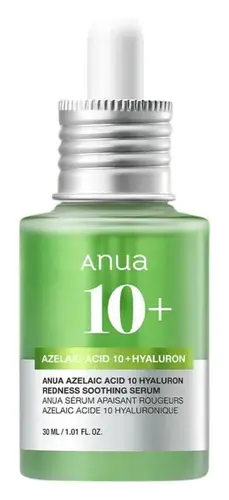
This hybrid sunscreen covers the full UV range and blocks ~98% of UVB at SPF 50.
This calming serum is formulated around Azelaic Acid to calm redness and refine skin texture.


What's inside
What's inside
 Key Ingredients
Benefits
Concerns
Ingredients Side-by-side
Water
Skin ConditioningEthylhexyl Methoxycinnamate
UV Absorber


Butylene Glycol
Humectant

Propylene Glycol
Humectant

Ethylhexyl Triazone
UV Absorber
Ethylhexyl Salicylate
UV Absorber
Cyclopentasiloxane
Emollient
Bis-Ethylhexyloxyphenol Methoxyphenyl Triazine
UV Absorber
Butyl Methoxydibenzoylmethane
UV Absorber
Polymethyl Methacrylate

Bis-PEG-18 Methyl Ether Dimethyl Silane
EmollientBellis Perennis Flower Extract
Skin ConditioningMica
Cosmetic ColorantIsostearyl Alcohol
Emollient

Titanium Dioxide
Cosmetic Colorant
Acrylates/C10-30 Alkyl Acrylate Crosspolymer
Emulsion StabilisingNicotiana Benthamiana Hexapeptide-40 Sh-Polypeptide-2
Skin Conditioning
3-O-Ethyl Ascorbic Acid
Skin Conditioning





4-Butylresorcinol
Antioxidant


Alcohol
Antimicrobial

Alcohol Denat.
Antimicrobial
Ascorbyl Palmitate
Antioxidant
Azelaic Acid
Buffering


BHT
Antioxidant
Butylene Glycol Cocoate
Emulsifying
Caprylic/Capric Triglyceride
Masking
Caprylyl Glycol
Emollient
Carbomer
Emulsion StabilisingCitric Acid
Buffering
Decyl Glucoside
Cleansing
Diacetyl Boldine
Skin Conditioning
Dimethicone
Emollient
Dipotassium Phosphate
BufferingDisodium EDTA
ChelatingDisodium Phosphate
BufferingEthylcellulose
Ethylhexylglycerin
Skin ConditioningGlycerin
Humectant
Glyceryl Oleate
Emollient

Glyceryl Stearate
Emollient
Hexylene Glycol
EmulsifyingLecithin
Emollient
Melissa Officinalis Leaf Extract
Skin ConditioningParfum
Masking
Phenethyl Alcohol
MaskingPhenoxyethanol
Preservative
Polysilicone-11
Polysorbate 20
Emulsifying
Potassium Phosphate
BufferingSilica
Abrasive
Sodium Chloride
MaskingSodium Cholate
Skin ConditioningSodium Hydroxide
BufferingTocopherol
Antioxidant

Tranexamic Acid
Astringent
Undecylenoyl Phenylalanine
Skin Conditioning
Water, Ethylhexyl Methoxycinnamate, Butylene Glycol, Propylene Glycol, Ethylhexyl Triazone, Ethylhexyl Salicylate, Cyclopentasiloxane, Bis-Ethylhexyloxyphenol Methoxyphenyl Triazine, Butyl Methoxydibenzoylmethane, Polymethyl Methacrylate, Bis-PEG-18 Methyl Ether Dimethyl Silane, Bellis Perennis Flower Extract, Mica, Isostearyl Alcohol, Titanium Dioxide, Acrylates/C10-30 Alkyl Acrylate Crosspolymer, Nicotiana Benthamiana Hexapeptide-40 Sh-Polypeptide-2, 3-O-Ethyl Ascorbic Acid, 4-Butylresorcinol, Alcohol, Alcohol Denat., Ascorbyl Palmitate, Azelaic Acid, BHT, Butylene Glycol Cocoate, Caprylic/Capric Triglyceride, Caprylyl Glycol, Carbomer, Citric Acid, Decyl Glucoside, Diacetyl Boldine, Dimethicone, Dipotassium Phosphate, Disodium EDTA, Disodium Phosphate, Ethylcellulose, Ethylhexylglycerin, Glycerin, Glyceryl Oleate, Glyceryl Stearate, Hexylene Glycol, Lecithin, Melissa Officinalis Leaf Extract, Parfum, Phenethyl Alcohol, Phenoxyethanol, Polysilicone-11, Polysorbate 20, Potassium Phosphate, Silica, Sodium Chloride, Sodium Cholate, Sodium Hydroxide, Tocopherol, Tranexamic Acid, Undecylenoyl Phenylalanine
Water
Skin ConditioningIsodecyl Neopentanoate
EmollientDimethicone
Emollient
Azelaic Acid
Buffering
Dimethicone/Bis-Isobutyl PPG-20 Crosspolymer
Emollient
Dimethyl Isosorbide
SolventHydroxyethyl Acrylate/Sodium Acryloyldimethyl Taurate Copolymer
Emulsion StabilisingPolysilicone-11
Isohexadecane
EmollientTocopherol
Antioxidant
Trisodium Ethylenediamine Disuccinate
ChelatingIsoceteth-20
EmulsifyingPolysorbate 60
Emulsifying
Triethanolamine
BufferingEthoxydiglycol
HumectantPhenoxyethanol
Preservative
Chlorphenesin
Antimicrobial
Water, Isodecyl Neopentanoate, Dimethicone, Azelaic Acid, Dimethicone/Bis-Isobutyl PPG-20 Crosspolymer, Dimethyl Isosorbide, Hydroxyethyl Acrylate/Sodium Acryloyldimethyl Taurate Copolymer, Polysilicone-11, Isohexadecane, Tocopherol, Trisodium Ethylenediamine Disuccinate, Isoceteth-20, Polysorbate 60, Triethanolamine, Ethoxydiglycol, Phenoxyethanol, Chlorphenesin
Reviews
Ingredients Explained
These ingredients are found in both products.
Ingredients higher up in an ingredient list are typically present in a larger amount.
Azelaic acid is a multitasker ingredient that helps treat acne, pigmentation, and irritation. It is a great option for sensitive skin.
What makes it special?
OTC Azelaic acid is usually available in concentrations from 10-15% and anything over requires a prescription.
Here's what each tier does best:
Unlike other acids, azelaic acid will not make your skin more photosensitive/sun sensitive.
Though this ingredient is naturally occurring in grains like wheat, rye, and barley, it is usually synthetically created for cosmetics to ensure stability and effectiveness.
Learn more about Azelaic AcidDimethicone is a type of synthetic silicone created from natural materials such as quartz. It is also known as polydimethylsiloxane.
What it does:
Dimethicone comes in different viscosities:
Depending on the viscosity, dimethicone has different properties.
Ingredients lists don't always show which type is used, so we recommend reaching out to the brand if you have questions about the viscosity.
This ingredient is unlikely to cause irritation because it does not get absorbed into skin. However, people with silicone allergies should be careful about using this ingredient.
Note: Dimethicone may contribute to pilling. This is because it is not oil or water soluble, so pilling may occur when layered with products. When mixed with heavy oils in a formula, the outcome is also quite greasy.
Learn more about DimethiconePhenoxyethanol is one of the most widely used preservatives in skincare (and for good reason!).
It has a large spectrum of antimicrobial activity and especially effective bacteria, yeast, and mold while only having a weak effect on your skin's natural microbiome.
On a cellular level, it disrupts the cell membranes of microbes by poking holes that make the cell leak. This shuts down the chemical reactions the microbe needs to make energy so it can no longer survive.
Another perk of this ingredient is that it stays functional across a wide pH range (3-10).
You'll often see it paired with boosters like Ethylhexylglycerin; one study showed that a 1:9 ratio of Ethylhexylglycerin to Phenoxyethanol damages bacterial membranes as effectively as doubling the Phenoxyethanol concentration on its own.
Typical use concentrations range from 0.3-1% depending on the formula, and this ingredient is capped at 1% int the EU.
Safety-wise, the fear mongering does not hold up to the evidence. The EU's Scientific Committee on Consumer Safety and FDA consider it safe as a preservative at up to 1%, including for children of all ages.
Adverse systemic effects only showed up in animal studies at exposures roughly 200x higher than what people get from cosmetics. And despite its very widespread use, this ingredient is a rare sensitizer and allergic reactions are uncommon.
Learn more about PhenoxyethanolPolysilicone-11 is a film-forming silicone that creates a non-tacky and matte finish on the skin. It's commonly used to improve texture, absorb excess oil, and help active ingredients spread evenly.
Due to its "rubber-like" structure, it stays on the skin's surface instead of being absorbed. On the skin, it creates a flexible layer that enhances wearability and stability.
Tocopherol is a fat-soluble antioxidant known as Vitamin E.
You'll find this ingredient in the vast majority of skincare (for good reason). It works to neutralize free radicals, or unstable molecules generated by UV exposure, pollution, and other environmental stressors, before they can cause oxidative damage to your skin cells.
Topically applied tocopherol has been shown to protect against UV damage by ramping up the skin's own natural defense enzymes.
It also acts as a skin conditioning agent; some studies show that regular topical use can improve the skin's water-binding capacity over 2-4 weeks.
This ingredient is especially loved for being a team player. When combined with Vitamin C, the photoprotective effect of both ingredients roughly doubles and the combo also helps reduce UV-induced DNA damage.
This ingredient has some brightening potential but it's more of a prevention ingredient than spot-fader. Cell studies show it can slow down melanin production but it's worth noting that it's not the most powerful brightener out there.
In formulations, it also serves as a stabilizer that helps protect other oxidation-prone ingredients from degrading.
Concentrations usually range from 0.1-1% in most leave-on products.
Learn more about TocopherolWater. It's the most common cosmetic ingredient of all. You'll usually see it at the top of ingredient lists, meaning that it makes up the largest part of the product.
So why is it so popular? Water most often acts as a solvent - this means that it helps dissolve other ingredients into the formulation.
You'll also recognize water as that liquid we all need to stay alive. If you see this, drink a glass of water. Remember to stay hydrated!
Learn more about Water