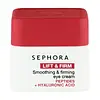
This anti-aging eye moisturizer is formulated around Sodium Hyaluronate and Tocopherol to soften the look of wrinkles and hydrate skin.
This eye moisturizer is formulated around Avena Sativa Kernel Extract to hydrate skin.

What's inside
What's inside
 Key Ingredients
Benefits
Concerns
Ingredients Side-by-side
Water
Skin ConditioningCoco-Caprylate/Caprate
Emollient
Propanediol
Solvent

C10-18 Triglycerides
Emollient

Glycerin
Humectant
Cetyl Alcohol
Emollient
Glyceryl Stearate Se
Emulsifying


Sodium Polyacrylate
Absorbent
CI 77891
Cosmetic ColorantHydroxyethyl Acrylate/Sodium Acryloyldimethyl Taurate Copolymer
Emulsion StabilisingSynthetic Fluorphlogopite
Tocopheryl Acetate
Antioxidant


Caprylyl Glycol
Emollient
Hydrolyzed Vegetable Protein
Skin ConditioningHydroxyacetophenone
Antioxidant
Sodium Benzoate
Masking
Sodium Hyaluronate
Humectant


Sodium Phytate
ChelatingPolysorbate 60
Emulsifying
Sorbitan Isostearate
Emulsifying
Tin Oxide
Abrasive
Tocopherol
Antioxidant
Water, Coco-Caprylate/Caprate, Propanediol, C10-18 Triglycerides, Glycerin, Cetyl Alcohol, Glyceryl Stearate Se, Sodium Polyacrylate, CI 77891, Hydroxyethyl Acrylate/Sodium Acryloyldimethyl Taurate Copolymer, Synthetic Fluorphlogopite, Tocopheryl Acetate, Caprylyl Glycol, Hydrolyzed Vegetable Protein, Hydroxyacetophenone, Sodium Benzoate, Sodium Hyaluronate, Sodium Phytate, Polysorbate 60, Sorbitan Isostearate, Tin Oxide, Tocopherol
Water
Skin ConditioningPropylene Glycol Dicaprylate/Dicaprate
EmollientButylene Glycol
Humectant
Caprylic/Capric Triglyceride
Masking
Propylene Glycol Dipelargonate
EmollientHydroxyethyl Acrylate/Sodium Acryloyldimethyl Taurate Copolymer
Emulsion StabilisingGlyceryl Stearate Se
Emulsifying
Stearic Acid
Cleansing
Palmitic Acid
Emollient
Limnanthes Alba Seed Oil
Skin Conditioning
Sodium Dehydroacetate
Preservative
Avena Sativa Kernel Extract
Abrasive
Methylparaben
Preservative

Ethylparaben
Preservative
Glycine
Buffering
Pentylene Glycol
Skin Conditioning
Dimethicone
Emollient
Glycerin
Humectant
Sorbitan Isostearate
Emulsifying
Polysorbate 60
Emulsifying
Tocopheryl Acetate
Antioxidant
Hydrolyzed Ceratonia Siliqua Seed Extract
Skin ConditioningHydrolyzed Rice Protein
Skin ConditioningSodium Lactate
Buffering
Pisum Sativum Extract
Skin ConditioningCyclodextrin
AbsorbentArginine
Masking
Hydrolyzed Soy Flour
Skin ConditioningPCA
Humectant
Sodium Benzoate
Masking
Mica
Cosmetic ColorantCI 77891
Cosmetic ColorantGlycogen
HumectantChlorhexidine Digluconate
Antimicrobial
Sodium Hyaluronate
Humectant
Glycine Soja Protein
EmulsifyingCaprylyl Glycol
Emollient
Sodium Cocoyl Glutamate
Cleansing
Ethylhexylglycerin
Skin ConditioningPotassium Sorbate
Preservative
Water, Propylene Glycol Dicaprylate/Dicaprate, Butylene Glycol, Caprylic/Capric Triglyceride, Propylene Glycol Dipelargonate, Hydroxyethyl Acrylate/Sodium Acryloyldimethyl Taurate Copolymer, Glyceryl Stearate Se, Stearic Acid, Palmitic Acid, Limnanthes Alba Seed Oil, Sodium Dehydroacetate, Avena Sativa Kernel Extract, Methylparaben, Ethylparaben, Glycine, Pentylene Glycol, Dimethicone, Glycerin, Sorbitan Isostearate, Polysorbate 60, Tocopheryl Acetate, Hydrolyzed Ceratonia Siliqua Seed Extract, Hydrolyzed Rice Protein, Sodium Lactate, Pisum Sativum Extract, Cyclodextrin, Arginine, Hydrolyzed Soy Flour, PCA, Sodium Benzoate, Mica, CI 77891, Glycogen, Chlorhexidine Digluconate, Sodium Hyaluronate, Glycine Soja Protein, Caprylyl Glycol, Sodium Cocoyl Glutamate, Ethylhexylglycerin, Potassium Sorbate
Ingredients Explained
These ingredients are found in both products.
Ingredients higher up in an ingredient list are typically present in a larger amount.
Caprylyl Glycol is a humectant, skin conditioner, emollient, and preservative booster derived from either caprylic acid or synthetically created.
Typical use levels vary from 0.3-1% as a preservative booster and go up to 2% to condition skin.
Because it is not a free-fatty acid, this ingredient is fungal acne safe (there's nothing for Malassezia to feed on).
Learn more about Caprylyl GlycolCi 77891 is a white pigment from Titanium dioxide. It is naturally found in minerals such as rutile and ilmenite.
It's main function is to add a white color to cosmetics. It can also be mixed with other colors to create different shades.
Ci 77891 is commonly found in sunscreens due to its ability to block UV rays.
Learn more about CI 77891Glycerin (or glycerol) is a compound naturally found in your skin. It's a powerhouse humectant that pulls water into the stratum corneum.
Topically, glycerin does several things at once:
Your skin makes glycerin on its own (mostly from sebaceous oil breakdown) and shuttles it to your outermost layer of skin, or your epidermis, via aquaporin-3.
Aquaporin-3 is a transporter that is essential for normal skin hydration, elasticity, and repair. Interestingly, mice lacking in AQP3 have dry and less elastic skin that can be fully corrected with glycerin.
This ingredient is non-irritating, plays well with almost every ingredient, and works across all skin types. Typical use is anywhere between 3-10% but can go up to 79% in some leave-on products.
Just know very high concentrations (>40%) can feel tacky in low humidity.
Glycerin is the name for this ingredient in American English. British English uses Glycerol/Glycerine.
Learn more about GlycerinGlyceryl Stearate SE is a self-emulsifying (SE) form of Glyceryl Stearate. It comes with a small amount of soap (usually potassium or sodium stearate) that gives it the "SE" part.
That soap lets it pull oil and water together on its own which is why it shows up as an emulsifier, thickener, and emollient.
Industry survey data shows this ingredient is used around 1-5% but Glyceryl Stearate goes as high at 17% in a leave-on deodorant.
Safety-wise, it's pretty boring: it's been deemed safe for topical use in 1982 and again most recently in 2021 by the CIR. Human repeat insult patch tests come back non-irritating, non-sensitizing, non-phototoxic, and non-photoallergenic.
This ingredient does carry a comedogenic rating of 3 from the old rabbit-ear assay. Just remember testing finished products in humans showed that formulas built with "comedogenic" ingredients are not necessarily comedogenic themselves. It's worth patch testing if you're breakout prone, and always listen to your skin.
The Malassezia yeast can potentially metabolize the stearic acid in this ingredient, so it may not be fungal acne safe.
Allergy is rare: a 310-patient patch test study of common emulsifiers found this ingredient was not a meaningful reactor. Isolated case reports do exist so a true contact allergy is possible but uncommon.
Learn more about Glyceryl Stearate SeThis is a synthetic polymer. It helps improve the texture of products by adding thickness and gel-like feel.
It is also an emulsifer, meaning it prevents ingredients such as oil and water from separating. It also helps evenly disperse other ingredients.
Polysorbate 60 is used to help stabilize products. It is a surfactant and emulsifier. These properties help keep ingredients together in a product. Surfactants help reduce surface tension between ingredients with different states, such as liquids and solids. Emulsifiers help prevent oils and waters from separating.
Polysorbate 60 is sorbitol-based and created from the ethoxylation of sorbitan. Ethoxylation is a chemical reaction used to add ethylene oxide. Sorbitan is a the dehydrated version of sorbitol, a sugar found in fruits.
In this case, the 60 comes from reacting 60 units of ethylene oxide with sorbitan.
Polysorbates are commonly used in medicine and foods.
Learn more about Polysorbate 60Sodium Benzoate is a preservative. It's used in both cosmetic and food products to inhibit the growth of mold and bacteria. It is typically produced synthetically.
Both the US FDA and EU Health Committee have approved the use of sodium benzoate. In the US, levels of 0.1% (of the total product) are allowed.
Sodium benzoate works as a preservative by inhibiting the growth of bacteria inside of cells. It prevents the cell from fermenting a type of sugar using an enzyme called phosphofructokinase.
It is the salt of benzoic acid. Foods containing sodium benzoate include soda, salad dressings, condiments, fruit juices, wines, and snack foods.
Studies for using ascorbic acid and sodium benzoate in cosmetics are lacking, especially in skincare routines with multiple steps.
We always recommend speaking with a professional, such as a dermatologist, if you have any concerns.
Learn more about Sodium BenzoateSodium Hyaluronate is the salt form of hyaluronic acid. It is a long sugar chain that is naturally found in your skin, joints, and connective tissue that maintains hydration and elasticity.
In skincare, it works as a humectant. It pulls water from the environment and deeper layers of skin and binds it to the surface.
Interestingly, the size of the molecule affects its behavior:
Some clinical evidence links low molecular weight versions to improved wrinkle depth, elasticity, anti-inflammatory effects, and barrier repair.
Many serums use a blend of both weights so you can get surface hydration plus longer-lasting and deeper effects.
You'll typically see concentrations between 0.1-2% for this ingredient.
Learn more about Sodium HyaluronateSorbitan Isostearate is an emulsifer. It is created from isostearic acid and sorbitol.
As an emulsifier, it keeps the water and oil ingredients from separating. This keeps formulas stable and smooth.
In a 24 hour occlusive patch test on 56 subjects, 10% sorbitan isostearate was completely non-irritating. Most formulas use less than 10%.
Because it's a fatty acid ester, it may not be fungal acne safe since the Malassezia yeast can utilize it as a nutrient source.
Learn more about Sorbitan IsostearateTocopheryl Acetate is a stable, shelf-friendly form of vitamin E.
Formulators love it because plain vitamin E oxidizes quickly once it hits air. This acetate version stays stable and resists going off, helping to extend a product's shelf life.
It's actually inactive on its own and works like a slow-release "storage" form; the enzymes in your skin called esterases gradually convert it into active vitamin E over time.
One in vivo study showed 5% of the acetate in the living layer of the epidermis converted to vitamin E after 5 days of application. This study also found the skin gained protection against UV damage even though the conversion was slow and small.
Once converted, vitamin E acts as a skin's main fat-soluble antioxidant that fights free radicals to protect skin from damage.
Topical vitamin E generally boosts the skin's photoprotection, and it reduced UV-damage in animal models.
This ingredient has some brightening potential but it's more of a prevention ingredient than spot-fader. Cell studies show it can slow down melanin production but it's worth noting that it's not the most powerful brightener out there.
Overall, it has a pretty solid safety profile and has been found to be non-irritating and non-comedogenic. Allergic reactions may happen but stay rare due to how widely the ingredient gets used.
The concentration will vary depending on the formula; industry data shows 0.1% in baby lotions, 3% in lipsticks, and 5% in foot powders. You can also find this ingredient at 100% in a pure vitamin E oil.
Most leave-on skincare keeps it at the lower end, often between 0.5-1%.
Learn more about Tocopheryl AcetateWater. It's the most common cosmetic ingredient of all. You'll usually see it at the top of ingredient lists, meaning that it makes up the largest part of the product.
So why is it so popular? Water most often acts as a solvent - this means that it helps dissolve other ingredients into the formulation.
You'll also recognize water as that liquid we all need to stay alive. If you see this, drink a glass of water. Remember to stay hydrated!
Learn more about Water

