

What's inside
What's inside
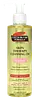 Key Ingredients
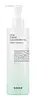
Benefits
Concerns
Ingredients Side-by-side
Glycine Soja Oil
Emollient






Prunus Amygdalus Dulcis Oil
Skin Conditioning
Polysorbate 85
Emulsifying
Prunus Armeniaca Kernel Oil
Masking
Sorbitan Trioleate
Emulsifying
Theobroma Cacao Seed Butter
Emollient
Tocopheryl Acetate
Antioxidant


Cetearyl Ethylhexanoate
Emollient
Vitis Vinifera Seed Oil
Emollient
Simmondsia Chinensis Seed Oil
Emollient

Sesamum Indicum Seed Oil
Emollient
Argania Spinosa Kernel Oil
Emollient
Oryza Sativa Bran Oil
Emollient
Rosa Canina Fruit Oil
Emollient
Ascorbyl Palmitate
Antioxidant
Isopropyl Myristate
Emollient
Parfum
Masking



Benzyl Benzoate
Antimicrobial

Citronellol
Perfuming
Geraniol
Perfuming
Butylphenyl Methylpropional
Perfuming
Glycine Soja Oil, Prunus Amygdalus Dulcis Oil, Polysorbate 85, Prunus Armeniaca Kernel Oil, Sorbitan Trioleate, Theobroma Cacao Seed Butter, Tocopheryl Acetate, Cetearyl Ethylhexanoate, Vitis Vinifera Seed Oil, Simmondsia Chinensis Seed Oil, Sesamum Indicum Seed Oil, Argania Spinosa Kernel Oil, Oryza Sativa Bran Oil, Rosa Canina Fruit Oil, Ascorbyl Palmitate, Isopropyl Myristate, Parfum, Benzyl Benzoate, Citronellol, Geraniol, Butylphenyl Methylpropional
Ethylhexyl Palmitate
Emollient
Sorbeth-30 Tetraoleate
Emulsifying
Triethylhexanoin
MaskingGlycine Soja Oil
Emollient
Caprylic/Capric Triglyceride
Masking
Simmondsia Chinensis Seed Oil
Emollient
Citrus Aurantifolia Oil
Cleansing
Citrus Limon Peel Oil
Masking
Citrus Aurantium Bergamia Fruit Oil
Masking
Tocopherol
Antioxidant
Helianthus Annuus Seed Oil
Emollient
Caprylyl Glycol
Emollient
Ethylhexylglycerin
Skin ConditioningAvena Sativa Kernel Oil
Skin Conditioning
Olea Europaea Fruit Oil
Masking
Oenothera Biennis Oil
Emollient
Persea Gratissima Oil
Skin Conditioning
Prunus Amygdalus Dulcis Oil
Skin Conditioning
Water
Skin Conditioning1,2-Hexanediol
Skin Conditioning
Centella Asiatica Extract
Cleansing
Centella Asiatica Leaf Extract
Skin Conditioning
Centella Asiatica Root Extract
Skin Conditioning
Pinus Pinaster Bark Extract
Antioxidant
Asiaticoside
Antioxidant
Asiatic Acid
Skin Conditioning
Madecassoside
Antioxidant
Madecassic Acid
Skin Conditioning
Ethylhexyl Palmitate, Sorbeth-30 Tetraoleate, Triethylhexanoin, Glycine Soja Oil, Caprylic/Capric Triglyceride, Simmondsia Chinensis Seed Oil, Citrus Aurantifolia Oil, Citrus Limon Peel Oil, Citrus Aurantium Bergamia Fruit Oil, Tocopherol, Helianthus Annuus Seed Oil, Caprylyl Glycol, Ethylhexylglycerin, Avena Sativa Kernel Oil, Olea Europaea Fruit Oil, Oenothera Biennis Oil, Persea Gratissima Oil, Prunus Amygdalus Dulcis Oil, Water, 1,2-Hexanediol, Centella Asiatica Extract, Centella Asiatica Leaf Extract, Centella Asiatica Root Extract, Pinus Pinaster Bark Extract, Asiaticoside, Asiatic Acid, Madecassoside, Madecassic Acid
Reviews
Ingredients Explained
These ingredients are found in both products.
Ingredients higher up in an ingredient list are typically present in a larger amount.
Glycine Soja Oil comes from the soybean. Glycine Soja is native to eastern Asia.
Soybean oil is an emollient. It is rich in antioxidants and fatty acids including palmitic, stearic, oleic, and linoleic acids.
As an emollient, the fatty acids in soybean oil helps keep your skin soft and hydrated. It does so by creating a film on top that traps moisture in.
Soybean oil is also rich in vitamin E, a potent antioxidant. Vitamin E is also anti-inflammatory and provides a soothing effect.
Studies show soy may help fade hyperpigmentation from UVB. It does so by disrupting the melanin process from UVB induced skin inflammation.
This ingredient may not be malassezia folliculitis, or fungal-acne, safe.
Soybeans are rich in proteins and are part of the legume family. Foods made with soybeans include tofu, soymilk, edamame, miso, and soy sauce.
Learn more about Glycine Soja OilThis ingredient is also known as sweet almond oil. It is a lightweight, cold-pressed oil from the ripe seeds of the sweet almond tree.
Sweet almond oil is rich in skin-nourishing fatty acids such as oleic acid (55-86%) and linolenic acid (7-35%).
As an emollient, it softens and hydrates skin by forming a thin barrier that locks in moisture.
Clinical studies have found it to be non-irritating and non-sensitizing. The CIR Expert Panel has evaluated the available safety data and concluded it is safe for topical use.
Because of the oleic acid content, this ingredient may not be fungal acne safe.
Learn more about Prunus Amygdalus Dulcis OilJojoba oil is one of the most well-studied plant-derived ingredients in cosmetics. It is an emollient with a special structure.
Because it is made up of 97-98% wax esters, it closely mirrors the linear monoesters found in human sebum. This makes it skin compatible, non-greasy, and lightweight.
Unlike other plant oils, jojoba wax doesn't easily penetrate skin. It mostly works in the uppermost layers as an emollient. This just means it forms a light barrier on the skin to help retain moisture.
Formulations with jojoba esters up to 90% reduced transepidermal water loss (TEWL) and increased barrier recovery by 81% (outperforming bisabolol at 47%).
Besides barrier support, the science also suggests jojoba to have anti-inflammatory effects and potential applications for skin infections, aging, and wound healing.
Fun fact: Indigenous cultures have used jojoba as a moisturizer and to help treat burns for centuries.
Due to its fatty acid content, Jojoba oil may not be fungal acne safe.
Learn more about Simmondsia Chinensis Seed Oil
