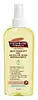
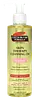
Palmer's Cocoa Butter Formula Skin Therapy Oil Versus Palmer's Cocoa Butter Skin Therapy Cleansing Oil, Face, Rosehip Fragrance
This oil-based makeup remover is made to dissolve makeup, sunscreen, and daily buildup.

What's inside
What's inside
 Key Ingredients
Benefits
Concerns
Ingredients Side-by-side


Glycine Soja Oil
Emollient








Prunus Amygdalus Dulcis Oil
Skin Conditioning
Polysorbate 85
Emulsifying
Prunus Armeniaca Kernel Oil
Masking
Sorbitan Trioleate
Emulsifying
Theobroma Cacao Seed Butter
Emollient
Tocopheryl Acetate
Antioxidant


Cetearyl Ethylhexanoate
Emollient
Vitis Vinifera Seed Oil
Emollient
Simmondsia Chinensis Seed Oil
Emollient

Sesamum Indicum Seed Oil
Emollient
Argania Spinosa Kernel Oil
Emollient
Oryza Sativa Bran Oil
Emollient
Rosa Canina Fruit Oil
Emollient
Ascorbyl Palmitate
Antioxidant
Isopropyl Myristate
Emollient
Parfum
Masking

Benzyl Benzoate
Antimicrobial
Citronellol
Perfuming
Geraniol
Perfuming
Butylphenyl Methylpropional
Perfuming
Glycine Soja Oil, Prunus Amygdalus Dulcis Oil, Polysorbate 85, Prunus Armeniaca Kernel Oil, Sorbitan Trioleate, Theobroma Cacao Seed Butter, Tocopheryl Acetate, Cetearyl Ethylhexanoate, Vitis Vinifera Seed Oil, Simmondsia Chinensis Seed Oil, Sesamum Indicum Seed Oil, Argania Spinosa Kernel Oil, Oryza Sativa Bran Oil, Rosa Canina Fruit Oil, Ascorbyl Palmitate, Isopropyl Myristate, Parfum, Benzyl Benzoate, Citronellol, Geraniol, Butylphenyl Methylpropional
Reviews
Ingredients Explained
These ingredients are found in both products.
Ingredients higher up in an ingredient list are typically present in a larger amount.
You may know this ingredient as argan oil. It has emollient and skin conditioning properties that help soften skin and reinforce the lipid barrier.
The fatty acid profile of argan oil is roughly 45-55% oleic acid, 28-36% linoleic acid, 10-15% palmitic acid, and 5-7% stearic acid. It also contains vitamin E, sterols, squalene, and polyphenols like ferulic acid.
Two clinical studies in postmenopausal women found that applying argan oil for 60 days significantly improved skin elasticity and moisturization (reduced transepidermal water loss and increased epidermal water content).
Since it is high in oleic and linoleic acid, this ingredient may not be fungal acne safe. Both of these fall in the C11-C24 range that Malassezia yeast can metabolize.
Learn more about Argania Spinosa Kernel OilCetearyl Ethylhexanoate is derived from cetearyl alcohol and sorbic acid.
It is an emollient and helps hydrate the skin. Emollients form a barrier on the skin to prevent water from escaping.
Isopropyl Myristate is an ester made by combining isopropyl alcohol with myristic acid.
It is primarily an emollient and penetration enhancer that gives products a lightweight, silky feel without the heaviness of oils.
This ingredient is generally considered non-toxic, non-irritating, and has low absorption potential.
You might have heard that this ingredient clogs pores. This reputation comes from the older rabbit ear studies which are more sensitive than human skin to clogging.
Dermatologist Dr. Zoe Draelos has also confirmed in a peer-reviewed paper that products containing comedogenic ingredients are not necessarily comedogenic themselves.
A small subset of people (~2%) may experience contact sensitivity so patch testing is a reasonable idea if you have reactive skin.
Since this ingredient is an ester of myristic acid (a C14 fatty acid), it falls within the carbon chain range that is known to feed Malassezia. This ingredient may not be fungal acne safe.
Learn more about Isopropyl MyristateParfum is a catch-all term for an ingredient or more that is used to give a scent to products.
Also called "fragrance", this ingredient can be a blend of hundreds of chemicals or plant oils. This means every product with "fragrance" or "parfum" in the ingredients list is a different mixture.
For instance, Habanolide is a proprietary trade name for a specific aroma chemical. When used as a fragrance ingredient in cosmetics, most aroma chemicals fall under the broad labeling category of “FRAGRANCE” or “PARFUM” according to EU and US regulations.
The term 'parfum' or 'fragrance' is not regulated in many countries. In many cases, it is up to the brand to define this term.
For instance, many brands choose to label themselves as "fragrance-free" because they are not using synthetic fragrances. However, their products may still contain ingredients such as essential oils that are considered a fragrance by INCI standards.
One example is Calendula flower extract. Calendula is an essential oil that still imparts a scent or 'fragrance'.
Depending on the blend, the ingredients in the mixture can cause allergies and sensitivities on the skin. Some ingredients that are known EU allergens include linalool and citronellol.
Parfum can also be used to mask or cover an unpleasant scent.
The bottom line is: not all fragrances/parfum/ingredients are created equally. If you are worried about fragrances, we recommend taking a closer look at an ingredient. And of course, we always recommend speaking with a professional.
Learn more about ParfumRosa Canina Fruit Oil is a non-fragrant plant oil that has earned its skincare reputation through chemistry.
It's dominated by fatty acids like linoleic acid (~35-55%), alpha-linolenic acid (~17-27%), and oleic acid (~14-22%). This is the exact profile that supports skin barrier, locks in hydration, and calms inflammation.
A 2024 review found evidence for the Rosa canina species supports its use for scarring, hyperpigmentation, wrinkles, and atopic dermatitis; this was mostly credited to its vitamin C content and fatty acid composition as the primary active mechanisms.
You might see this ingredient marketed as a "natural retinol". Some rosehip seed oils contains traces of all-trans-retinoic acid but these trace amounts are far below biologically active levels.
The Cosmetic Ingredient Review Panel has deemed this ingredient safe and it's well-tolerated.
Fungal acne: The fatty acids of this oil fall into the C11-24 range that Malassezia yeast can metabolize, so this ingredient may not be fungal acne safe.
Learn more about Rosa Canina Fruit OilSesamum Indicum Seed Oil is the cold-pressed oil from sesame seeds.
It is an emollient and skin conditioning agent made up of roughly 82-85% unsaturated fatty acids, mostly linoleic (~41%) and oleic acid (~39%).
This pairing gives it barrier-supporting and moisturizing properties. Linoleic acid, an essential omega-6 fatty acid, can be incorporated into complex skin lipids. Topical application has shown barrier repair, anti-inflammatory, and wound-healing effects in cell and animal studies.
Beyond fatty acids, sesame oil brings something more distinctive to the table:
It contains natural antioxidants sesamol, sesamolin, and gamma-tocopherol. These also give the oil notably high oxidative stability.
One of the oil's key lignans, sesamin, has also demonstrated anti-inflammatory activity in preclinical models.
A 2023 clinical study found that a single application of sesame seed oil to the forearms of 35 healthy women improved stratum corneum hydration (though it didn't outperform raspberry seed oil).
The comedogenic rating of 1-3 depends on the type of sesame oil; unrefined carries a rating of 3 while refined sesame oil drops to a 1.
This ingredient may not be safe for fungal acne as it contains fatty acids that can feed Malassezia.
Learn more about Sesamum Indicum Seed OilTheobroma Cacao Seed Butter comes from the Theobroma cacoa, or Cacao tree. Cacao trees are native to tropical landscapes.
Like other plant butters, Cacao seed butter is an emollient. Emollients help soothe and soften your skin. By creating a barrier to trap moisture in, emollients help keep your skin hydrated.
Cacao seed butter contains antioxidants known as polyphenols. Antioxidants help fight free-radical molecules by stabilizing them. Unstable free-radicals may cause damage to your skin cells. Antioxidants may help with anti-aging.
Theobroma Cacao Seed Butter can be bad for acne prone skin.
Learn more about Theobroma Cacao Seed Butter

