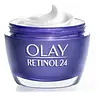
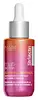
Olay Retinol 24 Night Face Cream Versus StriVectin Super-C Retinol Brighten & Correct Vitamin C Serum

What's inside
What's inside
 Key Ingredients
Benefits
Concerns
Ingredients Side-by-side
Water
Skin ConditioningDimethicone
Emollient

Glycerin
Humectant

Tapioca Starch
Dimethicone Crosspolymer
Emulsion Stabilising
Retinyl Propionate
Skin Conditioning


Caprylic/Capric Triglyceride
Masking
Retinol
Skin Conditioning





Palmitoyl Pentapeptide-4
Skin Conditioning
BHT
Antioxidant
Butylene Glycol
Humectant
Dimethiconol
Emollient
Niacinamide
Smoothing


Polysorbate 20
Emulsifying
Laureth-4
Emulsifying
Laureth-7
EmulsifyingDisodium EDTA
Polyacrylamide
Acrylates/C10-30 Alkyl Acrylate Crosspolymer
Emulsion StabilisingAminomethyl Propanol
BufferingPEG-100 Stearate
Ammonium Polyacrylate
StabilisingPolymethylsilsesquioxane
Titanium Dioxide
Cosmetic Colorant

C13-14 Alkane
SolventDMDM Hydantoin
Preservative


Iodopropynyl Butylcarbamate
Preservative
Benzyl Alcohol
Perfuming


Methylparaben
Preservative
Water, Dimethicone, Glycerin, Tapioca Starch, Dimethicone Crosspolymer, Retinyl Propionate, Caprylic/Capric Triglyceride, Retinol, Palmitoyl Pentapeptide-4, BHT, Butylene Glycol, Dimethiconol, Niacinamide, Polysorbate 20, Laureth-4, Laureth-7, Disodium EDTA, Polyacrylamide, Acrylates/C10-30 Alkyl Acrylate Crosspolymer, Aminomethyl Propanol, PEG-100 Stearate, Ammonium Polyacrylate, Polymethylsilsesquioxane, Titanium Dioxide, C13-14 Alkane, DMDM Hydantoin, Iodopropynyl Butylcarbamate, Benzyl Alcohol, Methylparaben
Water
Skin ConditioningSodium Ascorbyl Phosphate
Antioxidant
Glycereth-7 Triacetate
EmollientPentylene Glycol
Skin Conditioning
Polysorbate 20
Emulsifying
Dipropylene Glycol
HumectantGlycerin
Humectant
Dimethyl Isosorbide
SolventAscorbyl Glucoside
Antioxidant
Ascorbic Acid
Antioxidant
Malpighia Glabra Fruit Juice
Skin ConditioningRetinol
Skin Conditioning
Sodium Hyaluronate
Humectant
Myristyl Nicotinate
Skin ConditioningTamarindus Indica Seed Polysaccharide
Skin ConditioningOrobanche Rapum Extract
Skin ProtectingMalus Domestica Fruit Cell Culture Extract
Skin ConditioningCamellia Sinensis Leaf Extract
Antimicrobial
Xylitylglucoside
Humectant
Bacillus/Sea Salt Ferment Filtrate
Skin ConditioningHydroxymethoxyphenyl Decanone
Skin ConditioningAnhydroxylitol
Humectant
Adenosine
Skin Conditioning
Xylitol
Humectant
Glucose
Humectant
Ethylhexylglycerin
Skin ConditioningLecithin
Emollient
Xanthan Gum
EmulsifyingAcrylates/C10-30 Alkyl Acrylate Crosspolymer
Emulsion StabilisingPropanediol
Solvent
Maltodextrin
Absorbent
Rhizobian Gum
Mica
Cosmetic ColorantParfum
Masking
Limonene
Perfuming
Linalool
Perfuming
Geraniol
Perfuming
Citral
Perfuming
Citronellol
Perfuming
Benzyl Benzoate
Antimicrobial
Chlorphenesin
Antimicrobial
Phenoxyethanol
Preservative
BHT
Antioxidant
BHA
Antioxidant
Sodium Benzoate
Masking
Potassium Sorbate
Preservative
CI 77491
Cosmetic ColorantCI 77891
Cosmetic ColorantWater, Sodium Ascorbyl Phosphate, Glycereth-7 Triacetate, Pentylene Glycol, Polysorbate 20, Dipropylene Glycol, Glycerin, Dimethyl Isosorbide, Ascorbyl Glucoside, Ascorbic Acid, Malpighia Glabra Fruit Juice, Retinol, Sodium Hyaluronate, Myristyl Nicotinate, Tamarindus Indica Seed Polysaccharide, Orobanche Rapum Extract, Malus Domestica Fruit Cell Culture Extract, Camellia Sinensis Leaf Extract, Xylitylglucoside, Bacillus/Sea Salt Ferment Filtrate, Hydroxymethoxyphenyl Decanone, Anhydroxylitol, Adenosine, Xylitol, Glucose, Ethylhexylglycerin, Lecithin, Xanthan Gum, Acrylates/C10-30 Alkyl Acrylate Crosspolymer, Propanediol, Maltodextrin, Rhizobian Gum, Mica, Parfum, Limonene, Linalool, Geraniol, Citral, Citronellol, Benzyl Benzoate, Chlorphenesin, Phenoxyethanol, BHT, BHA, Sodium Benzoate, Potassium Sorbate, CI 77491, CI 77891
Ingredients Explained
These ingredients are found in both products.
Ingredients higher up in an ingredient list are typically present in a larger amount.
Acrylates/C10-30 Alkyl Acrylate Crosspolymer is a synthetic polymer. It is used to thicken, emulsify, and improve the texture of products.
As an emulsifier, it helps stabilize oil-in-water emulsions to give products an elegant feel when applied.
It can also form a thin protective film on skin. One study found that a formula using this polymer helped slow down how quickly other ingredients (like DEET) were absorbed through skin.
A 2024 study of over 1,300 patients confirmed that sensitization to this ingredient is rare. It is also non-mutagenic and has a clean track record.
Learn more about Acrylates/C10-30 Alkyl Acrylate CrosspolymerBHT is a synthetic antioxidant and preservative.
As an antioxidant, it helps your body fight off free-radicals. Free-radicals are molecules that may damage your skin cells.
As a preservative, it is used to stabilize products and prevent them from degrading. Specifically, BHT prevents degradation from oxidation.
The concerns related to BHT come from oral studies; this ingredient is currently allowed for use by both the FDA and EU.
However, it was recently restricted for use in the UK as of April 2024.
Learn more about BHTGlycerin (or glycerol) is a compound naturally found in your skin. It's a powerhouse humectant that pulls water into the stratum corneum.
Topically, glycerin does several things at once:
Your skin makes glycerin on its own (mostly from sebaceous oil breakdown) and shuttles it to your outermost layer of skin, or your epidermis, via aquaporin-3.
Aquaporin-3 is a transporter that is essential for normal skin hydration, elasticity, and repair. Interestingly, mice lacking in AQP3 have dry and less elastic skin that can be fully corrected with glycerin.
This ingredient is non-irritating, plays well with almost every ingredient, and works across all skin types. Typical use is anywhere between 3-10% but can go up to 79% in some leave-on products.
Just know very high concentrations (>40%) can feel tacky in low humidity.
Glycerin is the name for this ingredient in American English. British English uses Glycerol/Glycerine.
Learn more about GlycerinPolysorbate 20 is a gentle, water-soluble emulsifier and mild surfactant. It stops oil and water from separating to keep your formulas blended and stable.
It also acts as a mild penetration enhancer by helping active ingredients absorb slightly better.
The common safety discussion around this ingredient involves a manufacturing byproduct called 1,4-dioxane.
Trace amounts can form during production but the EU's Scientific Committee on Consumer Safety has concluded that levels at/below 10 ppm in finished products are safe (commercial products consistently fall within acceptable margins).
True allergic reactions are uncommon and the CIR Expert Panel has confirmed this ingredient to be safe as used in cosmetics.
Because it is derived from lauric acid, it may not be fungal acne safe.
Learn more about Polysorbate 20Retinol is a gold-standard ingredient for anti-aging. It is a form of Vitamin A and belongs to the class of retinoids that also includes tretinoin.
Why is retinol famous?
It has the most scientific studies backing up its skin benefits out of all the non-prescription ingredients.
Retinol is proven to:
This is why retinol is effective at removing wrinkles, fading dark spots, treating acne, and reducing the appearance of pores.
Studies show retinol is less effective when exposed to UV. Be sure to look for appropriate packaging to keep your retinol potent (similar to Vitamin C).
Using retinol or any retinoids will increase sun-sensitivity in the first few months. Though studies show retinoids increase your skin's natural SPF with continuous use, it is best to always wear sunscreen and sun-protection.
We recommend speaking with a medical professional about using this ingredient during pregnancy.
Retinol may cause irritation in some people, so be sure to patch test. Experts recommend 'ramping up' retinol use: start using this ingredient once a week and work up to using it daily.
Read about Tretinoin
Learn more about RetinolWater. It's the most common cosmetic ingredient of all. You'll usually see it at the top of ingredient lists, meaning that it makes up the largest part of the product.
So why is it so popular? Water most often acts as a solvent - this means that it helps dissolve other ingredients into the formulation.
You'll also recognize water as that liquid we all need to stay alive. If you see this, drink a glass of water. Remember to stay hydrated!
Learn more about Water
