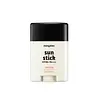
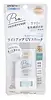
Mongdies Sun Stick SPF50+ PA++++ Versus Kosé Suncut Prodefense Light Up UV Sunscreen Stick SPF 50+ PA+++
This mineral sunscreen covers the full UV range and blocks ~98% of UVB at SPF 50.
This mineral sunscreen covers the full UV range and blocks ~98% of UVB at SPF 50.


What's inside
What's inside
 Key Ingredients
Benefits
Concerns
Ingredients Side-by-side
Octyldodecanol
Emollient
Propylheptyl Caprylate
EmollientButylene Glycol Dicaprylate/Dicaprate
EmollientC12-15 Alkyl Benzoate
AntimicrobialPolyamide-8
EmollientTitanium Dioxide
Cosmetic Colorant

Dibutyl Lauroyl Glutamide
Skin ConditioningDibutyl Ethylhexanoyl Glutamide
Skin ConditioningSilica Silylate
Emollient
Vinyldimethicone

Aluminum Stearate
Cosmetic ColorantPolyhydroxystearic Acid
Emulsifying

Pelargonium Graveolens Flower Oil
Masking




Glycine Soja Seed Extract
Skin Conditioning

Camellia Sinensis Leaf Extract
Antimicrobial





Oenothera Biennis Flower Extract
AstringentChamomilla Recutita Flower Extract
Masking
Glycyrrhiza Glabra Root Extract
Bleaching
Persea Gratissima Oil
Skin Conditioning

Sea Water
HumectantBrassica Oleracea Italica Sprout Extract
EmollientPhaseolus Radiatus Sprout Extract
HumectantTriticum Vulgare Sprout Extract
Skin ConditioningBeta Vulgaris Sprout Extract
Skin ConditioningBrassica Napus Sprout Extract
HumectantBrassica Oleracea Capitata Sprout Extract
Skin ConditioningMedicago Sativa Sprout Extract
Skin ConditioningHelianthus Annuus Sprout Extract
Skin ConditioningBrassica Juncea Sprout Extract
Skin ConditioningGlycine Soja Sprout Extract
EmollientCarthamus Tinctorius Bud Extract
Skin ConditioningTrifolium Repens Sprout Extract
Skin ConditioningOenothera Biennis Sprout Extract
Arachis Hypogaea (Peanut) Sprout Extract
HumectantBambusa Vulgaris Shoot Extract
Antioxidant
Chrysanthemum Zawadskii Sprout Extract
Sesamum Indicum Sprout Extract
HumectantCaprylic/Capric Triglyceride
Masking
Alumina
Abrasive
Dehydroacetic Acid
Preservative
Pentaerythrityl Tetra-Di-T-Butyl Hydroxyhydrocinnamate
Antioxidant
Stearic Acid
Cleansing
Glycerin
Humectant
Beta-Glucan
Skin Conditioning
Ceramide NP
Skin Conditioning
Sodium PCA
Humectant
Sodium Hyaluronate
Humectant
Allantoin
Skin Conditioning
Tocopherol
Antioxidant
Panthenol
Skin Conditioning
Butylene Glycol
Humectant
Water
Skin ConditioningOctyldodecanol, Propylheptyl Caprylate, Butylene Glycol Dicaprylate/Dicaprate, C12-15 Alkyl Benzoate, Polyamide-8, Titanium Dioxide, Dibutyl Lauroyl Glutamide, Dibutyl Ethylhexanoyl Glutamide, Silica Silylate, Vinyldimethicone, Aluminum Stearate, Polyhydroxystearic Acid, Pelargonium Graveolens Flower Oil, Glycine Soja Seed Extract, Camellia Sinensis Leaf Extract, Oenothera Biennis Flower Extract, Chamomilla Recutita Flower Extract, Glycyrrhiza Glabra Root Extract, Persea Gratissima Oil, Sea Water, Brassica Oleracea Italica Sprout Extract, Phaseolus Radiatus Sprout Extract, Triticum Vulgare Sprout Extract, Beta Vulgaris Sprout Extract, Brassica Napus Sprout Extract, Brassica Oleracea Capitata Sprout Extract, Medicago Sativa Sprout Extract, Helianthus Annuus Sprout Extract, Brassica Juncea Sprout Extract, Glycine Soja Sprout Extract, Carthamus Tinctorius Bud Extract, Trifolium Repens Sprout Extract, Oenothera Biennis Sprout Extract, Arachis Hypogaea (Peanut) Sprout Extract, Bambusa Vulgaris Shoot Extract, Chrysanthemum Zawadskii Sprout Extract, Sesamum Indicum Sprout Extract, Caprylic/Capric Triglyceride, Alumina, Dehydroacetic Acid, Pentaerythrityl Tetra-Di-T-Butyl Hydroxyhydrocinnamate, Stearic Acid, Glycerin, Beta-Glucan, Ceramide NP, Sodium PCA, Sodium Hyaluronate, Allantoin, Tocopherol, Panthenol, Butylene Glycol, Water
Zinc Oxide
Cosmetic Colorant
Dimethicone
Emollient
Polymethylsilsesquioxane
Hydrogenated Polydecene
EmollientEthylhexyl Palmitate
Emollient
Synthetic Wax
Abrasive
Diphenylsiloxy Phenyl Trimethicone
Skin Conditioning
Titanium Dioxide
Cosmetic Colorant
Sorbitan Sesquiisostearate
Emulsifying
Triethoxycaprylylsilane
Aluminum Hydroxide
EmollientEquisetum Arvense Extract
AstringentSalvia Officinalis Oil
Masking
Centella Asiatica Leaf Extract
Skin Conditioning
Tocopherol
Antioxidant
Helianthus Annuus Seed Oil
Emollient
Limnanthes Alba Seed Oil
Skin Conditioning
Tocopheryl Acetate
Antioxidant
Butylene Glycol
Humectant
Squalane
Emollient
Ceramide Ng
Skin Conditioning
Hydrogen Dimethicone
Phytosterols
Skin Conditioning
Pentylene Glycol
Skin Conditioning
Polyhydroxystearic Acid
Emulsifying
Phytosteryl/Octyldodecyl Lauroyl Glutamate
Skin ConditioningWater
Skin ConditioningHydrogenated Lecithin
Emulsifying
Zinc Oxide, Dimethicone, Polymethylsilsesquioxane, Hydrogenated Polydecene, Ethylhexyl Palmitate, Synthetic Wax, Diphenylsiloxy Phenyl Trimethicone, Titanium Dioxide, Sorbitan Sesquiisostearate, Triethoxycaprylylsilane, Aluminum Hydroxide, Equisetum Arvense Extract, Salvia Officinalis Oil, Centella Asiatica Leaf Extract, Tocopherol, Helianthus Annuus Seed Oil, Limnanthes Alba Seed Oil, Tocopheryl Acetate, Butylene Glycol, Squalane, Ceramide Ng, Hydrogen Dimethicone, Phytosterols, Pentylene Glycol, Polyhydroxystearic Acid, Phytosteryl/Octyldodecyl Lauroyl Glutamate, Water, Hydrogenated Lecithin
Ingredients Explained
These ingredients are found in both products.
Ingredients higher up in an ingredient list are typically present in a larger amount.
Butylene Glycol (or BG) is used within cosmetic products for a few different reasons:
Overall, Butylene Glycol is a safe and well-rounded ingredient that works well with other ingredients.
Though this ingredient works well with most skin types, some people with sensitive skin may experience a reaction such as allergic rashes, closed comedones, or itchiness.
Learn more about Butylene GlycolPolyhydroxystearic Acid is a vegetable-derived soft wax made from castor oil. It's an emulsion stabilizer, thickener, and film former.
You'll likely see it in sunscreens because it helps disperse pigments and UV-reflecting minerals like titanium dioxide and zinc oxide evenly.
Depending on the concentration, it can drastically change the texture of a product from pasty solid (like lipstick) to sprayable liquid.
The CIR Expert Panel for Cosmetic Ingredient Safety has concluded this ingredient to be safe in cosmetics. The highest reported use concentration is 14.2% in lipsticks.
Learn more about Polyhydroxystearic AcidTitanium Dioxide (TD) is a mineral UV filter widely used in sunscreens and cosmetics.
It's one of only two UV filters officially classified as "mineral" by regulatory agencies (the other being Zinc Oxide).
A really common myth is that mineral filters work by reflecting UV light off your skin like tiny mirrors.
They don't only do that; modern research shows TD protects mostly by absorbing UV radiation, the same way chemical filters do.
When researchers measured this, reflection accounted for only about 4-5% of the protection (and less than SPF 2 on its own). The other ~95% comes from absorption: the UV photons hit the particle and their energy gets soaked up by its semiconductor band gap rather than bouncing off.
So "reflects vs. absorbs" was never really the right way to split mineral from chemical filters.
TD gives broad-spectrum protection that's strongest in the UVB and UVA-2 range and weaker in the UVA-1 range. Its UVA protection isn't quite as strong as Zinc Oxide's which is why you'll often see the two paired together.
Together, they make a solid broad-spectrum system.
TD is a great pick for sensitive, acne-prone, or redness-prone skin because it's non-irritating and chemically inert. Regulatory reviews classify it as a non-sensitizer and mild-to-non-irritant.
It's also unlikely to cause the "eye sting" some chemical filters are known for.
The main trade-off is cosmetic; TD can leave a white cast and has a thicker texture. This is why mineral sunscreens are often less cosmetically elegant than chemical or hybrid formulas (and harder to shade-match on deeper skin tones).
Formulators often use micronized or nano-sized TD to cut down on white case and improve spreadability. Smaller particles scatter less visible light so the formula looks less chalky while still filtering UV.
TD is almost always bundled with coatings like Alumina, Silica, Stearic Acid, or Dimethicone. These coatings do two important jobs:
TD can be used at up to 25% in a finished sunscreen; this is the regulatory ceiling in both the US and the EU.
In practice, the amount in any given product varies a lot depending on the target SPF and whether it's paired with other UV filters.
TD is one of the most heavily vetted sunscreen ingredients out there. It is approved as a UV filter in all major markets worldwide, including the US, EU, UK, Japan, Korea, China, Australia, and Canada.
The safety evidence is solid. There was an old worry that nano particles might absorb through skin into the body but multiple studies (including on damaged, sunburned, and UV-irradiated skin) have shown that TD stays on the surface and the layer of dead skin cells on top of everything else.
There's also no evidence of carcinogenicity, mutagenicity, or reproductive toxicity from dermal exposure of this ingredient.
For those who have seen the headline about a 2022 EU ban on TD, that was on TD as a food additive (a complete separate use from topical sunscreen).
There are ongoing questions about how nano-TD might affect marine ecosystems. As of now, there has been no conclusive evidence that any form of TD (or any other sunscreen filter) harms coral reefs or marine life.
The science is still developing and it's a space worth watching rather than packing over.
However, several destinations have reef-safety sunscreen rules that restrict certain chemical filters and steer visitors toward mineral, non-nano options. If you're traveling somewhere with these rules, a non-nano mineral sunscreen is the safe bet.
Learn more about Titanium DioxideTocopherol is a fat-soluble antioxidant known as Vitamin E.
You'll find this ingredient in the vast majority of skincare (for good reason). It works to neutralize free radicals, or unstable molecules generated by UV exposure, pollution, and other environmental stressors, before they can cause oxidative damage to your skin cells.
Topically applied tocopherol has been shown to protect against UV damage by ramping up the skin's own natural defense enzymes.
It also acts as a skin conditioning agent; some studies show that regular topical use can improve the skin's water-binding capacity over 2-4 weeks.
This ingredient is especially loved for being a team player. When combined with Vitamin C, the photoprotective effect of both ingredients roughly doubles and the combo also helps reduce UV-induced DNA damage.
This ingredient has some brightening potential but it's more of a prevention ingredient than spot-fader. Cell studies show it can slow down melanin production but it's worth noting that it's not the most powerful brightener out there.
In formulations, it also serves as a stabilizer that helps protect other oxidation-prone ingredients from degrading.
Concentrations usually range from 0.1-1% in most leave-on products.
Learn more about TocopherolWater. It's the most common cosmetic ingredient of all. You'll usually see it at the top of ingredient lists, meaning that it makes up the largest part of the product.
So why is it so popular? Water most often acts as a solvent - this means that it helps dissolve other ingredients into the formulation.
You'll also recognize water as that liquid we all need to stay alive. If you see this, drink a glass of water. Remember to stay hydrated!
Learn more about Water

