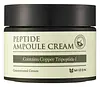
This anti-aging ampoule is formulated around Copper Tripeptide-1 and Adenosine to soften the look of wrinkles and strengthen the skin barrier.
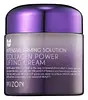
This anti-aging moisturizer is formulated around Houttuynia Cordata Extract and Copper Tripeptide-1 to soften the look of wrinkles.

What's inside
What's inside
 Key Ingredients
Benefits
Concerns
Ingredients Side-by-side
Water
Skin ConditioningStearic Acid
Cleansing



Neopentyl Glycol Diheptanoate
EmollientCetearyl Olivate
Sorbitan Olivate
Emulsifying
Hydrogenated Poly(C6-14 Olefin)
EmollientGlycerin
Humectant

Cyclomethicone
Emollient
Butylene Glycol
Humectant
Copper Tripeptide-1
Skin Conditioning

Glyceryl Stearate
Emollient
PEG-100 Stearate
Surfactant
Polyacrylate-13
Polyisobutene
Polysorbate 20
Emulsifying
Cetearyl Alcohol
Emollient



Cetearyl Glucoside
Emulsifying
Dimethicone
Emollient
Trehalose
Humectant
Theobroma Cacao Extract
Skin ConditioningCaprylyl Glycol
Emollient
Ethylhexylglycerin
Skin ConditioningTropolone
Skin ConditioningAmmonium Acryloyldimethyltaurate/Vp Copolymer
Triethanolamine
BufferingCoptis Japonica Extract
AntimicrobialAdenosine
Skin Conditioning
Propylene Glycol
Humectant
Hydrolyzed Extensin
Skin ConditioningRubus Idaeus Fruit Extract
AstringentBeta-Glucan
Skin Conditioning
Biosaccharide Gum-1
Humectant
Iris Florentina Root Extract
MaskingHydrolyzed Wheat Protein
Skin ConditioningPrunus Amygdalus Dulcis Seed Extract
Skin ConditioningLavandula Angustifolia Oil
Masking




Disodium EDTA
Water, Stearic Acid, Neopentyl Glycol Diheptanoate, Cetearyl Olivate, Sorbitan Olivate, Hydrogenated Poly(C6-14 Olefin), Glycerin, Cyclomethicone, Butylene Glycol, Copper Tripeptide-1, Glyceryl Stearate, PEG-100 Stearate, Polyacrylate-13, Polyisobutene, Polysorbate 20, Cetearyl Alcohol, Cetearyl Glucoside, Dimethicone, Trehalose, Theobroma Cacao Extract, Caprylyl Glycol, Ethylhexylglycerin, Tropolone, Ammonium Acryloyldimethyltaurate/Vp Copolymer, Triethanolamine, Coptis Japonica Extract, Adenosine, Propylene Glycol, Hydrolyzed Extensin, Rubus Idaeus Fruit Extract, Beta-Glucan, Biosaccharide Gum-1, Iris Florentina Root Extract, Hydrolyzed Wheat Protein, Prunus Amygdalus Dulcis Seed Extract, Lavandula Angustifolia Oil, Disodium EDTA
Water
Skin ConditioningHydrolyzed Collagen
Emollient
Houttuynia Cordata Extract
Skin Conditioning
Trehalose
Humectant
Sorbitan Isostearate
Emulsifying
Royal Jelly
Dextrin
AbsorbentCopper Tripeptide-1
Skin Conditioning
Polyisobutene
Theobroma Cacao Extract
Skin ConditioningBHT
Antioxidant
Glycerin
Humectant
Beta-Glucan
Skin Conditioning
Polyacrylate-13
Polysorbate 20
Emulsifying
Phenoxyethanol
Preservative
Cetearyl Dimethicone Crosspolymer
Cyclopentasiloxane
Emollient
Propanediol
Solvent
Iris Florentina Root Extract
MaskingDimethicone
Emollient
Adenosine
Skin Conditioning
Coptis Chinensis Root Extract
Antioxidant
Salvia Hispanica Seed Extract
Emollient
Ethylhexylglycerin
Skin ConditioningXanthan Gum
EmulsifyingBis-PEG-18 Methyl Ether Dimethyl Silane
EmollientCentella Asiatica Extract
Cleansing
Prunus Amygdalus Dulcis Seed Extract
Skin ConditioningPropolis Extract
Skin Conditioning

Carbomer
Emulsion StabilisingButylene Glycol
Humectant
Hydrolyzed Royal Jelly Protein
Skin Conditioning1,2-Hexanediol
Skin Conditioning
Cyclohexasiloxane
Emollient
Disodium EDTA
Sodium Hyaluronate
Humectant
Tromethamine
BufferingWater, Hydrolyzed Collagen, Houttuynia Cordata Extract, Trehalose, Sorbitan Isostearate, Royal Jelly, Dextrin, Copper Tripeptide-1, Polyisobutene, Theobroma Cacao Extract, BHT, Glycerin, Beta-Glucan, Polyacrylate-13, Polysorbate 20, Phenoxyethanol, Cetearyl Dimethicone Crosspolymer, Cyclopentasiloxane, Propanediol, Iris Florentina Root Extract, Dimethicone, Adenosine, Coptis Chinensis Root Extract, Salvia Hispanica Seed Extract, Ethylhexylglycerin, Xanthan Gum, Bis-PEG-18 Methyl Ether Dimethyl Silane, Centella Asiatica Extract, Prunus Amygdalus Dulcis Seed Extract, Propolis Extract, Carbomer, Butylene Glycol, Hydrolyzed Royal Jelly Protein, 1,2-Hexanediol, Cyclohexasiloxane, Disodium EDTA, Sodium Hyaluronate, Tromethamine
Ingredients Explained
These ingredients are found in both products.
Ingredients higher up in an ingredient list are typically present in a larger amount.
Adenosine is a purine nucleoside that your body already makes in every cell. In skincare, it acts mainly as a skin conditioning and anti-aging agent.
The way it works is fairly well mapped out:
Your skin has cells called fibroblasts that build collagen (the stuff that keeps skin firm and smooth). Adenosine basically flips a switch on these cells that tells them to get to work making more collagen and other proteins. These cells slow down on their own as skin ages, so Adenosine helps give them a little nudge to keep going.
The clinical backing is pretty solid too.
A blind, randomized, placebo-controlled trial of 126 women aged 45-65 tested a 0.1% cream twice daily and found real improvements in crow's feet and frown lines using a precise 3D skin-mapping technique; these changes showed up by week 3 and held at 2 months.
A later study using Adenosine-loaded dissolving microneedle patches reported gains in wrinkle depth, dermal density, elasticity, and hydration.
On concentrations, South Korea's Ministry of Food and Drug Safety has set 0.04% as the approved functional anti-wrinkle level. You'll typically see this ingredient used somewhere in the 0.04-0.1% range since it works at low doses.
This ingredient has been found safe for cosmetics with the data showing no irritation or sensitization.
Overall, this is a great ingredient for any anti-aging routine and has no photosensitizing effect, so it suits both AM and PM use.
Learn more about AdenosineBeta-Glucan is a soluble polysaccharide (a chain of glucose sugars) sourced from the cells walls of oats, baker's yeast, mushrooms, and seaweed.
It's a rare ingredient that pulls double-duty as a heavy-duty hydrator and skin-soothing repair agent.
On the surface, it acts as a humectant that holds water in place and reduces moisture loss for a plumper, smoother feel, while its anti-inflammatory and antioxidant properties make it a great pick for calming redness or sensitive skin
The more interesting story is underneath:
Despite its large molecular size, oat beta-glucan has been shown to penetrate the epidermis and reach the dermis by slipping between skin cells. Here, it interacts with fibroblasts and macrophages to nudge collagen synthesis and support wound repair.
A small 2005 split-face clinical study of 27 subjects found topical beta-glucan produced measurable reductions in wrinkle depth, height, and roughness after 8 weeks of use.
It is worth noting the trial was small and the penetration testing used frozen, irradiated skin so the anti-aging data is encouraging rather than definitive.
This ingredient gets along with pretty much everything and is typically used around 0.1-1%.
Fungal acne: This ingredient is not a food source for the Malassezia yeast because it is a glucose polysaccharide with no fatty acid or ester component.
Learn more about Beta-GlucanButylene Glycol (or BG) is used within cosmetic products for a few different reasons:
Overall, Butylene Glycol is a safe and well-rounded ingredient that works well with other ingredients.
Though this ingredient works well with most skin types, some people with sensitive skin may experience a reaction such as allergic rashes, closed comedones, or itchiness.
Learn more about Butylene GlycolCopper Tripeptide-1 (GHK-Cu) is a skin repairing ingredient known for its ability to boost collagen, improve firmness, and support skin regeneration.
It is a complex made up of a naturally occurring peptide (glycine-histidine-lysine) and copper, an essential trace element.
While studying wound healing, researchers noticed GHK-Cu stimulated hair follicle enlargement and growth by keeping hair in its active growth phase longer. This has made it a promising ingredient for hair regrowth treatments.
Some people have reported increased facial hair. While GHK-Cu can make your hair follicles bigger, it usually doesn’t turn soft, barely-visible facial hairs into thick, dark ones.
Anecdotal reports suggest that overusing copper peptides might lead to premature aging due to excess free copper or enzyme imbalances. This claim isn’t backed by large-scale studies.
Unfortunately, there are limited human studies for this ingredient. While early results are promising, many studies are either small, in-vitro, or not rigorously controlled.
For example, there is a 1998 study that explored the effects of copper tripeptide, vitamin C, tretinoin, and melatonin on skin repair and collagen synthesis.
After one month, increased procollagen production was seen in 7 out of 10 participants using copper tripeptide (more than those using vitamin C, melatonin, or tretinoin.
While the study was exploratory, it offers early evidence that copper tripeptide may support collagen production. Larger, well-designed trials are still needed to confirm its potential and understand individual responses.
Read more about other common types of peptides here:
Learn more about Copper Tripeptide-1Dimethicone is a type of synthetic silicone created from natural materials such as quartz. It is also known as polydimethylsiloxane.
What it does:
Dimethicone comes in different viscosities:
Depending on the viscosity, dimethicone has different properties.
Ingredients lists don't always show which type is used, so we recommend reaching out to the brand if you have questions about the viscosity.
This ingredient is unlikely to cause irritation because it does not get absorbed into skin. However, people with silicone allergies should be careful about using this ingredient.
Note: Dimethicone may contribute to pilling. This is because it is not oil or water soluble, so pilling may occur when layered with products. When mixed with heavy oils in a formula, the outcome is also quite greasy.
Learn more about DimethiconeDisodium EDTA is a chelating agent. It grabs onto and deactivates metal ions that sneak into your products from water, packaging, or air.
This ingredient mainly works behind the scenes and helps with:
On top of that, this ingredient can counteract the effects of hard water by binding to the minerals in it.
One thing worth knowing is that Disodium EDTA has been shown to be a mild penetration enhancer. It can help other ingredients absorb into skin more effectively which can be a double-edged sword (great for actives, but can also make the active too strong if you have sensitive skin).
Clinical patch testing showed no significant skin irritation at typical use concentrations and minimal dermal absorption.
You'll most likely see this ingredient near the end of an ingredient list. It's typically found in concentrations less than 1%.
Learn more about Disodium EDTAEthylhexylglycerin is created from glycerin. It is a multitasker ingredient that:
The CIR Expert Panel found minimal skin absorption or sensitization of any kind in a safety assessment. Though this ingredient is considered well-tolerated, a small number of cases of allergic dermatitis have been published since 2002. Just be sure to patch test if you are unsure.
Industry-reported use ranges from 8% in rinse-off products and 2% in leave-on formulations.
Learn more about EthylhexylglycerinGlycerin (or glycerol) is a compound naturally found in your skin. It's a powerhouse humectant that pulls water into the stratum corneum.
Topically, glycerin does several things at once:
Your skin makes glycerin on its own (mostly from sebaceous oil breakdown) and shuttles it to your outermost layer of skin, or your epidermis, via aquaporin-3.
Aquaporin-3 is a transporter that is essential for normal skin hydration, elasticity, and repair. Interestingly, mice lacking in AQP3 have dry and less elastic skin that can be fully corrected with glycerin.
This ingredient is non-irritating, plays well with almost every ingredient, and works across all skin types. Typical use is anywhere between 3-10% but can go up to 79% in some leave-on products.
Just know very high concentrations (>40%) can feel tacky in low humidity.
Glycerin is the name for this ingredient in American English. British English uses Glycerol/Glycerine.
Learn more about GlycerinWe don't have a description for Iris Florentina Root Extract yet.
Polyacrylate-13 is a type of acrylate polymer. Acrylate polymers are commonly used as adhesives in cosmetics.
Polyacrylate-13 creates a film to protect the skin. It is also used to thicken and stabilize a product. It works by making water a gel-like consistency. This gel consistency helps suspend particles.
Polyacrylate-13 is a copolymer of acrylic acid, acrylamide, sodium acrylate, sodium acryloyldimethyltaurate monomers
Learn more about Polyacrylate-13Polyisobutene is a synthetic polymer made from isobutene.
It is a film-forming agent and helps bind ingredients together.
Polyisobutene is not absorbed by the skin.
Learn more about PolyisobutenePolysorbate 20 is a gentle, water-soluble emulsifier and mild surfactant. It stops oil and water from separating to keep your formulas blended and stable.
It also acts as a mild penetration enhancer by helping active ingredients absorb slightly better.
The common safety discussion around this ingredient involves a manufacturing byproduct called 1,4-dioxane.
Trace amounts can form during production but the EU's Scientific Committee on Consumer Safety has concluded that levels at/below 10 ppm in finished products are safe (commercial products consistently fall within acceptable margins).
True allergic reactions are uncommon and the CIR Expert Panel has confirmed this ingredient to be safe as used in cosmetics.
Because it is derived from lauric acid, it may not be fungal acne safe.
Learn more about Polysorbate 20Prunus Amygdalus Dulcis Seed Extract is the extract from dried sweet almond seeds.
Almonds contain healthy fats, vitamins, and minerals. It is a rich source of Vitamin E, a great antioxidant and skin conditioning ingredient. Sweet almond oil contains fatty acids such as linolenic acid and triglycerides.
Prunus amygdalus dulcis is native to Iran.
Learn more about Prunus Amygdalus Dulcis Seed ExtractThis ingredient is extracted from the seeds of the cocoa tree.
Cacao seeds contain antioxidants known as polyphenols. These include flavonoids, procyanidins, and epicatechins.
Studies show these polyphenols help improve skin health.
The more famous ingredient from cocoa tree is cocoa butter.
Learn more about Theobroma Cacao ExtractTrehalose is a disaccharide made of two glucose molecules (glucose is sugar!). Trehalose is used to help moisturize skin. It also has antioxidant properties.
As a humectant, trehalose helps draw moisture from the air to your skin. This helps keep your skin hydrated.
Due to its antioxidant properties, trehalose may help with signs of aging. Antioxidants help fight free-radical molecules, unstable molecules that may damage your skin.
In medicine, trehalose and hyaluronic acid are used to help treat dry eyes.
Some animals, plants, and bacteria create trehalose as a source of energy to survive freeze or lack of water.
Learn more about TrehaloseWater. It's the most common cosmetic ingredient of all. You'll usually see it at the top of ingredient lists, meaning that it makes up the largest part of the product.
So why is it so popular? Water most often acts as a solvent - this means that it helps dissolve other ingredients into the formulation.
You'll also recognize water as that liquid we all need to stay alive. If you see this, drink a glass of water. Remember to stay hydrated!
Learn more about Water


