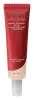
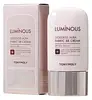
Missha M Perfect Cover BB Cream SPF42 PA+++ Versus TONYMOLY Luminous Goddess Aura Fabric BB Cream SPF50+ PA+++
This chemical sunscreen covers burning UVB but little of the UVA that drives aging.

What's inside
What's inside
 Key Ingredients
Benefits
Concerns
Ingredients Side-by-side
Water
Skin ConditioningCyclomethicone
Emollient
Ethylhexyl Methoxycinnamate
UV Absorber


Zinc Oxide
Cosmetic Colorant
Propylene Glycol
Humectant


Titanium Dioxide
Cosmetic Colorant
Caprylic/Capric Triglyceride
Masking

PEG-10 Dimethicone
Skin Conditioning
Cetyl PEG/PPG-10/1 Dimethicone
Emulsifying
Arbutin
Antioxidant




Paraffinum Liquidum
Emollient

Glycerin
Humectant
CI 77492
Cosmetic ColorantPolyethylene
Abrasive
Talc
Abrasive
Phenyl Trimethicone
Skin Conditioning
Beeswax
Emulsion Stabilising

Sodium Chloride
MaskingCI 77491
Cosmetic ColorantCI 77499
Cosmetic ColorantMethylparaben
Preservative

Dimethicone
Emollient
Propylparaben
Preservative
Rosa Canina Fruit Oil
Emollient
Simmondsia Chinensis Seed Oil
Emollient
Squalane
Emollient
Hydrolyzed Collagen
Emollient
Macadamia Ternifolia Seed Oil
Emollient
Disodium EDTA
ChelatingAdenosine
Skin Conditioning
Algae Extract
Emollient
Rosmarinus Officinalis Leaf Extract
AntimicrobialChamomilla Recutita Flower Extract
Masking
Sodium Hyaluronate
Humectant
Fagus Sylvatica Bud Extract
TonicCeramide NP
Skin Conditioning
Parfum
Masking

Hydroxyisohexyl 3-Cyclohexene Carboxaldehyde
Masking
Butylphenyl Methylpropional
Perfuming
Benzyl Salicylate
Perfuming
Hydroxycitronellal
Perfuming
Alpha-Isomethyl Ionone
Perfuming
Hexyl Cinnamal
Perfuming
Linalool
Perfuming
Citronellol
Perfuming
Water, Cyclomethicone, Ethylhexyl Methoxycinnamate, Zinc Oxide, Propylene Glycol, Titanium Dioxide, Caprylic/Capric Triglyceride, PEG-10 Dimethicone, Cetyl PEG/PPG-10/1 Dimethicone, Arbutin, Paraffinum Liquidum, Glycerin, CI 77492, Polyethylene, Talc, Phenyl Trimethicone, Beeswax, Sodium Chloride, CI 77491, CI 77499, Methylparaben, Dimethicone, Propylparaben, Rosa Canina Fruit Oil, Simmondsia Chinensis Seed Oil, Squalane, Hydrolyzed Collagen, Macadamia Ternifolia Seed Oil, Disodium EDTA, Adenosine, Algae Extract, Rosmarinus Officinalis Leaf Extract, Chamomilla Recutita Flower Extract, Sodium Hyaluronate, Fagus Sylvatica Bud Extract, Ceramide NP, Parfum, Hydroxyisohexyl 3-Cyclohexene Carboxaldehyde, Butylphenyl Methylpropional, Benzyl Salicylate, Hydroxycitronellal, Alpha-Isomethyl Ionone, Hexyl Cinnamal, Linalool, Citronellol
Water
Skin ConditioningCyclopentasiloxane
Emollient
CI 77891
Cosmetic ColorantEthylhexyl Methoxycinnamate
UV Absorber
Diphenyl Dimethicone/Vinyl Diphenyl Dimethicone/Silsesquioxane Crosspolymer
Diphenylsiloxy Phenyl Trimethicone
Skin Conditioning
Phenyl Trimethicone
Skin Conditioning
Methyl Trimethicone
Skin Conditioning
Isotridecyl Isononanoate
EmollientLauryl PEG-10 Tris(Trimethylsiloxy)Silylethyl Dimethicone
Emulsifying
Niacinamide
Smoothing



Vinyl Dimethicone/Methicone Silsesquioxane Crosspolymer
Glycerin
Humectant
Polymethylsilsesquioxane
Leontopodium Alpinum Flower/Leaf Extract
Skin ConditioningZea Mays Starch
Absorbent
Nelumbo Nucifera Flower Water
TonicGossypium Herbaceum Extract
Skin ConditioningButylene Glycol
Humectant
Tourmaline
Pearl Powder
Amethyst Powder
Abrasive
Nephrite Powder
Abrasive
Sapphire Powder
Ruby Powder
Skin ConditioningDiamond Powder
Abrasive
Rosa Damascena Flower Water
Masking
Lilium Tigrinum Extract
Skin ConditioningLilium Tigrinum Flower/Leaf/Stem Extract
Skin ConditioningScutellaria Baicalensis Root Extract
Astringent
Propolis Extract
Skin Conditioning
Silk Amino Acids
HumectantRoyal Jelly Extract
Skin Conditioning
Camellia Japonica Flower Extract
EmollientLonicera Japonica Flower Extract
Skin ConditioningAluminum Hydroxide
EmollientCetyl PEG/PPG-10/1 Dimethicone
Emulsifying
Dimethicone/Vinyl Dimethicone Crosspolymer
Skin Conditioning
Disodium Stearoyl Glutamate
CleansingVp/Hexadecene Copolymer
Disteardimonium Hectorite
StabilisingTriethoxycaprylylsilane
Dimethicone
Emollient
Adenosine
Skin Conditioning
Sodium Chloride
Masking1,2-Hexanediol
Skin Conditioning
Caprylyl Glycol
Emollient
Ethyl Hexanediol
SolventEthylhexylglycerin
Skin ConditioningParfum
Masking
Mica
Cosmetic ColorantCI 77492
Cosmetic ColorantCI 77491
Cosmetic ColorantCI 77499
Cosmetic ColorantWater, Cyclopentasiloxane, CI 77891, Ethylhexyl Methoxycinnamate, Diphenyl Dimethicone/Vinyl Diphenyl Dimethicone/Silsesquioxane Crosspolymer, Diphenylsiloxy Phenyl Trimethicone, Phenyl Trimethicone, Methyl Trimethicone, Isotridecyl Isononanoate, Lauryl PEG-10 Tris(Trimethylsiloxy)Silylethyl Dimethicone, Niacinamide, Vinyl Dimethicone/Methicone Silsesquioxane Crosspolymer, Glycerin, Polymethylsilsesquioxane, Leontopodium Alpinum Flower/Leaf Extract, Zea Mays Starch, Nelumbo Nucifera Flower Water, Gossypium Herbaceum Extract, Butylene Glycol, Tourmaline, Pearl Powder, Amethyst Powder, Nephrite Powder, Sapphire Powder, Ruby Powder, Diamond Powder, Rosa Damascena Flower Water, Lilium Tigrinum Extract, Lilium Tigrinum Flower/Leaf/Stem Extract, Scutellaria Baicalensis Root Extract, Propolis Extract, Silk Amino Acids, Royal Jelly Extract, Camellia Japonica Flower Extract, Lonicera Japonica Flower Extract, Aluminum Hydroxide, Cetyl PEG/PPG-10/1 Dimethicone, Dimethicone/Vinyl Dimethicone Crosspolymer, Disodium Stearoyl Glutamate, Vp/Hexadecene Copolymer, Disteardimonium Hectorite, Triethoxycaprylylsilane, Dimethicone, Adenosine, Sodium Chloride, 1,2-Hexanediol, Caprylyl Glycol, Ethyl Hexanediol, Ethylhexylglycerin, Parfum, Mica, CI 77492, CI 77491, CI 77499
Reviews
Ingredients Explained
These ingredients are found in both products.
Ingredients higher up in an ingredient list are typically present in a larger amount.
Adenosine is a purine nucleoside that your body already makes in every cell. In skincare, it acts mainly as a skin conditioning and anti-aging agent.
The way it works is fairly well mapped out:
Your skin has cells called fibroblasts that build collagen (the stuff that keeps skin firm and smooth). Adenosine basically flips a switch on these cells that tells them to get to work making more collagen and other proteins. These cells slow down on their own as skin ages, so Adenosine helps give them a little nudge to keep going.
The clinical backing is pretty solid too.
A blind, randomized, placebo-controlled trial of 126 women aged 45-65 tested a 0.1% cream twice daily and found real improvements in crow's feet and frown lines using a precise 3D skin-mapping technique; these changes showed up by week 3 and held at 2 months.
A later study using Adenosine-loaded dissolving microneedle patches reported gains in wrinkle depth, dermal density, elasticity, and hydration.
On concentrations, South Korea's Ministry of Food and Drug Safety has set 0.04% as the approved functional anti-wrinkle level. You'll typically see this ingredient used somewhere in the 0.04-0.1% range since it works at low doses.
This ingredient has been found safe for cosmetics with the data showing no irritation or sensitization.
Overall, this is a great ingredient for any anti-aging routine and has no photosensitizing effect, so it suits both AM and PM use.
Learn more about AdenosineThis ingredient is a silicone-based emulsifer that helps the water and oil phases play nicely together.
It's pretty effective because one end of the molecule loves oil and the other one loves water.
Besides holding formulas together, it also leaves a silky and lightweight feel on skin without the greasiness. A manufacturer also claims it can help with the controlled release of active ingredients.
The CIR Expert Panel found this ingredient to not be sensitizing in concentrations up to 15% in human maximazation testing and dimethicone-based compounds were not comedogenic.
It has a high molecular weight well above 1,000 g/mol which means it limits meaningful skin penetration.
A 2019 study specifically tested this ingredient and found no observable Malassezia growth in its presence.
Learn more about Cetyl PEG/PPG-10/1 DimethiconeCi 77491 is also hydrated iron III oxide. It's sole purpose is to give a red/pink hue to products.
Iron III oxides are classified as inorganic chemicals for coloring.
Synthetically created Ci 77491 is considered safer than those naturally found. This is because the synthetically created version may contain less impurities. Iron oxides are generally non-toxic and non-allergenic.
Learn more about CI 77491CI 77492 is also hydrated iron III oxide. It's sole purpose is to give a yellow hue to products.
Iron III oxides are classified as inorganic chemicals for coloring.
Synthetically created CI 77492 is considered safer than those naturally found. This is because the synthetically created version may contain less impurities. Iron oxides are generally non-toxic and non-allergenic.
Learn more about CI 77492Ci 77499 is also hydrated iron III oxide. It is created from mixing red and black iron oxides. This helps give shades of darkness to a product.
Iron III oxides are classified as inorganic chemicals for coloring.
Dimethicone is a type of synthetic silicone created from natural materials such as quartz. It is also known as polydimethylsiloxane.
What it does:
Dimethicone comes in different viscosities:
Depending on the viscosity, dimethicone has different properties.
Ingredients lists don't always show which type is used, so we recommend reaching out to the brand if you have questions about the viscosity.
This ingredient is unlikely to cause irritation because it does not get absorbed into skin. However, people with silicone allergies should be careful about using this ingredient.
Note: Dimethicone may contribute to pilling. This is because it is not oil or water soluble, so pilling may occur when layered with products. When mixed with heavy oils in a formula, the outcome is also quite greasy.
Learn more about DimethiconeThis ingredient is also known as Octinoxate and is one of the oldest and most widely used chemical UV filters in skincare.
It has a simple job: soap up UVB radiation (290-320 nm), the wavelengths responsible for sunburn and a big chunk of long-term sun damage.
In formulas, it's always paired with a separate UVA filter because octinoxate solely protects skin from UVB.
Because it's an oil-soluble liquid, it's easy to blend into the oil phase of lotions/creams and gives a cosmetically elegant feel.
The one quirk about formulating this ingredient is photostability; the molecule slowly changes shape into a less effective version when sunlight hits it. So the longer you're in the sun, the weaker its protection gets. The drop can be more than 30% in some formulas.
It also doesn't play nice with Avobenzone (the common UVA filter) since avobenzone destabilizes octinoxate and the two degrade each other. But don't worry: brands have solved this issue by adding photostabilizers like Tinosorb S to prevent degradation and keep SPF stable under heavy UV exposure.
The maximum allowed level is 10% in the EU and Australia, 7.5% in the US and Canada, and 20% in Japan.
The Cosmetic Ingredient Review Panel has concluded this ingredient to be safe in cosmetics up to 10%.
One last thing worth knowing for context:
Octinoxate has been the subject of ongoing review in Europe where the Scientific Committee on Consumer Safety's (SCCS) 2025 final opinion is that this ingredient is an endocrine-active substance.
Lab and animal studies suggest it can act a bit like a hormone in the body (mildly mimicking estrogen and slightly blocking male hormones). It's important to know this hasn't really been shown to happen in everyday human use.
This ingredient is also banned in Hawaii over coral reef concerns.
Learn more about Ethylhexyl MethoxycinnamateGlycerin (or glycerol) is a compound naturally found in your skin. It's a powerhouse humectant that pulls water into the stratum corneum.
Topically, glycerin does several things at once:
Your skin makes glycerin on its own (mostly from sebaceous oil breakdown) and shuttles it to your outermost layer of skin, or your epidermis, via aquaporin-3.
Aquaporin-3 is a transporter that is essential for normal skin hydration, elasticity, and repair. Interestingly, mice lacking in AQP3 have dry and less elastic skin that can be fully corrected with glycerin.
This ingredient is non-irritating, plays well with almost every ingredient, and works across all skin types. Typical use is anywhere between 3-10% but can go up to 79% in some leave-on products.
Just know very high concentrations (>40%) can feel tacky in low humidity.
Glycerin is the name for this ingredient in American English. British English uses Glycerol/Glycerine.
Learn more about GlycerinParfum is a catch-all term for an ingredient or more that is used to give a scent to products.
Also called "fragrance", this ingredient can be a blend of hundreds of chemicals or plant oils. This means every product with "fragrance" or "parfum" in the ingredients list is a different mixture.
For instance, Habanolide is a proprietary trade name for a specific aroma chemical. When used as a fragrance ingredient in cosmetics, most aroma chemicals fall under the broad labeling category of “FRAGRANCE” or “PARFUM” according to EU and US regulations.
The term 'parfum' or 'fragrance' is not regulated in many countries. In many cases, it is up to the brand to define this term.
For instance, many brands choose to label themselves as "fragrance-free" because they are not using synthetic fragrances. However, their products may still contain ingredients such as essential oils that are considered a fragrance by INCI standards.
One example is Calendula flower extract. Calendula is an essential oil that still imparts a scent or 'fragrance'.
Depending on the blend, the ingredients in the mixture can cause allergies and sensitivities on the skin. Some ingredients that are known EU allergens include linalool and citronellol.
Parfum can also be used to mask or cover an unpleasant scent.
The bottom line is: not all fragrances/parfum/ingredients are created equally. If you are worried about fragrances, we recommend taking a closer look at an ingredient. And of course, we always recommend speaking with a professional.
Learn more about ParfumPhenyl Trimethicone is a silicon-based polymer. It is derived from silica.
Phenyl Trimethicone is used as an emollient and prevents products from foaming.
As an emollient, it helps trap moisture in the skin. It is considered an occlusive.
Learn more about Phenyl TrimethiconeChances are, you eat sodium chloride every day. Sodium Chloride is also known as table salt. This ingredient has many purposes in skincare: thickener, emulsifier, and exfoliator.
You'll most likely find this ingredient in cleansers where it is used to create a gel-like texture. As an emulsifier, it also prevents ingredients from separating.
You might see people debate whether Sodium Chloride is comedogenic, but there actually haven't been any comedogenic tests done on it. Either way, the overall formulation of a product matters a lot more than any single ingredient.
You might see this ingredient used in scrubs as a primary exfoliating ingredient.
Learn more about Sodium ChlorideWater. It's the most common cosmetic ingredient of all. You'll usually see it at the top of ingredient lists, meaning that it makes up the largest part of the product.
So why is it so popular? Water most often acts as a solvent - this means that it helps dissolve other ingredients into the formulation.
You'll also recognize water as that liquid we all need to stay alive. If you see this, drink a glass of water. Remember to stay hydrated!
Learn more about Water

