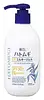
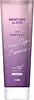
KUMANO COSME Hatomugi UV Care & Moisturizing The UV Milky Gel SPF 50+ PA++++ Versus OMI Menturm Sun UV Protect Tone Up Essence SPF 50+ PA++++
This chemical sunscreen covers most of the UV range, lighter on the deep UVA that drives aging.
This hybrid sunscreen covers the full UV range and blocks ~98% of UVB at SPF 50.

What's inside
What's inside
 Key Ingredients
Benefits
Concerns
Ingredients Side-by-side
Water
Skin ConditioningEthylhexyl Methoxycinnamate 9.5%
UV Absorber


Alcohol
Antimicrobial



Butyl Methoxydibenzoylmethane 1%
UV Absorber
Octocrylene 1%
UV Absorber
Steareth-6
EmulsifyingDimethicone
Emollient

Butylene Glycol
Humectant

Carbomer
Emulsion StabilisingCoix Lacryma-Jobi Ma-Yuen Seed Extract
Skin ConditioningRosmarinus Officinalis Leaf Extract
AntimicrobialPrunus Persica Leaf Extract
Emollient
Aloe Barbadensis Leaf Extract
Emollient

Citrus Junos Peel Oil
Astringent
Cocos Nucifera Oil
Masking




Sodium Hyaluronate
Humectant

Ceramide Ng
Skin Conditioning
Xanthan Gum
EmulsifyingTetrasodium EDTA
ChelatingSodium Hydroxide 0.1%
BufferingBHT
Antioxidant
Methylparaben 0.2%
Preservative

Ethylparaben 0.01%
Preservative
Phenoxyethanol 0.9%
Preservative
Water, Ethylhexyl Methoxycinnamate 9.5%, Alcohol, Butyl Methoxydibenzoylmethane 1%, Octocrylene 1%, Steareth-6, Dimethicone, Butylene Glycol, Carbomer, Coix Lacryma-Jobi Ma-Yuen Seed Extract, Rosmarinus Officinalis Leaf Extract, Prunus Persica Leaf Extract, Aloe Barbadensis Leaf Extract, Citrus Junos Peel Oil, Cocos Nucifera Oil, Sodium Hyaluronate, Ceramide Ng, Xanthan Gum, Tetrasodium EDTA, Sodium Hydroxide 0.1%, BHT, Methylparaben 0.2%, Ethylparaben 0.01%, Phenoxyethanol 0.9%
Water
Skin ConditioningAlcohol Denat.
Antimicrobial
Ethylhexyl Methoxycinnamate
UV Absorber
Isopropyl Myristate
Emollient
Dipropylene Glycol
HumectantCucumis Sativus Fruit Water
Skin ConditioningAloe Barbadensis Leaf Juice
Skin Conditioning
Chamomilla Recutita Flower Extract
Masking
Triethanolamine
BufferingOctadecene
SolventCarbomer
Emulsion StabilisingTocopheryl Acetate
Antioxidant

Butylene Glycol
Humectant
Propylene Glycol
Humectant
Disodium EDTA
ChelatingEthoxydiglycol
HumectantGlucose
Humectant
Lactic Acid
Buffering




Tocopherol
Antioxidant
Caramel
Cosmetic ColorantPhosphoric Acid
BufferingBisabolol
Antioxidant
CI 17200
Cosmetic ColorantCI 42090
Cosmetic ColorantParfum
Masking
Tin Oxide
Abrasive
BHT
Antioxidant
Methylparaben
Preservative
Propylparaben
Preservative
Rosa Centifolia Flower Extract
Astringent
Prunus Persica Leaf Extract
Emollient
Stearyl Dimethicone
Emollient
Polyglyceryl-3 Methylglucose Distearate
Emulsifying
Sodium Benzoate
Masking
Luffa Cylindrica Fruit/Leaf/Stem Extract
Skin ConditioningAcrylates/C10-30 Alkyl Acrylate Crosspolymer
Emulsion StabilisingTitanium Dioxide
Cosmetic Colorant
Hydrogenated Polyisobutene
EmollientStearoyl Inulin
EmollientDiethylamino Hydroxybenzoyl Hexyl Benzoate
UV Filter
Ethylhexyl Triazone
UV Absorber
Potassium Sorbate
Preservative
Synthetic Fluorphlogopite
Perilla Ocymoides Leaf Extract
TonicSodium Sulfate
Sodium Sulfite
Preservative
Malus Baccata Fruit/Leaf/Stem Extract
Skin ConditioningWater, Alcohol Denat., Ethylhexyl Methoxycinnamate, Isopropyl Myristate, Dipropylene Glycol, Cucumis Sativus Fruit Water, Aloe Barbadensis Leaf Juice, Chamomilla Recutita Flower Extract, Triethanolamine, Octadecene, Carbomer, Tocopheryl Acetate, Butylene Glycol, Propylene Glycol, Disodium EDTA, Ethoxydiglycol, Glucose, Lactic Acid, Tocopherol, Caramel, Phosphoric Acid, Bisabolol, CI 17200, CI 42090, Parfum, Tin Oxide, BHT, Methylparaben, Propylparaben, Rosa Centifolia Flower Extract, Prunus Persica Leaf Extract, Stearyl Dimethicone, Polyglyceryl-3 Methylglucose Distearate, Sodium Benzoate, Luffa Cylindrica Fruit/Leaf/Stem Extract, Acrylates/C10-30 Alkyl Acrylate Crosspolymer, Titanium Dioxide, Hydrogenated Polyisobutene, Stearoyl Inulin, Diethylamino Hydroxybenzoyl Hexyl Benzoate, Ethylhexyl Triazone, Potassium Sorbate, Synthetic Fluorphlogopite, Perilla Ocymoides Leaf Extract, Sodium Sulfate, Sodium Sulfite, Malus Baccata Fruit/Leaf/Stem Extract
Reviews
Ingredients Explained
These ingredients are found in both products.
Ingredients higher up in an ingredient list are typically present in a larger amount.
BHT is a synthetic antioxidant and preservative.
As an antioxidant, it helps your body fight off free-radicals. Free-radicals are molecules that may damage your skin cells.
As a preservative, it is used to stabilize products and prevent them from degrading. Specifically, BHT prevents degradation from oxidation.
The concerns related to BHT come from oral studies; this ingredient is currently allowed for use by both the FDA and EU.
However, it was recently restricted for use in the UK as of April 2024.
Learn more about BHTButylene Glycol (or BG) is used within cosmetic products for a few different reasons:
Overall, Butylene Glycol is a safe and well-rounded ingredient that works well with other ingredients.
Though this ingredient works well with most skin types, some people with sensitive skin may experience a reaction such as allergic rashes, closed comedones, or itchiness.
Learn more about Butylene GlycolCarbomer is a synthetic thickening and gelling agent. It's basically the ingredient that gives a lot of serums, gels, creams, and sunscreens their smooth, non-sticky texture.
Although legally permitted at very high levels, carbomers are normally used at concentrations below 1%.
It also needs to be neutralized to actually thicken, and because it is a large molecule, it doesn't really penetrate the skin barrier.
Allergy-wise, the risk is very low. Clinical studies show carbomers have low potential for skin irritation/sensitization even at concentrations up to 100%.
A 2024 UK study patch-tested 1,302 patients and found true allergy to the parent group of carbomer to be rare with no confirmed relevant reactions.
Learn more about CarbomerThis ingredient is also known as Octinoxate and is one of the oldest and most widely used chemical UV filters in skincare.
It has a simple job: soap up UVB radiation (290-320 nm), the wavelengths responsible for sunburn and a big chunk of long-term sun damage.
In formulas, it's always paired with a separate UVA filter because octinoxate solely protects skin from UVB.
Because it's an oil-soluble liquid, it's easy to blend into the oil phase of lotions/creams and gives a cosmetically elegant feel.
The one quirk about formulating this ingredient is photostability; the molecule slowly changes shape into a less effective version when sunlight hits it. So the longer you're in the sun, the weaker its protection gets. The drop can be more than 30% in some formulas.
It also doesn't play nice with Avobenzone (the common UVA filter) since avobenzone destabilizes octinoxate and the two degrade each other. But don't worry: brands have solved this issue by adding photostabilizers like Tinosorb S to prevent degradation and keep SPF stable under heavy UV exposure.
The maximum allowed level is 10% in the EU and Australia, 7.5% in the US and Canada, and 20% in Japan.
The Cosmetic Ingredient Review Panel has concluded this ingredient to be safe in cosmetics up to 10%.
One last thing worth knowing for context:
Octinoxate has been the subject of ongoing review in Europe where the Scientific Committee on Consumer Safety's (SCCS) 2025 final opinion is that this ingredient is an endocrine-active substance.
Lab and animal studies suggest it can act a bit like a hormone in the body (mildly mimicking estrogen and slightly blocking male hormones). It's important to know this hasn't really been shown to happen in everyday human use.
This ingredient is also banned in Hawaii over coral reef concerns.
Learn more about Ethylhexyl MethoxycinnamateMethylparaben is a synthetic preservative and one of the most widely used in the world. It has a simple, but important job: prevent your products from going bad by stopping bacteria, yeast, and mold from growing.
Typical use levels are low, often 0.1-0.3%.
This is also one of the most heavily studied preservatives out there and major regulatory bodies have repeatedly given it the green light.
In 2023, the EU's Scientific Committee on Consumer Safety (SCCS) confirmed that this ingredient is safe up to 0.4% on its own, of up to 0.8% when mixed with other paraben esters.
Here's the science behind the noise behind parabens/hormones as well:
Methylparaben shows very weak estrogen-like activity in vitro tests (more than 1,000x weaker than your body's own estradiol). In vivo (live-organism) studies don't support a meaningful endocrine-disrupting effect either.
You get a stronger estrogenic effect from eating tofu, actually.
It's also a low sensitizer and allergic reactions are uncommon; they usually happen on damage or broken skin.
There is a caveat: France has proposed to formally re-examine its endocrine classification in 2025 so the regulatory conversation isn't fully closed as of yet.
But as it stands today, this ingredient is considered safe at permitted levels.
Learn more about MethylparabenPrunus Persica Leaf Extract comes from the leaves of the peach tree.
Peach leaves contain antioxidants such as ferulic acid.
As an emollient, peach leaves help soften and moisturize your skin. Emollients create a barrier on the skin to prevent moisture from escaping. This helps keep your skin hydrated.
Learn more about Prunus Persica Leaf ExtractWater. It's the most common cosmetic ingredient of all. You'll usually see it at the top of ingredient lists, meaning that it makes up the largest part of the product.
So why is it so popular? Water most often acts as a solvent - this means that it helps dissolve other ingredients into the formulation.
You'll also recognize water as that liquid we all need to stay alive. If you see this, drink a glass of water. Remember to stay hydrated!
Learn more about Water

