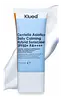
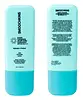
Klued Centella Asiatica Daily Calming Hybrid Sunscreen SPF 50+ PA++++ Versus Smoochkins Ectoin Ceramide Airyfit Daily Sunscreen SPF 50
This hybrid sunscreen covers the full UV range and blocks ~98% of UVB at SPF 50.
This chemical sunscreen covers most of the UV range, lighter on the deep UVA that drives aging.

What's inside
What's inside
 Key Ingredients
Benefits
Concerns
Ingredients Side-by-side
Water
Skin ConditioningIsopropyl Myristate
Emollient





Caprylic/Capric Triglyceride
Masking


Propylene Glycol
Humectant
Glycerin
Humectant
Dimethicone
Emollient
Butyl Methoxydibenzoylmethane
UV Absorber
Ethylhexyl Methoxycinnamate
UV Absorber
Titanium Dioxide
Cosmetic Colorant
Octocrylene
UV Absorber
Talc
Abrasive
Cyclopentasiloxane
Emollient
Centella Asiatica Extract
Cleansing



Camellia Sinensis Leaf Extract
Antimicrobial



Glycyrrhiza Glabra Root Extract
Bleaching
Butylene Glycol
Humectant
Lecithin
Emollient
Phenoxyethanol
Preservative
Acrylates/C10-30 Alkyl Acrylate Crosspolymer
Emulsion StabilisingCarbomer
Emulsion StabilisingXanthan Gum
EmulsifyingTriethanolamine
BufferingTetrasodium EDTA
ChelatingEthylhexylglycerin
Skin ConditioningWater, Isopropyl Myristate, Caprylic/Capric Triglyceride, Propylene Glycol, Glycerin, Dimethicone, Butyl Methoxydibenzoylmethane, Ethylhexyl Methoxycinnamate, Titanium Dioxide, Octocrylene, Talc, Cyclopentasiloxane, Centella Asiatica Extract, Camellia Sinensis Leaf Extract, Glycyrrhiza Glabra Root Extract, Butylene Glycol, Lecithin, Phenoxyethanol, Acrylates/C10-30 Alkyl Acrylate Crosspolymer, Carbomer, Xanthan Gum, Triethanolamine, Tetrasodium EDTA, Ethylhexylglycerin
Water
Skin ConditioningButyl Methoxydibenzoylmethane
UV Absorber
Ethylhexyl Methoxycinnamate
UV Absorber
Silica
Abrasive
Glyceryl Stearate
Emollient
PEG-100 Stearate
Surfactant
Cyclopentasiloxane
Emollient
Caprylic/Capric Triglyceride
Masking
Isopropyl Myristate
Emollient
Propanediol
Solvent
Phenoxyethanol
Preservative
Octocrylene
UV Absorber
Niacinamide
Smoothing

Cetyl Alcohol
Emollient
Trimethylsiloxysilicate
Emollient
Dimethicone Crosspolymer
Emulsion Stabilising
Centella Asiatica Leaf Extract
Skin Conditioning
Aloe Barbadensis Leaf Extract
Emollient
Ectoin
Skin Conditioning
Hydrogenated Phosphatidylcholine
Emulsifying
Glycerin
Humectant
Butyrospermum Parkii Butter
Skin Conditioning
Squalane
Emollient
Ceramide NP
Skin Conditioning
Pentylene Glycol
Skin Conditioning
Butylene Glycol
Humectant
Ethylhexylglycerin
Skin Conditioning1,2-Hexanediol
Skin Conditioning
Lecithin
Emollient
Acrylates/C10-30 Alkyl Acrylate Crosspolymer
Emulsion StabilisingTriethanolamine
BufferingXanthan Gum
EmulsifyingTetrasodium EDTA
ChelatingWater, Butyl Methoxydibenzoylmethane, Ethylhexyl Methoxycinnamate, Silica, Glyceryl Stearate, PEG-100 Stearate, Cyclopentasiloxane, Caprylic/Capric Triglyceride, Isopropyl Myristate, Propanediol, Phenoxyethanol, Octocrylene, Niacinamide, Cetyl Alcohol, Trimethylsiloxysilicate, Dimethicone Crosspolymer, Centella Asiatica Leaf Extract, Aloe Barbadensis Leaf Extract, Ectoin, Hydrogenated Phosphatidylcholine, Glycerin, Butyrospermum Parkii Butter, Squalane, Ceramide NP, Pentylene Glycol, Butylene Glycol, Ethylhexylglycerin, 1,2-Hexanediol, Lecithin, Acrylates/C10-30 Alkyl Acrylate Crosspolymer, Triethanolamine, Xanthan Gum, Tetrasodium EDTA
Reviews
Ingredients Explained
These ingredients are found in both products.
Ingredients higher up in an ingredient list are typically present in a larger amount.
Acrylates/C10-30 Alkyl Acrylate Crosspolymer is a synthetic polymer. It is used to thicken, emulsify, and improve the texture of products.
As an emulsifier, it helps stabilize oil-in-water emulsions to give products an elegant feel when applied.
It can also form a thin protective film on skin. One study found that a formula using this polymer helped slow down how quickly other ingredients (like DEET) were absorbed through skin.
A 2024 study of over 1,300 patients confirmed that sensitization to this ingredient is rare. It is also non-mutagenic and has a clean track record.
Learn more about Acrylates/C10-30 Alkyl Acrylate CrosspolymerAlso known as Avobenzone, this ingredient is an oil-soluble used to absorb the full spectrum of UVA rays (peak 357 nm).
It's one of the most effective UVA filters available but has a major caveat of photostability: avobenzone is susceptible to photodegradation.
This means it can lose efficacy when exposed to sunlight without the help of a stabilizing agent.
Studies show antioxidants (like vitamin E or vitamin C) and some UV filters (like octocrylene and Tinosorb S) can meaningfully improve its stability in a formulation.
The maximum allowable concentration according to regulation is 3% in the US + Canada, and 5% in the EU, Australia, China, Korea, and ASEAN countries.
It has a well-support safety profile: a comprehensive 2025 review found minimal toxicity with no evidence of carcinogenicity.
Overall, avobenzone is a safe and regulated ingredient used in sunscreen for over 40 years.
Learn more about Butyl MethoxydibenzoylmethaneButylene Glycol (or BG) is used within cosmetic products for a few different reasons:
Overall, Butylene Glycol is a safe and well-rounded ingredient that works well with other ingredients.
Though this ingredient works well with most skin types, some people with sensitive skin may experience a reaction such as allergic rashes, closed comedones, or itchiness.
Learn more about Butylene GlycolCaprylic/Capric Triglyceride (aka MCT Oil) is a lightweight emollient, solvent, and texture enhancer. It is considered a skin-softener by helping to prevent moisture loss.
Though it behaves like an oil, it is not technically one due to its chemical composition. One perk of this ingredient is that it is very stable, resistant to oxidation, and unlikely to go rancid.
In practice, that translates to a long shelf life and a consistently elegant skin feel.
While there is an assumption Caprylic Triglyceride can clog pores due to it being derived from coconut oil, there is no research supporting this. Just patch test if you have concerns.
Fractionated coconut oil and MCT Oil are both listed as Caprylic/Capric Triglyceride according to INCI. This is because INCI names are based on the ingredient’s final chemical composition and not its marketing name or source.
This ingredient is treated as the gold standard fungal acne safe oil. Even though it is coconut derived, the problematic lauric acid is stripped out.
This leaves just caprylic (C8) and capric (C10) acid. These chain lengths actually trend antifungal; a 2020 study found caprylic acid was enough to disrupt Malassezia furfur cell membrane, with a caprylic acid derivative damaging membrane structures at concentrations as low as 0.2%.
Learn more about Caprylic/Capric TriglycerideCyclopentasiloxane (D5) is a lightweight silicone that mostly acts as an emollient and solvent in cosmetics. Its the reason your products feel silky, fast-spreading, and non-greasy.
Since D5 is volatile, it does its thing and then evaporates off the skin quickly.
The safety profile of this ingredient is reassuring; the US CIR Expert Panel concluded D5 is safe as used in cosmetics and Health Canada concluded that D5 is not harmful to human health or the environment as currently used in cosmetics
There's a study that people mention about D5 in a rat study showing tumors. This study is related to long-term inhalation of high D5 levels.
Regulatory bodies have judged this study to be not applicable in topical skincare since skin absorption of D5 is very low and we're not really inhaling huge amounts of D5.
The only restriction for this ingredient is environmental. The European Chemicals Agency (ECHA) restricted D5 in wash-off cosmetics at or above 0.1% due to their persistence in water.
Learn more about CyclopentasiloxaneThis ingredient is also known as Octinoxate and is one of the oldest and most widely used chemical UV filters in skincare.
It has a simple job: soap up UVB radiation (290-320 nm), the wavelengths responsible for sunburn and a big chunk of long-term sun damage.
In formulas, it's always paired with a separate UVA filter because octinoxate solely protects skin from UVB.
Because it's an oil-soluble liquid, it's easy to blend into the oil phase of lotions/creams and gives a cosmetically elegant feel.
The one quirk about formulating this ingredient is photostability; the molecule slowly changes shape into a less effective version when sunlight hits it. So the longer you're in the sun, the weaker its protection gets. The drop can be more than 30% in some formulas.
It also doesn't play nice with Avobenzone (the common UVA filter) since avobenzone destabilizes octinoxate and the two degrade each other. But don't worry: brands have solved this issue by adding photostabilizers like Tinosorb S to prevent degradation and keep SPF stable under heavy UV exposure.
The maximum allowed level is 10% in the EU and Australia, 7.5% in the US and Canada, and 20% in Japan.
The Cosmetic Ingredient Review Panel has concluded this ingredient to be safe in cosmetics up to 10%.
One last thing worth knowing for context:
Octinoxate has been the subject of ongoing review in Europe where the Scientific Committee on Consumer Safety's (SCCS) 2025 final opinion is that this ingredient is an endocrine-active substance.
Lab and animal studies suggest it can act a bit like a hormone in the body (mildly mimicking estrogen and slightly blocking male hormones). It's important to know this hasn't really been shown to happen in everyday human use.
This ingredient is also banned in Hawaii over coral reef concerns.
Learn more about Ethylhexyl MethoxycinnamateEthylhexylglycerin is created from glycerin. It is a multitasker ingredient that:
The CIR Expert Panel found minimal skin absorption or sensitization of any kind in a safety assessment. Though this ingredient is considered well-tolerated, a small number of cases of allergic dermatitis have been published since 2002. Just be sure to patch test if you are unsure.
Industry-reported use ranges from 8% in rinse-off products and 2% in leave-on formulations.
Learn more about EthylhexylglycerinGlycerin (or glycerol) is a compound naturally found in your skin. It's a powerhouse humectant that pulls water into the stratum corneum.
Topically, glycerin does several things at once:
Your skin makes glycerin on its own (mostly from sebaceous oil breakdown) and shuttles it to your outermost layer of skin, or your epidermis, via aquaporin-3.
Aquaporin-3 is a transporter that is essential for normal skin hydration, elasticity, and repair. Interestingly, mice lacking in AQP3 have dry and less elastic skin that can be fully corrected with glycerin.
This ingredient is non-irritating, plays well with almost every ingredient, and works across all skin types. Typical use is anywhere between 3-10% but can go up to 79% in some leave-on products.
Just know very high concentrations (>40%) can feel tacky in low humidity.
Glycerin is the name for this ingredient in American English. British English uses Glycerol/Glycerine.
Learn more about GlycerinIsopropyl Myristate is an ester made by combining isopropyl alcohol with myristic acid.
It is primarily an emollient and penetration enhancer that gives products a lightweight, silky feel without the heaviness of oils.
This ingredient is generally considered non-toxic, non-irritating, and has low absorption potential.
This ingredient does have a comedogenic rating of 3-5, but this doesn't mean a formula with this ingredient will clog pores.
Dermatologist Dr. Zoe Draelos has also confirmed in a peer-reviewed paper that products containing comedogenic ingredients are not necessarily comedogenic themselves.
A small subset of people (~2%) may experience contact sensitivity so patch testing is a reasonable idea if you have reactive skin.
Since this ingredient is an ester of myristic acid (a C14 fatty acid), it falls within the carbon chain range that is known to feed Malassezia. This ingredient may not be fungal acne safe.
Learn more about Isopropyl MyristateLecithin is a term for a group of substances found in the cell membranes of plants, animals, and humans. They are made up of phospholipids.
Thanks to its amphiphilic structure (water-loving head and oil-loving tail), it is a true multitasker:
It plays well with most ingredients and is typically used at 0.1-1%. However, concentrations up to 50% have been reported in moisturizers.
Learn more about LecithinOctocrylene is an oil-soluble organic UV filter that mainly absorbs UVB and short wave UVA II light.
Its real superpower is teamwork: octocrylene is remarkably photostable and is most famous for stabilizing avobenzone (the workhorse UVA filter).
This ingredient is commonly used to enhance both UVB and UVA protection due to its unique property in stabilizing avobenzone. It also pulls double duty by boosting water resistance and giving formulas a smooth, spreadable feel.
The EU's Scientific Committee on Consumer Safety (SCCS) has deemed octocrylene to be safe as a UV-filter at concentrations up to 10% (capped at 9% in propellant sprays). The US also permits it up to 10%.
Two things worth knowing:
You'll usually see this ingredient used in concentrations between 2-10% (higher amounts when used as a stabilizer for avobenzone).
Learn more about OctocrylenePhenoxyethanol is one of the most widely used preservatives in skincare (and for good reason!).
It has a large spectrum of antimicrobial activity and especially effective bacteria, yeast, and mold while only having a weak effect on your skin's natural microbiome.
On a cellular level, it disrupts the cell membranes of microbes by poking holes that make the cell leak. This shuts down the chemical reactions the microbe needs to make energy so it can no longer survive.
Another perk of this ingredient is that it stays functional across a wide pH range (3-10).
You'll often see it paired with boosters like Ethylhexylglycerin; one study showed that a 1:9 ratio of Ethylhexylglycerin to Phenoxyethanol damages bacterial membranes as effectively as doubling the Phenoxyethanol concentration on its own.
Typical use concentrations range from 0.3-1% depending on the formula, and this ingredient is capped at 1% int the EU.
Safety-wise, the fear mongering does not hold up to the evidence. The EU's Scientific Committee on Consumer Safety and FDA consider it safe as a preservative at up to 1%, including for children of all ages.
Adverse systemic effects only showed up in animal studies at exposures roughly 200x higher than what people get from cosmetics. And despite its very widespread use, this ingredient is a rare sensitizer and allergic reactions are uncommon.
Learn more about PhenoxyethanolTetrasodium EDTA is the salt formed from neutralizing ethylenediamine tetraacetic acid with sodium hydroxide. It is a chelating agent and used to prevent metal ions from binding to other ingredients. This helps keep the product and ingredients stable.
Tetrasodium EDTA comes as a white solid and is soluble in water.
Triethanolamine (TEA) is an emulsifier and pH adjuster. It is created using ethylene oxide and ammonia. This gives Triethanolamine a nitrogen core and a similar scent to ammonia.
As an emulsifier, it prevents ingredients from separating and enhances texture by adding volume to a product.
PH adjusters are common in cosmetic products. The pH of a product can affect the effectiveness of other ingredients. A product with a high pH may also irritate the skin.
If you are looking for the tea leaf ingredient, click here.
Learn more about TriethanolamineWater. It's the most common cosmetic ingredient of all. You'll usually see it at the top of ingredient lists, meaning that it makes up the largest part of the product.
So why is it so popular? Water most often acts as a solvent - this means that it helps dissolve other ingredients into the formulation.
You'll also recognize water as that liquid we all need to stay alive. If you see this, drink a glass of water. Remember to stay hydrated!
Learn more about WaterXanthan gum is used as a stabilizer and thickener within cosmetic products. It helps give products a sticky, thick feeling - preventing them from being too runny.
On the technical side of things, xanthan gum is a polysaccharide - a combination consisting of multiple sugar molecules bonded together.
Xanthan gum is a pretty common and great ingredient. It is a natural, non-toxic, non-irritating ingredient that is also commonly used in food products.
Learn more about Xanthan Gum

