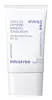
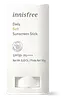
innisfree Daily UV Defense Mineral Sunscreen Broad Spectrum SPF 45 Versus innisfree Daily Soft Sunscreen Stick (SPF50+ PA++++)
This hybrid sunscreen covers the full UV range and blocks ~98% of UVB at SPF 45.
This mineral sunscreen covers the full UV range and blocks ~98% of UVB at SPF 50.

What's inside
What's inside
 Key Ingredients
Benefits
Concerns
Ingredients Side-by-side
Zinc Oxide 17%
Cosmetic Colorant


Water
Skin ConditioningPropylheptyl Caprylate
EmollientButyloctyl Salicylate
Skin Conditioning
Propanediol
Solvent

Caprylyl Methicone
Skin Conditioning
Disiloxane
Skin Conditioning
Polyglyceryl-3 Polydimethylsiloxyethyl Dimethicone
Skin Conditioning
Polymethylsilsesquioxane
Polyglyceryl-2 Dipolyhydroxystearate
Skin Conditioning

Disteardimonium Hectorite
StabilisingMagnesium Sulfate
Triethoxycaprylylsilane
1,2-Hexanediol
Skin Conditioning
Silica
Abrasive

Lauryl Polyglyceryl-3 Polydimethylsiloxyethyl Dimethicone
Skin Conditioning
Synthetic Fluorphlogopite
Dicaprylyl Carbonate
EmollientCaprylyl Glycol
Emollient
Glyceryl Caprylate
EmollientCI 77288
Cosmetic ColorantMica
Cosmetic ColorantEthylhexylglycerin
Skin ConditioningSodium Hyaluronate
Humectant


Tocopherol
Antioxidant



Squalane
Emollient
Ceramide NP
Skin Conditioning

Niacinamide
Smoothing



Hydrolyzed Sodium Hyaluronate
Skin Conditioning
Panthenol
Skin Conditioning
Butylene Glycol
Humectant
Centella Asiatica Extract
Cleansing
Centella Asiatica Leaf Extract
Skin Conditioning
Saccharomyces Ferment
Skin Conditioning
Centella Asiatica Root Extract
Skin Conditioning
Hydroxypropyltrimonium Hyaluronate
Asiaticoside
Antioxidant
Madecassoside
Antioxidant
Hydrolyzed Hyaluronic Acid
Humectant
Sodium Acetylated Hyaluronate
Humectant
Hyaluronic Acid
Humectant
Sodium Hyaluronate Crosspolymer
Humectant
Potassium Hyaluronate
Skin ConditioningAsiatic Acid
Skin Conditioning
Madecassic Acid
Skin Conditioning
Zinc Oxide 17%, Water, Propylheptyl Caprylate, Butyloctyl Salicylate, Propanediol, Caprylyl Methicone, Disiloxane, Polyglyceryl-3 Polydimethylsiloxyethyl Dimethicone, Polymethylsilsesquioxane, Polyglyceryl-2 Dipolyhydroxystearate, Disteardimonium Hectorite, Magnesium Sulfate, Triethoxycaprylylsilane, 1,2-Hexanediol, Silica, Lauryl Polyglyceryl-3 Polydimethylsiloxyethyl Dimethicone, Synthetic Fluorphlogopite, Dicaprylyl Carbonate, Caprylyl Glycol, Glyceryl Caprylate, CI 77288, Mica, Ethylhexylglycerin, Sodium Hyaluronate, Tocopherol, Squalane, Ceramide NP, Niacinamide, Hydrolyzed Sodium Hyaluronate, Panthenol, Butylene Glycol, Centella Asiatica Extract, Centella Asiatica Leaf Extract, Saccharomyces Ferment, Centella Asiatica Root Extract, Hydroxypropyltrimonium Hyaluronate, Asiaticoside, Madecassoside, Hydrolyzed Hyaluronic Acid, Sodium Acetylated Hyaluronate, Hyaluronic Acid, Sodium Hyaluronate Crosspolymer, Potassium Hyaluronate, Asiatic Acid, Madecassic Acid
Isopropyl Palmitate
Emollient


Butylene Glycol Dicaprylate/Dicaprate
EmollientPolyethylene
Abrasive
C12-15 Alkyl Benzoate
AntimicrobialPolymethylsilsesquioxane
Vinyl Dimethicone/Methicone Silsesquioxane Crosspolymer
Titanium Dioxide
Cosmetic Colorant
Hdi/Trimethylol Hexyllactone Crosspolymer
Vinyldimethicone
Ozokerite
Emulsion StabilisingAluminum Stearate
Cosmetic ColorantPolyhydroxystearic Acid
Emulsifying
Caprylic/Capric Triglyceride
Masking
Polyglyceryl-4 Diisostearate/Polyhydroxystearate/Sebacate
Emulsifying
Alumina
Abrasive
Parfum
Masking


Silica
Abrasive
Dehydroacetic Acid
Preservative
Stearic Acid
Cleansing
Water
Skin ConditioningSodium Hyaluronate
Humectant
1,2-Hexanediol
Skin Conditioning
Opuntia Ficus-Indica Stem Extract
Skin Conditioning
Isopropyl Palmitate, Butylene Glycol Dicaprylate/Dicaprate, Polyethylene, C12-15 Alkyl Benzoate, Polymethylsilsesquioxane, Vinyl Dimethicone/Methicone Silsesquioxane Crosspolymer, Titanium Dioxide, Hdi/Trimethylol Hexyllactone Crosspolymer, Vinyldimethicone, Ozokerite, Aluminum Stearate, Polyhydroxystearic Acid, Caprylic/Capric Triglyceride, Polyglyceryl-4 Diisostearate/Polyhydroxystearate/Sebacate, Alumina, Parfum, Silica, Dehydroacetic Acid, Stearic Acid, Water, Sodium Hyaluronate, 1,2-Hexanediol, Opuntia Ficus-Indica Stem Extract
Reviews
Ingredients Explained
These ingredients are found in both products.
Ingredients higher up in an ingredient list are typically present in a larger amount.
1,2-Hexanediol is a synthetic liquid and another multi-functional powerhouse.
It is a:
- Humectant, drawing moisture into the skin
- Emollient, helping to soften skin
- Solvent, dispersing and stabilizing formulas
- Preservative booster, enhancing the antimicrobial activity of other preservatives
Polymethylsilsesquioxane is a silicone used as a film forming agent.
When applied to the skin, this ingredient creates an invisible film on the surface. This film still allows oxygen to pass through, but prevents moisture from escaping. This can help condition and hydrate the skin. It also leaves a silky feel when applied.
Polymethylsilsesquioxane has not been shown to clog pores. It has been deemed safe to use up to 55%, but most cosmetics use much less.
If you have concerns about using this ingredient, we recommend speaking with a professional.
Learn more about PolymethylsilsesquioxaneSilica, also known as silicon dioxide, is a naturally occurring mineral. It is used as a fine, spherical, and porous powder in cosmetics.
Though it has exfoliant properties, the function of silica varies depending on the product.
The unique structure of silica enhances the spreadability and adds smoothness, making it a great texture enhancer.
It is also used as an active carrier, emulsifier, and mattifier due to its ability to absorb excess oil.
In some products, tiny microneedles called spicules are made from silica or hydrolyzed sponge. When you rub them in, they lightly polish away dead skin layers and enhance the penetration of active ingredients.
Learn more about SilicaSodium Hyaluronate is the salt form of hyaluronic acid. It is a long sugar chain that is naturally found in your skin, joints, and connective tissue that maintains hydration and elasticity.
In skincare, it works as a humectant. It pulls water from the environment and deeper layers of skin and binds it to the surface.
Interestingly, the size of the molecule affects its behavior:
Some clinical evidence links low molecular weight versions to improved wrinkle depth, elasticity, anti-inflammatory effects, and barrier repair.
Many serums use a blend of both weights so you can get surface hydration plus longer-lasting and deeper effects.
You'll typically see concentrations between 0.1-2% for this ingredient.
Learn more about Sodium HyaluronateWater. It's the most common cosmetic ingredient of all. You'll usually see it at the top of ingredient lists, meaning that it makes up the largest part of the product.
So why is it so popular? Water most often acts as a solvent - this means that it helps dissolve other ingredients into the formulation.
You'll also recognize water as that liquid we all need to stay alive. If you see this, drink a glass of water. Remember to stay hydrated!
Learn more about Water

