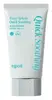
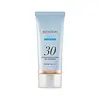
Espoir Water Splash Quick Soothing Sun Cream SPF 50+ Versus Menokin 30 Seconds Glow & Clear Gel Sunscreen SPF 50+
This chemical sunscreen covers the full UV range and blocks ~98% of UVB at SPF 50.
This chemical sunscreen covers the full UV range and blocks ~98% of UVB at SPF 50.

What's inside
What's inside
 Key Ingredients
Benefits
Concerns
Ingredients Side-by-side
Water
Skin ConditioningPropanediol
Solvent

C12-15 Alkyl Benzoate
AntimicrobialIsododecane
EmollientDrometrizole Trisiloxane
UV Absorber

Coco-Caprylate/Caprate
Emollient
Ethylhexyl Triazone
UV Absorber
Niacinamide
Smoothing










Diethylamino Hydroxybenzoyl Hexyl Benzoate
UV Filter
Terephthalylidene Dicamphor Sulfonic Acid
UV Absorber
Tromethamine
Buffering1,2-Hexanediol
Skin Conditioning
Xylitol
Humectant
Arachidyl Alcohol
Emollient
Silica
Abrasive
Sodium Polyacryloyldimethyl Taurate
Emulsion StabilisingBehenyl Alcohol
Emollient
Dimethicone
Emollient
Polyacrylate Crosspolymer-6
Emulsion StabilisingArachidyl Glucoside
EmulsifyingBoron Nitride
Absorbent
Carbomer
Emulsion StabilisingCetearyl Alcohol
Emollient




Allantoin
Skin Conditioning
Ethylhexylglycerin
Skin ConditioningCaprylyl Glycol
Emollient
Dimethicone/Vinyl Dimethicone Crosspolymer
Skin Conditioning
Methicone
Emollient
Sodium Metaphosphate
BufferingZinc PCA
Humectant
Phytosterols
Skin Conditioning
Ectoin
Skin Conditioning
Tocopherol
Antioxidant

Camellia Sinensis Leaf Extract
Antimicrobial
Water, Propanediol, C12-15 Alkyl Benzoate, Isododecane, Drometrizole Trisiloxane, Coco-Caprylate/Caprate, Ethylhexyl Triazone, Niacinamide, Diethylamino Hydroxybenzoyl Hexyl Benzoate, Terephthalylidene Dicamphor Sulfonic Acid, Tromethamine, 1,2-Hexanediol, Xylitol, Arachidyl Alcohol, Silica, Sodium Polyacryloyldimethyl Taurate, Behenyl Alcohol, Dimethicone, Polyacrylate Crosspolymer-6, Arachidyl Glucoside, Boron Nitride, Carbomer, Cetearyl Alcohol, Allantoin, Ethylhexylglycerin, Caprylyl Glycol, Dimethicone/Vinyl Dimethicone Crosspolymer, Methicone, Sodium Metaphosphate, Zinc PCA, Phytosterols, Ectoin, Tocopherol, Camellia Sinensis Leaf Extract
Water
Skin ConditioningGlycerin
Humectant
Neopentyl Glycol Diheptanoate
EmollientDiisopropyl Sebacate
EmollientDrometrizole Trisiloxane
UV Absorber
Propanediol
Solvent
C12-15 Alkyl Benzoate
AntimicrobialDiethylamino Hydroxybenzoyl Hexyl Benzoate
UV Filter
Methyl Gluceth-20
Humectant
Behenyl Alcohol
Emollient
Ethylhexyl Triazone
UV Absorber
Terephthalylidene Dicamphor Sulfonic Acid
UV Absorber
1,2-Hexanediol
Skin Conditioning
Tromethamine
BufferingBisabolol
Antioxidant
Sodium Polyacryloyldimethyl Taurate
Emulsion StabilisingPolyacrylate Crosspolymer-6
Emulsion StabilisingSphingomonas Ferment Extract
Skin Conditioning
Acrylates/C10-30 Alkyl Acrylate Crosspolymer
Emulsion StabilisingMelia Azadirachta Leaf Extract
Skin ConditioningMelia Azadirachta Flower Extract
Skin ConditioningAdenosine
Skin Conditioning
Butylene Glycol
Humectant
Ethylhexylglycerin
Skin ConditioningHydrolyzed Extensin
Skin ConditioningCoccinia Indica Fruit Extract
Skin Conditioning
Solanum Melongena Fruit Extract
Skin ConditioningAloe Barbadensis Flower Extract
EmollientSimmondsia Chinensis Seed Oil
Emollient
Curcuma Longa Root Extract
Antioxidant
Corallina Officinalis Extract
Skin Conditioning
Ocimum Sanctum Leaf Extract
Skin ConditioningAloe Barbadensis Leaf Juice
Skin Conditioning
Caprylyl Glycol
Emollient
Acetyl Hexapeptide-8
Humectant
Limnanthes Alba Seed Oil
Skin Conditioning
Panthenol
Skin Conditioning
Ceramide NP
Skin Conditioning
Sodium Hyaluronate
Humectant
Hydroxyacetophenone
Antioxidant
Polyurethane-15
Water, Glycerin, Neopentyl Glycol Diheptanoate, Diisopropyl Sebacate, Drometrizole Trisiloxane, Propanediol, C12-15 Alkyl Benzoate, Diethylamino Hydroxybenzoyl Hexyl Benzoate, Methyl Gluceth-20, Behenyl Alcohol, Ethylhexyl Triazone, Terephthalylidene Dicamphor Sulfonic Acid, 1,2-Hexanediol, Tromethamine, Bisabolol, Sodium Polyacryloyldimethyl Taurate, Polyacrylate Crosspolymer-6, Sphingomonas Ferment Extract, Acrylates/C10-30 Alkyl Acrylate Crosspolymer, Melia Azadirachta Leaf Extract, Melia Azadirachta Flower Extract, Adenosine, Butylene Glycol, Ethylhexylglycerin, Hydrolyzed Extensin, Coccinia Indica Fruit Extract, Solanum Melongena Fruit Extract, Aloe Barbadensis Flower Extract, Simmondsia Chinensis Seed Oil, Curcuma Longa Root Extract, Corallina Officinalis Extract, Ocimum Sanctum Leaf Extract, Aloe Barbadensis Leaf Juice, Caprylyl Glycol, Acetyl Hexapeptide-8, Limnanthes Alba Seed Oil, Panthenol, Ceramide NP, Sodium Hyaluronate, Hydroxyacetophenone, Polyurethane-15
Ingredients Explained
These ingredients are found in both products.
Ingredients higher up in an ingredient list are typically present in a larger amount.
1,2-Hexanediol is a synthetic liquid and another multi-functional powerhouse.
It is a:
- Humectant, drawing moisture into the skin
- Emollient, helping to soften skin
- Solvent, dispersing and stabilizing formulas
- Preservative booster, enhancing the antimicrobial activity of other preservatives
Behenyl Alcohol is a type of fatty alcohol (these are different from the drying, solvent alcohols).
Fatty Alcohols have hydrating properties and are most often used as an emollient or to thicken a product. They are usually derived from natural fats and oils; behenyl alcohol is derived from the fats of vegetable oils.
Emollients help keep your skin soft and hydrated by creating a film that traps moisture in.
In 2000, Behenyl Alcohol was approved by the US as medicine to reduce the duration of cold sores.
Learn more about Behenyl AlcoholC12-15 Alkyl Benzoate is a lightweight emollient made by combinig benzoic acid with fatty alcohols that are 12-15 carbons long.
In cosmetics, it plays several roles:
The Cosmetic Review Expert Panel has concluded the alkyl benzoate group to be safe as used in cosmetics; it wasn't found to be a skin irritant and unlikely to be absorbed due to its low water solubility.
This report recorded almost 1000 reported uses with concentrations up to 59% in leave-on products but your cosmetics will typically use 0.5-15% depending on the product.
It's often called a "SPF booster": this is because it keeps UV filters properly dissolved and evenly distributed to support a sunscreen's performance. It doesn't actually raise SPF on its own.
Overall, this ingredient is well tolerated.
This ingredient is fungal acne safe because it is an ester of benzoic acid.
Think of this ingredient as two parts stuck together: an oily part and an acid part. Malassezia only gets a meal when it can snip off a fatty acid to eat. With C12-15 Alkyl Benzoate, the acid part is benzoic acid, which isn't a fatty acid and which the yeast can't use as food.
Benzoic acid is actually used as a preservative to stop yeast from growing.
The oily part is a blend of C12-15 fatty alcohols but fatty alcohols in this size range can support only a little Malassezia growth (mostly for one species of Malassezia as well).
In the ingredient, those alcohols stay locked inside the molecule. The yeast can only reach them by snipping the benzoate bond, and that type of bond is harder for it to cut than a normal fatty bond.
So not much gets released. And whatever does get snipped comes packaged with benzoic acid, which discourages yeast growth.
Learn more about C12-15 Alkyl BenzoateCaprylyl Glycol is a humectant, skin conditioner, emollient, and preservative booster derived from either caprylic acid or synthetically created.
Typical use levels vary from 0.3-1% as a preservative booster and go up to 2% to condition skin.
Because it is not a free-fatty acid, this ingredient is fungal acne safe (there's nothing for Malassezia to feed on).
Learn more about Caprylyl GlycolDiethylamino Hydroxybenzoyl Hexyl Benzoate (DHHB) is a chemical UV-A absorber. It is formulated for high UVA protection (320-400 nm).
DHHB is well-liked for:
DHHB has been approved by the EU, Japan, Taiwan, and South America for use up to 10%. Unfortunately, it has not been approved for use in the US or Canada due to slow regulatory processes.
This ingredient is soluble in oils, fats, and lipids.
Learn more about Diethylamino Hydroxybenzoyl Hexyl BenzoateDrometrizole Trisiloxane is an oil-soluble organic UV filter that L'oreal patented back in 1989.
Its offers broad-spectrum protection against UVB and UVA with two peaks: 303nm in the UVB range and 344 nm in the UVA range.
The standout trait is photostability. Unlike other UV filters, this one doesn't break down when exposed to sunlight.
You'll likely see it paired with Mexoryl SX (Ecamsule) because the two filters show a synergistic effect where the combined protection is greater than the sum of the individual filters.
Because it is oil soluble, it's great for water-resistant/sport/beach sunscreens.
Concentration-wise, the EU permits up to 15% but formulas use it well below that ceiling and almost never as a solo active.
It has a pretty solid safety record: allergic reactions are considered rare, its large molecule size means little to no absorption through skin, and toxicology reviews found no significant toxicity.
Just so you know, there were a handful of isolated allergic contact dermatitis case reports (which is true of every UV filter), but most people will not react to it.
This ingredient is available in the EU, Canada, Australia, and Japan, but not the US. This is just because the manufacturer hasn't pushed the data through the FDA's OTC ingredient pathway.
Learn more about Drometrizole TrisiloxaneEthylhexyl Triazone (aka Octyl Triazone) is an oil-soluble organic UVB filter. It has peak absorption around 314 nm, right in the middle of the UVB range.
This ingredient is described as one of the most effective UVB filters available and small concentrations are enough to deliver a high SPF thanks to its strong UV absorbing power.
Formulators love it for its stability; its ability to filter UV stays practically unchanged even under intense radiation and it can also help boost the photostability of less stable filters like avobenzone.
It's also a great pick for water resistant products because it's insoluble in water and has a good affinity for keratin.
Because it's a big, heavy molecule, the European Scientific Committee has found to to have very low dermal penetration and negative results for allergenicity.
In vitro testing also showed a low absorption rate and clean results on irritation.
Typical use levels are 1-5% with 5% being the maximum in the EU, Japan, and other markets that allow it. However, this ingredient is not approved yet in the US or Canada.
Learn more about Ethylhexyl TriazoneEthylhexylglycerin is created from glycerin. It is a multitasker ingredient that:
The CIR Expert Panel found minimal skin absorption or sensitization of any kind in a safety assessment. Though this ingredient is considered well-tolerated, a small number of cases of allergic dermatitis have been published since 2002. Just be sure to patch test if you are unsure.
Industry-reported use ranges from 8% in rinse-off products and 2% in leave-on formulations.
Learn more about EthylhexylglycerinPolyacrylate Crosspolymer-6 is a texture enhancer and pH adjuster.
It is be used to thicken water-based products and create a gel-texture with a velvet feel.
One manufacturer claims this ingredient to have a pH range of 2-8 and to be biodegradable.
This ingredient is also known as Sepimax Zen.
Learn more about Polyacrylate Crosspolymer-6Propanediol is an all-star ingredient. It softens, hydrates, and smooths the skin.
It’s often used to:
Propanediol is not likely to cause sensitivity and considered safe to use. It is derived from corn or petroleum with a clear color and no scent.
Learn more about PropanediolThis is a lab-made ingredient that plays a huge role in improving the texture of a formula.
It's used to thicken watery gel-creams, prevent water + oil from separating, and give products a silky, non-greasy glide.
Safety-wise, a panel of independent toxicologists reviewed this ingredient and concluded it to be safe in cosmetics in the present practices of use and concentration.
A separate sensitization patch test on humans also showed no evidence of allergic reactivity, and a true allergy to this ingredient is considered rare.
Typical usage levels range from 0.015%-3% in leave-on products and 0.078%-3.2% in rinse-off products.
Learn more about Sodium Polyacryloyldimethyl TaurateTerephthalylidene Dicamphor Sulfonic Acid (aka ecamsule or Mexoryl SX) is a water-soluble organic UV filter developed and patented by L'Oreal back in 1982.
It's one of the better UVA protectors out there and shields skin across a broad UVA range (~290-390 nm) with peak absorption right around 345 nm.
This peak absorption happens to be the exact type of UVA light that sinks deepest into skin and does the most to cause aging and dark spots.
Ecamsule works by soaking up UV rays and turning them into a tiny bit of harmless heat. The molecule basically flips, releases that energy as heat, then snaps back to its original shape and does it all over again. This is also why it's so stable in sunlight and doesn't break down or wear out the way some filters do.
The clinical backing for this ingredient is solid as well:
A large 2008 review by Fourtanier & colleagues (2008) pulled together human trials showing ecamsule-containing sunscreens prevented UV-induced pigmentation, DNA damage, and signs of aging.
That built on earlier work by Seite et al. (1998) that found it protected skin from repeated low-level UVA exposure. And a controlled study by DeLeo et al. (2009) showed that even an SPF 40 cream with ecamsule helped prevent sun-triggered rash even under the real sun.
On concentrations:
Because this ingredient is an acid, it has to be neutralized so it doesn't tank the product's pH.
Safety-wise, it's pretty well tolerated. There are some rare cases of mild irritation mostly in people with sensitivities towards camphor derivatives.
A 2019 FDA study found that volunteers who slathered on sunscreen heavily for several days had tiny amounts of ecamsule show up in their blood. This was slightly above the level at which the FDA asks for extra safety testing; this just means the FDA wants more safety studies done and not evidence that anything harmful actually happens. No problems were found and dermatologists still recommend using sunscreen.
Learn more about Terephthalylidene Dicamphor Sulfonic AcidTromethamine (aka THAM) is a synthetic amino acid that shows up in skincare as a helper ingredient.
It functions as a pH adjuster to help neutralize acidic ingredients and set a formula's pH to the right spot.
This matters a lot because a lot of actives (like vitamin C) needs a specific pH to work well and feel comfortable on skin.
Concentration use ranges from 0.1-1.0% depending on the formula.
Learn more about TromethamineWater. It's the most common cosmetic ingredient of all. You'll usually see it at the top of ingredient lists, meaning that it makes up the largest part of the product.
So why is it so popular? Water most often acts as a solvent - this means that it helps dissolve other ingredients into the formulation.
You'll also recognize water as that liquid we all need to stay alive. If you see this, drink a glass of water. Remember to stay hydrated!
Learn more about Water

