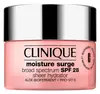
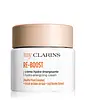
Clinique Moisture Surge Broad Spectrum SPF 28 Sheer Hydrator Moisturizer Versus Clarins Re-Boost Hydra-Energizing Cream
This barrier-repair day moisturizer is formulated around Lactobacillus Ferment Lysate and Aloe Barbadensis Leaf Polysaccharides to strengthen the skin barrier and hydrate skin.
This moisturizer is formulated around Lycium Barbarum Fruit Extract to hydrate skin.


What's inside
What's inside
 Key Ingredients
Benefits
Concerns
Ingredients Side-by-side
Butyl Methoxydibenzoylmethane 3%
UV Absorber
Homosalate 7%
Skin Conditioning
Ethylhexyl Methoxycinnamate 7%
UV Absorber
Ethylhexyl Salicylate 4.5%
UV Absorber
Water
Skin ConditioningButylene Glycol
Humectant

Ethylhexyl Methoxycrylene
Skin Conditioning
Butyloctyl Salicylate
Skin Conditioning
Dextrin Palmitate
Emulsifying

Polymethylsilsesquioxane

Glycerin
Humectant
Lactobacillus Ferment Lysate
Skin Conditioning
Aloe Barbadensis Leaf Polysaccharides
Emollient
Sodium Hyaluronate
Humectant

Caffeine
Skin Conditioning
Sodium Polyaspartate
Humectant7-Dehydrocholesterol
Emulsion StabilisingCaprylyl Glycol
Emollient
Acrylates Copolymer
Sorbitol
Humectant
Dimethicone
Emollient
Polyglyceryl-2 Stearate
Emulsifying
Sucrose
Humectant
Saccharide Isomerate
Humectant
Hydroxyethyl Urea
Humectant
PPG-8-Ceteth-20
EmulsifyingSorbeth-30 Tetraisostearate
Emulsifying
Glyceryl Stearate
Emollient
Sorbitan Sesquiisostearate
Emulsifying
Potassium Hydroxide
BufferingCarbomer
Emulsion StabilisingDipropylene Glycol
HumectantDehydroxanthan Gum
Emulsion StabilisingStearyl Alcohol
Emollient
Sodium Polyacryloyldimethyl Taurate
Emulsion StabilisingHexylene Glycol
EmulsifyingAcrylates/Beheneth-25 Methacrylate Copolymer
Acrylates/C10-30 Alkyl Acrylate Crosspolymer
Emulsion StabilisingTocopheryl Acetate
Antioxidant


BHT
Antioxidant
Disodium EDTA
ChelatingSodium Citrate
BufferingCitric Acid
Buffering
Potassium Sorbate
Preservative
Sodium Benzoate
Masking
Phenoxyethanol
Preservative
CI 14700
Cosmetic ColorantButyl Methoxydibenzoylmethane 3%, Homosalate 7%, Ethylhexyl Methoxycinnamate 7%, Ethylhexyl Salicylate 4.5%, Water, Butylene Glycol, Ethylhexyl Methoxycrylene, Butyloctyl Salicylate, Dextrin Palmitate, Polymethylsilsesquioxane, Glycerin, Lactobacillus Ferment Lysate, Aloe Barbadensis Leaf Polysaccharides, Sodium Hyaluronate, Caffeine, Sodium Polyaspartate, 7-Dehydrocholesterol, Caprylyl Glycol, Acrylates Copolymer, Sorbitol, Dimethicone, Polyglyceryl-2 Stearate, Sucrose, Saccharide Isomerate, Hydroxyethyl Urea, PPG-8-Ceteth-20, Sorbeth-30 Tetraisostearate, Glyceryl Stearate, Sorbitan Sesquiisostearate, Potassium Hydroxide, Carbomer, Dipropylene Glycol, Dehydroxanthan Gum, Stearyl Alcohol, Sodium Polyacryloyldimethyl Taurate, Hexylene Glycol, Acrylates/Beheneth-25 Methacrylate Copolymer, Acrylates/C10-30 Alkyl Acrylate Crosspolymer, Tocopheryl Acetate, BHT, Disodium EDTA, Sodium Citrate, Citric Acid, Potassium Sorbate, Sodium Benzoate, Phenoxyethanol, CI 14700
Water
Skin ConditioningGlycerin
Humectant
Cetearyl Ethylhexanoate
Emollient
Butylene Glycol
Humectant
1,2-Hexanediol
Skin Conditioning
Hydroxyethyl Acrylate/Sodium Acryloyldimethyl Taurate Copolymer
Emulsion StabilisingPrunus Armeniaca Kernel Oil
Masking


Silica
Abrasive


Cocos Nucifera Fruit Juice
Emollient
Propylene Glycol
Humectant
Xylitylglucoside
Humectant
Acrylates/C10-30 Alkyl Acrylate Crosspolymer
Emulsion StabilisingAnhydroxylitol
Humectant
Ethylhexylglycerin
Skin ConditioningParfum
Masking

Xylitol
Humectant
Sodium Hydroxide
BufferingTartaric Acid
Buffering
Disodium EDTA
ChelatingGlucose
Humectant
Tamarindus Indica Extract
SmoothingMarrubium Vulgare Extract
Skin ConditioningLycium Barbarum Fruit Extract
Astringent
Citric Acid
Buffering
Ficus Carica Fruit Extract
Humectant
Malpighia Emarginata Seed Extract
Skin ConditioningPhenethyl Alcohol
MaskingFurcellaria Lumbricalis Extract
Skin ConditioningSodium Benzoate
Masking
Rhododendron Ferrugineum Extract
MaskingPotassium Sorbate
Preservative
Sorbic Acid
Preservative
Lapsana Communis Flower/Leaf/Stem Extract
Skin ConditioningMaris Sal
Skin ConditioningCI 14700
Cosmetic ColorantWater, Glycerin, Cetearyl Ethylhexanoate, Butylene Glycol, 1,2-Hexanediol, Hydroxyethyl Acrylate/Sodium Acryloyldimethyl Taurate Copolymer, Prunus Armeniaca Kernel Oil, Silica, Cocos Nucifera Fruit Juice, Propylene Glycol, Xylitylglucoside, Acrylates/C10-30 Alkyl Acrylate Crosspolymer, Anhydroxylitol, Ethylhexylglycerin, Parfum, Xylitol, Sodium Hydroxide, Tartaric Acid, Disodium EDTA, Glucose, Tamarindus Indica Extract, Marrubium Vulgare Extract, Lycium Barbarum Fruit Extract, Citric Acid, Ficus Carica Fruit Extract, Malpighia Emarginata Seed Extract, Phenethyl Alcohol, Furcellaria Lumbricalis Extract, Sodium Benzoate, Rhododendron Ferrugineum Extract, Potassium Sorbate, Sorbic Acid, Lapsana Communis Flower/Leaf/Stem Extract, Maris Sal, CI 14700
Reviews
Ingredients Explained
These ingredients are found in both products.
Ingredients higher up in an ingredient list are typically present in a larger amount.
Acrylates/C10-30 Alkyl Acrylate Crosspolymer is a synthetic polymer. It is used to thicken, emulsify, and improve the texture of products.
As an emulsifier, it helps stabilize oil-in-water emulsions to give products an elegant feel when applied.
It can also form a thin protective film on skin. One study found that a formula using this polymer helped slow down how quickly other ingredients (like DEET) were absorbed through skin.
A 2024 study of over 1,300 patients confirmed that sensitization to this ingredient is rare. It is also non-mutagenic and has a clean track record.
Learn more about Acrylates/C10-30 Alkyl Acrylate CrosspolymerButylene Glycol (or BG) is used within cosmetic products for a few different reasons:
Overall, Butylene Glycol is a safe and well-rounded ingredient that works well with other ingredients.
Though this ingredient works well with most skin types, some people with sensitive skin may experience a reaction such as allergic rashes, closed comedones, or itchiness.
Learn more about Butylene GlycolCi 14700, also known as Red No. 4, is a synthetic red dye derived from petroleum. It is water soluble.
Citric Acid is an alpha hydroxy acid (AHA) naturally found in citrus fruits like oranges, lemons, and limes.
Like other AHAs, citric acid can exfoliate skin by breaking down the bonds that hold dead skin cells together. This helps reveal smoother and brighter skin underneath.
However, this exfoliating effect only happens at high concentrations (20%) which can be hard to find in cosmetic products.
Due to this, citric acid is usually included in small amounts as a pH adjuster. This helps keep products slightly more acidic and compatible with skin's natural pH.
In skincare formulas, citric acid can:
While it can provide some skin benefits, research shows lactic acid and glycolic acid are generally more effective and less irritating exfoliants.
Most citric acid used in skincare today is made by fermenting sugars (usually from molasses). This synthetic version is identical to the natural citrus form but easier to stabilize and use in formulations.
Rosacea skin has a lower threshold for acids generally, with 62.5% of rosacea subjects in one study reacting to lactic acid in a sting test. This is why we mark citric acid as a potential rosacea trigger.
However, this ingredient shows up as a pH adjuster or chelator at roughly 0.1-1% in many products. These low levels are unlikely to be an issue for rosacea skin and becomes a potential trigger at exfoliating concentrations (20%). Because everybody's skin is unique, we recommend a patch test if you are unsure.
Learn more about Citric AcidDisodium EDTA is a chelating agent. It grabs onto and deactivates metal ions that sneak into your products from water, packaging, or air.
This ingredient mainly works behind the scenes and helps with:
On top of that, this ingredient can counteract the effects of hard water by binding to the minerals in it.
One thing worth knowing is that Disodium EDTA has been shown to be a mild penetration enhancer. It can help other ingredients absorb into skin more effectively which can be a double-edged sword (great for actives, but can also make the active too strong if you have sensitive skin).
Clinical patch testing showed no significant skin irritation at typical use concentrations and minimal dermal absorption.
You'll most likely see this ingredient near the end of an ingredient list. It's typically found in concentrations less than 1%.
Learn more about Disodium EDTAGlycerin (or glycerol) is a compound naturally found in your skin. It's a powerhouse humectant that pulls water into the stratum corneum.
Topically, glycerin does several things at once:
Your skin makes glycerin on its own (mostly from sebaceous oil breakdown) and shuttles it to your outermost layer of skin, or your epidermis, via aquaporin-3.
Aquaporin-3 is a transporter that is essential for normal skin hydration, elasticity, and repair. Interestingly, mice lacking in AQP3 have dry and less elastic skin that can be fully corrected with glycerin.
This ingredient is non-irritating, plays well with almost every ingredient, and works across all skin types. Typical use is anywhere between 3-10% but can go up to 79% in some leave-on products.
Just know very high concentrations (>40%) can feel tacky in low humidity.
Glycerin is the name for this ingredient in American English. British English uses Glycerol/Glycerine.
Learn more about GlycerinPotassium Sorbate is a preservative used to prevent yeast and mold in products. It is commonly found in both cosmetic and food products.
This ingredient comes from potassium salt derived from sorbic acid. Sorbic acid is a natural antibiotic and effective against fungus.
Both potassium sorbate and sorbic acid can be found in baked goods, cheeses, dried meats, dried fruit, ice cream, pickles, wine, yogurt, and more.
You'll often find this ingredient used with other preservatives.
Learn more about Potassium SorbateSodium Benzoate is a preservative. It's used in both cosmetic and food products to inhibit the growth of mold and bacteria. It is typically produced synthetically.
Both the US FDA and EU Health Committee have approved the use of sodium benzoate. In the US, levels of 0.1% (of the total product) are allowed.
Sodium benzoate works as a preservative by inhibiting the growth of bacteria inside of cells. It prevents the cell from fermenting a type of sugar using an enzyme called phosphofructokinase.
It is the salt of benzoic acid. Foods containing sodium benzoate include soda, salad dressings, condiments, fruit juices, wines, and snack foods.
Studies for using ascorbic acid and sodium benzoate in cosmetics are lacking, especially in skincare routines with multiple steps.
We always recommend speaking with a professional, such as a dermatologist, if you have any concerns.
Learn more about Sodium BenzoateWater. It's the most common cosmetic ingredient of all. You'll usually see it at the top of ingredient lists, meaning that it makes up the largest part of the product.
So why is it so popular? Water most often acts as a solvent - this means that it helps dissolve other ingredients into the formulation.
You'll also recognize water as that liquid we all need to stay alive. If you see this, drink a glass of water. Remember to stay hydrated!
Learn more about Water

