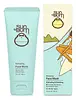
This wash off mask is made with Bentonite and Aloe Barbadensis Leaf Juice for a rinse-off oil-control boost.

What's inside
What's inside
 Key Ingredients
Benefits
Concerns
Ingredients Side-by-side
Water
Skin ConditioningGlycerin
Humectant


Isopropyl Palmitate
Emollient




Behentrimonium Chloride
Preservative
Cetearyl Alcohol
Emollient

Brassica Alcohol
Emollient
Cetyl Esters
Emollient
Musa Sapientum Peel Extract
Skin ConditioningCocos Nucifera Fruit Extract
Emollient
Ananas Sativus Fruit Extract
Skin ConditioningCarica Papaya Fruit Extract
Skin ConditioningMangifera Indica Juice
Skin ConditioningEuterpe Oleracea Fruit Extract

Curcuma Longa Root Extract
Antioxidant

Ocimum Basilicum Flower/Leaf Extract
TonicCorallina Officinalis Extract
Skin Conditioning
Lactobacillus
Skin ConditioningPersea Gratissima Oil
Skin Conditioning
Prunus Amygdalus Dulcis Oil
Skin Conditioning
Melia Azadirachta Flower Extract
Skin ConditioningPanthenol
Skin Conditioning
Melia Azadirachta Leaf Extract
Skin ConditioningOcimum Sanctum Leaf Extract
Skin ConditioningBrassicyl Isoleucinate Esylate
Emulsion StabilisingCetrimonium Chloride
Antimicrobial
Behentrimonium Methosulfate
SurfactantGuar Hydroxypropyltrimonium Chloride
Skin ConditioningParfum
Masking

Benzyl Alcohol
Perfuming

Sodium Benzotriazolyl Butylphenol Sulfonate
UV AbsorberDehydroacetic Acid
Preservative
Sodium Hydroxide
BufferingWater, Glycerin, Isopropyl Palmitate, Behentrimonium Chloride, Cetearyl Alcohol, Brassica Alcohol, Cetyl Esters, Musa Sapientum Peel Extract, Cocos Nucifera Fruit Extract, Ananas Sativus Fruit Extract, Carica Papaya Fruit Extract, Mangifera Indica Juice, Euterpe Oleracea Fruit Extract, Curcuma Longa Root Extract, Ocimum Basilicum Flower/Leaf Extract, Corallina Officinalis Extract, Lactobacillus, Persea Gratissima Oil, Prunus Amygdalus Dulcis Oil, Melia Azadirachta Flower Extract, Panthenol, Melia Azadirachta Leaf Extract, Ocimum Sanctum Leaf Extract, Brassicyl Isoleucinate Esylate, Cetrimonium Chloride, Behentrimonium Methosulfate, Guar Hydroxypropyltrimonium Chloride, Parfum, Benzyl Alcohol, Sodium Benzotriazolyl Butylphenol Sulfonate, Dehydroacetic Acid, Sodium Hydroxide
Water
Skin ConditioningDimethicone
Emollient
Glycerin
Humectant
Bentonite
Absorbent

Isoamyl Cocoate

Dimethicone/Vinyl Dimethicone Crosspolymer
Skin Conditioning
Chromium Hydroxide Green
Titanium Dioxide
Cosmetic Colorant

Cocamidopropyl Betaine
Cleansing
Sodium Methyl Oleoyl Taurate
CleansingAloe Barbadensis Leaf Juice
Skin Conditioning
Cocos Nucifera Fruit Extract
Emollient
Pelvetia Canaliculata Extract
Skin Protecting
Musa Sapientum Flower Extract
Skin ConditioningMusa Sapientum Fruit Extract
Skin ConditioningMusa Sapientum Leaf Extract
Skin ConditioningMusa Sapientum Peel Extract
Skin ConditioningMusa Sapientum Pulp Extract
Skin ConditioningHelianthus Annuus Extract
Emollient
Isopulegol
MaskingIsostearic Acid
Cleansing
Lactobacillus
Skin ConditioningLactobacillus Ferment
Skin Conditioning
Caprylic/Capric Triglyceride
Masking
Coco-Glucoside
Cleansing
Lauryl Glucoside
CleansingLecithin
Emollient
Lysolecithin
EmulsifyingPolyglyceryl-3 Polyricinoleate
Emulsifying
Polyhydroxystearic Acid
Emulsifying
Pullulan
Sclerotium Gum
Emulsion StabilisingStearic Acid
Cleansing
Tocopherol
Antioxidant



Xanthan Gum
EmulsifyingAlumina
Abrasive
Parfum
Masking
Phenoxyethanol
Preservative
Ethylhexylglycerin
Skin ConditioningWater, Dimethicone, Glycerin, Bentonite, Isoamyl Cocoate, Dimethicone/Vinyl Dimethicone Crosspolymer, Chromium Hydroxide Green, Titanium Dioxide, Cocamidopropyl Betaine, Sodium Methyl Oleoyl Taurate, Aloe Barbadensis Leaf Juice, Cocos Nucifera Fruit Extract, Pelvetia Canaliculata Extract, Musa Sapientum Flower Extract, Musa Sapientum Fruit Extract, Musa Sapientum Leaf Extract, Musa Sapientum Peel Extract, Musa Sapientum Pulp Extract, Helianthus Annuus Extract, Isopulegol, Isostearic Acid, Lactobacillus, Lactobacillus Ferment, Caprylic/Capric Triglyceride, Coco-Glucoside, Lauryl Glucoside, Lecithin, Lysolecithin, Polyglyceryl-3 Polyricinoleate, Polyhydroxystearic Acid, Pullulan, Sclerotium Gum, Stearic Acid, Tocopherol, Xanthan Gum, Alumina, Parfum, Phenoxyethanol, Ethylhexylglycerin
Ingredients Explained
These ingredients are found in both products.
Ingredients higher up in an ingredient list are typically present in a larger amount.
Cocos Nucifera Fruit Extract (coconut extract) is a water-soluble extract from coconut fruit.
It's a skin conditioning agent that helps keep the skin soft and hydrated. This ingredient is different from coconut oil with a totally different composition.
Direct research on this extract is limited and mostly comes from supplier safety dossiers:
Human testing found it to be non-irritating or sensitizing in a 50-subject occlusive patch test.
Real-world concentrations are very low: industry survey data puts it at 0.0007% to 0.02% in face and neck products, 0.0005% in moisturizers and cleansers, and up to 0.04% in hair conditioners.
Most human clinical skin research on coconut is on virgin coconut oil and not this extract. For example, a randomized double-blind trial found virgin coconut oil as effective and safe as mineral oil for mild to moderate xerosis with significant improvement in hydration and skin surface lipids. However, you can't transfer that to a water-based fruit extract at 0.01%.
There's no comedogenicity data for this specific ingredient; the "coconut clogs pores" reputation comes from coconut oil which scored high on the old rabbit ear assay.
That method tested pure ingredients on rabbit ears and later work showed the results translate inconsistently to human skin.
Some people still find it breaks them out. So if that's you, definitely trust your skin.
Learn more about Cocos Nucifera Fruit ExtractGlycerin (or glycerol) is a compound naturally found in your skin. It's a powerhouse humectant that pulls water into the stratum corneum.
Topically, glycerin does several things at once:
Your skin makes glycerin on its own (mostly from sebaceous oil breakdown) and shuttles it to your outermost layer of skin, or your epidermis, via aquaporin-3.
Aquaporin-3 is a transporter that is essential for normal skin hydration, elasticity, and repair. Interestingly, mice lacking in AQP3 have dry and less elastic skin that can be fully corrected with glycerin.
This ingredient is non-irritating, plays well with almost every ingredient, and works across all skin types. Typical use is anywhere between 3-10% but can go up to 79% in some leave-on products.
Just know very high concentrations (>40%) can feel tacky in low humidity.
Glycerin is the name for this ingredient in American English. British English uses Glycerol/Glycerine.
Learn more about GlycerinLactobacillus is the INCI name for the live, whole lactic bacteria culture itself and is classified as a skin conditioning agent.
It is the same genus of probiotic that you can find in yogurt or fermented foods and it shows up at low levels naturally on human skin.
This ingredient is more of a microbiome agent rather than an active; it helps rebalance the skin's microbial community.
The bacteria and their metabolites produce lactic acid and other antimicrobial compounds that crowd out the "bad bacteria". Research on Lactobacillus strains shows activity against pathogens and acne-causing bacteria.
One strain, Lactobacillus plantarum, has also been shown to boost collagen synthesis and lower melanin synthesis in lab and clinical observation.
The most eye-catching data comes from acne research, a topical cream with live lactobacilli was well-tolerated and improved skin hydration by 37.3% after 14 days of use and 45.6% after 28 days.
Sources for this ingredient are usually fermented substrates like dairy, soy, or rice.
In general, this is a low-irritation and well-tolerated ingredient that plays nice with most of your routine.
One thing to keep in mind is that live bacteria are hard to keep alive inside of a skincare product. They struggle to survive on the shelf and don't get along with the preservatives that stop products from spoiling.
That's why you'll see ferment and postbiotic forms instead, like Lactobacillus Ferment or Lactobacillus Ferment Lysate.
There isn't a fixed percentage for this ingredient since it is dosed by strain and viable count.
On the fungal acne front: Lactobacillus is a bacterium (not a fungus). The whole culture contains no fatty acids, esters, or oils that Malassezia can feed on so it is considered fungal acne safe.
Learn more about LactobacillusWe don't have a description for Musa Sapientum Peel Extract yet.
Parfum is a catch-all term for an ingredient or more that is used to give a scent to products.
Also called "fragrance", this ingredient can be a blend of hundreds of chemicals or plant oils. This means every product with "fragrance" or "parfum" in the ingredients list is a different mixture.
For instance, Habanolide is a proprietary trade name for a specific aroma chemical. When used as a fragrance ingredient in cosmetics, most aroma chemicals fall under the broad labeling category of “FRAGRANCE” or “PARFUM” according to EU and US regulations.
The term 'parfum' or 'fragrance' is not regulated in many countries. In many cases, it is up to the brand to define this term.
For instance, many brands choose to label themselves as "fragrance-free" because they are not using synthetic fragrances. However, their products may still contain ingredients such as essential oils that are considered a fragrance by INCI standards.
One example is Calendula flower extract. Calendula is an essential oil that still imparts a scent or 'fragrance'.
Depending on the blend, the ingredients in the mixture can cause allergies and sensitivities on the skin. Some ingredients that are known EU allergens include linalool and citronellol.
Parfum can also be used to mask or cover an unpleasant scent.
The bottom line is: not all fragrances/parfum/ingredients are created equally. If you are worried about fragrances, we recommend taking a closer look at an ingredient. And of course, we always recommend speaking with a professional.
Learn more about ParfumWater. It's the most common cosmetic ingredient of all. You'll usually see it at the top of ingredient lists, meaning that it makes up the largest part of the product.
So why is it so popular? Water most often acts as a solvent - this means that it helps dissolve other ingredients into the formulation.
You'll also recognize water as that liquid we all need to stay alive. If you see this, drink a glass of water. Remember to stay hydrated!
Learn more about Water