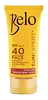
This hybrid sunscreen covers the full UV range and blocks ~98% of UVB at SPF 40.
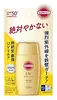
This hybrid sunscreen covers the full UV range and blocks ~98% of UVB at SPF 50.


What's inside
What's inside
 Key Ingredients
Benefits
Concerns
Ingredients Side-by-side
Water
Skin ConditioningEthylhexyl Methoxycinnamate
UV Absorber


Cyclotetrasiloxane
Emollient
Cyclopentasiloxane
Emollient
Cetyl Alcohol
Emollient



Glyceryl Stearate
Emollient
Ceteareth-20
CleansingCeteareth-12
EmulsifyingCetearyl Alcohol
Emollient


Cetyl Palmitate
Emollient
Butyl Methoxydibenzoylmethane
UV Absorber
Octocrylene
UV Absorber
Benzyl Alcohol
Perfuming




Glyceryl Caprylate
EmollientGlyceryl Undecylenate
Emollient
Butyrospermum Parkii Butter
Skin Conditioning
C12-15 Alkyl Benzoate
AntimicrobialTitanium Dioxide
Cosmetic Colorant
Aluminum Hydroxide
EmollientDimethicone/Methicone Copolymer
Sorbitan Palmitate
Emulsifying
Sorbitan Olivate
Emulsifying
Carbomer
Emulsion StabilisingTriethanolamine
BufferingBisabolol
Antioxidant



Panthenol
Skin Conditioning
Sodium Polyacrylate
Absorbent
Tocopheryl Acetate
Antioxidant

Citric Acid
Buffering
Tetrasodium EDTA
Benzylidene Dimethoxydimethylindanone
Skin ProtectingWater, Ethylhexyl Methoxycinnamate, Cyclotetrasiloxane, Cyclopentasiloxane, Cetyl Alcohol, Glyceryl Stearate, Ceteareth-20, Ceteareth-12, Cetearyl Alcohol, Cetyl Palmitate, Butyl Methoxydibenzoylmethane, Octocrylene, Benzyl Alcohol, Glyceryl Caprylate, Glyceryl Undecylenate, Butyrospermum Parkii Butter, C12-15 Alkyl Benzoate, Titanium Dioxide, Aluminum Hydroxide, Dimethicone/Methicone Copolymer, Sorbitan Palmitate, Sorbitan Olivate, Carbomer, Triethanolamine, Bisabolol, Panthenol, Sodium Polyacrylate, Tocopheryl Acetate, Citric Acid, Tetrasodium EDTA, Benzylidene Dimethoxydimethylindanone
Water
Skin ConditioningCyclopentasiloxane
Emollient
Zinc Oxide
Cosmetic Colorant
Alcohol
Antimicrobial
Ethylhexyl Methoxycinnamate
UV Absorber
Isododecane
EmollientCaprylic/Capric Triglyceride
Masking
C12-15 Alkyl Benzoate
AntimicrobialSilica
Abrasive

Trimethylsiloxysilicate
Emollient
Diethylhexyl Succinate
EmollientDiethylamino Hydroxybenzoyl Hexyl Benzoate
UV Filter
Polysilicone-15
UV Filter
Bis-Ethylhexyloxyphenol Methoxyphenyl Triazine
Skin Conditioning
Chamomilla Recutita Flower Extract
Masking
Salvia Officinalis Leaf Extract
CleansingTocopherol
Antioxidant

Sodium Hyaluronate
Humectant
Simmondsia Chinensis Seed Oil
Emollient
Hydrolyzed Collagen
Emollient
Butylene Glycol
Humectant
BHT
Antioxidant
Acrylates/Dimethicone Methacrylate/Ethylhexyl Acrylate Copolymer
Skin Conditioning
Stearoyl Inulin
EmollientTriethoxycaprylylsilane
Polyhydroxystearic Acid
Emulsifying
Lauryl PEG-9 Polydimethylsiloxyethyl Dimethicone
Skin Conditioning
Sodium Lauroyl Glutamate
SurfactantPhenoxyethanol
Preservative
Water, Cyclopentasiloxane, Zinc Oxide, Alcohol, Ethylhexyl Methoxycinnamate, Isododecane, Caprylic/Capric Triglyceride, C12-15 Alkyl Benzoate, Silica, Trimethylsiloxysilicate, Diethylhexyl Succinate, Diethylamino Hydroxybenzoyl Hexyl Benzoate, Polysilicone-15, Bis-Ethylhexyloxyphenol Methoxyphenyl Triazine, Chamomilla Recutita Flower Extract, Salvia Officinalis Leaf Extract, Tocopherol, Sodium Hyaluronate, Simmondsia Chinensis Seed Oil, Hydrolyzed Collagen, Butylene Glycol, BHT, Acrylates/Dimethicone Methacrylate/Ethylhexyl Acrylate Copolymer, Stearoyl Inulin, Triethoxycaprylylsilane, Polyhydroxystearic Acid, Lauryl PEG-9 Polydimethylsiloxyethyl Dimethicone, Sodium Lauroyl Glutamate, Phenoxyethanol
Reviews
Ingredients Explained
These ingredients are found in both products.
Ingredients higher up in an ingredient list are typically present in a larger amount.
C12-15 Alkyl Benzoate is a lightweight emollient made by combinig benzoic acid with fatty alcohols that are 12-15 carbons long.
In cosmetics, it plays several roles:
The Cosmetic Review Expert Panel has concluded the alkyl benzoate group to be safe as used in cosmetics; it wasn't found to be a skin irritant and unlikely to be absorbed due to its low water solubility.
This report recorded almost 1000 reported uses with concentrations up to 59% in leave-on products but your cosmetics will typically use 0.5-15% depending on the product.
It's often called a "SPF booster": this is because it keeps UV filters properly dissolved and evenly distributed to support a sunscreen's performance. It doesn't actually raise SPF on its own.
Overall, this ingredient is well tolerated.
This ingredient is fungal acne safe because it is an ester of benzoic acid.
Think of this ingredient as two parts stuck together: an oily part and an acid part. Malassezia only gets a meal when it can snip off a fatty acid to eat. With C12-15 Alkyl Benzoate, the acid part is benzoic acid, which isn't a fatty acid and which the yeast can't use as food.
Benzoic acid is actually used as a preservative to stop yeast from growing.
The oily part is a blend of C12-15 fatty alcohols but fatty alcohols in this size range can support only a little Malassezia growth (mostly for one species of Malassezia as well).
In the ingredient, those alcohols stay locked inside the molecule. The yeast can only reach them by snipping the benzoate bond, and that type of bond is harder for it to cut than a normal fatty bond.
So not much gets released. And whatever does get snipped comes packaged with benzoic acid, which discourages yeast growth.
Learn more about C12-15 Alkyl BenzoateCyclopentasiloxane (D5) is a lightweight silicone that mostly acts as an emollient and solvent in cosmetics. Its the reason your products feel silky, fast-spreading, and non-greasy.
Since D5 is volatile, it does its thing and then evaporates off the skin quickly.
The safety profile of this ingredient is reassuring; the US CIR Expert Panel concluded D5 is safe as used in cosmetics and Health Canada concluded that D5 is not harmful to human health or the environment as currently used in cosmetics
There's a study that people mention about D5 in a rat study showing tumors. This study is related to long-term inhalation of high D5 levels.
Regulatory bodies have judged this study to be not applicable in topical skincare since skin absorption of D5 is very low and we're not really inhaling huge amounts of D5.
The only restriction for this ingredient is environmental. The European Chemicals Agency (ECHA) restricted D5 in wash-off cosmetics at or above 0.1% due to their persistence in water.
Learn more about CyclopentasiloxaneThis ingredient is also known as Octinoxate and is one of the oldest and most widely used chemical UV filters in skincare.
It has a simple job: soap up UVB radiation (290-320 nm), the wavelengths responsible for sunburn and a big chunk of long-term sun damage.
In formulas, it's always paired with a separate UVA filter because octinoxate solely protects skin from UVB.
Because it's an oil-soluble liquid, it's easy to blend into the oil phase of lotions/creams and gives a cosmetically elegant feel.
The one quirk about formulating this ingredient is photostability; the molecule slowly changes shape into a less effective version when sunlight hits it. So the longer you're in the sun, the weaker its protection gets. The drop can be more than 30% in some formulas.
It also doesn't play nice with Avobenzone (the common UVA filter) since avobenzone destabilizes octinoxate and the two degrade each other. But don't worry: brands have solved this issue by adding photostabilizers like Tinosorb S to prevent degradation and keep SPF stable under heavy UV exposure.
The maximum allowed level is 10% in the EU and Australia, 7.5% in the US and Canada, and 20% in Japan.
The Cosmetic Ingredient Review Panel has concluded this ingredient to be safe in cosmetics up to 10%.
One last thing worth knowing for context:
Octinoxate has been the subject of ongoing review in Europe where the Scientific Committee on Consumer Safety's (SCCS) 2025 final opinion is that this ingredient is an endocrine-active substance.
Lab and animal studies suggest it can act a bit like a hormone in the body (mildly mimicking estrogen and slightly blocking male hormones). It's important to know this hasn't really been shown to happen in everyday human use.
This ingredient is also banned in Hawaii over coral reef concerns.
Learn more about Ethylhexyl MethoxycinnamateWater. It's the most common cosmetic ingredient of all. You'll usually see it at the top of ingredient lists, meaning that it makes up the largest part of the product.
So why is it so popular? Water most often acts as a solvent - this means that it helps dissolve other ingredients into the formulation.
You'll also recognize water as that liquid we all need to stay alive. If you see this, drink a glass of water. Remember to stay hydrated!
Learn more about Water

