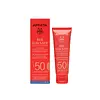
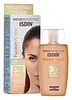
Apivita Natural Cosmetics Hydra Fresh Tinted Face Gel Cream SPF 50 Versus ISDIN Fusion Water Color Sunscreen SPF50
This chemical sunscreen covers the full UV range and blocks ~98% of UVB at SPF 50.
This chemical sunscreen covers the full UV range and blocks ~98% of UVB at SPF 50.


What's inside
What's inside
 Key Ingredients
Benefits
Concerns
Ingredients Side-by-side
Water
Skin ConditioningCI 77891
Cosmetic ColorantDiethylamino Hydroxybenzoyl Hexyl Benzoate
UV Filter
Bis-Ethylhexyloxyphenol Methoxyphenyl Triazine
UV Absorber
Ethylhexyl Triazone
UV Absorber
Propanediol
Solvent

Ethylhexyl Salicylate
UV Absorber
Isoamyl Laurate
Emollient

C9-12 Alkane
SolventDicaprylyl Carbonate
EmollientSilica
Abrasive


CI 77492
Cosmetic ColorantGlyceryl Stearate Citrate
Emollient
Sodium Stearoyl Glutamate
CleansingPentylene Glycol
Skin Conditioning
Parfum
Masking



Hydrolyzed Algin
Maris Aqua
HumectantChlorella Vulgaris Extract
Skin ConditioningPropolis Extract
Skin Conditioning




Rosa Canina Fruit Extract
Astringent
Rosmarinus Officinalis Leaf Extract
AntimicrobialPanthenol
Skin Conditioning
Aloe Barbadensis Leaf Juice Powder
Skin Conditioning
Brassica Campestris Seed Oil
Skin Conditioning
Sodium Hyaluronate
Humectant

Glycerin
Humectant
Hydroxypropyl Cyclodextrin
MaskingBisabolol
Antioxidant
Tocopheryl Acetate
Antioxidant

Coco-Caprylate/Caprate
Emollient
Ethylhexylglycerin
Skin ConditioningDisodium EDTA
ChelatingHydrogenated Lecithin
Emulsifying
Hydroxyacetophenone
Antioxidant
Citronellyl Methylcrotonate
Masking
Triacontanyl Pvp
HumectantXanthan Gum
EmulsifyingCitric Acid
Buffering
CI 77491
Cosmetic ColorantCI 77499
Cosmetic ColorantWater, CI 77891, Diethylamino Hydroxybenzoyl Hexyl Benzoate, Bis-Ethylhexyloxyphenol Methoxyphenyl Triazine, Ethylhexyl Triazone, Propanediol, Ethylhexyl Salicylate, Isoamyl Laurate, C9-12 Alkane, Dicaprylyl Carbonate, Silica, CI 77492, Glyceryl Stearate Citrate, Sodium Stearoyl Glutamate, Pentylene Glycol, Parfum, Hydrolyzed Algin, Maris Aqua, Chlorella Vulgaris Extract, Propolis Extract, Rosa Canina Fruit Extract, Rosmarinus Officinalis Leaf Extract, Panthenol, Aloe Barbadensis Leaf Juice Powder, Brassica Campestris Seed Oil, Sodium Hyaluronate, Glycerin, Hydroxypropyl Cyclodextrin, Bisabolol, Tocopheryl Acetate, Coco-Caprylate/Caprate, Ethylhexylglycerin, Disodium EDTA, Hydrogenated Lecithin, Hydroxyacetophenone, Citronellyl Methylcrotonate, Triacontanyl Pvp, Xanthan Gum, Citric Acid, CI 77491, CI 77499
Water
Skin ConditioningOctocrylene
UV Absorber
Propanediol
Solvent
Butyl Methoxydibenzoylmethane
UV Absorber
Ethylhexyl Salicylate
UV Absorber
Polymethyl Methacrylate
CI 77891
Cosmetic ColorantPhenylbenzimidazole Sulfonic Acid
UV Absorber
Polysilicone-15
UV Filter
Caprylic/Capric Triglyceride
Masking
Hydrogenated Polydecene
EmollientPropylene Glycol Dicaprylate/Dicaprate
EmollientTromethamine
BufferingBis-Ethylhexyloxyphenol Methoxyphenyl Triazine
UV Absorber
Silica
Abrasive
CI 77492
Cosmetic Colorant1,2-Hexanediol
Skin Conditioning
Hydroxyacetophenone
Antioxidant
Magnesium Aluminum Silicate
Absorbent
Polysorbate 60
Emulsifying
Disteardimonium Hectorite
StabilisingCaprylyl Glycol
Emollient
Tocopheryl Acetate
Antioxidant
Xanthan Gum
EmulsifyingCI 77491
Cosmetic ColorantPropylene Carbonate
SolventCI 77499
Cosmetic ColorantDisodium EDTA
ChelatingParfum
Masking
Aluminum Hydroxide
EmollientPEG-8
HumectantSodium Lauroyl Glutamate
SurfactantLysine
Skin ConditioningTocopherol
Antioxidant
Magnesium Chloride
Ascorbyl Palmitate
Antioxidant
Ascorbic Acid
Antioxidant
Citric Acid
Buffering
Water, Octocrylene, Propanediol, Butyl Methoxydibenzoylmethane, Ethylhexyl Salicylate, Polymethyl Methacrylate, CI 77891, Phenylbenzimidazole Sulfonic Acid, Polysilicone-15, Caprylic/Capric Triglyceride, Hydrogenated Polydecene, Propylene Glycol Dicaprylate/Dicaprate, Tromethamine, Bis-Ethylhexyloxyphenol Methoxyphenyl Triazine, Silica, CI 77492, 1,2-Hexanediol, Hydroxyacetophenone, Magnesium Aluminum Silicate, Polysorbate 60, Disteardimonium Hectorite, Caprylyl Glycol, Tocopheryl Acetate, Xanthan Gum, CI 77491, Propylene Carbonate, CI 77499, Disodium EDTA, Parfum, Aluminum Hydroxide, PEG-8, Sodium Lauroyl Glutamate, Lysine, Tocopherol, Magnesium Chloride, Ascorbyl Palmitate, Ascorbic Acid, Citric Acid
Reviews
Ingredients Explained
These ingredients are found in both products.
Ingredients higher up in an ingredient list are typically present in a larger amount.
This ingredient is better known as bemotrizinol or Tinosorb S and is one of the best broad-spectrum UV filters in modern sunscreen.
It works by absorbing UV light across a whole range (280-400 nm) with peaks around 310 nm (UVB) and 340-345 nm (UVA). This means it covers UVB plus the deeper UVA wavelengths that drive photoaging and pigmentation.
Another pro?
It's exceptionally photostable, barely degrades in sunlight, and acts as a "bodyguard" for less stable filters.
That's why you'll see it paired with avobenzone or octinoxate; this team up ensures they keep working through sun exposure.
Safety reviews have been reassuring across the board. This ingredient shows low absorption through the skin, rarely irritates, and lab studies found it doesn't act like a hormone in the body (a concern that's been raised about some older sunscreen filters).
On maximum concentrations:
In 2026, the US F.D.A finally added it as an OTC sunscreen ingredient at concentrations up to 6% for adults / children 6 months and older
Learn more about Bis-Ethylhexyloxyphenol Methoxyphenyl TriazineCi 77491 is also hydrated iron III oxide. It's sole purpose is to give a red/pink hue to products.
Iron III oxides are classified as inorganic chemicals for coloring.
Synthetically created Ci 77491 is considered safer than those naturally found. This is because the synthetically created version may contain less impurities. Iron oxides are generally non-toxic and non-allergenic.
Learn more about CI 77491CI 77492 is also hydrated iron III oxide. It's sole purpose is to give a yellow hue to products.
Iron III oxides are classified as inorganic chemicals for coloring.
Synthetically created CI 77492 is considered safer than those naturally found. This is because the synthetically created version may contain less impurities. Iron oxides are generally non-toxic and non-allergenic.
Learn more about CI 77492Ci 77499 is also hydrated iron III oxide. It is created from mixing red and black iron oxides. This helps give shades of darkness to a product.
Iron III oxides are classified as inorganic chemicals for coloring.
Ci 77891 is a white pigment from Titanium dioxide. It is naturally found in minerals such as rutile and ilmenite.
It's main function is to add a white color to cosmetics. It can also be mixed with other colors to create different shades.
Ci 77891 is commonly found in sunscreens due to its ability to block UV rays.
Learn more about CI 77891Citric Acid is an alpha hydroxy acid (AHA) naturally found in citrus fruits like oranges, lemons, and limes.
Like other AHAs, citric acid can exfoliate skin by breaking down the bonds that hold dead skin cells together. This helps reveal smoother and brighter skin underneath.
However, this exfoliating effect only happens at high concentrations (20%) which can be hard to find in cosmetic products.
Due to this, citric acid is usually included in small amounts as a pH adjuster. This helps keep products slightly more acidic and compatible with skin's natural pH.
In skincare formulas, citric acid can:
While it can provide some skin benefits, research shows lactic acid and glycolic acid are generally more effective and less irritating exfoliants.
Most citric acid used in skincare today is made by fermenting sugars (usually from molasses). This synthetic version is identical to the natural citrus form but easier to stabilize and use in formulations.
Rosacea skin has a lower threshold for acids generally, with 62.5% of rosacea subjects in one study reacting to lactic acid in a sting test. This is why we mark citric acid as a potential rosacea trigger.
However, this ingredient shows up as a pH adjuster or chelator at roughly 0.1-1% in many products. These low levels are unlikely to be an issue for rosacea skin and becomes a potential trigger at exfoliating concentrations (20%). Because everybody's skin is unique, we recommend a patch test if you are unsure.
Learn more about Citric AcidDisodium EDTA is a chelating agent. It grabs onto and deactivates metal ions that sneak into your products from water, packaging, or air.
This ingredient mainly works behind the scenes and helps with:
On top of that, this ingredient can counteract the effects of hard water by binding to the minerals in it.
One thing worth knowing is that Disodium EDTA has been shown to be a mild penetration enhancer. It can help other ingredients absorb into skin more effectively which can be a double-edged sword (great for actives, but can also make the active too strong if you have sensitive skin).
Clinical patch testing showed no significant skin irritation at typical use concentrations and minimal dermal absorption.
You'll most likely see this ingredient near the end of an ingredient list. It's typically found in concentrations less than 1%.
Learn more about Disodium EDTAEthylhexyl Salicylate (also called Octisalate or Octyl Salicylate) is an oil-soluble organic UV filter that's been used in sunscreen since the 1950's.
It absorbs UVB light in the 280-320 nm range with a peak absorbance around 306 nm.
You'll often see it paired with other UV filters to boost overall SPF because octisalate is a fairly week filter on its own.
The reason you'll see it so often is because it can help solubilize and stabilize the trickier filters like oxybenzone and avobenzone.
Unlike these filters, octisalate has pretty good photostability and doesn't create skin-damaging free radicals when exposed to sunlight.
The fatty-alcohol part of the molecule also gives it a light, emollient feel so it doubles as a nice texture enhancer.
Usage levels vary around the world:
Safety-wise, this ingredient has a pretty reassuring track record. The EU's Scientific Committee on Consumer Products (SCCP) found very low skin penetration in human skin tests and negative results for irritation, phototoxicity, and photoallergy.
The real-world allergy risk is pretty low too; a 2012 European study of 1,031 people recorded only 2 reactions to it (a rate of 0.19%).
You might have seen scary headlines about sunscreen getting into your blood.
In 2019, the FDA found that several chemical filters can absorb through the skin and show up in the bloodstream at small but measurable levels.
Here's the important part: these tiny levels are just a cutoff the FDA uses to decide which ingredients need more testing and doesn't mean anything harmful was found.
The researchers were clear that the results are no reason to stop wearing sunscreen.
Learn more about Ethylhexyl SalicylateHydroxyacetophenone is a small phenolic molecule that earns its place in a formulas as an antioxidant and preservative booster.
As a phenol, it is able to neutralize free radicals to protect both the product and the skin from oxidative stress.
Though it can't kill microbes on its own, it works as a good supporting agent when combined with other preservatives like Phenoxyethanol or 1,2-Hexanediol.
This ingredient naturally occurs as piceol in Norwegian spruce needles (~0.4-1.1% dry weight and in cloudberries). Though the cosmetic-grade material is synthesized for purity and consistency.
You'll usually see it used at low levels and suppliers recommend up to 1% added to a water phase.
Safety testing was done at concentrations like 0.05% in SPF products and 0.5% in a Human Repeated Insult Patch Test. The safety evidence is assuring; this ingredient is safe for cosmetics in current use and also holds safety status as a food flavoring as well.
An honest caveat: the "soothing" and "anti-inflammatory" claims come mostly from supplier marketing rather than published clinical trials. The Cosmetic Ingredient Review's own literature search found no useful efficacy studies on this ingredient.
So the antioxidant and preservative-boosting roles are the well supported ones while the calming benefit is plausible but thinly evidenced.
Overall, this is a well-tolerated, low-irritation multitasker that quietly helps a formula stay fresh and stable.
Learn more about HydroxyacetophenoneParfum is a catch-all term for an ingredient or more that is used to give a scent to products.
Also called "fragrance", this ingredient can be a blend of hundreds of chemicals or plant oils. This means every product with "fragrance" or "parfum" in the ingredients list is a different mixture.
For instance, Habanolide is a proprietary trade name for a specific aroma chemical. When used as a fragrance ingredient in cosmetics, most aroma chemicals fall under the broad labeling category of “FRAGRANCE” or “PARFUM” according to EU and US regulations.
The term 'parfum' or 'fragrance' is not regulated in many countries. In many cases, it is up to the brand to define this term.
For instance, many brands choose to label themselves as "fragrance-free" because they are not using synthetic fragrances. However, their products may still contain ingredients such as essential oils that are considered a fragrance by INCI standards.
One example is Calendula flower extract. Calendula is an essential oil that still imparts a scent or 'fragrance'.
Depending on the blend, the ingredients in the mixture can cause allergies and sensitivities on the skin. Some ingredients that are known EU allergens include linalool and citronellol.
Parfum can also be used to mask or cover an unpleasant scent.
The bottom line is: not all fragrances/parfum/ingredients are created equally. If you are worried about fragrances, we recommend taking a closer look at an ingredient. And of course, we always recommend speaking with a professional.
Learn more about ParfumPropanediol is an all-star ingredient. It softens, hydrates, and smooths the skin.
It’s often used to:
Propanediol is not likely to cause sensitivity and considered safe to use. It is derived from corn or petroleum with a clear color and no scent.
Learn more about PropanediolSilica, also known as silicon dioxide, is a naturally occurring mineral. It is used as a fine, spherical, and porous powder in cosmetics.
Though it has exfoliant properties, the function of silica varies depending on the product.
The unique structure of silica enhances the spreadability and adds smoothness, making it a great texture enhancer.
It is also used as an active carrier, emulsifier, and mattifier due to its ability to absorb excess oil.
In some products, tiny microneedles called spicules are made from silica or hydrolyzed sponge. When you rub them in, they lightly polish away dead skin layers and enhance the penetration of active ingredients.
Learn more about SilicaTocopheryl Acetate is a stable, shelf-friendly form of vitamin E.
Formulators love it because plain vitamin E oxidizes quickly once it hits air. This acetate version stays stable and resists going off, helping to extend a product's shelf life.
It's actually inactive on its own and works like a slow-release "storage" form; the enzymes in your skin called esterases gradually convert it into active vitamin E over time.
One in vivo study showed 5% of the acetate in the living layer of the epidermis converted to vitamin E after 5 days of application. This study also found the skin gained protection against UV damage even though the conversion was slow and small.
Once converted, vitamin E acts as a skin's main fat-soluble antioxidant that fights free radicals to protect skin from damage.
Topical vitamin E generally boosts the skin's photoprotection, and it reduced UV-damage in animal models.
This ingredient has some brightening potential but it's more of a prevention ingredient than spot-fader. Cell studies show it can slow down melanin production but it's worth noting that it's not the most powerful brightener out there.
Overall, it has a pretty solid safety profile and has been found to be non-irritating and non-comedogenic. Allergic reactions may happen but stay rare due to how widely the ingredient gets used.
The concentration will vary depending on the formula; industry data shows 0.1% in baby lotions, 3% in lipsticks, and 5% in foot powders. You can also find this ingredient at 100% in a pure vitamin E oil.
Most leave-on skincare keeps it at the lower end, often between 0.5-1%.
Learn more about Tocopheryl AcetateWater. It's the most common cosmetic ingredient of all. You'll usually see it at the top of ingredient lists, meaning that it makes up the largest part of the product.
So why is it so popular? Water most often acts as a solvent - this means that it helps dissolve other ingredients into the formulation.
You'll also recognize water as that liquid we all need to stay alive. If you see this, drink a glass of water. Remember to stay hydrated!
Learn more about WaterXanthan gum is used as a stabilizer and thickener within cosmetic products. It helps give products a sticky, thick feeling - preventing them from being too runny.
On the technical side of things, xanthan gum is a polysaccharide - a combination consisting of multiple sugar molecules bonded together.
Xanthan gum is a pretty common and great ingredient. It is a natural, non-toxic, non-irritating ingredient that is also commonly used in food products.
Learn more about Xanthan Gum

